



AI Summary
Do you need an easy and organized way to collect information about your employees?
Creating an employee information form in WordPress gives you the flexibility to gather the information about people you need, store that information in one convenient location, and access it whenever you need to.
In this article, I’ll show you the easy way to create an employee information form in WordPress using WPForms by asking for everything once, in a consistent format, and storing it in one place you control.
Build Your Employee Information Form Now! 🙂
What Is an Employee Information Form?
An employee information form is the record you keep on each person who works for you. It documents their personal and contact details, their emergency contact, and the facts about their role, so you have a single reliable source for the day you need to reach someone’s next of kin or confirm a start date.
The people who get the most out of one are usually running a team without a full HR system behind them. Small business owners, office managers, and one-person HR departments all end up doing this work in spreadsheets otherwise. A form gives you the same structure an HRIS would impose, without the subscription.
It helps to be clear about what this form is for. It is your internal record, separate from the statutory paperwork a new hire also has to complete. Tax withholding and eligibility verification have their own government forms with their own rules, and I have covered those separately in this guide to the forms every new employee needs to fill out.
One habit worth building in from the start is asking people to review their details once a year. Addresses change, phone numbers change, and emergency contacts change most of all. A form you can resend takes a minute, while chasing a stale record when you actually need it takes far longer.
What to Include on an Employee Information Form
The temptation with a form like this is to ask for everything you can imagine ever wanting, but every extra field is another thing an employee has to look up, and another piece of personal data you are now responsible for protecting.
Here is how I’d group the fields that genuinely earn their place.
Personal and contact details:
- Full legal name, plus a preferred name if it differs
- Personal email address
- Mobile phone number
- Home address
- Date of birth
Employment details:
- Job title
- Department
- Supervisor or manager name
- Start date
- Office phone or extension
Emergency contact:
- Contact’s full name
- Relationship to the employee
- Primary phone number
- Secondary phone number or email
Payroll and benefits pointers:
- Employment type, such as full time, part time, or contract
- Salary or pay rate, if your process records it here
- Whether benefits enrollment has been completed
Documents and credentials:
- A photo for an ID badge or staff directory
- Professional licenses or certifications relevant to the role
- Any work authorization document your process requires you to note
Salary and date of birth deserve a second thought before you include them. Both are genuinely useful and both are sensitive, so only collect them if your process actually uses them. Now let’s build the thing.
How to Create an Employee Information Form in WordPress
The whole process takes about fifteen minutes with the right plugin, mostly because you are starting from a template rather than a blank form. I’ll go through it step by step.
- Step 1: Install the WPForms Pro Plugin
- Step 2: Create Your Employee Information Form
- Step 3: Configure Your Employee Information Form Settings
- Step 4: Set Up Employee Information Form Notifications
- Step 5: Configure Your Employee Information Form Confirmations
- Step 6: Restrict Who Can Fill Out Your Form
- Step 7: Add Your Employee Information Form to Your Website
- Fields and Features That Set a WPForms Employee Information Form Apart
- How to Keep Employee Information Secure
Step 1: Install the WPForms Pro Plugin
WPForms is the drag and drop form builder I use for anything involving employee data, largely because it ships with an employee information form already built.
There are 2,100+ WordPress form templates in the library covering business operations, HR, and onboarding, so you rarely start from nothing.
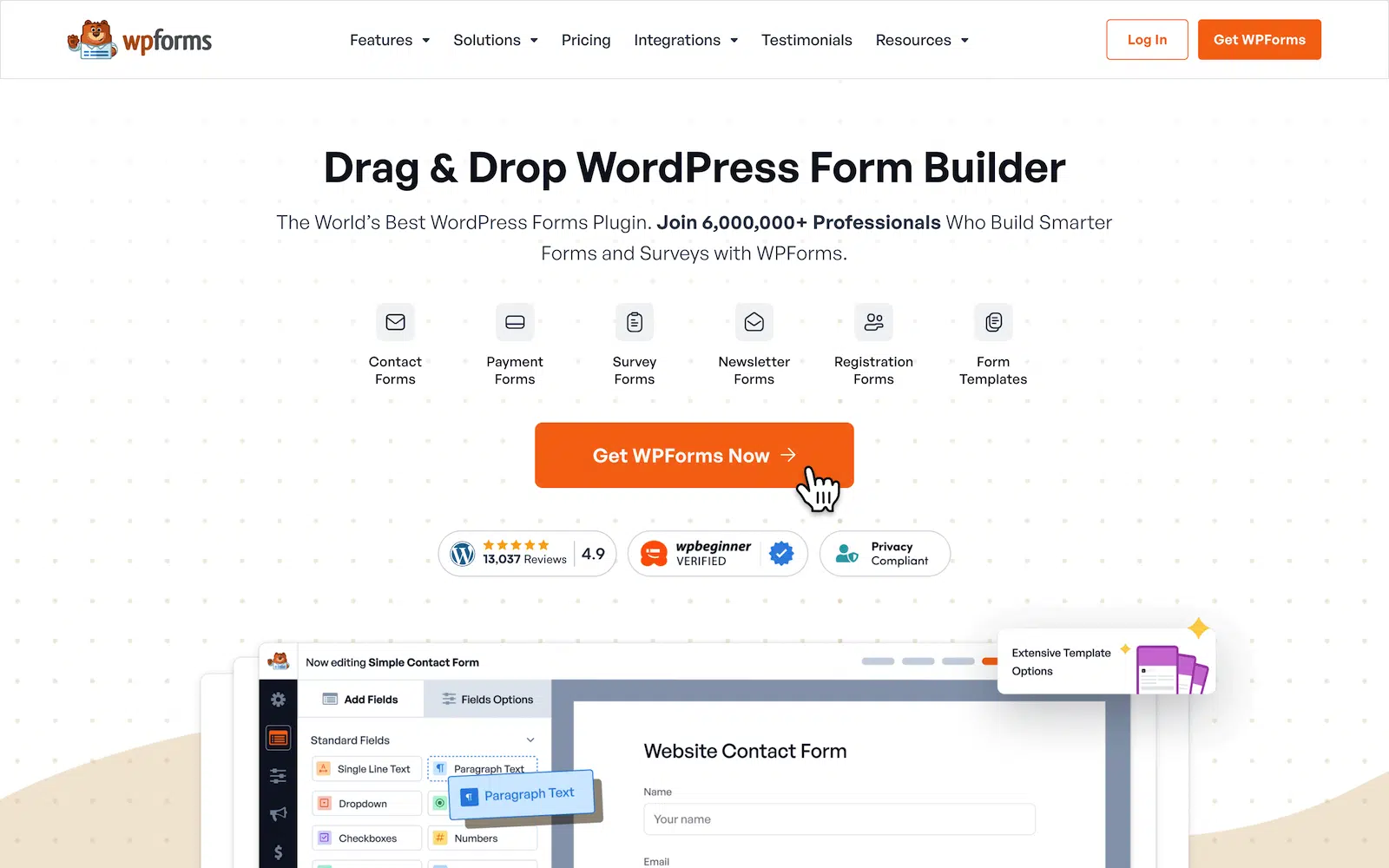
What I like most about WPForms for HR work is that everything stays inside WordPress. Submissions land in your own database, file uploads land on your own server, and you decide who can see any of it.
With a hosted form service you are handing employee addresses and phone numbers to a third party, then hoping their retention policy matches yours.
You’ll need the Pro license to follow every step here, because the access controls in Step 6 come from the Form Locker addon, and the signature, PDF, and Google Sheets features I cover later are Pro as well.
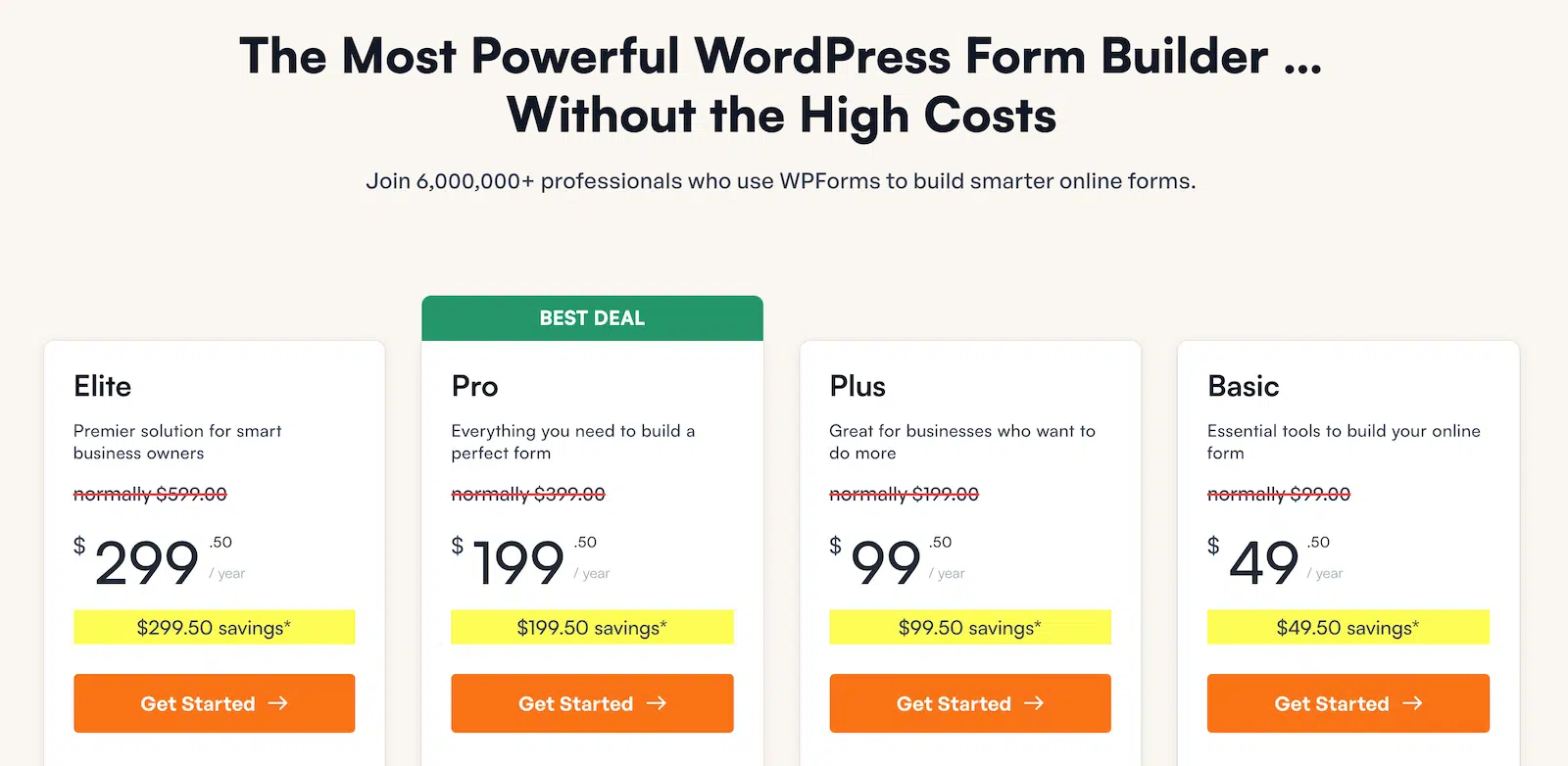
To get started, buy the Pro license. Then, install WPForms on your website. If you need help, follow these instructions on how to add a plugin to WordPress.
Step 2: Create Your Employee Information Form
Once the plugin is active, go to WPForms » Add New and give your form a name. Something plain like “Employee Information” works, since this name is what you’ll be scanning for in your forms list two years from now.
Scroll down to Select a Template and type “employee information form” into the search bar. Several related templates come up, including bio data and personal information variants.
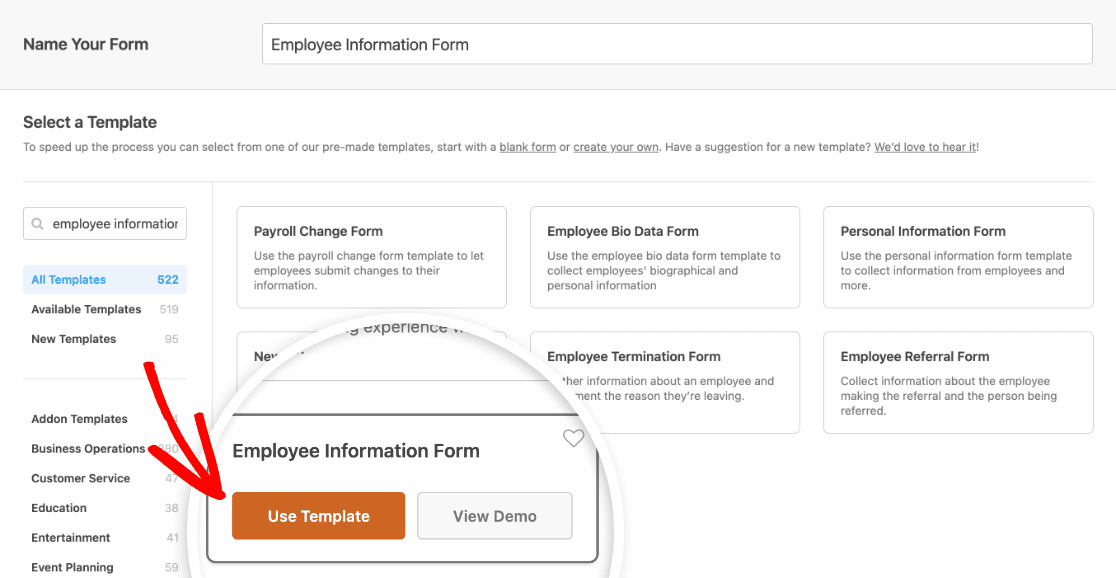
Pick the Employee Information Form template. Most of the work is already done when the template loads.
It arrives with name, email, phone, and address fields, date of birth, job title, supervisor name, department, office phone, start date, and salary, plus a separate emergency contact block asking for a name, phone number, and relationship.
You can preview the employee information form template if you want to see the live version before you commit to it.
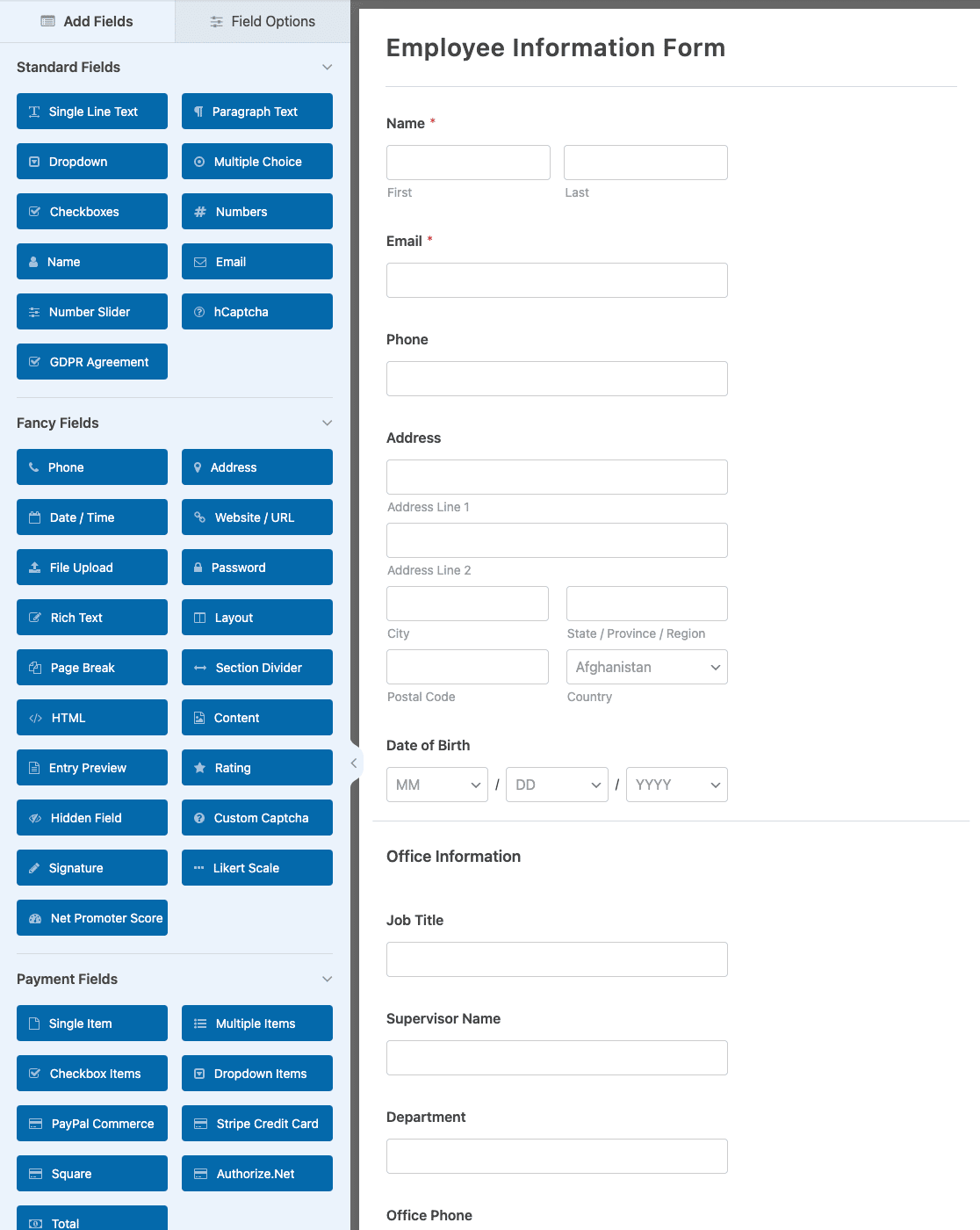
From here, drag any field you want from the left panel into the form on the right, click a field to edit its label and settings, and drag fields up or down to reorder them.
A photo field is the addition I’d make first. If you want people to supply an image for their ID badge or the staff directory, add a File Upload field to the form.
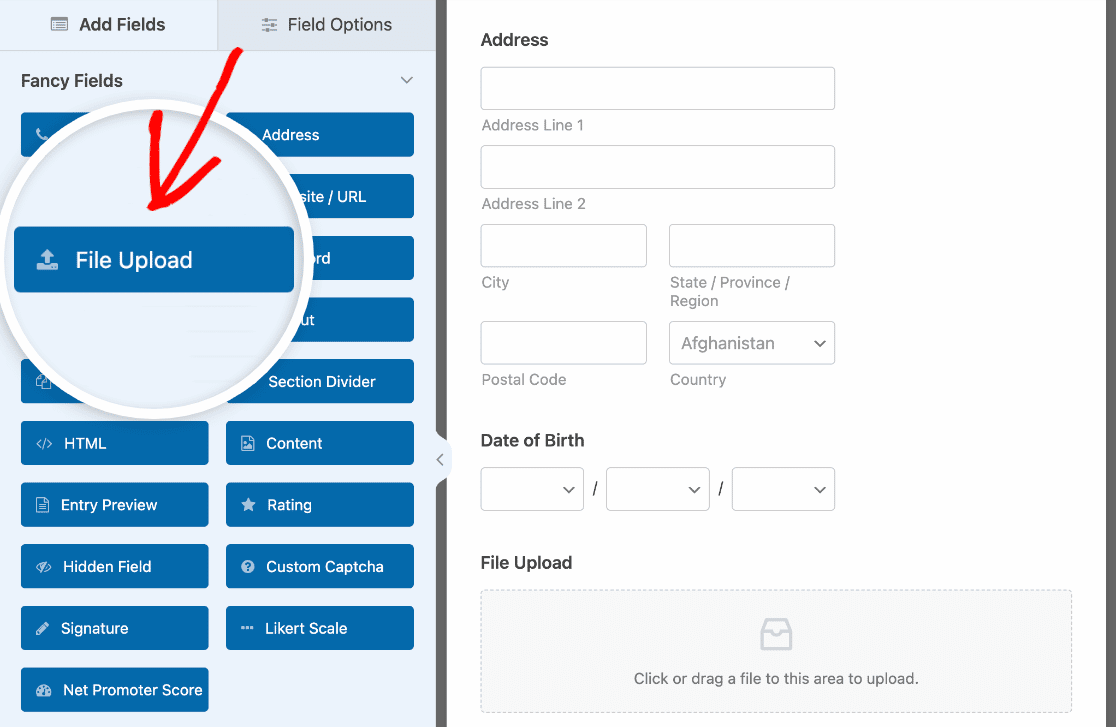
Employees can then either browse for a file or drag one into the dropzone, and they get to pick a photo they actually like rather than sitting for whatever a photographer captured on their first morning.
Toggle on the Required setting so nobody can submit the form without attaching a picture.
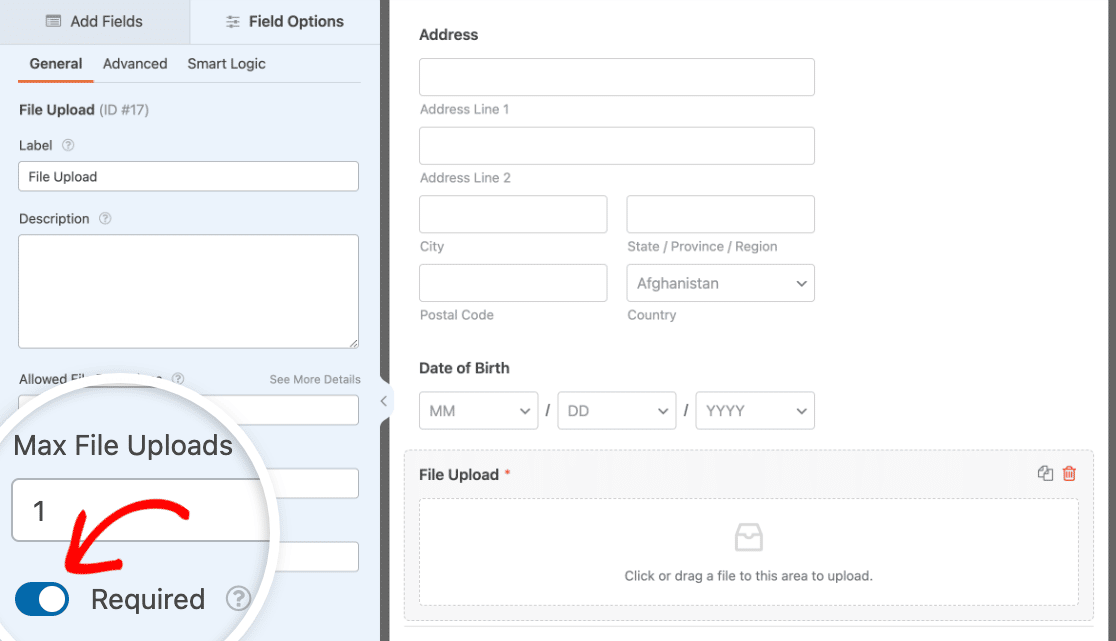
Three other customizations are worth knowing about before you move on:
- The Repeater field lets an employee add several dependents or emergency contacts without you building duplicate fields for each one.
- Page Break fields split a long form into shorter pages with a progress bar, which noticeably helps completion on forms this size.
- And conditional logic shows or hides fields based on earlier answers, so a contractor never sees your benefits questions. I go into each of these in more detail further down.
When the form looks the way you want, click Save.
Step 3: Configure Your Employee Information Form Settings
With the fields in place, open Settings » General to handle the form’s basics.
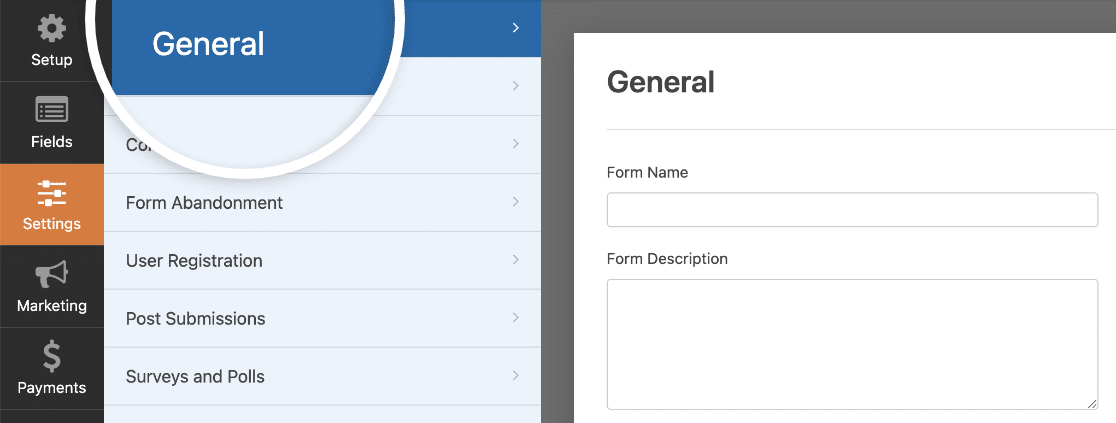
Here you can configure the following:
- Form Name — Change the name of your form here if you’d like.
- Form Description — Give your form a description.
- Tags — Add tags to organize your WordPress forms.
- Submit Button Text — Customize the copy on the submit button.
- Submit Button Processing Text — Chang the text that shows while your form is submitting.
If you expand the Advanced section, you can also:
- Add CSS Classes — Use custom CSS to style your form or submit button.
- Enable Prefill by URL — Automatically fill in some fields using a custom URL.
- Enable AJAX form submission — Enable AJAX settings with no page reload.
- Disable storing entry information in WordPress — You can disable the storing of entry information and user details, such as IP addresses and user agents, in an effort to comply with GDPR requirements. Check out our step-by-step instructions on how to add a GDPR agreement field to your simple contact form.
Once you’re done, move down to the Spam Protection and Security settings.
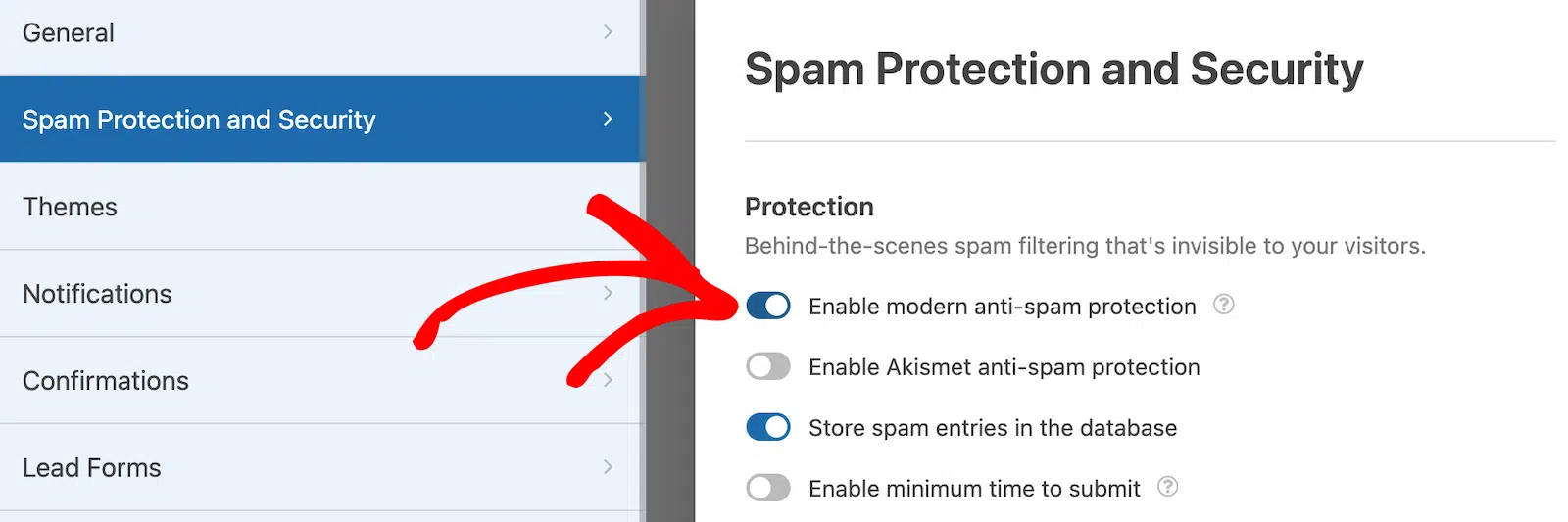
Here you can:
- Enable modern anti-spam protection — Stop contact form spam with WPForms’ built-in anti-spam protection.
- Enable Akismet anti-spam protection — If you use the Akismet anti-spam plugin, you can connect it to your form.
- Enable country filter — Block submissions from certain countries.
- Enable keyword filter — Prevent entries that include specified words or phrases.
You can also set up your preferred CAPTCHA. Check out our complete guide to form spam prevention for more details. Click Save.
Step 4: Set Up Employee Information Form Notifications
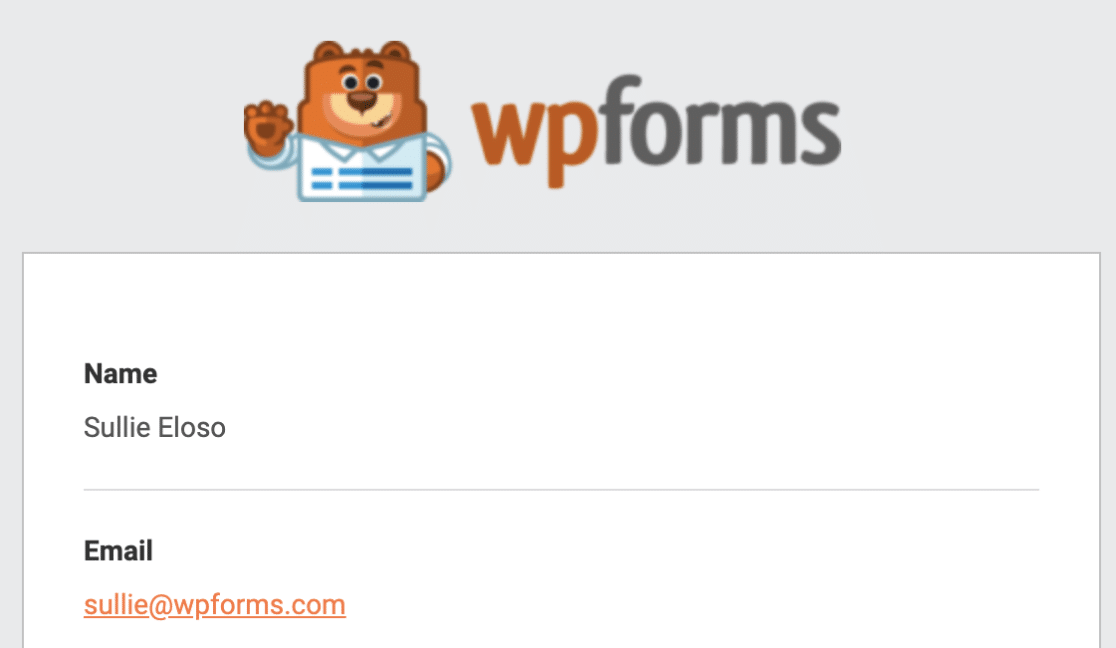
Notifications are a great way to send an email whenever someone submits an employee information form on your website.
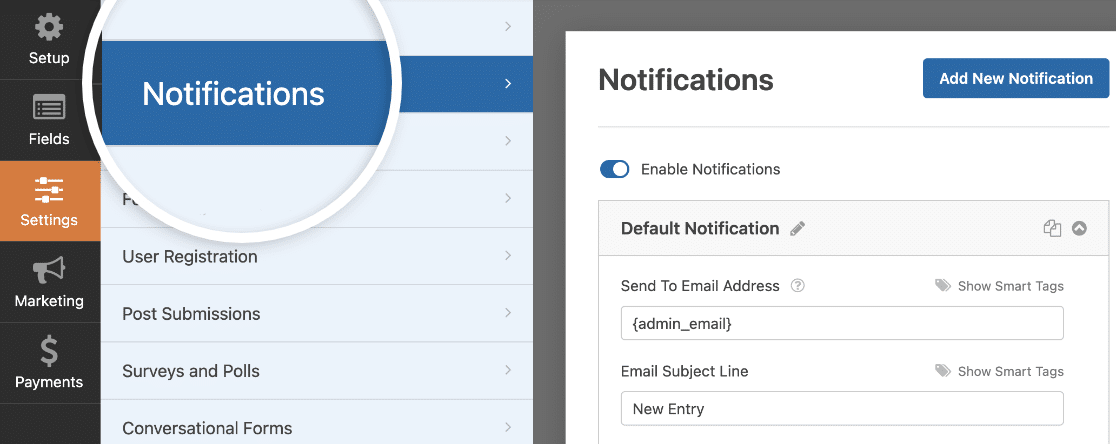
In fact, unless you disable this feature, whenever someone submits a form on your site, you’ll get a notification about it.
If you use Smart Tags, you can also send a notification to your new employee when they fill out your form, letting them know you received it and will be in contact shortly if needed. This assures people their entry has gone through properly.
For help with this step, check out our documentation on how to set up form notifications in WordPress.
You can send more than one notification when a new employee information form is submitted on your site. For instance, you can send a notification to yourself, your employee, and your HR department or other administrator.
For help doing this, check out our step-by-step tutorial on how to send multiple form notifications in WordPress.
Lastly, if you want to keep branding across your emails consistent, you can check out this guide on adding a custom header to your email template.
Step 5: Configure Your Employee Information Form Confirmations
Form confirmations are messages that display to employees once they submit their employee information form on your website.
They let people know that their information has been collected and offer you the chance to let them know what the next steps are. WPForms has three confirmation types:
- Message. This is the default confirmation type in WPForms. When someone submits an employee information form, a simple message confirmation will appear letting them know their form was processed.
- Show Page. This confirmation type will take site visitors to a specific web page on your site thanking them for their form entry. For help doing this, check out our tutorial on redirecting people to a thank you page.
- Go to URL (Redirect). This option is used when you want to send site visitors to a different website.
Let’s see how to set up a simple form confirmation in WPForms so you can customize the message site visitors will see when they fill out an employee information form on your website.
To start, click on the Confirmations tab under Settings. Next, select the type of confirmation type you’d like to create. For this example, we’ll select Message.
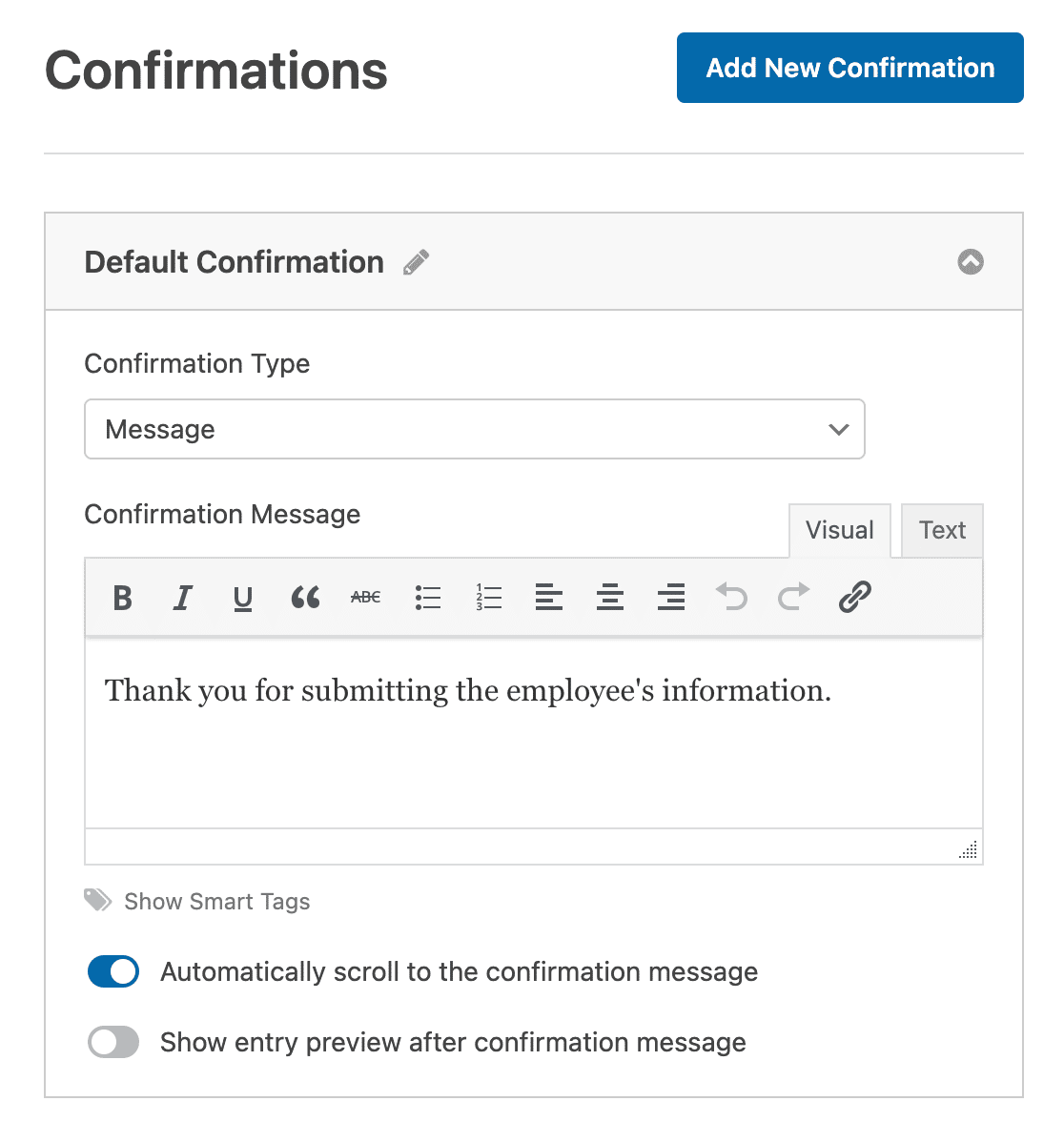
Then, customize the confirmation message to your liking and click Save. If you want to display different confirmations to site visitors based on their behavior, be sure to read up on how to create conditional form confirmations.
Step 6: Restrict Who Can Fill Out Your Form
WPForms comes with a Form Locker addon that gives website owners a way to configure form permissions and access controls. To access these settings, go to Settings » Form Locker.
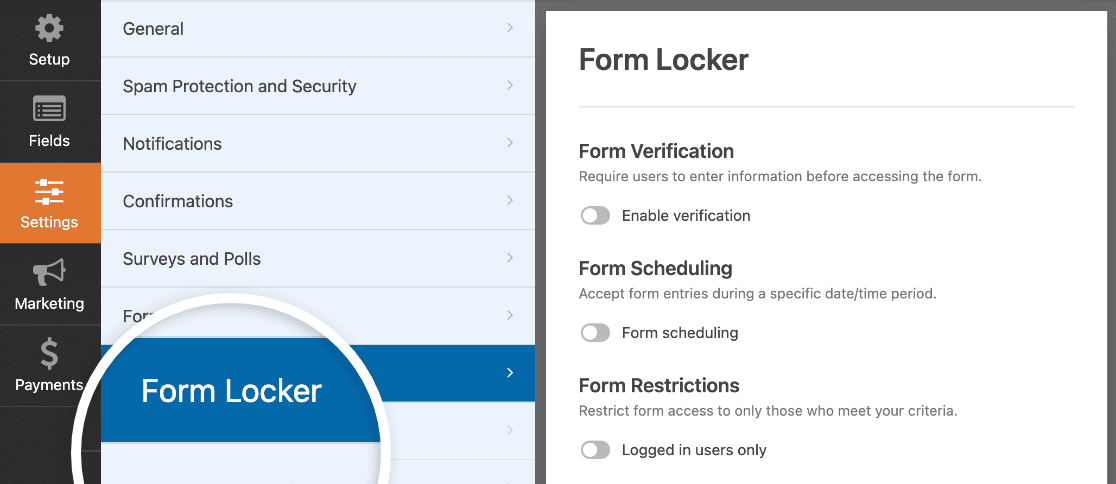
Here, you’ll see 4 different settings:
- Form Verification: Enable password protection so only those with the password, such as your employees, can fill out your form.
- Form Scheduling: Schedule start and end dates for your employee information form.
- Form Restrictions: Allow only those who have logged into your website to submit an employee information form.
- Entry Limits & Restrictions: Limit the number of form entries you’ll accept.
Of course, you won’t necessarily use all of these settings. However, if you’re looking to prevent spam form submissions, requiring employees to have a password to fill out a form or restricting form submissions to those who are logged in help.
Step 7: Add Your Employee Information Form to Your Website
After you’ve created an employee information form, you need to add it to your WordPress website.
WPForms allows you to add your forms to many locations on your website, including your blog posts, pages, and even sidebar widgets.
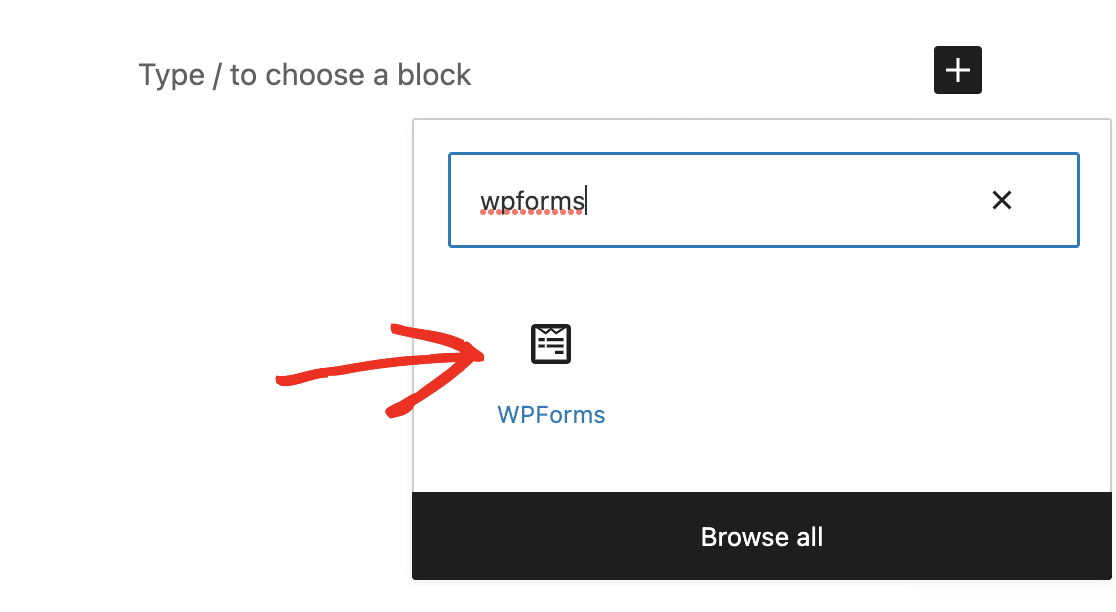
Let’s take a look at the most common post or page embed option. First, create a new page or open an existing one in the editor. Then add a new block and select WPForms.
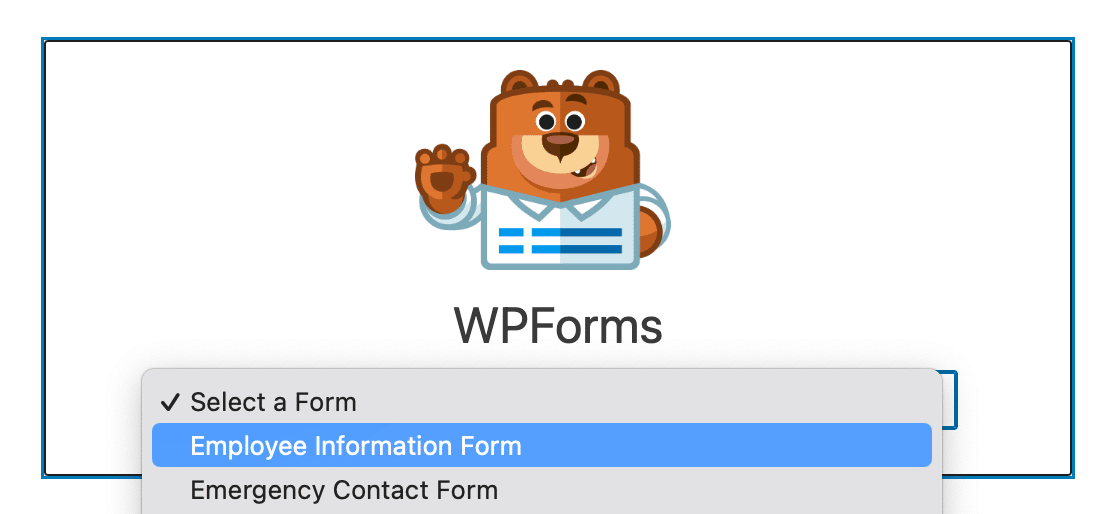
When the WPForms block appears, select your employee information form from the dropdown.
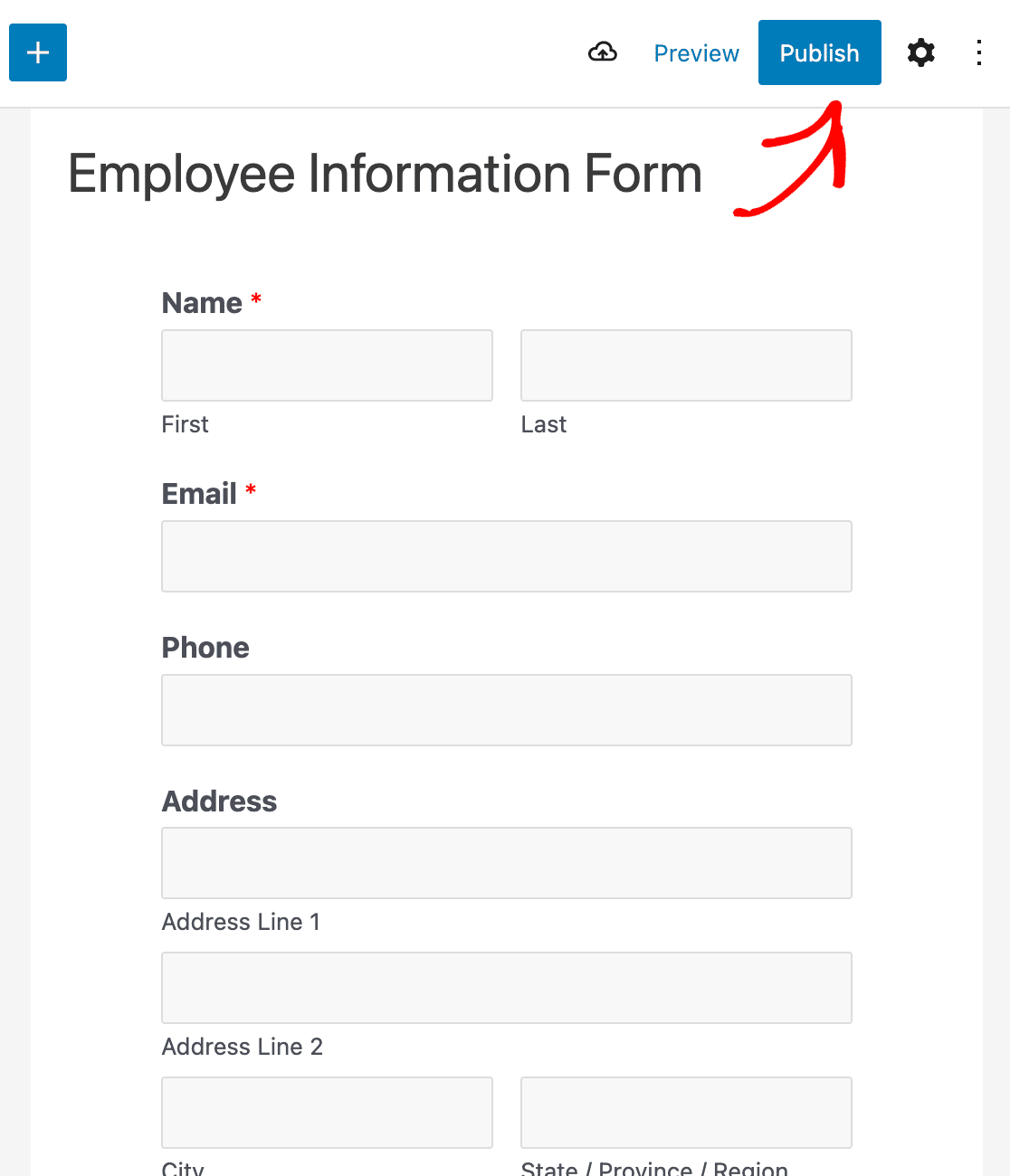
Then, Publish or Update your post or page so your form will appear on your website.
Before you send the link to anyone, open the page in a private browsing window and submit a test entry yourself. Y
ou should see your confirmation message appear, find the notification emails in the inboxes you configured, and see the entry listed under WPForms » Entries.
If you turned on password protection in Step 6, the private window will also confirm the lock is actually working rather than only appearing to.
Fields and Features That Set a WPForms Employee Information Form Apart
Most form builders will get you a working employee information form. What separates them is what happens when your requirements stop being simple, and this is where I think WPForms pulls clearly ahead of the alternatives I’ve compared it against.
Repeater Field for Dependents and Multiple Emergency Contacts
Employees rarely have exactly one of anything, so someone might list two emergency contacts, three dependents for benefits purposes, or two prior job titles within your company.
The usual workaround is building “Emergency Contact 2” and “Emergency Contact 3” field groups and hoping you guessed high enough.
The Repeater field, available from Basic upward, removes the guessing by letting you build the contact block once and mark it repeatable.
The employee then clicks a button to add as many copies as they need, and entries stay grouped so you can tell which phone number belongs to which contact.

Camera Field for ID Badge Photos
Asking for a photo upload works, but it puts the burden on the employee to find a suitable image, get it onto the right device, and attach it.
The Camera field skips all of that by letting them take the photo inside the form on their phone or laptop. It runs a three second countdown, shows them a preview, and lets them retake it until they’re happy.
You can cap the file size, choose whether the image lands in your WordPress Media Library or the WPForms uploads folder, and apply access restrictions to the file afterwards.

Digital Signatures for Policy Acknowledgments
Plenty of employee information forms double as the moment someone confirms they’ve read the handbook or accepted an equipment policy.
Rather than emailing a PDF and chasing a scan back, add a digital signature field and let them sign with a mouse or finger right in the form.
The signature is stored with the entry on a Pro license, so the acknowledgment and the record it relates to stay together.

Save and Resume for Longer Forms
A complete employee information form with dependents, credentials, and acknowledgments is not a two minute job.
If an employee has to stop and dig out a certification number, you’d rather they came back to a saved draft than started over.
Save and Resume, a Pro feature, gives them a link that restores everything they’d entered, and it can email that link to them so they don’t have to keep the tab open.

PDF Records and Google Sheets Sync
The PDF addon generates a styled document from each entry, which gives you a clean per-employee record to file or print without any copy and paste.
The Google Sheets addon takes the other approach and pushes every submission into a spreadsheet as a new row, so your HR sheet updates itself.
Both are Pro features, and between them they cover the two things people usually ask for after their first month of collecting entries.

How to Keep Employee Information Secure
An employee information form collects more sensitive data than almost anything else you’ll build, since home addresses, dates of birth, and sometimes salary figures all sit in one place. For the data itself, you have a few controls worth knowing:
- Ask for a consent acknowledgment: A GDPR agreement field records that the employee understood what you’re collecting and why, which is good practice regardless of whether GDPR applies to you.
- Stop storing what you don’t need: The Disable storing entry information in WordPress setting from Step 3 keeps entries out of your database entirely, so the notification email becomes the only copy.
- Restrict uploaded files: Photos and certification scans can be protected so they aren’t accessible to anyone who guesses the URL.
- Delete on a schedule: The Entry Automation addon runs scheduled exports and deletions, which is the practical way to hold to a retention policy instead of letting entries pile up for years. This is an Elite feature.
I’m not a lawyer and none of this is legal advice. How long you’re required to keep employment records, and what you’re allowed to ask for in the first place, varies by country and often by state, so check your own obligations before you finalize the field list.
FAQs on Creating an Employee Information Form in WordPress
An employee information form in WordPress raises a few recurring questions about storage, access, and licensing. Here are the ones I get asked most often.
What information should an employee information form include?
At minimum, collect the employee’s full legal name, personal email, mobile number, home address, job title, department, supervisor, start date, and an emergency contact with a relationship and phone number.
Date of birth, salary, employment type, and credentials are common additions. Only collect a field if your process genuinely uses it, since each one adds data you’re then responsible for protecting.
Where is employee information stored after someone submits the form?
Entries are saved in your own WordPress database and shown under WPForms » Entries, and uploaded files are stored on your own server.
Nothing goes to a third-party service, which is the main reason I prefer building this form on WordPress rather than using a hosted form tool. You can also disable entry storage entirely if you’d rather the notification email be the only copy.
Can employees update their own information later?
Yes, and the simplest approach is to reuse the same form. Form Scheduling lets you open it for a set window each year for an annual details refresh, and a fresh submission gives you a dated record of what changed rather than overwriting the original.
If you’d rather employees maintained a single ongoing profile, the User Registration addon can create WordPress accounts for them at submission time.
Is it safe to collect employee data through a WordPress form?
It’s as safe as the site it runs on. Use a host with SSL, keep WordPress and your plugins updated, restrict the form to logged-in users or a password, and audit who has administrator access to your site.
The advantage over a hosted form service is that you control the whole chain rather than trusting someone else’s retention and access policies.
Can I create an employee information form with WPForms Lite?
Not usefully, no. Lite doesn’t store entries in your dashboard and doesn’t include the advanced fields this form depends on, like Address, Date, and File Upload.
Basic is the realistic starting point for a working employee information form, and Pro adds the access controls, signatures, and PDF and Google Sheets output covered above.
Next, Build the Rest of Your Onboarding Paperwork
Once your employee information form is collecting cleanly, the natural next job is the paperwork that surrounds it, and I’ve broken down all 10 forms a new hire has to complete, covering tax withholding, eligibility verification, handbook acknowledgments, and equipment sign-off.
If you’re hiring rather than onboarding, the same builder handles the front of the process. Here’s how to create a job application form in WordPress, and you can browse the wider set of HR forms for WordPress if you’d rather start from a template than a blank page.
Build Your Employee Information Form Now
Ready to build your form? Get started today with the easiest WordPress form builder plugin. WPForms Pro includes lots of free templates and offers a 14-day money-back guarantee.
If this article helped you out, please follow us on Facebook and X (Twitter) for more free WordPress tutorials and guides.