



AI Summary
Someone emails you about a trip, you email back asking for dates, they reply without a budget, and a few messages later you still can’t approve anything.
A travel request form solves this by collecting everything up front like the trip details, the reason for travel, and any supporting documents in one place, then routing it to the right person for approval.
In this guide, I’ll walk you through building one in WordPress in just a few minutes with a free template and zero code.
I’ll also show you how to send requests to the right manager and keep track of approvals once they start coming in.
Create Your Travel Request Form Now
What Is a Travel Request Form?
A travel request form is an online form employees use to request approval for a business trip before they book anything.
It gathers the traveler’s details, trip dates, destination, purpose, and estimated costs so a manager or the finance team can review and approve the request in one step.
Instead of loose emails and chat pings, you get a consistent record for every trip, which makes it easier to approve expenses and stay on top of your travel budget.
A good travel request form (sometimes called a travel requisition form or a travel authorization form) usually collects details like:
- Employee name and department
- Manager or approver name
- Reason for travel
- Departure and destination cities
- Departure and return dates
- Travel arrangements needed, like flights, a hotel, or a rental car
- Estimated cost
- Supporting documents, such as a conference invite or a doctor’s note
You’ll want a form builder that lets you add or remove fields easily, so you can match the form to how your company actually handles travel.
How to Make an Online Travel Request Form
Now let’s get into the fun part and actually build the form. I’ll be using the WPForms travel request form template, so most of the setup is already done for you before you even start.
Step 1: Install the WPForms Plugin
The easiest way to make a travel request form in WordPress is with WPForms. It’s the most beginner-friendly form builder plugin, and it comes with 2,100+ WordPress form templates, including a ready-made travel request form template you can customize in minutes.
What I like most about WPForms for a form like this is how much it handles on its own. You get drag-and-drop editing, file uploads for documents, and smart notifications that send each request to the right person.
For this tutorial, I recommend WPForms Pro, since it unlocks the extras that make travel requests genuinely useful, like Google Sheets tracking, digital signatures for approvals, and Save and Resume for longer forms.
To get started, go ahead and buy the WPForms Pro license. Then install WPForms on your site. If you need a hand, follow this step-by-step guide on how to install a plugin in WordPress.
Step 2: Open the Travel Request Form Template
With WPForms installed, you’re ready to create your form. This first step is where you load the travel request template so you’re not starting from a blank page.
To start, go to WPForms » Add New from your WordPress dashboard and give your form a name. Then scroll down to the Select a Template section and type “travel request” into the search bar.
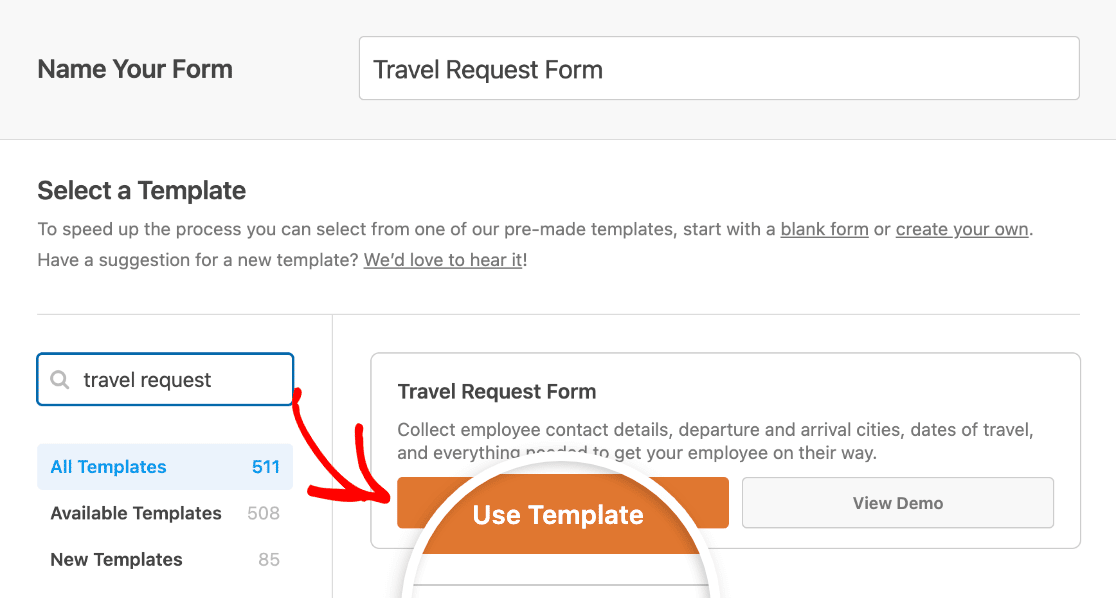
Once the pre-built travel request form template loads, most of the work is already done for you. You’ll see fields for the following:
- Employee Name
- Employee ID
- Manager / Supervisor
- Reason for travel
- Travel arrangements needed (Flight, Hotel, Rental Car, and Other)
- Departure City
- Arrival City
- Departure Date
- Return Date
- Additional Information
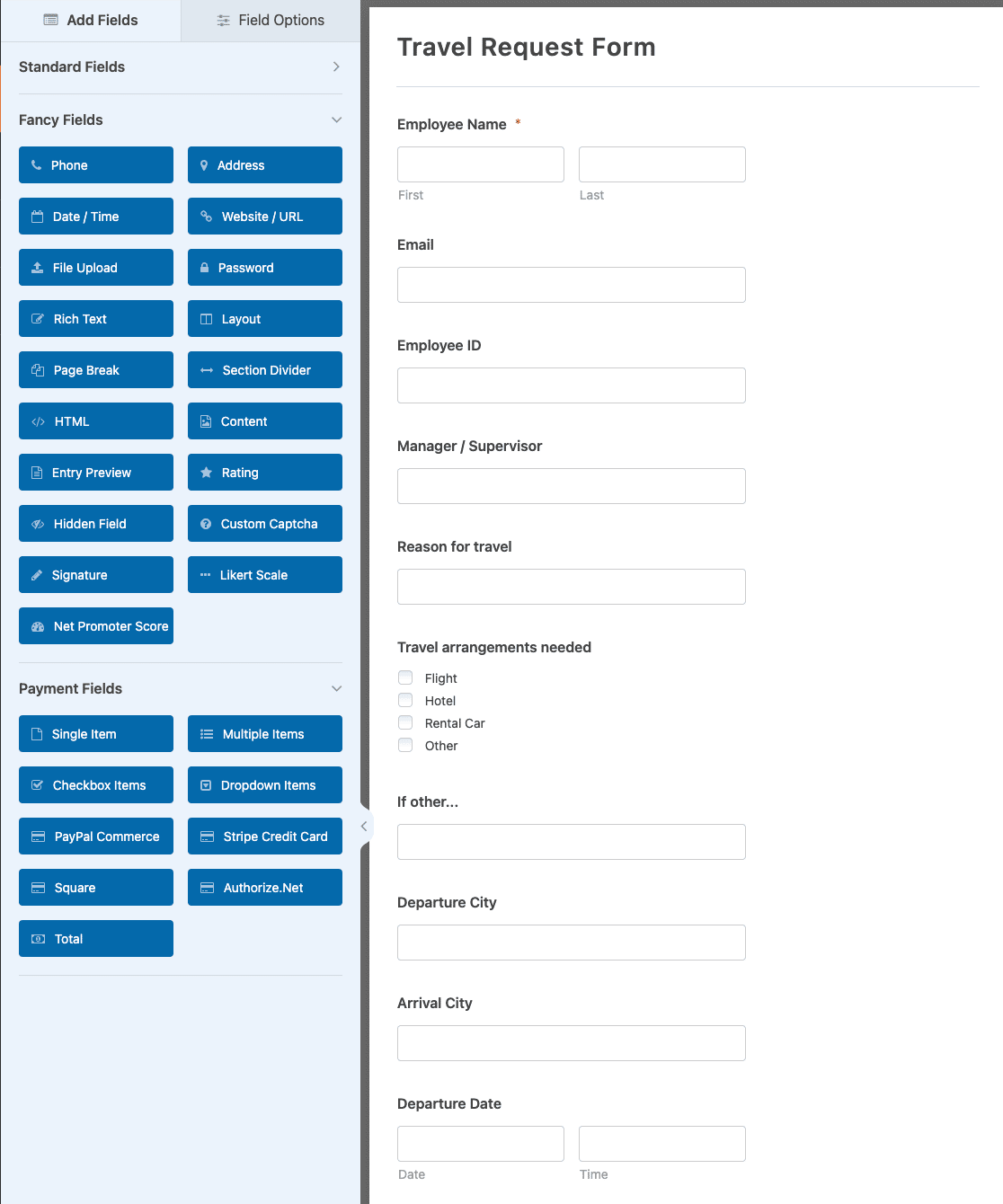
If you’re not sure which fields you actually need, you can describe your form to WPForms AI in plain language and let it build them for you, then adjust from there.
Want to see the finished result first? Our live travel request form demo shows exactly what your visitors will fill out.
Step 3: Add or Customize Fields
The template covers the basics, but every company handles travel a little differently. So go ahead and add, remove, or rearrange fields until the form matches your process.
To add a field, drag it from the left-hand panel onto your form on the right. To edit a field, click on it and change its label, options, or settings. You can also drag any field up or down to reorder it.
Say you want travelers to attach a document, like a conference invitation or a receipt. You can add a File Upload field by dragging it from the Fancy Fields section onto your form, like this:
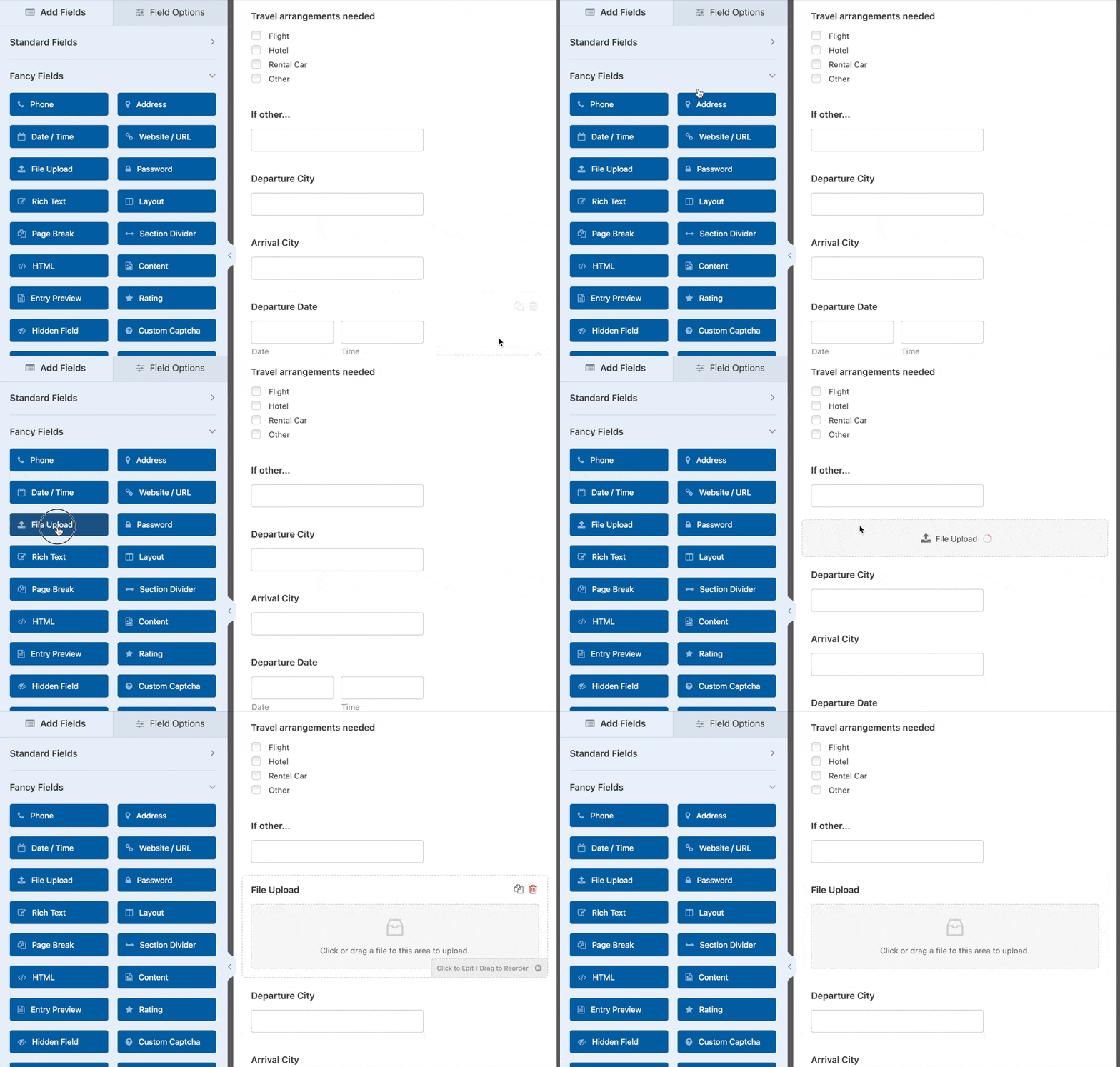
If your team is often on the road, the newer Camera field is handy too, since it lets people snap a photo of a receipt or document right from their phone. When your form looks the way you want, click Save.
Step 4: Configure Your Form Settings
These settings control how your form looks and behaves. To start, go to Settings » General.
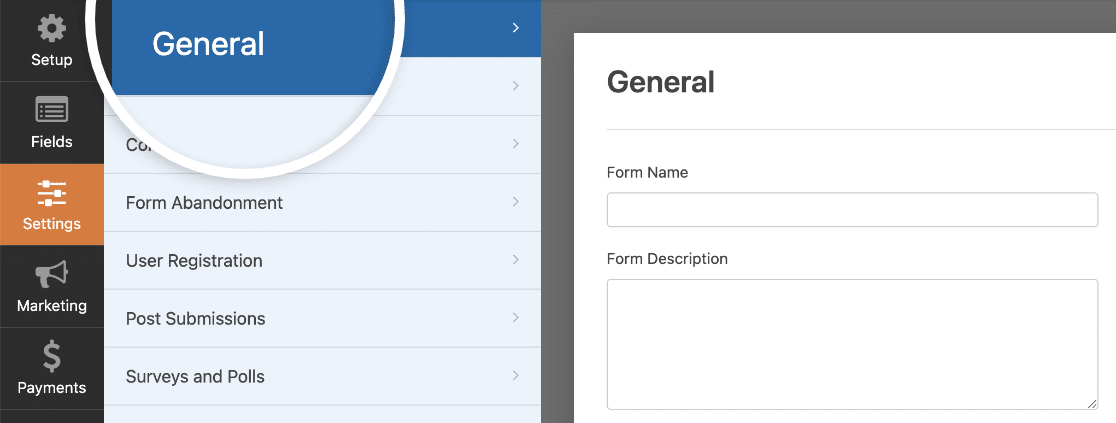
Here you can configure the following:
- Form Name: Change the name of your form here if you’d like.
- Form Description: Give your form a description.
- Tags: Organize your WordPress forms with tags.
- Submit Button Text: Customize the copy on the submit button.
- Submit Button Processing Text: Change the text that shows while your form is submitting.
Under the Advanced section, you can also:
- Add CSS Classes: Style your form or submit button with CSS.
- Enable Prefill by URL: Automatically fill some fields in your form using a custom URL.
- Enable AJAX form submission: Turn on AJAX settings so the form submits with no page reload.
- Disable storing entry information in WordPress: You can stop storing entry information and user details, such as IP addresses and user agents, to help comply with GDPR. Our step-by-step instructions on how to add a GDPR agreement field walk you through it.
After you’re done with the general settings, move on down to the Spam Protection and Security settings.
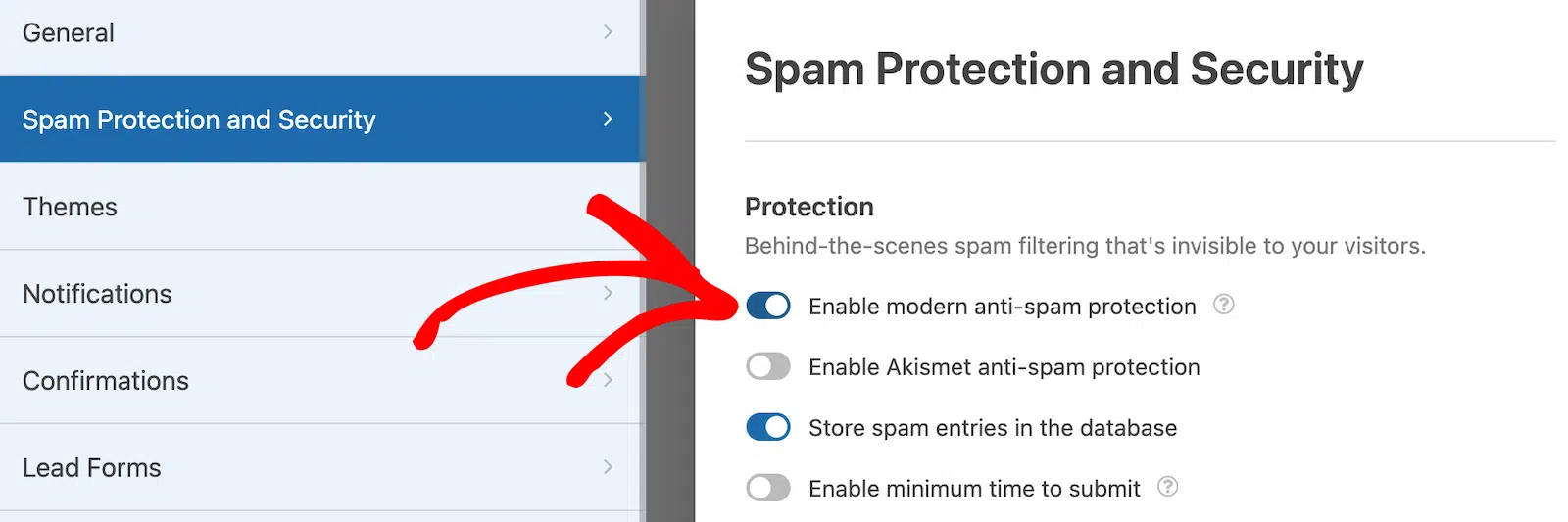
- Enable modern anti-spam protection: Stop contact form spam with WPForms modern anti-spam protection.
- Enable Akismet anti-spam protection: If you use the Akismet plugin, you can connect it to your form.
- Enable country filter: Block submissions from certain countries.
- Enable keyword filter: Prevent entries that include specific words or phrases.
You can also set up your preferred CAPTCHA for extra protection. When you’re happy with these settings, click Save.
Step 5: Set Up Notifications
Notifications are how you make sure a travel request actually reaches the right person. Each time someone submits the form, WPForms can send an email to whoever needs to see it.
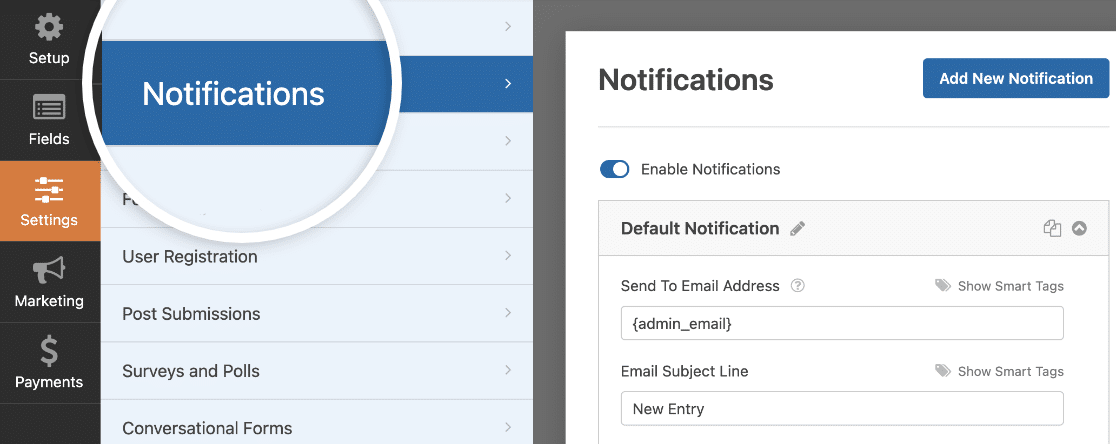
Unless you turn it off, you’ll get a notification every time someone submits the form. That covers you, but the real value for a travel request form is sending more than one notification at once.
For a travel request form, I’d set up a few separate emails so everyone stays in the loop. Send one to yourself or the office admin, one to the traveler’s manager so they can approve the trip, and one to HR or finance so they can start planning the budget.
If you use Smart Tags, you can even send a confirmation to the employee who filled out the form, letting them know their request came through and what happens next.
You can also add the details of your travel approval and reimbursement process right in the notification email, so nobody has to ask how it works.
- For help getting the basics in place, you can see our documentation on how to set up form notifications in WordPress.
- To send those separate emails to different people, follow our step-by-step tutorial on how to send multiple form notifications in WordPress.
- And if you want your emails to match your company branding, here’s how to go about adding a custom header to your email template.
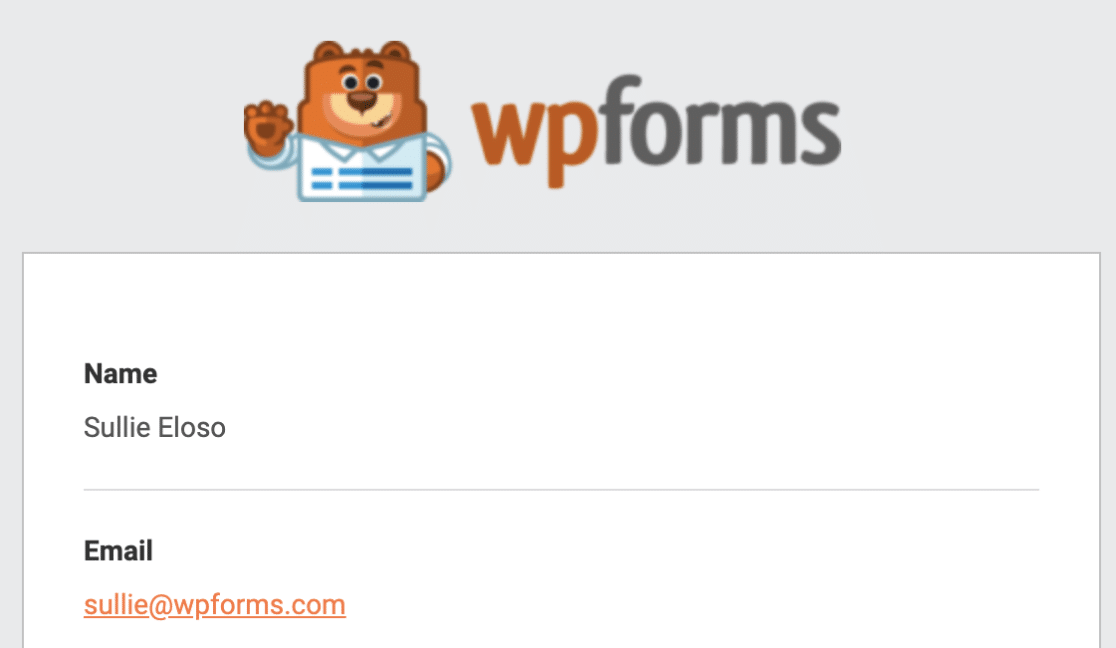
A branded header is a small touch, but it makes the whole request process feel more official to your team.
Step 6: Configure Your Confirmations
Now let’s set up your confirmation, which is the message people see right after they submit the form. It’s your chance to tell them what happens next and set expectations around approval.
WPForms gives you three confirmation types:
- Message: When someone submits the form, a simple message appears letting them know their request was received and is being processed.
- Show Page: This takes the person to a specific page on your site, like a thank you page. For help with that, check out our tutorial on redirecting customers to a thank you page.
- Go to URL (Redirect): Use this when you want to send people to a different website.
For a travel request form, a Message confirmation works well. You can use it to set expectations, like letting people know it takes three business days to hear back about approvals.
To set it up, click the Confirmations tab in the Form Editor under Settings. Then select the confirmation type you want.
For this example, I’m choosing Message and writing something like “Thanks for submitting your travel request! We’ll let you know if it’s approved or denied within three business days.”
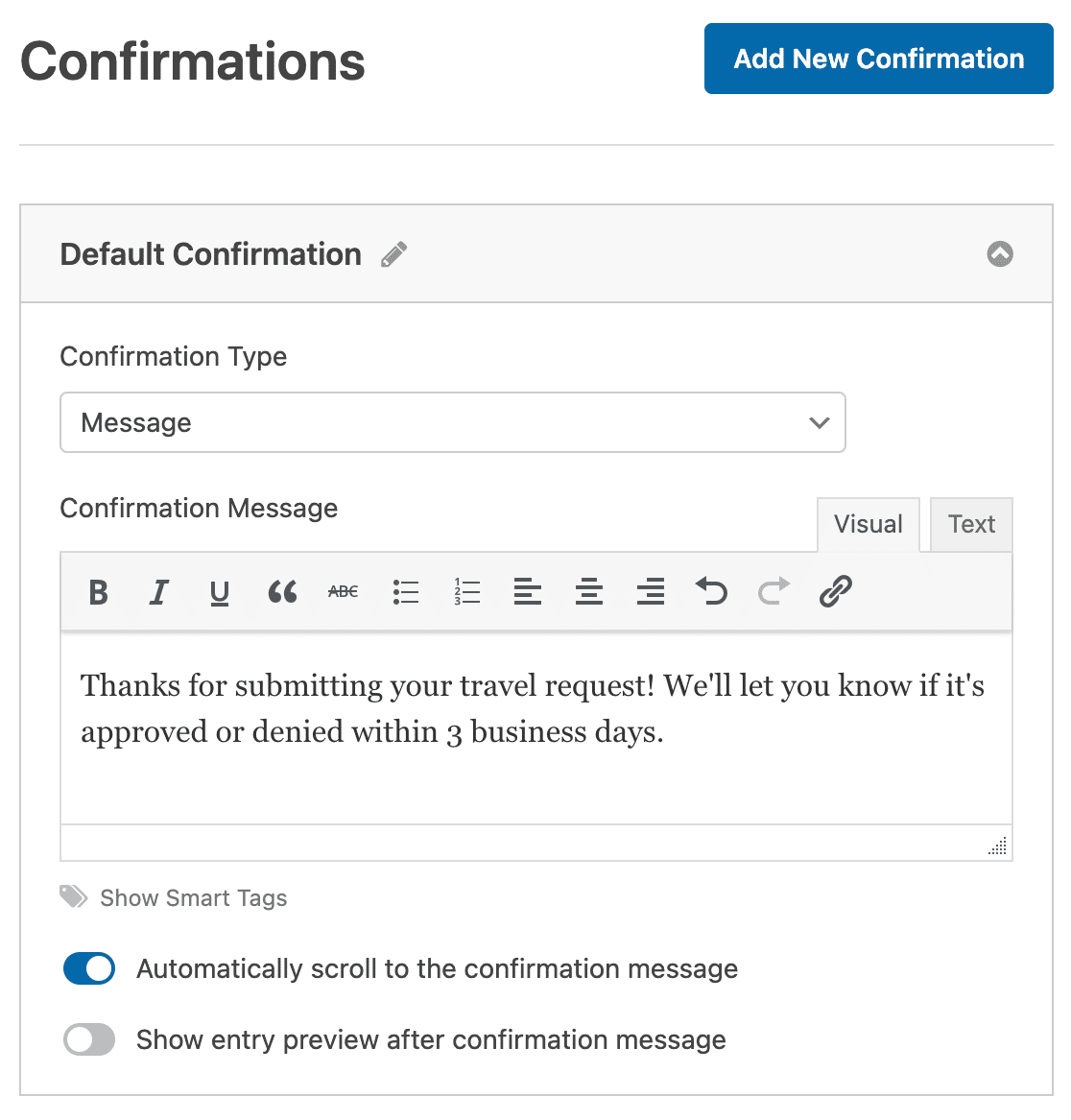
Once you’ve customized the message to your liking, go ahead and click Save. If you’d like more detail, here’s our full guide on how to set up a form confirmation in WPForms.
Step 7: Publish Your Travel Request Form
Your travel request form is built, so all that’s left is to put it on your website. WPForms makes publishing straightforward with its built-in embed tool. Start by clicking the Embed button at the top of the form builder.

When the Embed in a Page window pops up, click Create New Page.

Next, WPForms will ask you to name the page. Type in a title and click Let’s Go!

WPForms will open a new page with your travel request form already in place. Go ahead and click Publish (or Update) at the top to make it live.
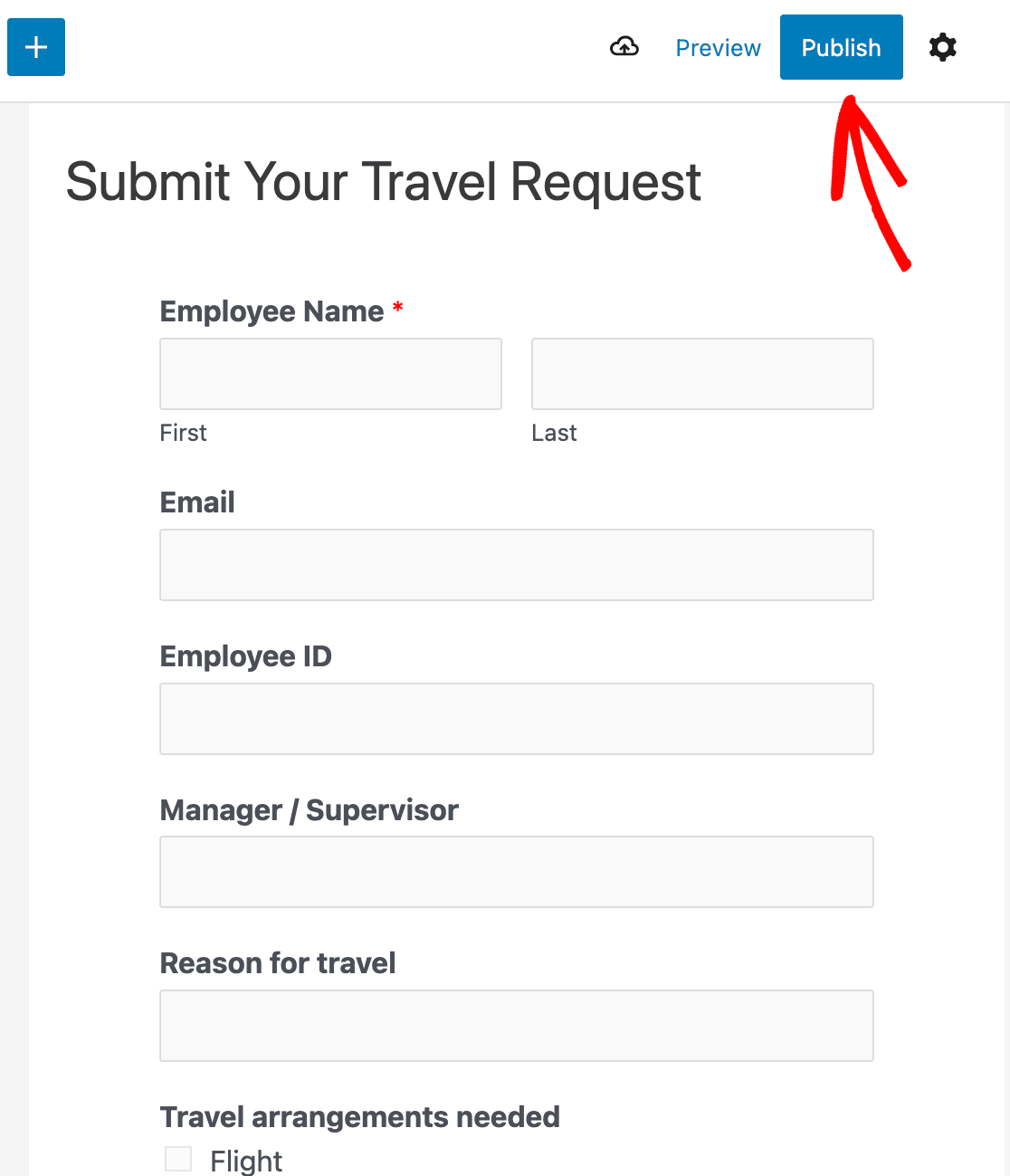
With that published, your employees can now submit travel requests straight from your website, and each one lands in the right inbox automatically.
Automate Your Travel Approval Workflow
A basic form is enough to collect requests, but the real time-saver is what happens after someone hits submit. With a few Pro features, you can turn your travel request form into a proper approval workflow.
The biggest time-saver is sending every request to a spreadsheet automatically. The Google Sheets addon adds each new submission to a Google Sheet, so you and your finance team keep a running log of every trip.
If your approvals need a formal sign-off, you can collect a digital signature right on the form, so a manager can approve a trip from any device without printing anything.
You can also review requests without leaving WordPress. Every submission is saved under WPForms » Entries, where you can search, star, and mark requests as handled.

Add conditional logic on top and the form can route itself, sending international trips to one approver and local ones to another.
These extras are optional, but together they turn a simple form into a system your whole team can rely on.
FAQs About Travel Request Forms
Travel request forms come up a lot for HR teams and small business owners. Here are answers to some of the most common questions about creating a travel request form, travel requisition form, or travel authorization form in WordPress.
What is a travel request form?
A travel request form is an online form employees fill out to request approval for a business trip. It collects the trip details, dates, destination, purpose, and estimated cost so a manager or finance team can review and approve the request before anything is booked.
What should be included in a travel request form?
At a minimum, include the employee’s name and department, their manager or approver, the reason for travel, the departure and destination cities, the travel dates, the arrangements needed like flights or a hotel, and the estimated cost. Adding a file upload field for supporting documents, such as a conference invite or receipts, is a helpful extra.
How do I create an online travel request form in WordPress?
Install WPForms, open the travel request form template, customize the fields to fit your process, set up your notifications, and embed the form on a page. The whole thing takes just a few minutes because the template does most of the setup for you.
What is the difference between a travel request form and a travel authorization form?
They’re often used to mean the same thing. A travel request form is usually the initial ask from the employee, while a travel authorization form is the approved version that confirms the trip and its budget have the green light. In practice, one form with an approval step can cover both.
Next, Build the Rest of Your Team’s Forms
Once your travel request form is live, you can use the same drag-and-drop builder for other internal requests, like a time off request form for vacation and sick days.
WPForms Pro is the easiest way to get professional forms on your WordPress site without hiring a developer. Along with the free travel request template, it gives you the features that make internal forms genuinely useful:
- Conversational Forms that ask one question at a time to boost completions
- A File Upload field so people can attach documents and receipts
- The User Journey tool that shows you what someone did on your site before submitting
- The option to create a multi-page form for longer requests
- Built-in connections to the most popular email marketing services
- Priority support from a friendly, knowledgeable team
Hiring soon? Take a look at our guide on how to create a job application form in WordPress to widen your candidate pool.
Create Your Travel Request Form Now
Ready to build your form? Get started today with the easiest WordPress form builder plugin. WPForms Pro includes lots of free templates and offers a 14-day money-back guarantee.
If this article helped you out, please follow us on Facebook and X (Twitter) for more free WordPress tutorials and guides.