



AI Summary
If you have a portfolio, a product catalog, or a pile of event photos to show off, a long wall of stacked images isn’t the answer.
An image slider lets you put all of that into one tidy, swipeable space, so visitors see more of your best content without endless scrolling.
The catch is that sliders have a reputation for slowing sites down. A poorly built one adds bloat, hurts your loading times, and can drag down your Core Web Vitals scores.
So the goal isn’t only to find a slider that looks good. You want one that stays fast, works on phones, and is simple enough to set up without writing code.
What Is a WordPress Image Slider Plugin?
A slider plugin turns one slot on your page into a rotating display, so visitors swipe or click through the images, or you set the slider to advance on its own while they read.
The same tool goes by several names, so you’ll see it called a slideshow plugin, an image carousel, a photo slider or a picture slider.
Most of the plugins below use two or three of those labels on their own sales pages. Several also handle video, WooCommerce products and post content in the same slider.
One distinction is worth keeping straight, because plenty of people searching for a slider actually want a gallery. A slider shows your photos in sequence, one or two at a time, inside a fixed frame.
An image gallery lays all of them out at once in a grid, which suits a portfolio where visitors want to scan everything quickly rather than wait for slides.
How to Choose a WordPress Image Slider Plugin
A few things matter more than the rest when you’re choosing one.
- Ease of use: A drag-and-drop builder lets you build a slider even if you’ve never touched code.
- Design options: Ready-made templates and real customization matter, so the slider fits your brand instead of fighting it.
- Speed: A badly coded slider can slow your whole page down, so pick one built for performance.
- Mobile handling: A responsive slider has to look right on phones and tablets without cropping your images awkwardly.
Speed is the criterion that deserves more attention than it usually gets in these roundups. A slider normally sits near the top of a page, so it competes with everything else your visitor is waiting for.
Most of the damage comes from the images rather than the plugin, and a slider holding five untouched camera exports will drag a page down whichever tool loads it.
- So compress every image before you upload it, and size it to the space the slider actually fills rather than the full width of your monitor.
- Keep the slide count low, because every extra slide is another file to fetch. Then check the result with PageSpeed Insights on a page that has the slider on it.
- Lazy loading is the one feature worth looking for by name. It shows your first slide immediately and pulls the rest in behind it. That stops the page waiting on images nobody’s scrolled down to yet.
Most of these plugins ship a block, a shortcode and a widget, so you can place a slider in a page, a post or a sidebar widget area.
If you’d rather the images came from your visitors than your own media library, you can let people submit their own photos through a form and feed the approved ones into the slider.
The 7 Best WordPress Image Slider Plugins
Every plugin here can build a responsive image slider, but they solve slightly different problems. Use the table above to find the closest match for you, then jump to the full review below for the details.
| Plugin | Best for | Free version | Starting price | WordPress.org rating |
|---|---|---|---|---|
| Soliloquy | A dedicated, beginner-friendly slider that stays light | Yes | $19.50/year | 4.7/5 |
| Smash Balloon | Sliders that auto-update from social media | Yes | $49/year | 4.9/5 |
| SeedProd | A slider built into a full page and theme builder | Yes | $39.50/year | 4.9/5 |
| MetaSlider | A free, lightweight slider | Yes | $39.50/year | 4.6/5 |
| Smart Slider 3 | Advanced design and animation control | Yes | $49 one-time | 4.9/5 |
| Slider Revolution | Designers who need big visual effects | No | From $3.75/month | Not on WordPress.org |
| Master Slider | Simple, touch-friendly sliders at no cost | Yes | Free | 4.6/5 |
1. Soliloquy
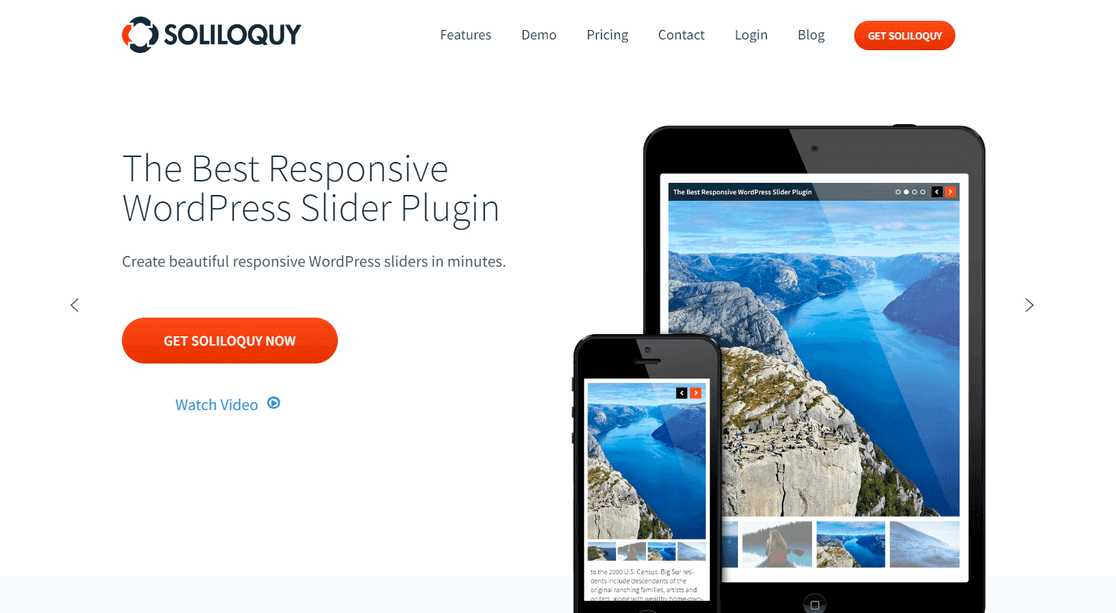
Soliloquy is my top pick if you want a slider that’s built for one job and does it without slowing you down.
What stands out is the drag-and-drop builder, where you upload your photos, drag them into the order you want, pick a ready-made template, and end up with a working slider without leaving your editor.
There’s no fiddly setup, which is the whole point of a dedicated slider plugin. Beyond basic photo sliders, you can create video sliders, WooCommerce product sliders, dynamic sliders that pull from your recent posts or Instagram, and lightbox sliders for a lightbox popup effect.
What matters most for performance is how it loads, showing your first slide right away and pulling in the rest in the background, so a slider full of high-resolution images doesn’t block the rest of your page.

Feature Breakdown
- Drag-and-drop builder: Build a slider in minutes with ready-made themes, no code needed.
- More than photos: Create video, WooCommerce product, featured content, and PDF sliders.
- Dynamic sliders: Automatically pull images from your recent posts, testimonials, or Instagram.
- Performance focus: Loads the cover slide first and the rest in the background to protect your speed.
- Image protection: Disable right-click downloads to stop people grabbing your photos.
Pricing: There’s a free version, Soliloquy Lite, on WordPress.org. Paid plans start at $19.50 per year for a single site.
2. Smash Balloon

Smash Balloon earns its spot for one specific job, which is turning your social media content into sliding carousels that update on their own.
Its Instagram Feed plugin is one of the most popular plugins on WordPress.org, so it’s well proven for pulling feeds into your site.
Instead of uploading images by hand, you connect a social account and Smash Balloon pulls the latest posts into a carousel automatically.
It offers separate plugins for Instagram, Facebook, Twitter, YouTube, and TikTok, plus a Social Wall plugin that combines content from every platform into one sliding feed.
Setup takes about a minute, and the feeds are fully customizable, so a carousel can blend into your design instead of looking bolted on.
You can also display likes, shares, and comments to add social proof, and the built-in caching keeps your feed showing even if a social platform has an outage.

Feature Breakdown
- Auto-updating sliders: New social posts appear in your carousel without any manual work.
- Shoppable feeds: Link Instagram sliders to specific product pages.
- Custom layouts: Match the feed to your brand with plenty of design controls.
- Fast and SEO-friendly: Responsive carousels that load quickly.
- Backup caching: Your feed stays up even if social media goes down.
Pricing: Each plugin has a free version on WordPress.org. Pro plans start at $49 per year for a single plugin, and the All Access Bundle with every plugin is $209.30 per year for unlimited sites.
3. SeedProd
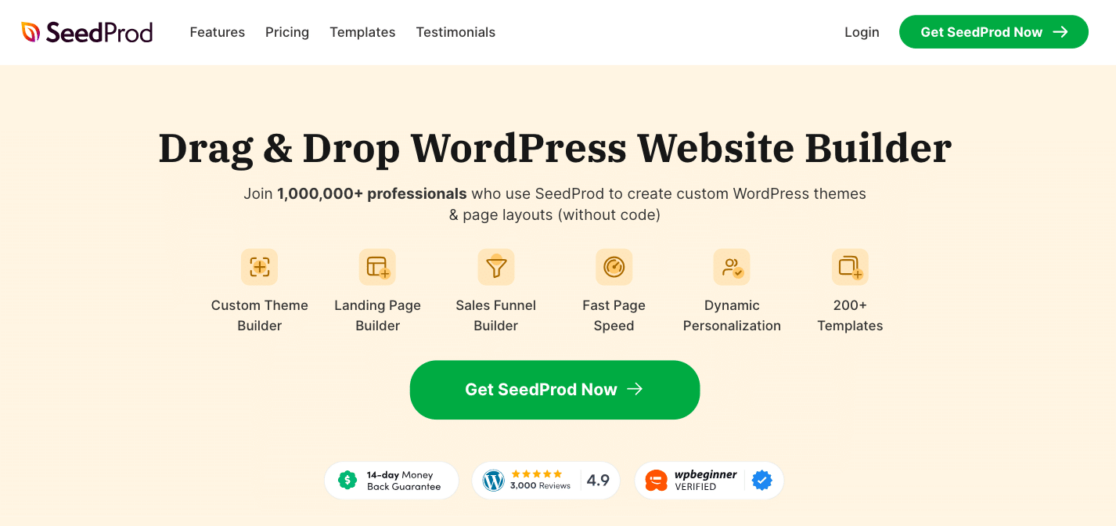
SeedProd is the best drag-and-drop page builder for WordPress, and it makes this list because image sliders are built right in.
It’s worth considering when you want a slider as part of a bigger website project rather than a standalone tool. With SeedProd, you can build landing pages, create custom WordPress themes, and design full page layouts without code.
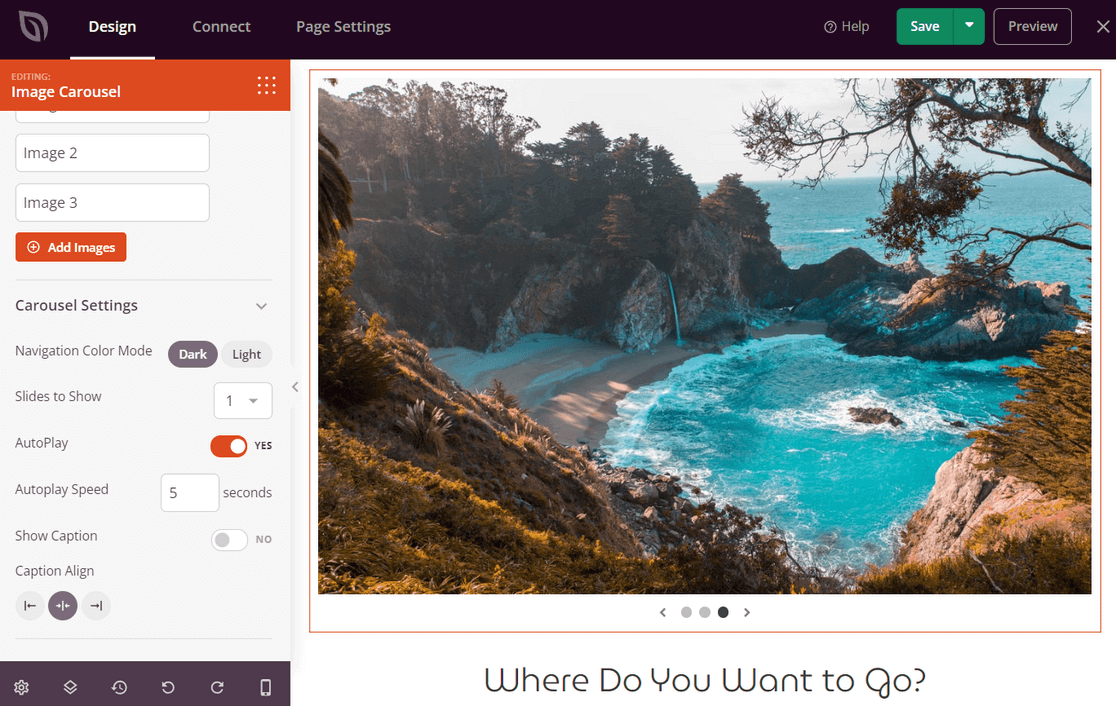
Adding a slider is as simple as dragging the Image Carousel block onto your page, then setting options like autoplay speed, captions, light or dark mode, and borders.
Because it’s a full builder with 90+ pro blocks, you get a lot more than sliders. You can add countdown timers, optin forms, advanced galleries, and testimonials on the same page, then preview how everything looks on mobile before you publish.
Feature Breakdown
- Slider plus builder: Add a carousel inside a full page and theme builder.
- 300+ templates: Start from a professionally designed layout and customize by pointing and clicking.
- 90+ pro blocks: Build out the rest of your page with timers, forms, and galleries.
- Live mobile preview: Check how your slider looks on every screen size before publishing.
- Speed-minded: Responsive, SEO-friendly output designed to load quickly.
Pricing: SeedProd Lite is free on WordPress.org. Paid plans start at $39.50 per year for the Basic plan, which renews at $79.
4. MetaSlider
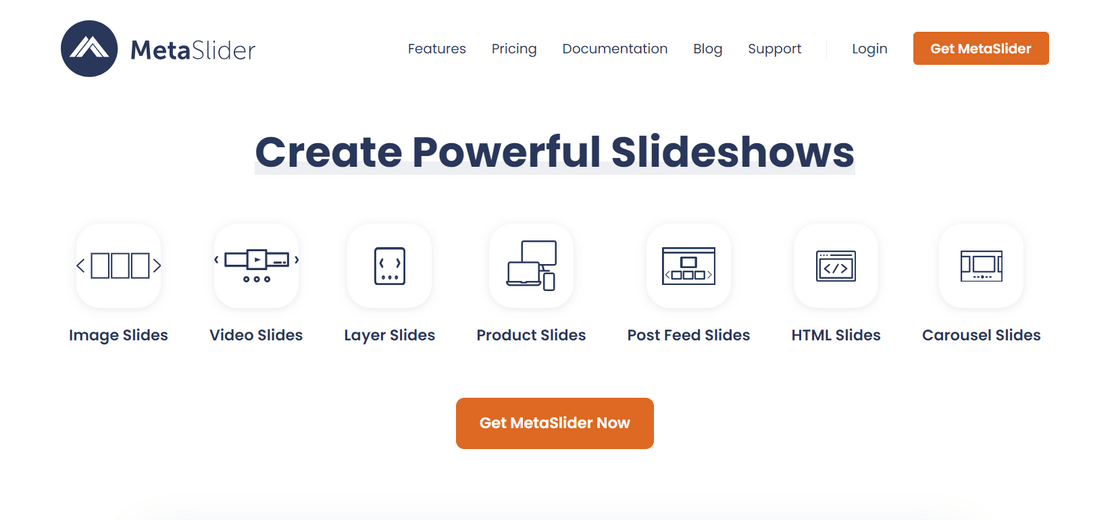
MetaSlider is the one I’d point most people to if they want a capable slider without paying anything. It’s trusted by big names like NASA, Harvard, and Vimeo, and it has a strong reputation as one of the lightest sliders you can run, which is exactly what you want if speed is your priority.
The drag-and-drop builder handles image sliders, video slideshows, product slideshows, post sliders, carousel sliders, and layer sliders. It works directly inside the Gutenberg block editor, so embedding a slider into a page or post is straightforward.
You also get multiple slideshow themes and a live theme editor that lets you build and preview your own designs in real time. Smart cropping keeps your slides sized correctly, and it connects with popular plugins like WooCommerce, The Events Calendar, and WPML.
Feature Breakdown
- Lightweight and fast: A favorite in slider speed comparisons, with a low impact on load times.
- Works in Gutenberg: Embed sliders without leaving the block editor.
- Live theme editor: Build custom slideshow designs and preview them instantly.
- Smart cropping: Keeps slides correctly sized for a clean look.
- Plugin integrations: Connects with WooCommerce, The Events Calendar, and WPML.
Pricing: There’s a free version on WordPress.org. MetaSlider Pro starts at $39.50 per year for one site, which renews at $79, with 5-site and unlimited plans available.
5. Smart Slider 3

Smart Slider 3 is the pick for anyone who wants serious design control over their sliders. It’s an all-in-one builder for sliders, carousels, and dynamic content presentations, with a depth of options the simpler tools don’t match.
It comes with a large library of slide templates organized by category, like content, media, team, testimonials, and product.
You customize slides in the editor and watch your changes update in real time, which keeps the design process quick even with complex layouts.
The trade-off is that all those options can feel like a lot at first. You can add layer animations, background animations, 3D parallax effects, animated shape dividers, and slider actions.
So, there’s a learning curve if you want to use the advanced features, but you can also build dynamic sliders from WordPress posts, WooCommerce, YouTube, and other sources.
Feature Breakdown
- 500+ slide templates: A large starting library with a drag-and-drop slide editor.
- Advanced animations: Layer effects, 3D parallax, and animated dividers for standout sliders.
- Real-time editing: See your changes as you make them.
- Dynamic sources: Pull slides from posts, WooCommerce, YouTube, and more.
- One-time pricing: Pay once for lifetime updates instead of an annual fee.
Pricing: The free version covers unlimited sites. The Standard plan is a one-time $49 for one site, and Premium is a one-time $99 for three or more sites, both with lifetime updates and support.
6. Slider Revolution
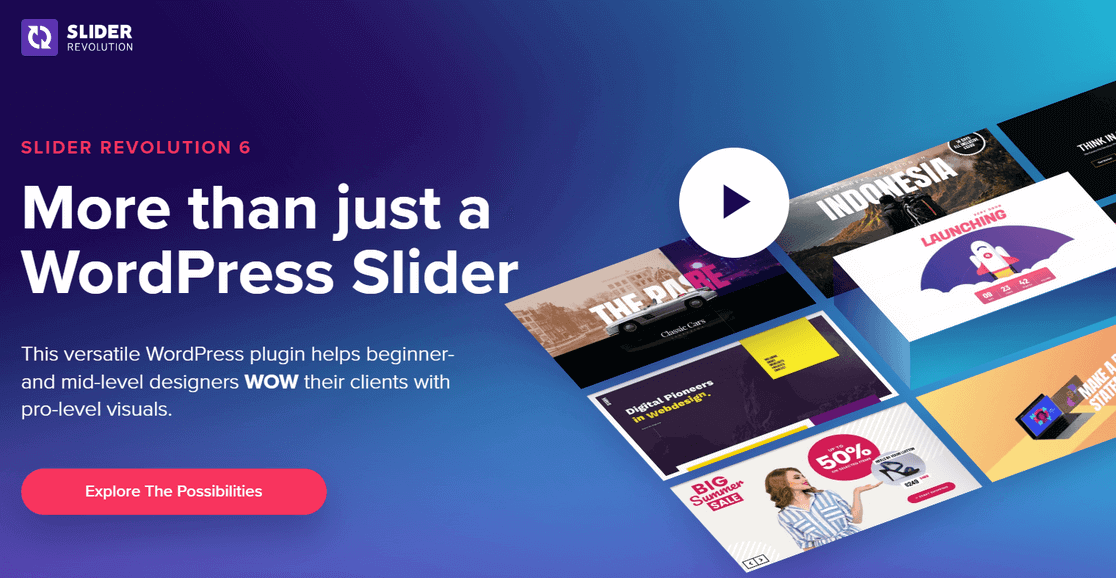
Slider Revolution is a best-selling slider plugin aimed at professional designers and developers. It’s less of a simple slider tool and more of a full visual editor for building high-end sliders and complete page sections with any type of media.
It ships with 200+ ready-made templates and 20+ addons for special effects like before-and-after sliders, particles, distortion, and reveal animations. There’s also an object library with background images and font icons to speed up the design work.
The honest downside is the learning curve, because the editor doesn’t look like the familiar WordPress interface and beginners often find it harder to navigate than the other plugins on this list. If you’re comfortable with design tools and want maximum creative freedom, that power is the appeal. If you just need a quick photo slider, it’s more than you need.
Feature Breakdown
- Advanced effects: 20+ addons for particles, distortion, reveal, and before-and-after sliders.
- 200+ templates: A big head start for complex designs.
- Design library: Built-in stock images, videos, and font icons.
- Full page sections: Build more than sliders, including entire page layouts.
Pricing: Slider Revolution is premium only, with licenses starting at $3.75 per month. There’s no free version, though it’s sometimes bundled with WordPress themes.
7. Master Slider

Master Slider rounds out the list as a free option for simple, touch-friendly sliders. It’s a reasonable starting point if your needs are basic and your budget is zero.
Using the drag-and-drop functionality, you can create sliders with loop and linear sliding, interactive transitions, customized thumbnails, and vertical or horizontal navigation. It’s built with touch swipe in mind, so it feels natural on mobile devices.
It also comes with WordPress blocks and shortcodes, so you can drop a slider into any page, post, sidebar, or widget area. It won’t match the depth of the paid tools above, but for a straightforward image slider it covers the basics.
Feature Breakdown
- Free to use: A no-cost slider with a friendly drag-and-drop interface.
- Touch-friendly: Designed for swipe navigation on mobile.
- Multiple skins: Several designs to give your sliders a modern look.
- Performance features: Cache boosting and smart memory management to help with speed.
Pricing: Master Slider is free on WordPress.org. There’s also a premium version with more skins and features available separately.
Which WordPress Image Slider Plugin Should You Use?
Soliloquy is my pick for most people reading this since it does one job well and the builder is quick to learn. It also loads the first slide before the rest, so a heavy slider won’t hold up your page. After that it comes down to what else you expect the plugin to do for you:
MetaSlider suits you if you want something free and light with a long track record behind it. Smash Balloon is the answer when the slides should refresh themselves from Instagram or Facebook instead of sitting static.
SeedProd makes sense if you’re redesigning pages anyway and would rather keep the slider inside the builder you’re already using. And both Smart Slider 3 and Slider Revolution give you layer animations and control over every transition, and both expect you to spend an afternoon learning the editor first.
They’re aimed at a different reader than the rest of this list. Master Slider covers the simple case at no cost, though MetaSlider will take you further for the same money.
FAQs About WordPress Image Slider Plugins
At WPForms, we get a lot of questions about WordPress plugins, and image sliders are no exception. Here are answers to the questions readers ask most about choosing and using a WordPress image slider plugin.
What is a WordPress image slider plugin?
A slider plugin is an add-on for WordPress that displays your images and videos in an animated slideshow.
The images usually show one at a time, and you can set the slider to advance automatically or let visitors click through manually. It’s different from a static image gallery, which shows all of your photos at once in a grid.
What should I look for in a slider plugin?
A few things matter more than the rest when you’re choosing one.
- Ease of use: A drag-and-drop builder lets you create a slider even if you’ve never touched code.
- Design options: Look for ready-made templates and customization so the slider fits your brand.
- Speed: A poorly coded slider can slow down your website, so pick one built for performance.
- Mobile compatibility: A responsive slider looks right on desktops, tablets, and phones.
Are image sliders bad for SEO or page speed?
They can be if you use a poorly built plugin or stuff a slider with huge, unoptimized images. A heavy slider adds extra scripts and large files that slow your page and can hurt your Core Web Vitals.
The fix is to choose a lightweight, well-coded plugin like the ones above, lazy-load your slides, and compress your images before you upload them. Done right, a slider won’t tank your rankings.
What size should my slider images be?
Match your images to the width of the area where the slider will appear.
A full-width slider usually looks best with images around 1920 pixels wide, while a slider inside a content column might only need 800 to 1200 pixels. Keep every image in a slider the same dimensions so the slideshow doesn’t jump around, and compress each file so it loads fast.
How do I create a responsive image slider?
Most of the plugins on this list are responsive by default, so the slider resizes itself for each screen. After you build your slider, preview it on mobile to confirm the images aren’t cropped awkwardly, then publish it with a block or shortcode.
If a plugin offers a mobile preview, like SeedProd does, use it to catch layout issues before your visitors do.
What are the advantages of using an image slider on my website?
Sliders are great for showing a variety of content in a small amount of space. Instead of choosing which single image to feature, you can display several without making the page longer. People use them to present a portfolio, show products in an online store, highlight promotions, and display testimonials or user-generated content. They also add movement that can draw the eye and keep visitors engaged.
What is the fastest slider plugin for WordPress?
There’s no single winner, because speed depends on how a plugin is coded and how you set it up. The lightweight options tend to perform best, and MetaSlider in particular has a strong reputation in speed tests.
Soliloquy also focuses on performance by loading the first slide first and the rest in the background. Whichever you choose, compressing your images and limiting the number of slides will do as much for speed as the plugin itself.
Next, Check Out These Additional WordPress Plugins
Now that you have a slider to beautifully showcase your content, you might want a simple way to turn those engaged visitors into leads, and that’s where WPForms comes in. You can also explore more tools to round out your site.
- Best Instagram Plugins for WordPress
- Best Video Plugins for WordPress
- Best Banner Plugins for WordPress
- Best Product Review Plugins for WordPress
- Best Popup Plugins for WordPress
Build Your First WordPress Form Now
Ready to build your form? Get started today with the easiest WordPress form builder plugin. WPForms Pro includes lots of free templates and offers a 14-day money-back guarantee.
If this article helped you out, please follow us on Facebook and X (Twitter) for more free WordPress tutorials and guides.