


AI Summary
Are you looking for the best marketing automation software for your business? Using marketing automation software to handle repeated tasks for you is key to growing your website.
On the flip side, if you’re manually supervising every aspect of your marketing, it can translate to valuable time spent on tasks that powerful software is fully capable of handling for you.
In this post, we’ll share the best marketing automation software for small businesses so you can save yourself time and money with your online marketing efforts.
Best Marketing Automation Software
Here are the thirteen marketing automation tools I’d actually recommend, ranked by how well they serve a small business rather than by how much they spend on ads.
- 1. Constant Contact: Best for Beginners Who Want Real Automation
- 2. ActiveCampaign: Best for Advanced Automation Workflows
- 3. HubSpot Marketing: Best All-in-One Platform
- 4. Brevo (formerly Sendinblue): Best for Multichannel Messaging
- 5. WPForms: Best for Capturing the Leads Your Automation Runs On
- 6. OptinMonster: Best for Growing Your List Faster
- 7. Omnisend: Best for Ecommerce Email and SMS
- 8. Drip: Best for Ecommerce Revenue Attribution
- 9. Uncanny Automator: Best for Automating WordPress Itself
- 10. Zapier: Best for Connecting Apps Outside WordPress
- 11. SeedProd: Best for Landing Pages That Feed Your Funnel
- 12. Freshsales: Best for Sales Teams on a Budget
- 13. AgileCRM: Best Free CRM for Small Teams
1. Constant Contact: Best for Beginners Who Want Real Automation
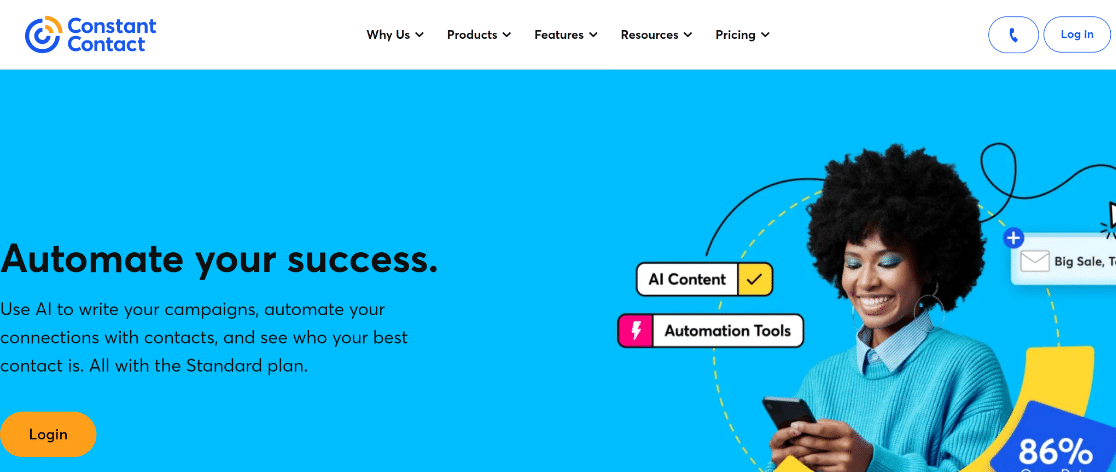
Constant Contact is the marketing automation software I recommend to most small businesses, because it’s the one platform here where the automation features and the learning curve are genuinely matched to each other.
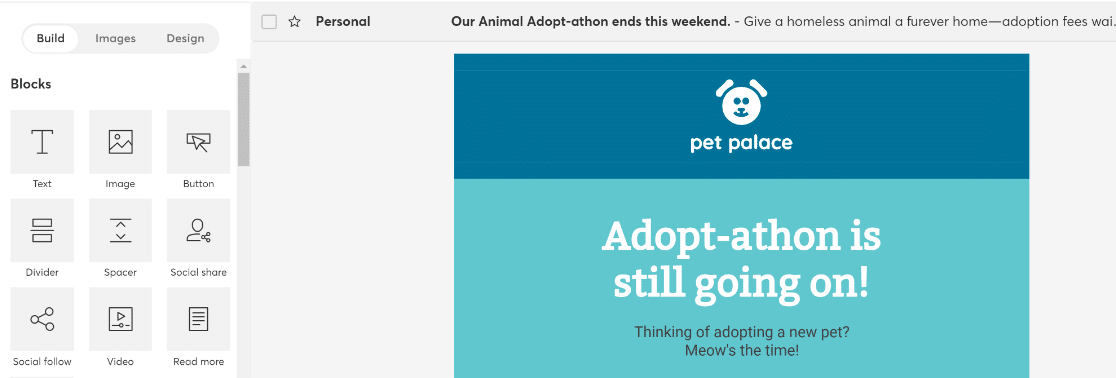
The builder splits into tabs for blocks, design and images, with a live preview on the right and nothing buried behind a menu.
It also previews how your subject line will look in a real inbox, which sounds minor until you’ve sent a campaign whose pre-header read “View this email in your browser.”
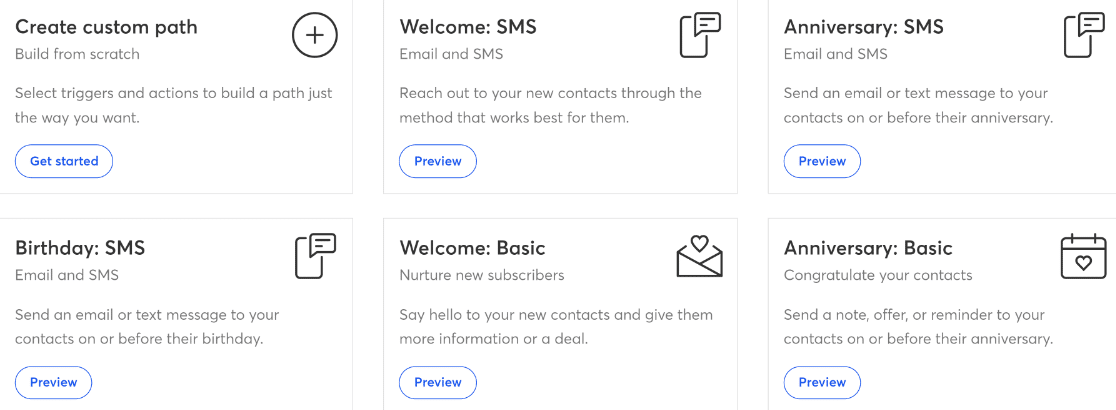
Automation here goes further than a welcome email. You can send to one segment, or build a conditional automated email series that branches on whether someone opened or clicked.
Segmentation is where it earns its place above the cheaper tools, because it builds segments from behaviour on its own and separates repeat customers from browsers without you writing a rule.
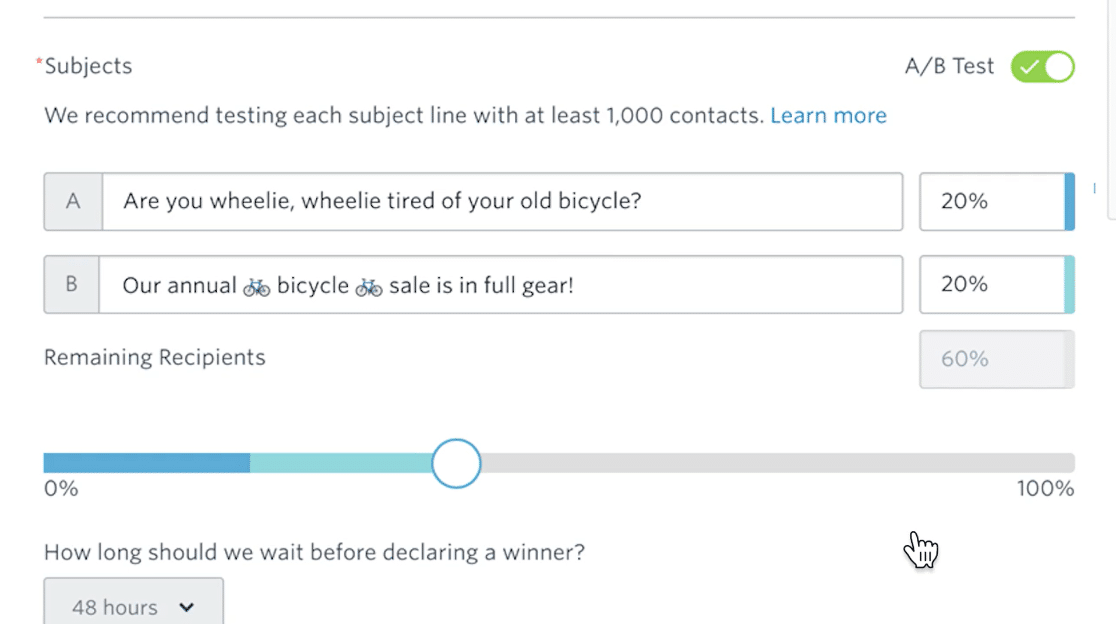
The A/B testing is unusually good for this price bracket, letting you test subject lines or full content variants and rendering a heatmap of where people actually clicked in each version.
Constant Contact is the one email tool here that connects to WPForms on every licence tier including the free one.
For a WordPress site that matters more than anything above it, because a signup form pushes straight to a list with no connector in between. That makes it the cheapest complete setup here for lead generation.
What I Liked
- Automation that doesn’t need a specialist: The branching logic is visual and readable, so you won’t need a consultant to change it later.
- Click heatmaps on A/B tests: Most tools at this price report opens and clicks as numbers. Seeing where people clicked is more useful.
- Free-tier WPForms connection: No other email platform here connects to WPForms Lite.
- Automatic template design: It will build an email template from your site’s existing logo and colours.
Pricing
- Lite: $12/month, or $10.20 paid annually
- Standard: $35/month, or $29.75 paid annually
- Premium: $80/month, or $68 paid annually
- Trial: 30 days, plus a 30-day money-back guarantee
Every plan carries a monthly send limit tied to your contact count, running from 10x contacts on Lite up to 24x on Premium.
2. ActiveCampaign: Best for Advanced Automation Workflows
ActiveCampaign has the strongest automation builder on this list, which makes it the right pick for anyone whose workflows have outgrown a linear sequence, and it’s the tool most other roundups name first.
The difference shows up in how much freedom you get over the rules themselves. Constant Contact gives you a solid set of triggers, while ActiveCampaign lets you nest conditions and split paths on almost any contact attribute. It can also run a workflow that waits on one event while watching for another.
It’s also a genuine CRM rather than an email tool with contact records bolted on. Deals move through pipelines and lead scores update from behaviour, so sales and marketing read from the same contact record.
One caveat is worth knowing before you commit. The Starter plan caps you at five actions per automation, which covers a welcome sequence and not much else. So the plans people actually mean when they praise ActiveCampaign’s automation are Plus and above.
WPForms includes a native ActiveCampaign addon at the Elite tier, which lets a form entry create or update a contact and trigger a workflow directly.
What I Liked
- Unlimited automation actions from Plus upward: The ceiling that makes Starter feel cramped disappears at $49/month.
- Lead scoring that’s actually usable: Scores update from opens, clicks and site visits without custom work.
- Predictive and conditional content: Available from Starter, which is unusual at $15/month.
- Deliverability: This is the tool most consistently praised for inbox placement in this category.
Pricing
All tiers are billed annually at 1,000 contacts.
- Starter: $15/month, one user
- Plus: $49/month, one user
- Pro: $79/month, three users
- Enterprise: $145/month, five users
- Trial: 14 days, plus a 30-day refund guarantee
3. HubSpot Marketing: Best All-in-One Platform

HubSpot Marketing Hub is the best choice when you want marketing, sales and service records living in one place instead of syncing between three separate tools.
The automation canvas handles far more than email, covering lead scoring, rotation to sales reps, webhooks and branching on CRM properties rather than just email behaviour.
HubSpot’s free tier is also more generous than most people expect. Two users get the full CRM, forms and email at no cost, which makes it a reasonable place to consolidate contacts before you’re ready to pay for anything at all.
Starter costs $7 per seat per month and includes exactly one automated action, while the tier that unlocks omni-channel automation with unlimited actions is Professional at $800 per month. That cliff is the single most important fact about HubSpot’s pricing.
It’s why the platform suits funded startups and established teams far better than a solo site owner.
The learning curve is real too, though HubSpot Academy is genuinely good and free. WPForms connects natively at the Elite tier with custom field mapping.
What I Liked
- A free tier you can build on: Full CRM and forms for two users at no cost.
- Automation beyond email: Lead rotation, internal alerts and webhooks sit in the same builder.
- One contact record everywhere: Marketing, sales and support stop disagreeing about who a lead is.
- HubSpot Academy: Free, structured, and the reason the learning curve is survivable.
Pricing
- Free: $0 for two users
- Starter: $7/month per seat, one automated action
- Professional: $800/month, where unlimited omni-channel automation begins
- Enterprise: $3,600/month
4. Brevo (formerly Sendinblue): Best for Multichannel Messaging
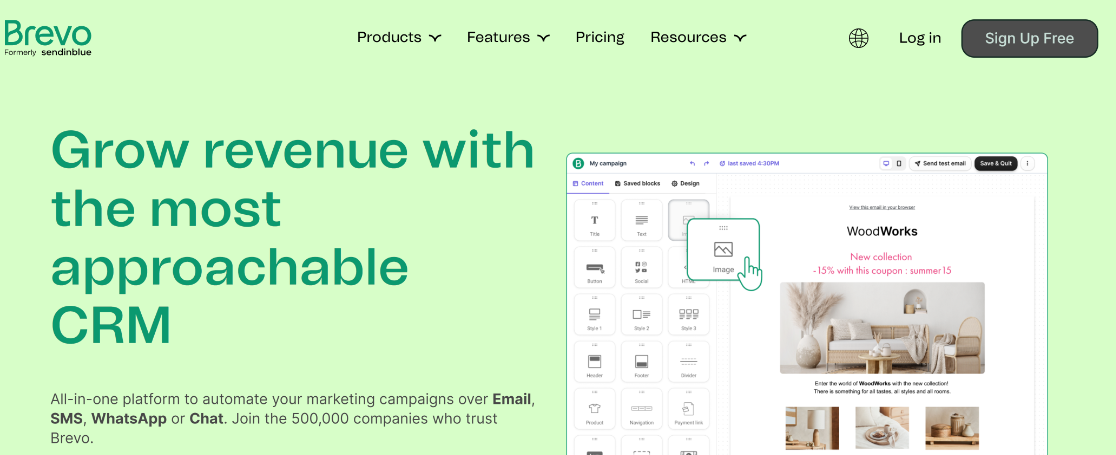
Brevo is the best pick when your customers need reaching by more than email, because SMS, WhatsApp, live chat and email all run from one contact list and one automation builder.
The workflow editor covers a wide range of trigger events, and the drag-and-drop designer gives you a decent block library. You can segment a list and send personalised campaigns off the back of behaviour, same as anywhere else here.
Something important changed, and a lot of older articles still get it wrong. Brevo used to offer unlimited contacts on every plan, and that was its headline advantage over per-contact competitors.
Since October 2025 the email volume you buy also caps your contact storage. The three cheapest Starter and Standard tiers hold 500, 1,500 or 2,500 contacts. That ceiling only jumps to 500,000 at the 20,000-email tier.
That change doesn’t make Brevo a bad tool. It does mean the reason most people were choosing it no longer applies, so compare it on send volume and channel coverage instead.
If you send transactional email from WordPress as well, you can set up Brevo with WP Mail SMTP so receipts and password resets use the same authenticated connection.
What I Liked
- Genuinely multichannel: Email, SMS, WhatsApp and chat share one contact record and one builder.
- A usable free plan: 300 emails a day, which is enough to test a real workflow.
- Transactional and marketing in one account: Useful if you already send receipts from WordPress.
- Native WPForms addon at Plus: Form entries reach a Brevo list without a connector.
Pricing
- Free: 300 emails a day
- Starter: $9/month, or $8 paid annually
- Business: $18/month, or $16 paid annually
- Enterprise: from around $449/month
Contact limits now scale with the email volume on your tier, so check that ceiling before you commit.
5. WPForms: Best for Capturing the Leads Your Automation Runs On
WPForms is the piece most marketing automation setups get wrong, because every platform above needs a reliable way to collect the contact in the first place and a form is where that happens.
WPForms builds any form with a drag-and-drop builder and no code. You can create a form with WPForms and start collecting data in under 5 minutes. WPForms is the most beginner-friendly WordPress form builder.
With over 5+ million sites running it and 2,100+ templates in the library, there’s usually a starting point close to what you need.
You can add a signup form to any page or widget area straight away. If a standard one-page form isn’t converting, the Lead Forms addon turns it into a distraction-free multi-step form.
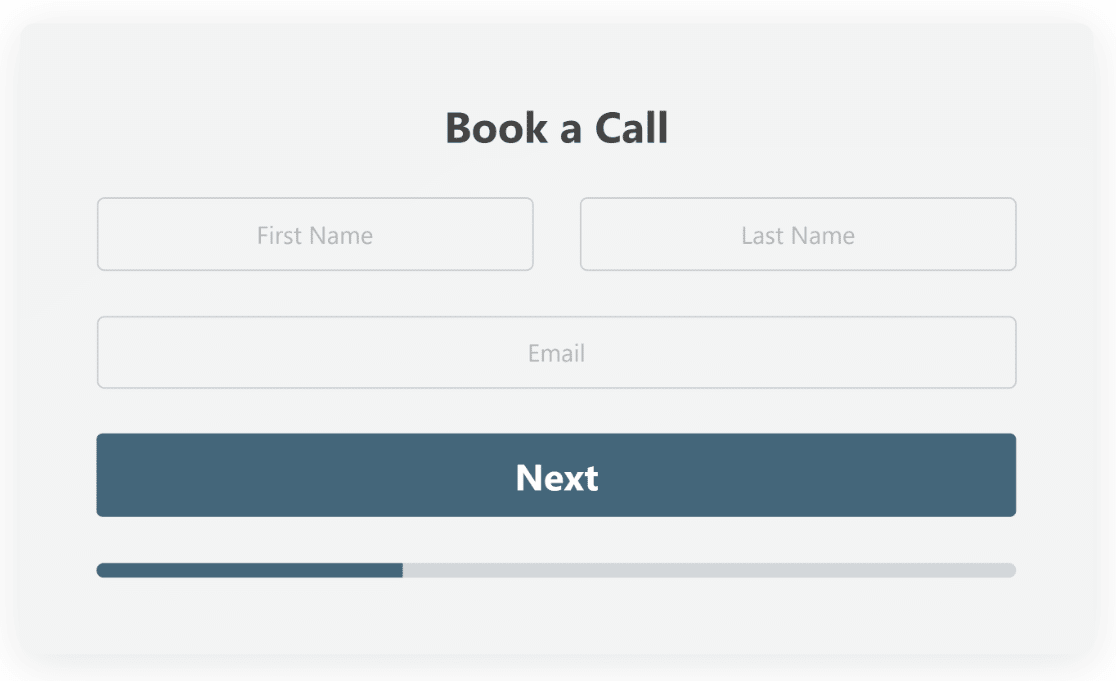
The integration list is where it stops being just a form plugin. WPForms connects natively to ten email platforms including Constant Contact, Brevo and Drip. HubSpot, ActiveCampaign, Salesforce, Pipedrive and Zoho CRM come in at Elite.
New signups land in the right list automatically, with no export step and no second plugin whose only job is moving data.
The reporting side is worth knowing about. User Journey shows you what a visitor did before they submitted, which tells you which content is actually generating leads. You can also automate entry handling on a schedule so exports and cleanups run without you.
What I Liked
- Native connections to ten email platforms: No connector plugin, no automation subscription, no CSV step.
- Conversion formats built in: Lead Forms, Conversational Forms and Form Abandonment ship as addons rather than needing a separate tool.
- User Journey reports: You can see which page produced a lead instead of guessing.
- A free tier that connects to Constant Contact: WPForms Lite plus Constant Contact Lite is a complete working setup.
Pricing
These are introductory prices and renewals are at full price.
- Lite: free
- Basic: $49.50/year, one site
- Plus: $99.50/year, three sites, where marketing integrations unlock
- Pro: $199.50/year, five sites
- Elite: $299.50/year, unlimited sites, where CRM integrations unlock
Every paid plan comes with a 14-day, 100% money-back guarantee.
Start Capturing Leads With WPForms
6. OptinMonster: Best for Growing Your List Faster
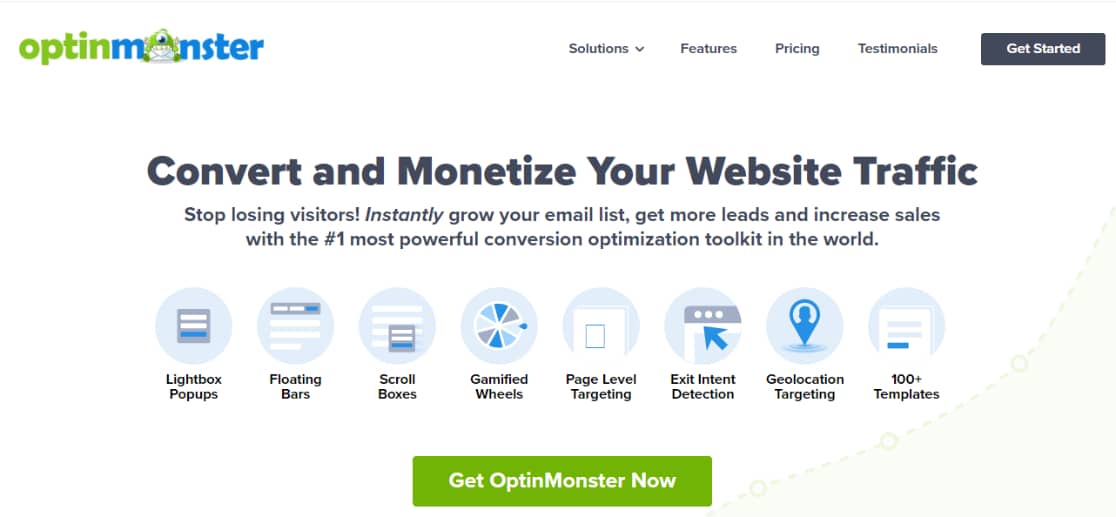
OptinMonster solves the problem sitting upstream of every tool on this list, which is that automation does nothing until people are actually subscribing.
It builds stunning lightboxes, landing pages, floating bars and inline forms. The targeting rules are what you’re really buying here, not the popup designs. Campaigns fire on exit intent, scroll depth, time on page or which page someone is reading. A visitor on your pricing page then sees something different from a visitor on a blog post.
You can embed a WPForms form inside an OptinMonster campaign using the WPForms block. That’s useful when you want a multi-field form in a popup rather than just an email capture.
Its behaviour personalisation handles segmentation before the contact ever reaches your email platform, and the ChatBot feature extends the same targeting into conversational campaigns.
The trade-off is worth naming, because there’s no free plan and the advertised monthly prices are introductory rates on annual billing. Year two costs meaningfully more than year one.
What I Liked
- Targeting rules well beyond exit intent: Page-level, referrer, scroll and time-based triggers all ship standard.
- WPForms block support: Put a real multi-field form in a popup, not just an email field.
- A/B testing on campaigns: Test the offer and the trigger, not just the copy.
- Works with every email tool here: It sits in front of your platform rather than replacing it.
Pricing
All tiers are billed annually at a 60% introductory discount for the first twelve months.
- Basic: $7/month, renewing at $210/year
- Plus: $19/month
- Pro: $29/month
- Growth: $49/month
There’s no free plan, and a 14-day money-back guarantee applies.
7. Omnisend: Best for Ecommerce Email and SMS
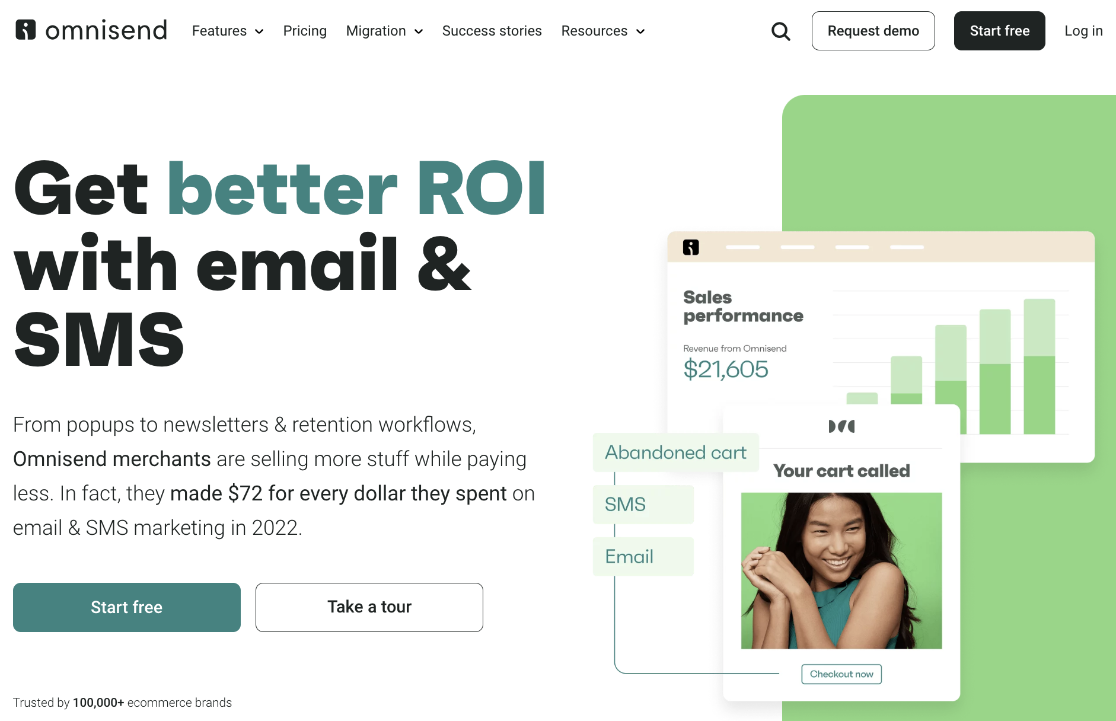
Omnisend is built for online stores, and its prebuilt workflows are the reason to choose it over a general-purpose email tool.
Cart recovery, welcome series, browse abandonment and post-purchase follow-ups all ship ready to switch on, so you edit a working sequence instead of building one from an empty canvas. Email, SMS and push notifications run from the same workflow, which matters when cart recovery works better as a text.
Omnisend got cheaper since this article last ran, which is not the usual direction of travel, and Standard is now $11.20 per month rather than the $16 it used to be.
The free plan covers 250 contacts and 500 emails a month with the full feature set rather than a crippled subset. It even includes 24/7 support and migration help, which most platforms reserve for paying customers.
WPForms has no native Omnisend addon, so you’d connect the two through Zapier or Make. For a store already running WooCommerce that’s rarely a problem, since Omnisend reads order data directly.
What I Liked
- Prebuilt ecommerce workflows: Cart recovery and post-purchase sequences work out of the gate.
- Email, SMS and push in one workflow: Channel choice per step rather than per campaign.
- A free plan with all the features: Volume is limited, capability isn’t.
- 24/7 support on the free tier: Genuinely unusual.
Pricing
- Free: 250 contacts, 500 emails a month
- Standard: $11.20/month, 500 contacts and up to 6,000 emails
- Pro: $41.30/month, 2,500 contacts with unlimited emails
- SMS: from $0.007 per message
8. Drip: Best for Ecommerce Revenue Attribution
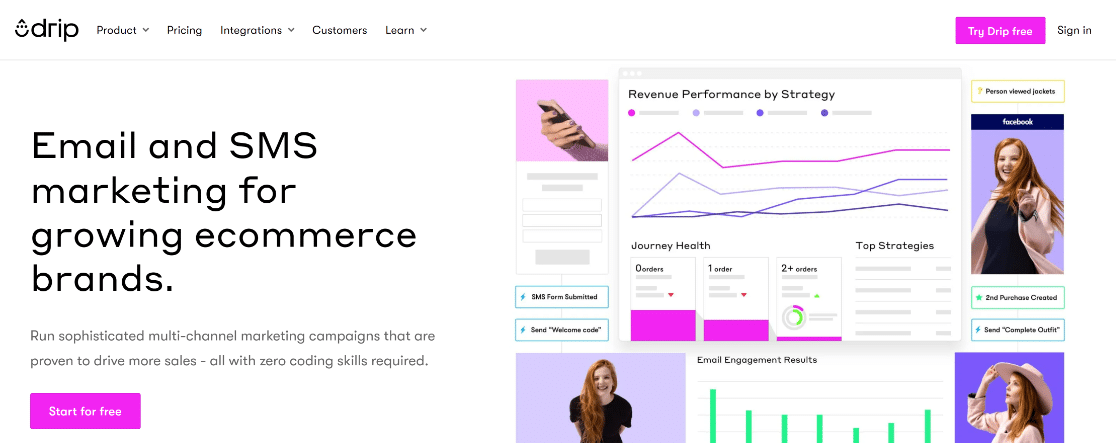
Drip focuses on ecommerce the way Omnisend does, but it earns its higher price on reporting rather than on channels.
Most tools tell you open and click rates. Drip attributes revenue to individual workflows instead. You can see that one abandoned-cart sequence generated a specific amount of money, which beats an open rate for a store deciding where to spend its time.
Email sends are unlimited on every plan rather than metered, and high-volume senders often find that works out cheaper than a per-email competitor despite the entry price. The email designer also includes ecommerce blocks, product recommendations among them.
Drip also connects natively to WPForms at the Plus tier, so form submissions enter a workflow without a connector sitting between them.
The entry price is the honest objection here, because at $39 per month there’s no free plan. A small store with a few hundred contacts will find Omnisend or Brevo covers the same ground for less.
What I Liked
- Revenue attribution per workflow: Know which automation actually made money.
- Unlimited email sends on every plan: No send-limit arithmetic as your list grows.
- Product recommendation blocks: Useful for stores with a real catalogue.
- Native WPForms addon at Plus: One less moving part.
Pricing
- Entry plan: $39/month, including unlimited email sends
- Live chat support: reserved for plans at $99/month and above
- Free plan: none
9. Uncanny Automator: Best for Automating WordPress Itself

Uncanny Automator automates WordPress rather than your email list, and that distinction is what earns it a place here.
It connects the plugins you already run so that actions in one trigger actions in another. A WPForms submission can enrol someone in a LearnDash course, add a user role and send a Slack message. None of that needs code, and none of it sends your data off-site.
Recipes are built from a trigger and a set of actions. The WPForms triggers are first-class rather than generic, and the plugin advertises 240+ integrations with over 10,000 triggers and actions.
Its real advantage over a hosted connector is that WordPress-to-WordPress automations never make a network round trip, so there’s no task quota and no per-operation cost. If your automations live mostly inside your own site, that’s the cheaper architecture by a wide margin.
For anything outside WordPress it’s the weaker choice, and Zapier’s catalogue is far larger. We go deeper on this side of things in our guide to WordPress-specific marketing automation plugins.
What I Liked
- No task metering on internal automations: WordPress-to-WordPress recipes don’t burn a quota.
- Deep WPForms triggers: Field values are available as tokens in later actions.
- A genuinely useful free version: Hundreds of triggers and actions with no licence.
- Data stays on your server: Relevant if you handle anything sensitive.
Pricing
The free version is on WordPress.org. Current sale pricing runs:
- Basic: $180/year, one site
- Plus: $288/year, ten sites
- Elite: $360/year, fifty sites
Legacy plans are still listed at $199, $349 and $599.
10. Zapier: Best for Connecting Apps Outside WordPress
Zapier is the connector to reach for when the tool you need to talk to has no native integration anywhere, and its catalogue is the whole reason why.
It now connects more than 9,000 apps, up from around 8,000 through most of 2025, exposing tens of thousands of individual triggers and actions. If two pieces of software exist, Zapier probably joins them.
WPForms includes a native Zapier addon at the Pro tier, so a form entry can start a workflow touching half a dozen services without any of them needing their own plugin.
The limits are worth reading before you rely on it. The free plan allows 100 tasks a month and two-step workflows only. Every run of every step consumes a task, which rules out most real automations.
Costs climb with volume in a way a self-hosted tool’s flat licence doesn’t. For WordPress-only work it’s also the less efficient option, since Uncanny Automator handles far more WordPress plugins natively.
What I Liked
- 9,000+ apps: The largest catalogue of any tool here by a wide margin.
- Multi-step workflows with filters and formatting: Real logic, not just A to B.
- Native WPForms addon at Pro: Forms become a trigger for anything.
- A free tier for testing: Enough to prove a workflow before paying.
Pricing
- Free: 100 tasks a month, two-step workflows
- Professional: from $19.99/month on annual billing
- Team: $69/month for 2,000 tasks
- Enterprise: quoted by sales
11. SeedProd: Best for Landing Pages That Feed Your Funnel
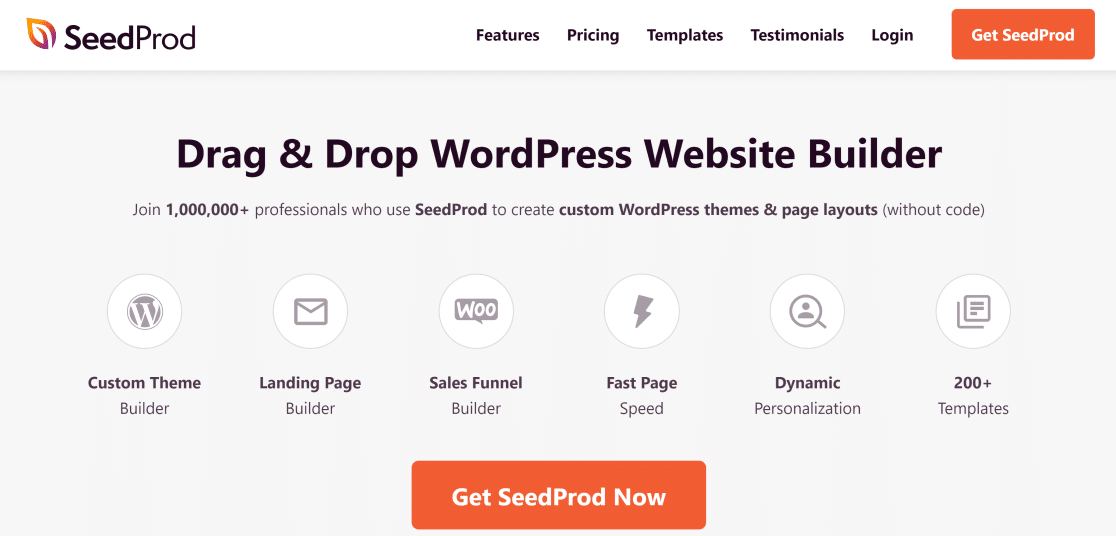
SeedProd builds the pages your automation collects leads on, which makes it useful before a site is even finished.
Coming-soon and maintenance modes can capture email addresses while you’re still building, so traffic arriving early doesn’t simply bounce. After launch the same builder handles landing pages and squeeze pages without touching your theme.
The WPForms block is built in, so a form drops onto a landing page and keeps every integration and notification it already had.
Pricing has moved a long way since this article first listed it. Basic is now $79 per year rather than the $39.50 older versions of this page quoted.
What I Liked
- Lead capture before launch: Coming-soon pages that actually collect subscribers.
- Theme-independent pages: Landing pages don’t inherit your theme’s layout.
- Native WPForms block: Forms keep their integrations on a SeedProd page.
- A free version: Enough for a basic coming-soon page.
Pricing
These are introductory prices and renewals are at full price.
- Basic: $79/year, one site
- Plus: $199/year, three sites
- Pro: $399/year, five sites
- Elite: $599/year, one hundred sites
12. Freshsales: Best for Sales Teams on a Budget
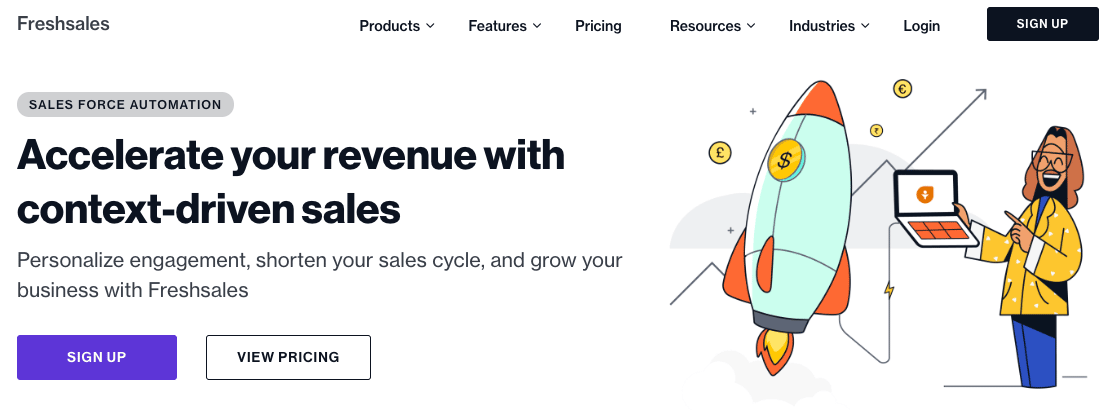
Freshsales is a sales CRM with marketing automation attached, so it suits a team whose bottleneck is following up on leads rather than sending campaigns.
Workflows here trigger emails to customers or notifications to colleagues, which covers the follow-ups that otherwise get forgotten. Repetitive sequences like webinar invitations and post-demo check-ins are the sort of thing it handles well.
At $9 per user per month the Growth plan is among the cheapest real CRMs available, and that’s the main argument for choosing it.
The free plan earlier versions of this article mentioned is no longer promoted, replaced by a 21-day trial of the full product. The entry price is also $9 per user rather than the $15 previously listed here.
Connecting it to WPForms means going through Zapier. You can also connect your forms to any CRM using webhooks at the Elite tier.
What I Liked
- $9 per user for a full CRM: Hard to beat at the entry level.
- Internal and external workflow triggers: Notify a rep or email a customer from the same rule.
- 21-day trial of everything: Long enough to test a real pipeline.
Pricing
All tiers are billed annually.
- Growth: $9/user/month
- Pro: $39/user/month
- Enterprise: $59/user/month
- Trial: 21 days, covering the full product
13. AgileCRM: Best Free CRM for Small Teams
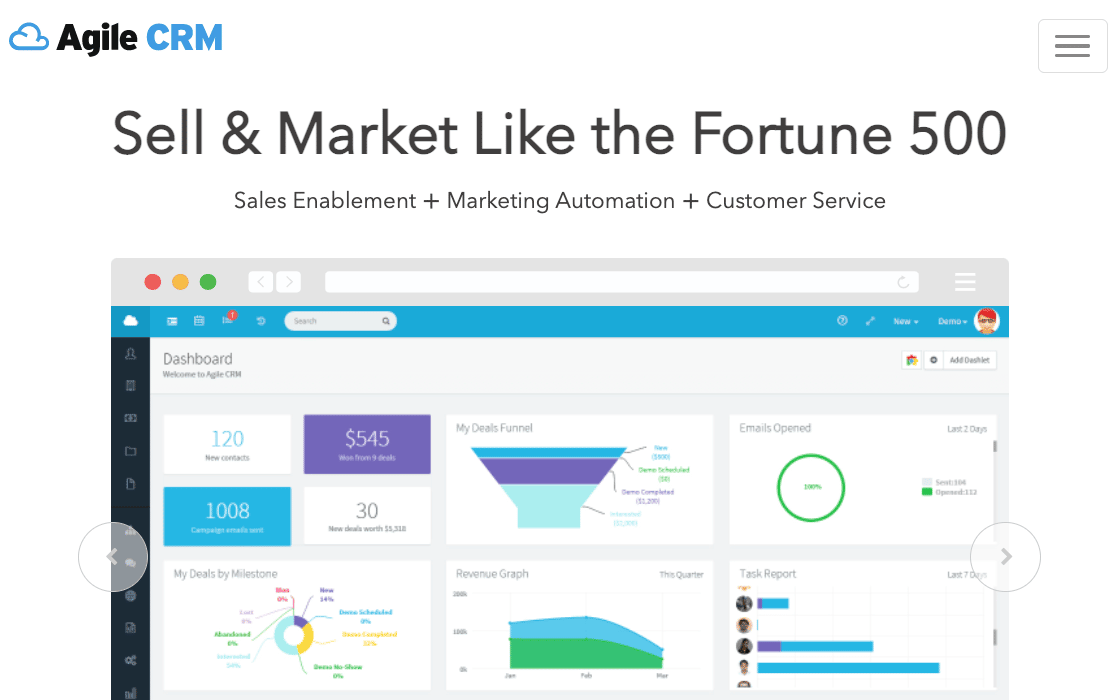
AgileCRM covers sales, marketing and support in one tool, and its free plan for up to ten users is the specific reason it’s still on this list.
The marketing side builds web popups, autoresponders and personalised campaigns for web and mobile. Its lead scoring tracks email opens, link clicks and browsing activity to show which leads to call first.
AgileCRM is the cheapest way here to get a CRM and marketing automation together at no cost. For a team of a few people that can be enough for a long time.
The interface shows its age next to HubSpot or ActiveCampaign, and there’s no native WPForms integration, so a Zapier connection is needed. Note too that the signup link lands on a registration page rather than a product tour.
What I Liked
- Free for up to ten users: The most generous free CRM tier here.
- Lead scoring included at every tier: Not held back for paid plans.
- Sales, marketing and support together: One tool instead of three.
Pricing
- Free: $0 for up to ten users
- Starter: $8.99/month
- Regular: $29.99/month
- Enterprise: $47.99/month
Get WPForms and Start Collecting Leads
FAQs on the Best Marketing Automation Software
Choosing between marketing automation platforms raises the same handful of questions every time. Here are the ones I get asked most, with answers on pricing, free options, and how these tools differ from a CRM.
What are the top 5 marketing automation tools?
The top five marketing automation tools for small businesses are Constant Contact, ActiveCampaign, HubSpot Marketing Hub, Brevo and Omnisend. Constant Contact suits beginners who want automation they can maintain themselves.
ActiveCampaign suits complex branching workflows, HubSpot suits teams wanting one record across marketing and sales, Brevo covers email alongside SMS and chat, and Omnisend is built for online stores. Your list size and whether you sell products matter more than any feature comparison.
Is there free marketing automation software?
Yes. HubSpot’s free tier includes the full CRM, forms and email for two users.
Brevo’s free plan sends 300 emails a day, Omnisend’s covers 250 contacts with every feature unlocked, and AgileCRM is free for up to ten users.
Uncanny Automator and WPForms both have free WordPress plugins.
The usual catch is that automation is limited to a single action or a low task quota. Free plans work well for testing a workflow and less well for running one at scale.
Can email marketing be automated?
Yes, email marketing can be automated with any tool on this list.
You set up workflows that send emails automatically based on conditions you define, such as someone joining a list, opening a previous email or abandoning a cart.
A blogger sending a weekly newsletter and a store recovering abandoned carts can both automate the large majority of their routine sending, which is where the time saving comes from.
What is marketing automation software?
Marketing automation software is a platform that performs repetitive marketing tasks for you based on rules you set once.
It handles email sequences, audience segmentation, lead scoring and campaign tracking across email, SMS, web and social channels without you triggering each action manually.
Companies using automated lead management see a 10% increase in revenue, which is why it’s worth setting up even at a small scale.
What is the difference between a CRM and marketing automation?
A CRM manages sales relationships while marketing automation runs marketing campaigns, and the difference is which part of your business each one serves. CRMs track deals, pipelines and contact history for a sales team.
Marketing automation platforms send campaigns and nurture leads before they reach that stage. The two overlap because both store contacts, and CRMs increasingly bundle marketing features, so tools like HubSpot, ActiveCampaign, Freshsales and AgileCRM do both.
If sales follow-up is your priority, our guide to the best CRMs for your small business covers that side in more detail.
Do I need Klaviyo or Mailchimp for marketing automation?
No, though both are reasonable choices depending on what you sell. Klaviyo is the strongest option for ecommerce stores needing deep product and purchase-behaviour segmentation, and it has a free plan. Mailchimp suits small lists that mainly need campaigns rather than complex automation.
GetResponse sits between the two with webinars included. WPForms connects natively to Mailchimp and GetResponse at the Plus tier, while Klaviyo needs Zapier, so the connection cost is worth factoring in alongside the subscription.
How do I choose marketing automation software?
Choose marketing automation software by matching the entry plan’s real limits to what you need today, not by comparing feature lists. Five checks cover most of it.
- Check the automation limits on the plan you’ll actually buy: ActiveCampaign’s Starter caps at five actions per automation and HubSpot’s Starter at one, which changes what those prices mean.
- Look at how contacts are counted: Brevo’s contact ceiling now scales with email volume, and per-contact pricing grows faster than it looks.
- Count the connection cost: A tool needing a connector plugin plus a monthly automation subscription to receive a form entry costs more than its price tag.
- Use the trial on a real workflow: Build the sequence you actually need rather than clicking through a demo.
- Read the renewal price: Several tools here advertise introductory rates, so year two can be double year one.
Next, Grow the List Your Automation Depends On
Picking a platform is the easy half. The harder part is making sure enough people subscribe for any of it to matter, and that work happens on your forms and landing pages rather than inside your email tool.
If email is where you’re focused, our roundup of the best email marketing services goes deeper on deliverability and send pricing than this list does. For the capture side, start with the form itself and work outward to the platform.
Build Your Lead Capture Forms Now
Ready to build your form? Get started today with the easiest WordPress form builder plugin. WPForms Pro includes lots of free templates and offers a 14-day money-back guarantee.
If this article helped you out, please follow us on Facebook and X (Twitter) for more free WordPress tutorials and guides.