


AI Summary
When a customer hits a wall, the last thing they want is to dig around your site looking for a way to contact you. And the last thing you want is support requests scattered across emails, DMs, and sticky notes.
That’s exactly what a Zendesk WordPress integration fixes. Your visitors fill out a simple form on your site, and every request lands in Zendesk as a neat, trackable ticket your team can actually manage.
Let me walk you through the easiest way to set it up with WPForms and Zapier (no code, I promise), plus two other methods in case they fit your setup better.
Create Your Zendesk Support Form Now
How to Set Up a Zendesk WordPress Integration
There are three main ways to connect Zendesk to your WordPress site. You can use the Zendesk integration for WPForms through Zapier, install Zendesk’s official plugin, or use a third-party connector plugin.
Here’s how the three methods compare at a glance.
| Method | Best For | Cost | Difficulty |
|---|---|---|---|
| WPForms + Zapier | Custom support ticket forms with full control over fields, logic, and notifications | WPForms Pro plus Zapier’s free plan | Easy |
| Official Zendesk plugin + Web Widget | Managing tickets from your WordPress dashboard and embedding a help widget | Free plugin, requires a Zendesk Team plan or higher | Moderate |
| Zendesk connector plugin | Sending form entries to Zendesk without a Zapier account | Free, with paid upgrades | Easy |
I’m going to focus on the WPForms method because it gives you the most control over what your support form asks. You decide which fields to include and where notifications go, and Zendesk still gets a clean ticket every time. I’ll cover the other two methods after the tutorial.
Step 1: Install the WPForms Pro Plugin
WPForms is the best drag and drop form builder for WordPress, and it makes building a support form genuinely simple. It comes with 2,100+ form templates, including a ready-made Support Ticket Form template that we’ll customize in this tutorial.
What I like most about WPForms for support forms is the conditional logic. Your form can ask smart follow-up questions based on what the customer selects, so tickets arrive in Zendesk with the details your team actually needs instead of a vague “it’s broken” message.
For this tutorial, you’ll need the Pro license or higher. That’s the tier that unlocks the Zapier addon, which handles the connection between your WordPress forms and Zendesk.
To get started, buy the Pro license. Then, install WPForms on your website. If you need help, follow these instructions on how to add a plugin to WordPress.
Step 2: Install the Zapier Addon
Next, you’ll need to install and activate the Zapier addon. It lets you connect your WordPress forms to 10,000+ web apps, including Zendesk. It’s quick and easy, and the best way to manage support tickets submitted on your WordPress website.
To do this, go to WPForms » Addons and find the one labeled Zapier. Click Install Addon and then Activate.
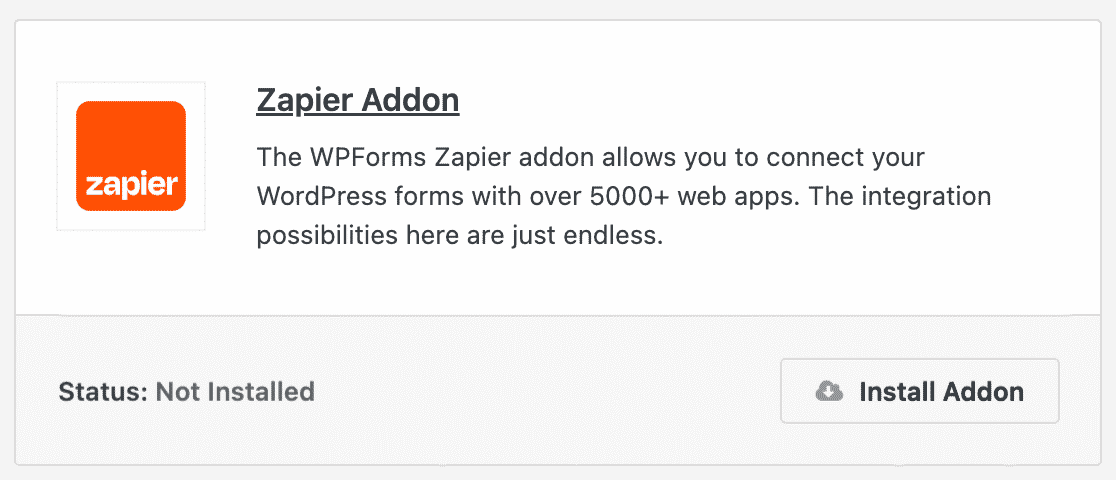
For more help with this step, take a look at how to install and use the Zapier addon.
Step 3: Create Your Zendesk Support Ticket Form
Now you’ll need to create a new form.
To do this, go to WPForms » Add New and enter a name for your form. Then move down to the Select a Template section.
Search for “support ticket” and choose the Support Ticket Form template by clicking on the Use Template button.
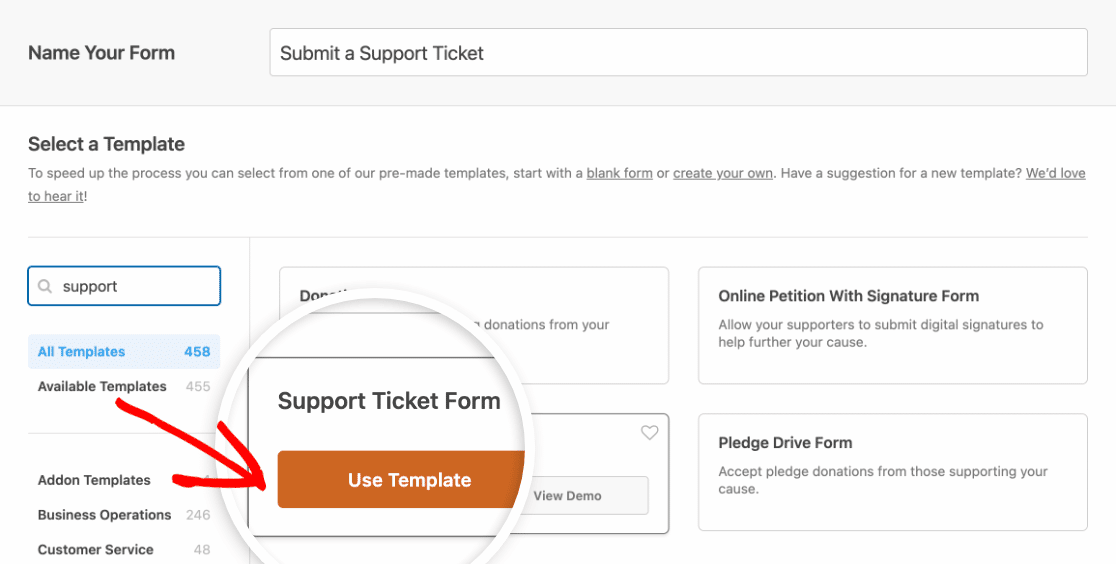
WPForms will create a form for you and load it in the form builder.
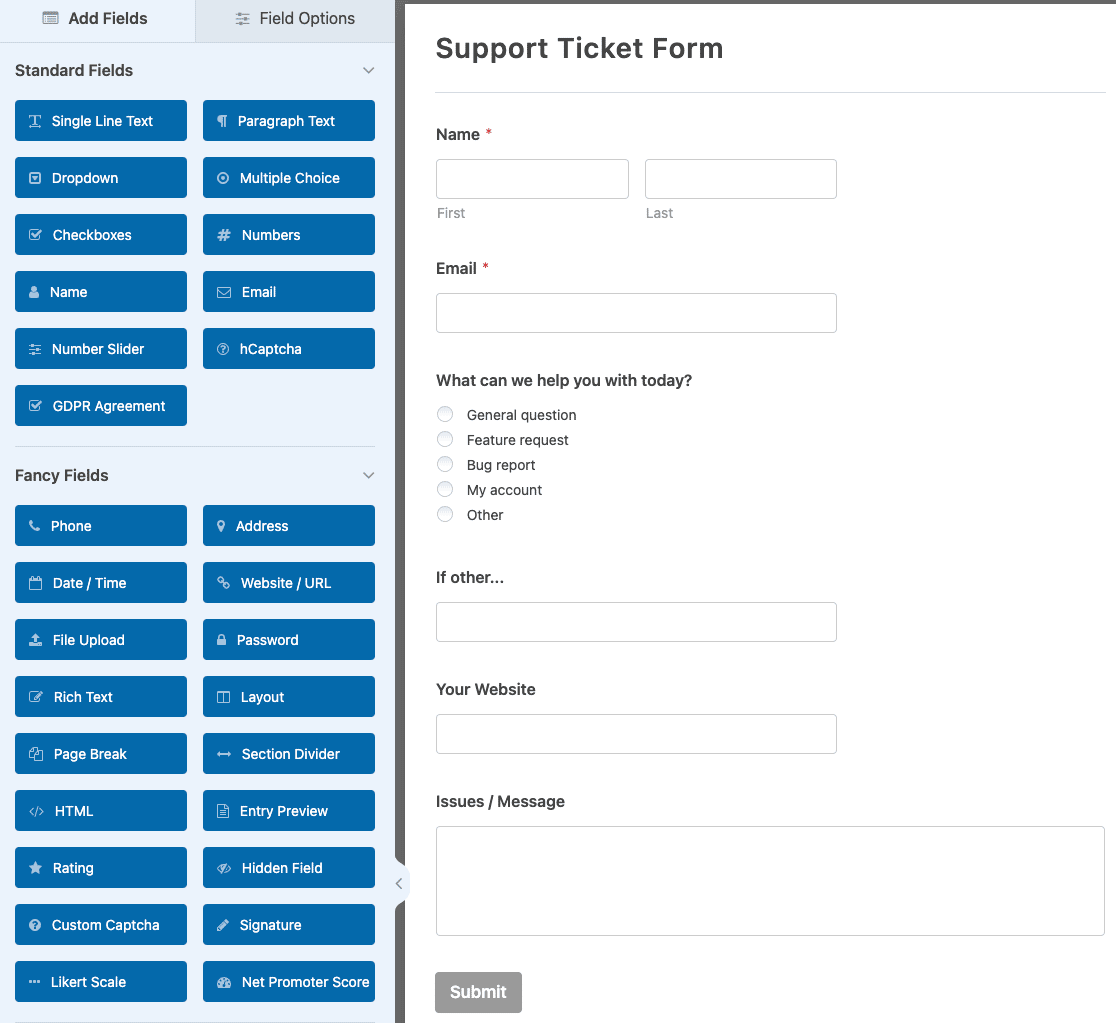
You’ll see your support ticket form has the following form fields:
- Name
- What can we help you with today? (Multiple Choice)
- If other… (Single Line Text)
- Your website (Website / URL)
- Issues / Message (Paragraph Text)
Of course, this is just to get you started and is geared towards those who provide computer support to customers. You can easily add or remove any form fields you want to customize the support form to meet your needs.
To add additional fields to your form, drag them from the left hand panel to the right hand panel.
Then, click on the field to make any changes. For instance, you can select the Multiple Choice field to change the support topics.
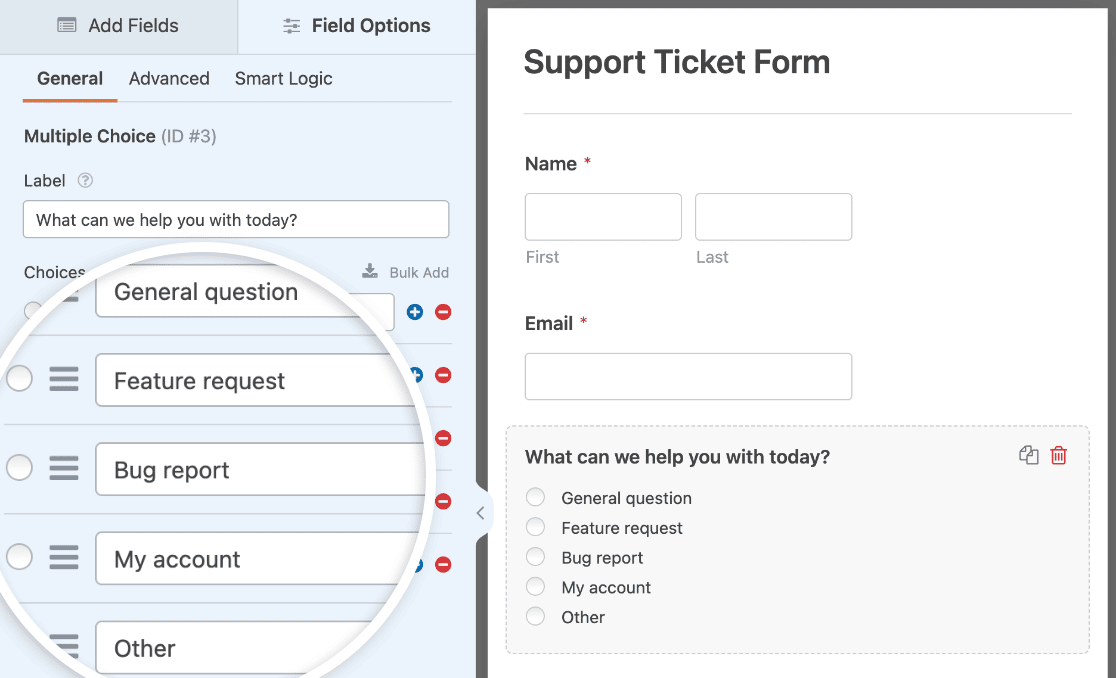
You can also click on a form field and drag it up or down to rearrange the order of your form.
Here are a few tips to help make your support form more efficient:
- Ask detailed questions in your support ticket form. This can help you better understand the issues of your customers and resolve them quickly.
- If you have extensive documentation published on your site, you might want to encourage your users to read it before submitting a support ticket. You can add a link to your documentation in your form using the Content field.
- Tell your customers how long it usually takes to get a response from an agent in the form confirmation or email notification. This can help your customers to set an expectation on turnaround time.
The Support Ticket Form template also uses smart conditional logic to show or hide the If other… field based on which choice users select from the What can we help you with today? field.
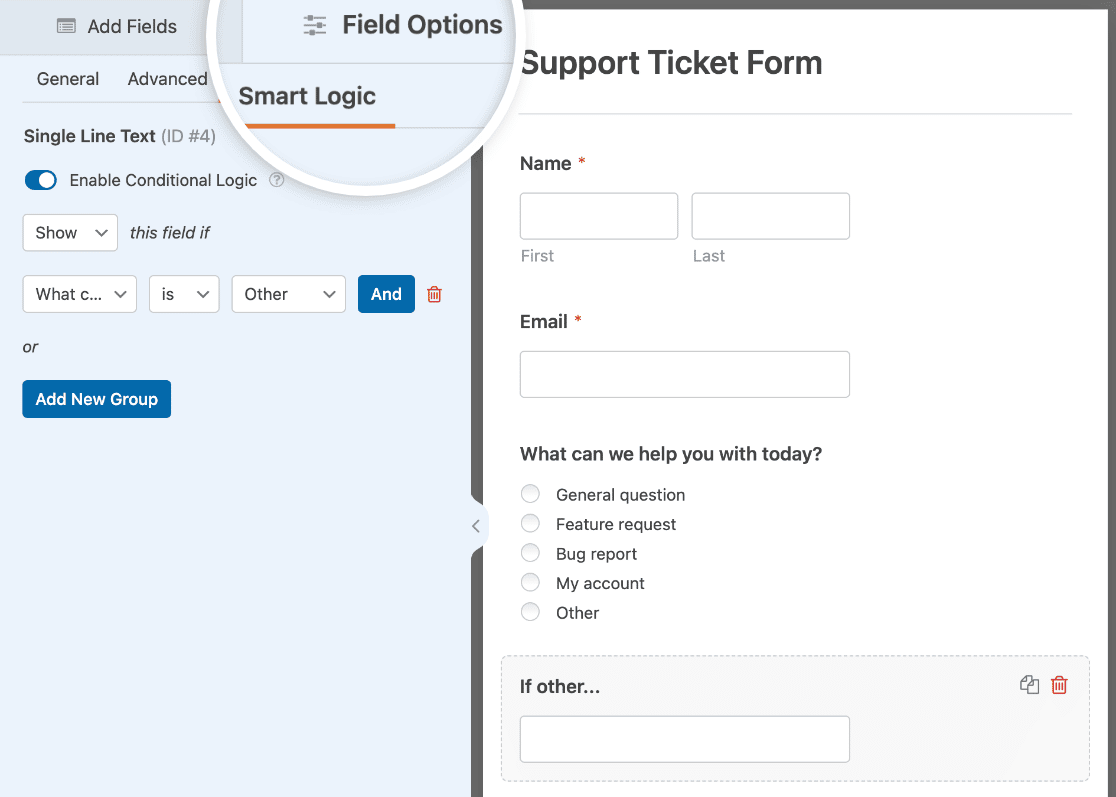
To learn more about how this works, check out our conditional logic tutorial.
And for more help creating your form, check out this tutorial on how to create a support ticket form in WordPress.
Finally, make sure to submit a test entry for your support ticket form. You’ll need this later when connecting WPForms to Zapier.
You can submit a test entry by clicking on the Preview button at the top of the form builder.

Then fill out the form and click the Submit button.
Now, let’s take a look at how to connect your WordPress support form to Zendesk.
Step 4: Create a New Zap with Zapier
The first thing you’ll need to do is log into your Zapier account and click on the Create Zap button near the top of the screen. If you don’t have a Zapier account, you can create one here.
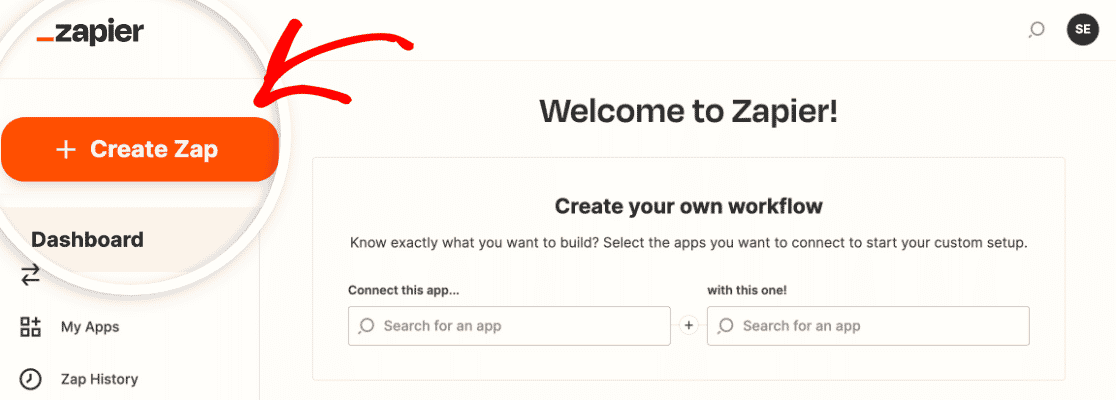
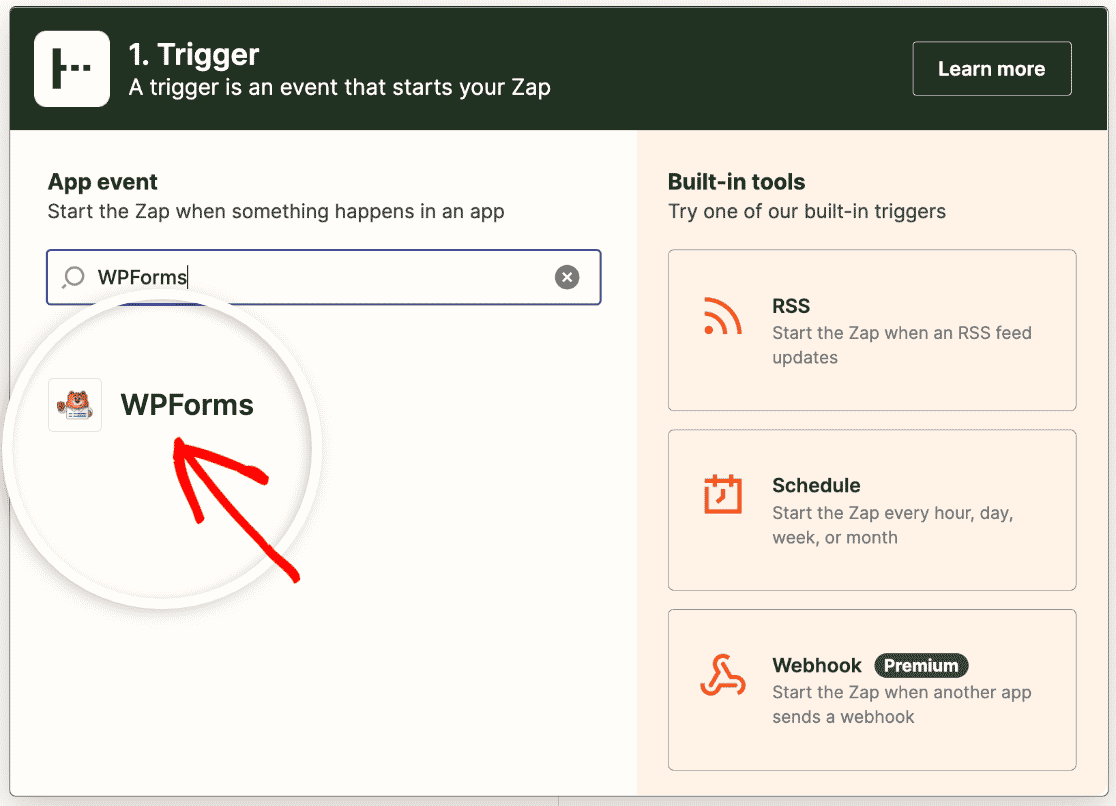
Next, you’ll need to choose a trigger app, which in our case is WPForms. Search for WPForms in the search bar and click on it.
Then you’ll have to select what event will trigger the Zap. The only option available for WPForms will be New Form Entry.
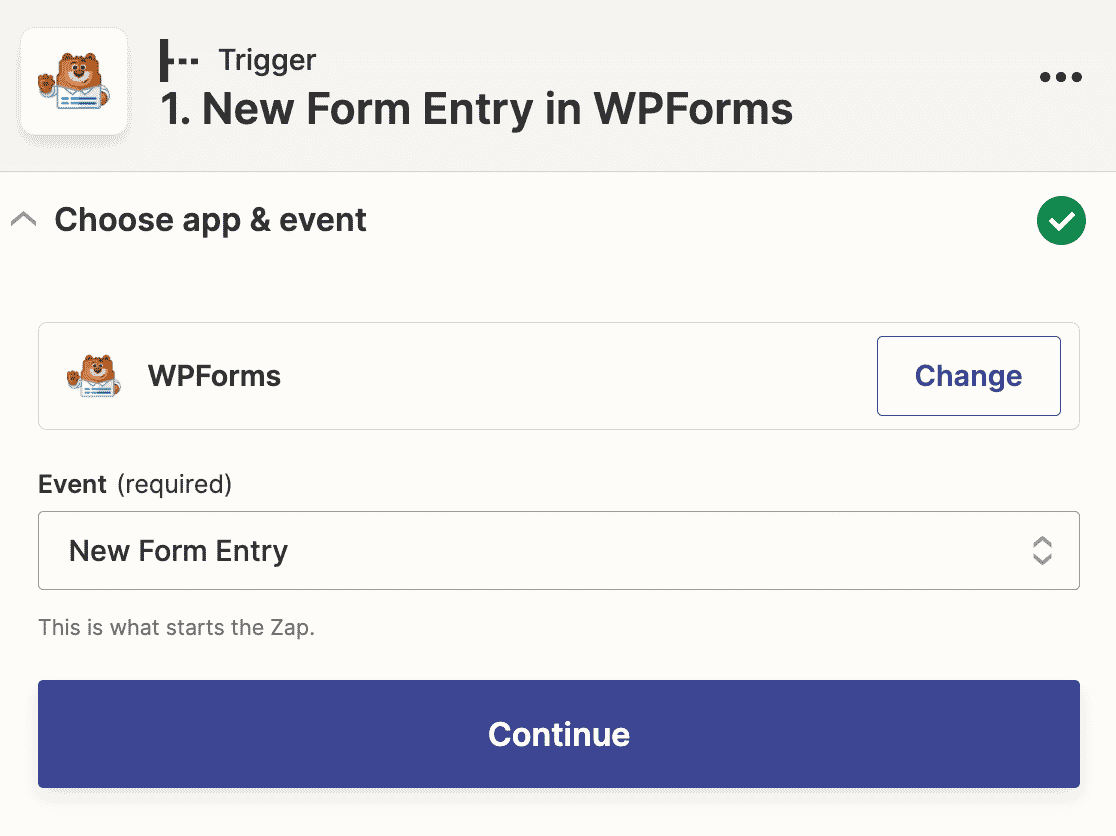
Click Continue to make WPForms the trigger when a form entry is submitted on your website.
Now you’ll need to connect Zapier to your WPForms account. Click Sign in in the Zap wizard.
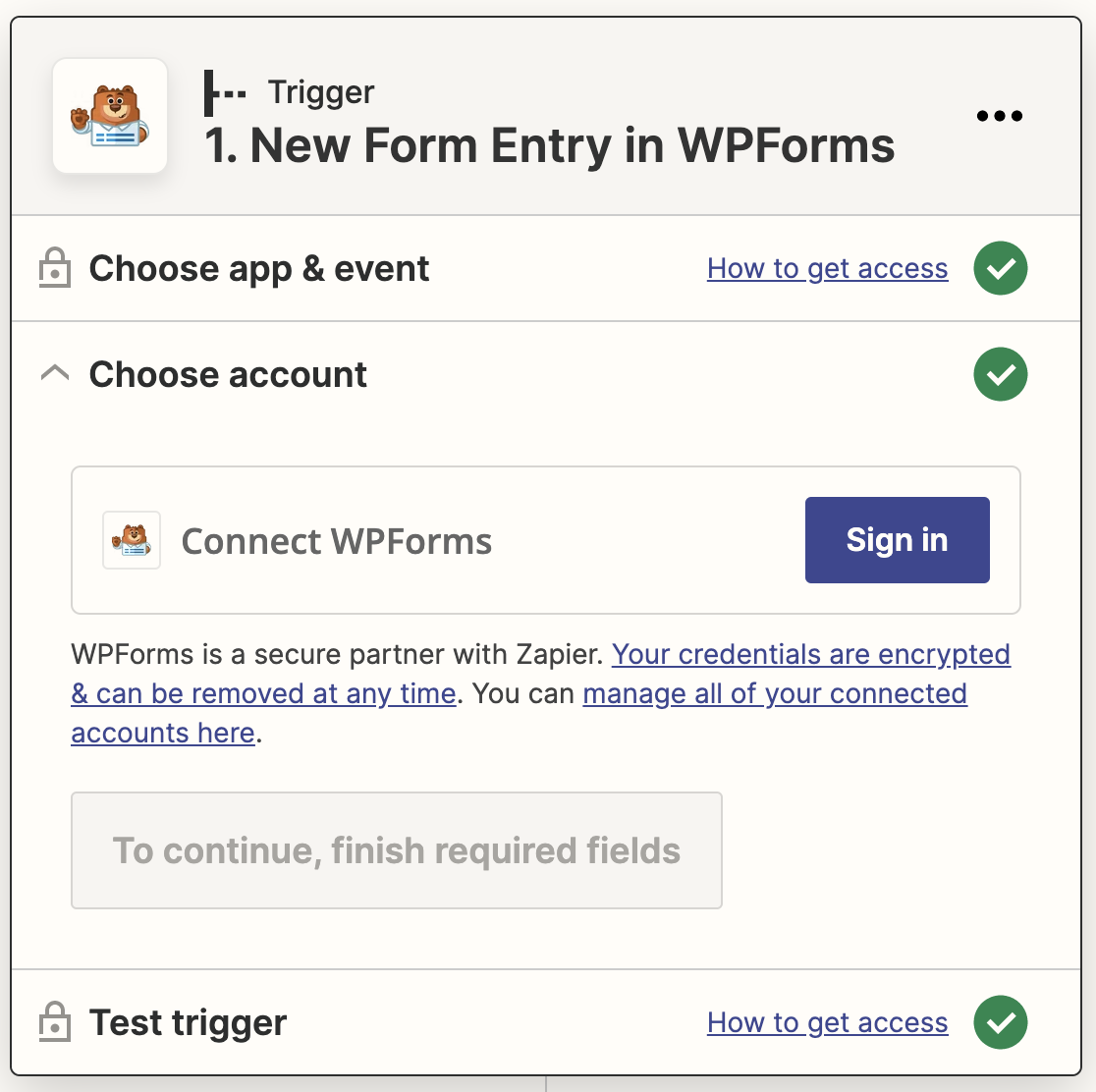
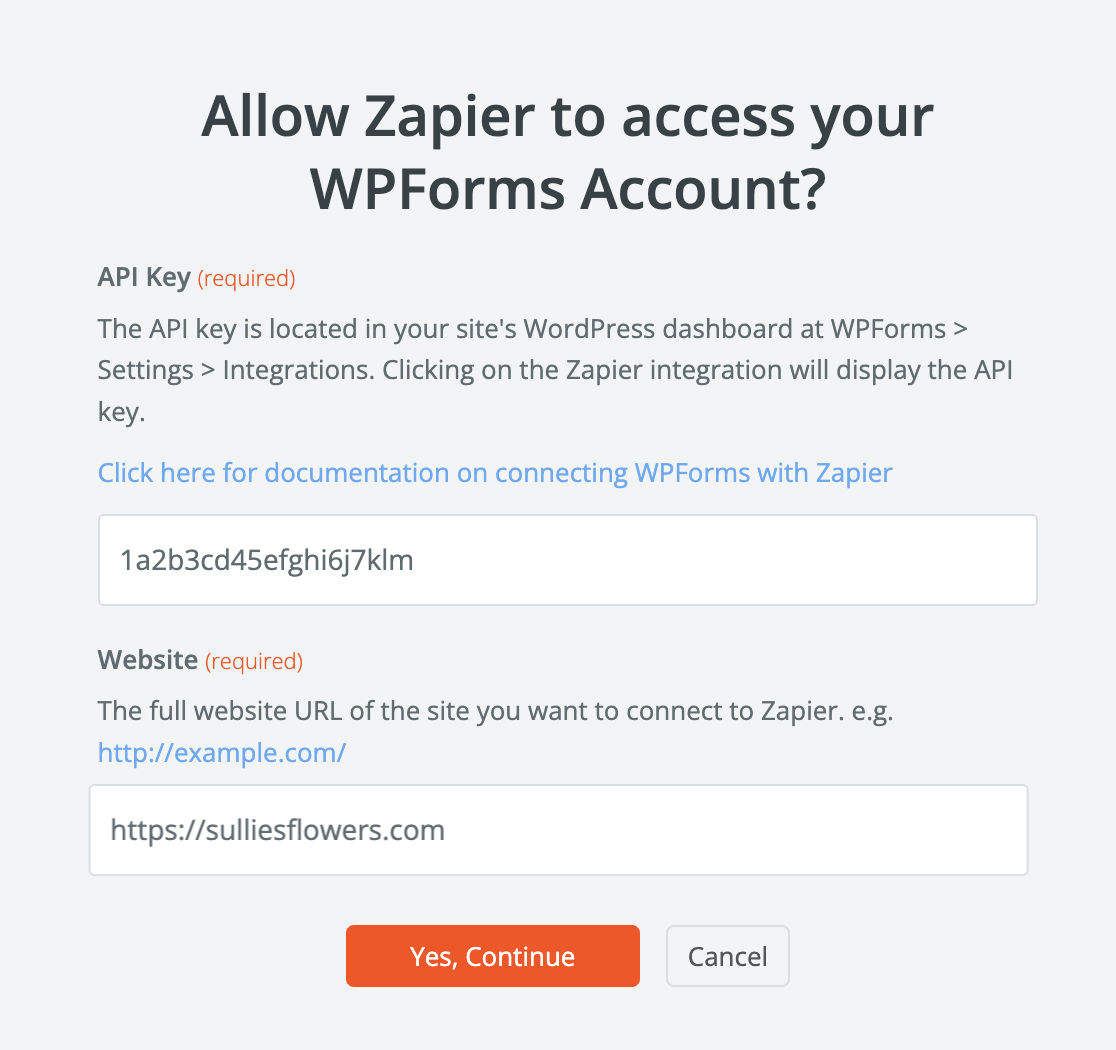
This will open a popup where you need to enter your site’s URL and Zapier API key.
To find your API key, open your WordPress admin dashboard in a new tab and go to WPForms » Settings » Integrations. Then expand the Zapier section.
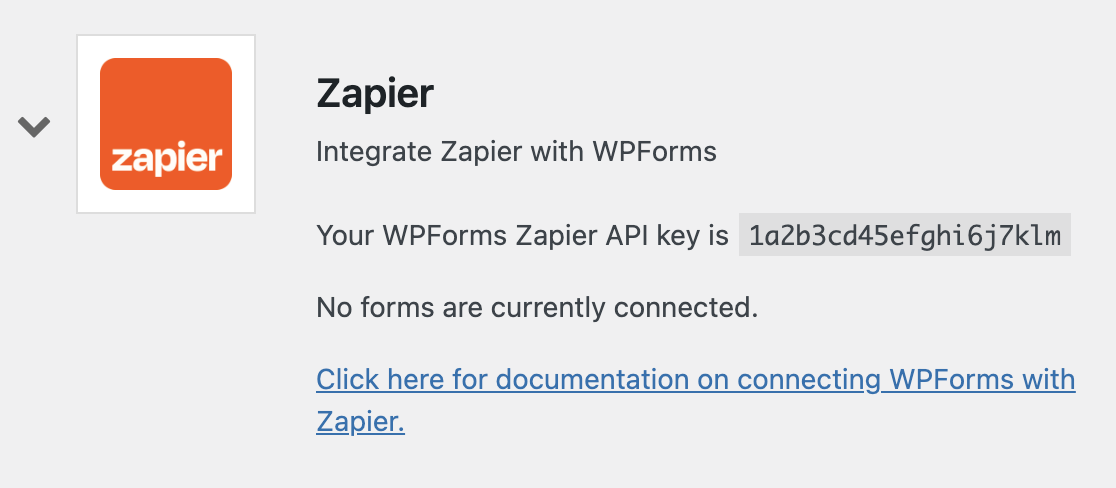
Here you can copy your API key and paste it into the popup window.
Once your WPForms account is connected to Zapier, you’ll have to choose which form to connect to this Zap. Select your support ticket form from the dropdown.
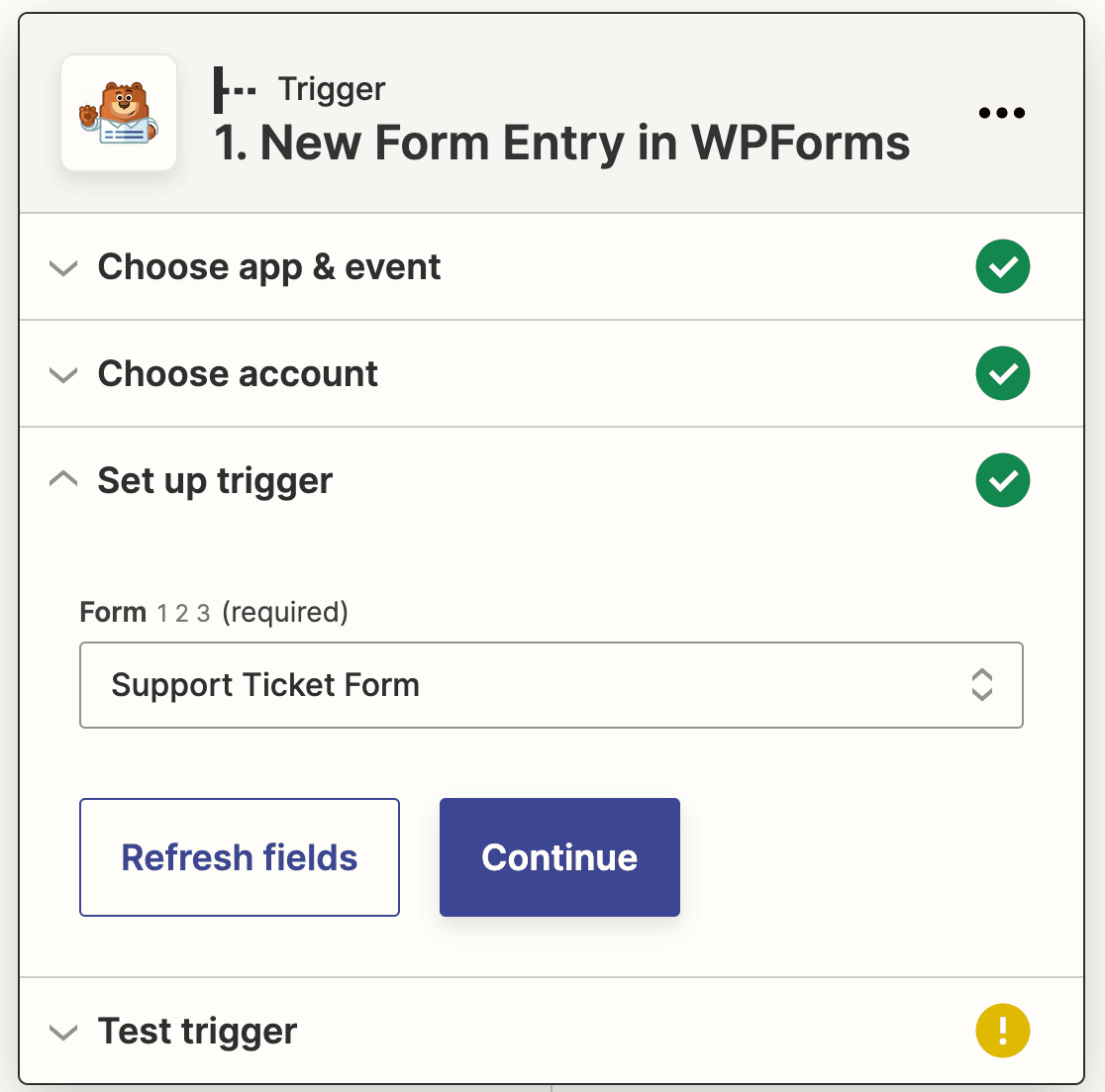
Click Continue. Zapier will now test your WPForms connection to make sure everything is working right. Click Test trigger.
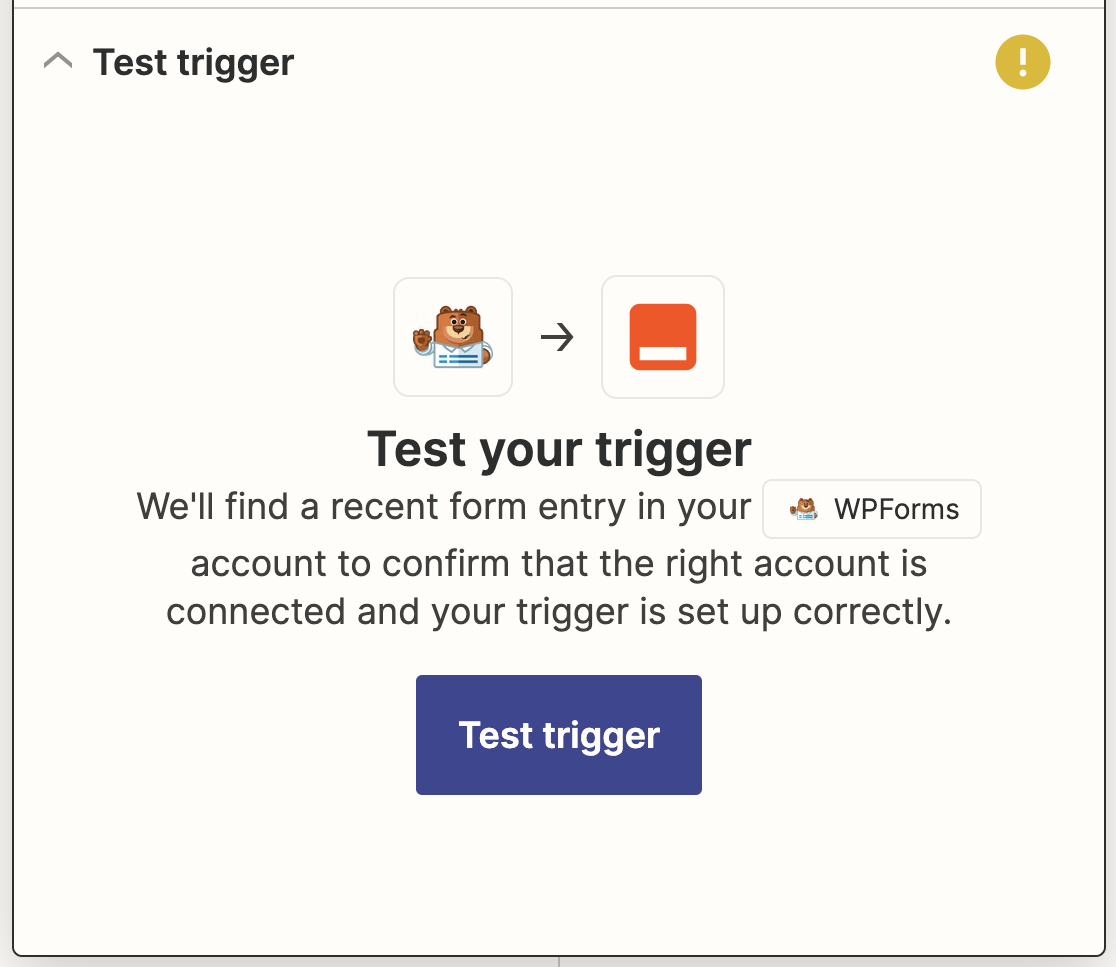
If you’ve set your Zap up right so far, you’ll see the test entry that you submitted to your support ticket form.
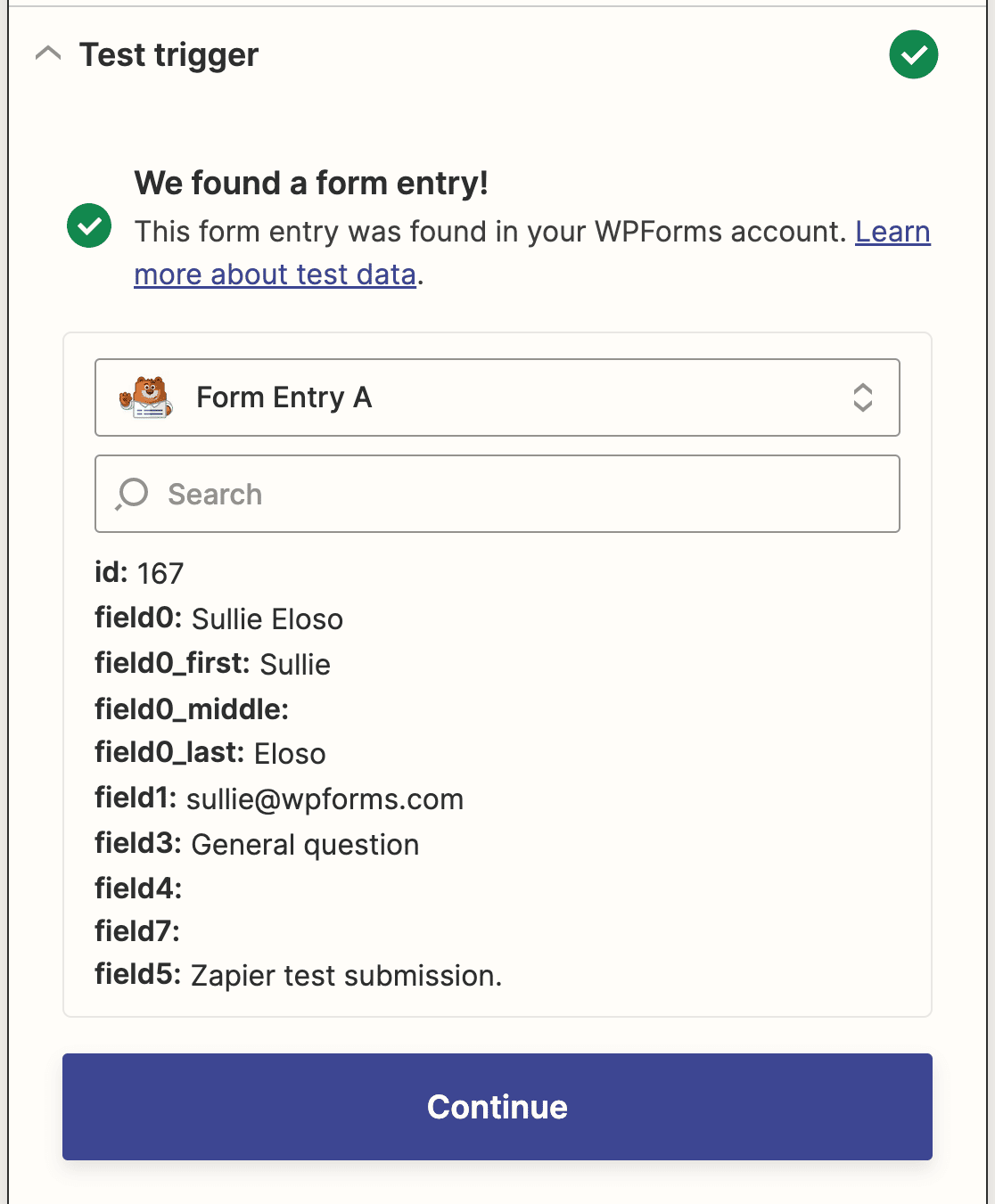
Click Continue one more time to set up the action half of your Zap.
Step 5: Connect Your WordPress Forms to Zendesk
Now that Zapier is connected to the WPForms plugin, you need to connect WPForms to Zendesk.
To start, search for the Zendesk app in the search bar and select it as the action app.
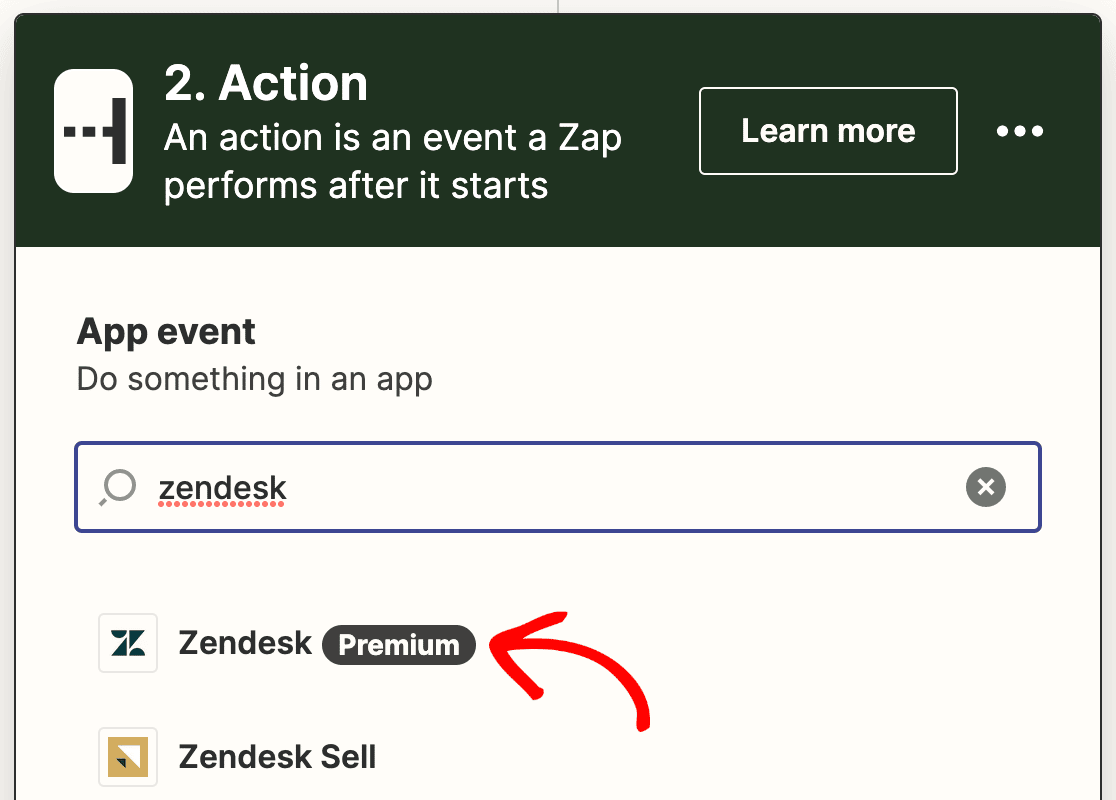
Next, you’ll choose the Zendesk action. Since we are creating a support ticket form to collect site visitor support requests, we’ll select Create Ticket.
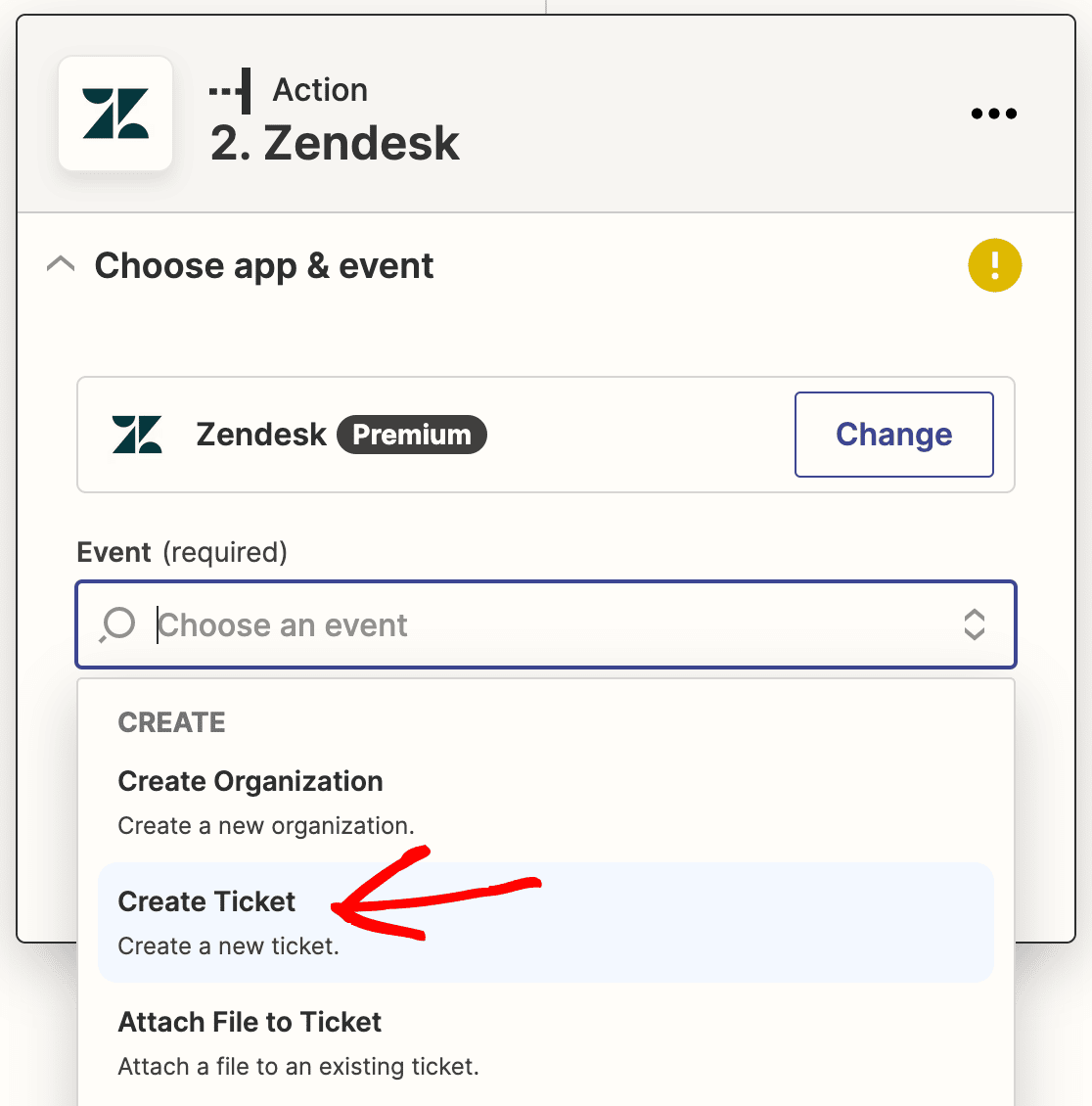
Click Continue.
Now you need to connect your Zendesk account to Zapier. Click Sign in.
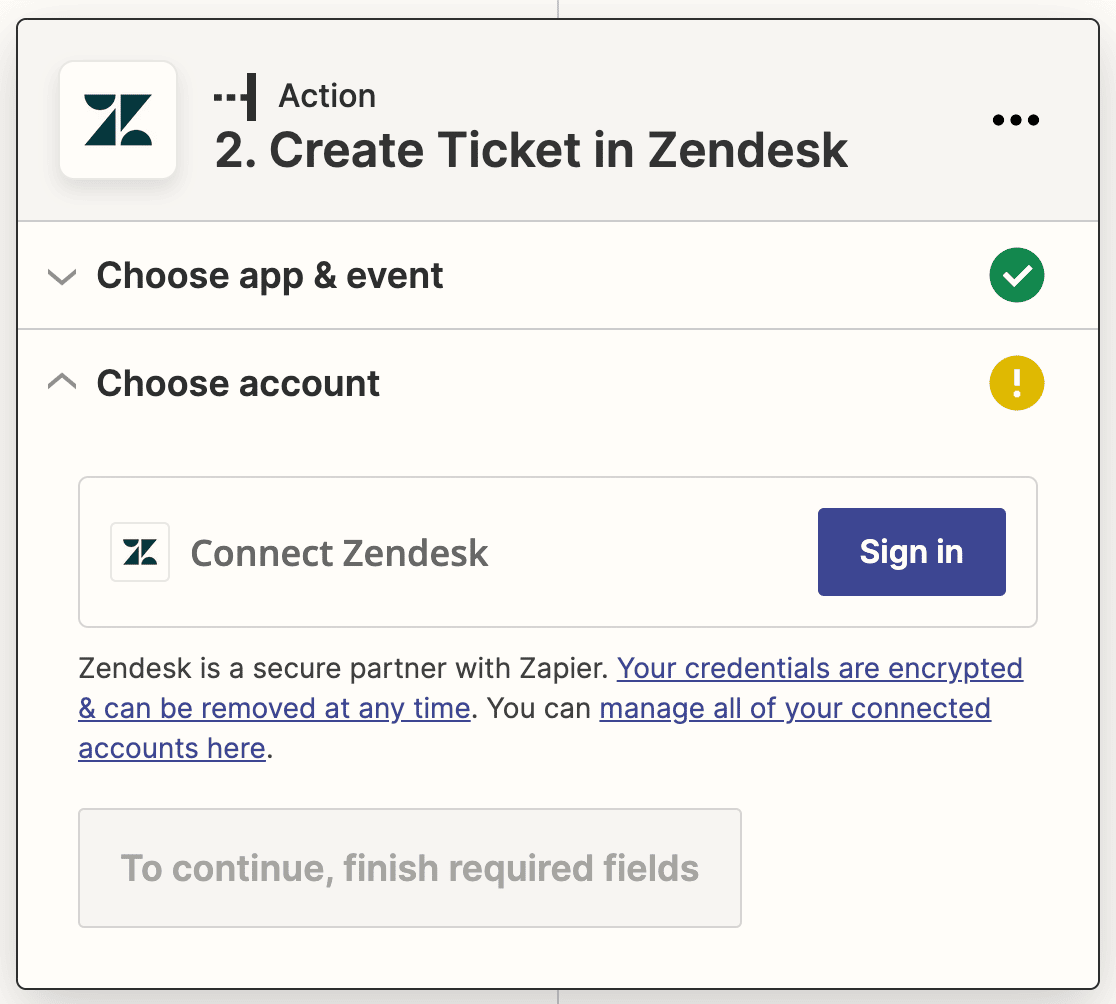
This will open a popup window where you’ll need to enter your Zendesk URL, email address, and API key.
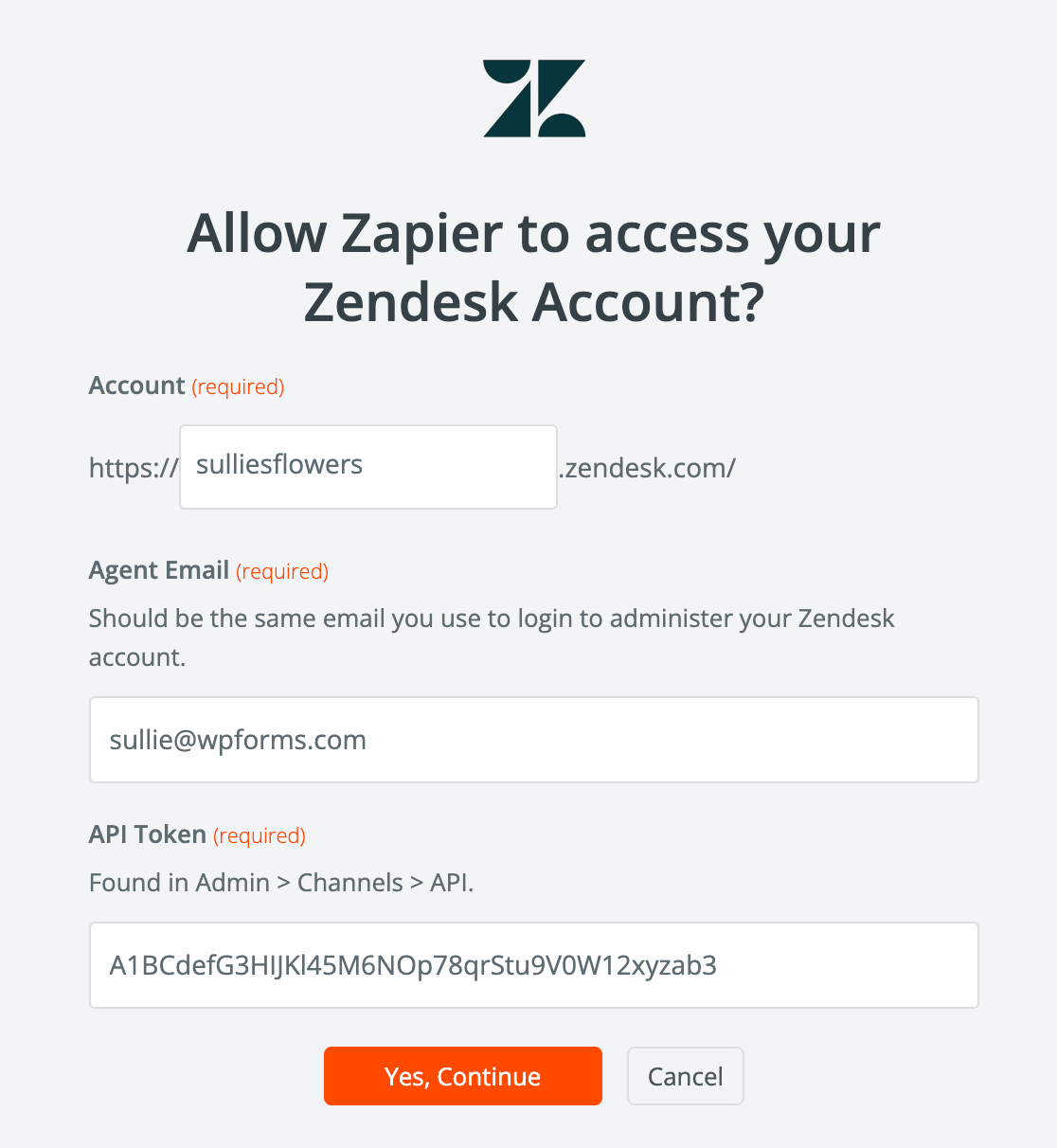
If you need help finding your API key, see Zendesk’s documentation on how to enable and generate API tokens.
Click Yes, Continue to close the popup window. Then click Continue in the Zap setup wizard to proceed to the next step.
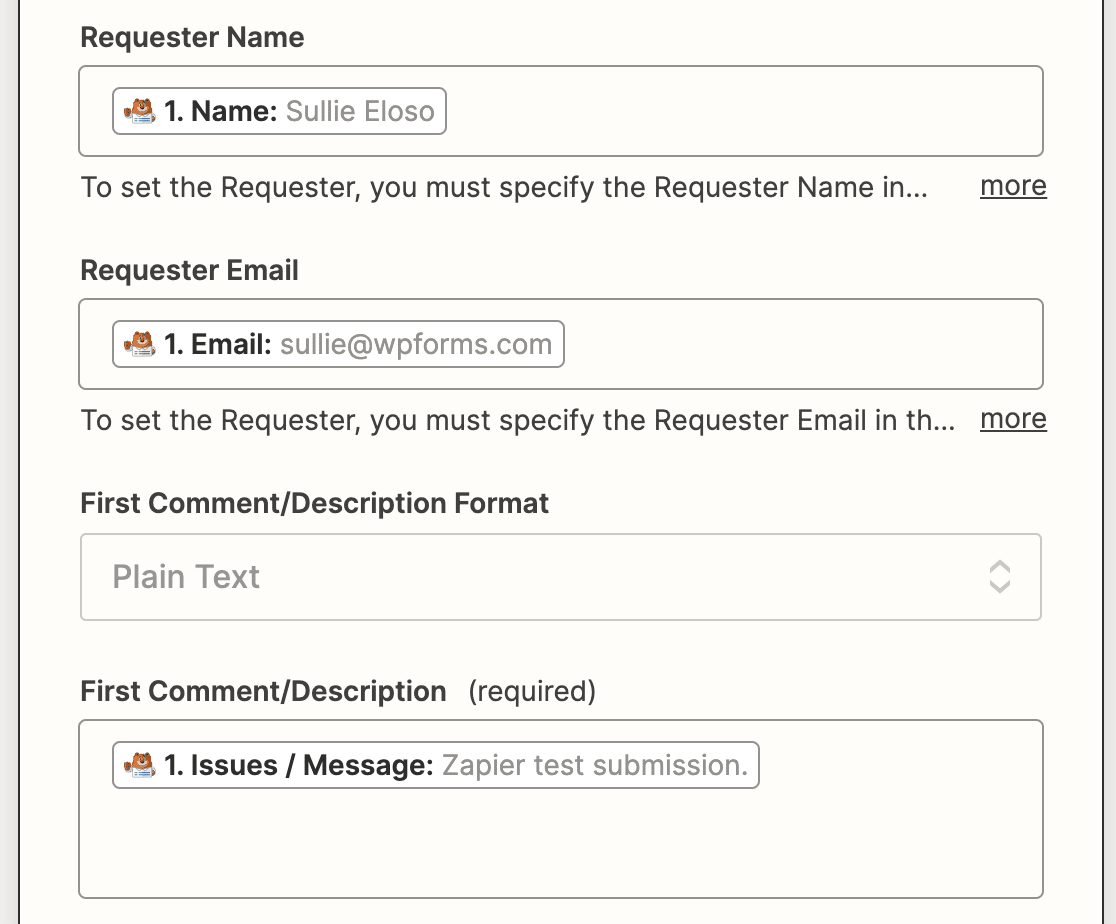
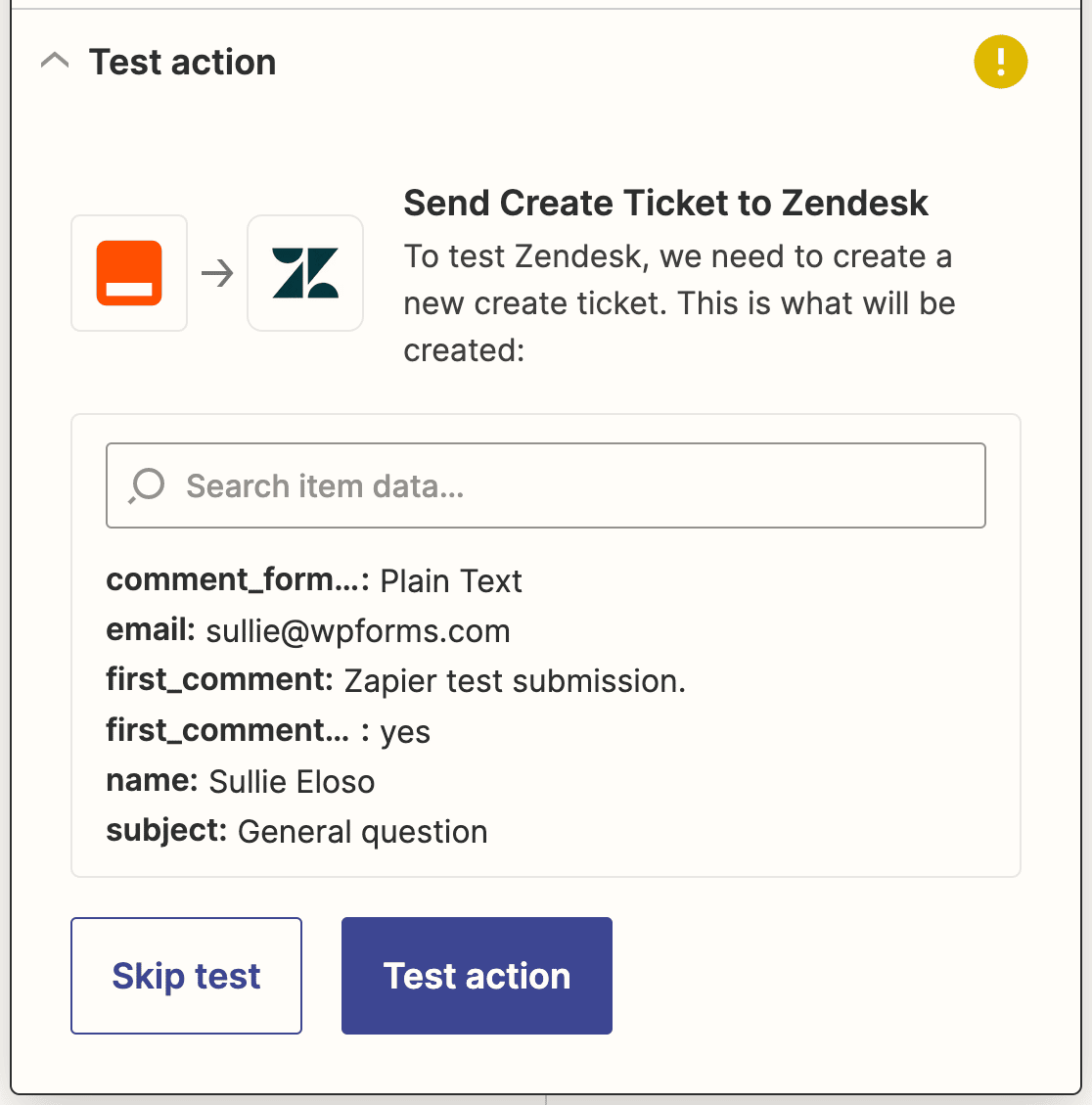
Now you need to set up a Zendesk ticket template. In this step, you’ll have to configure the correct WPForms fields in its corresponding Zendesk ticket fields. Use the dropdowns to select the corresponding fields from your WordPress form.
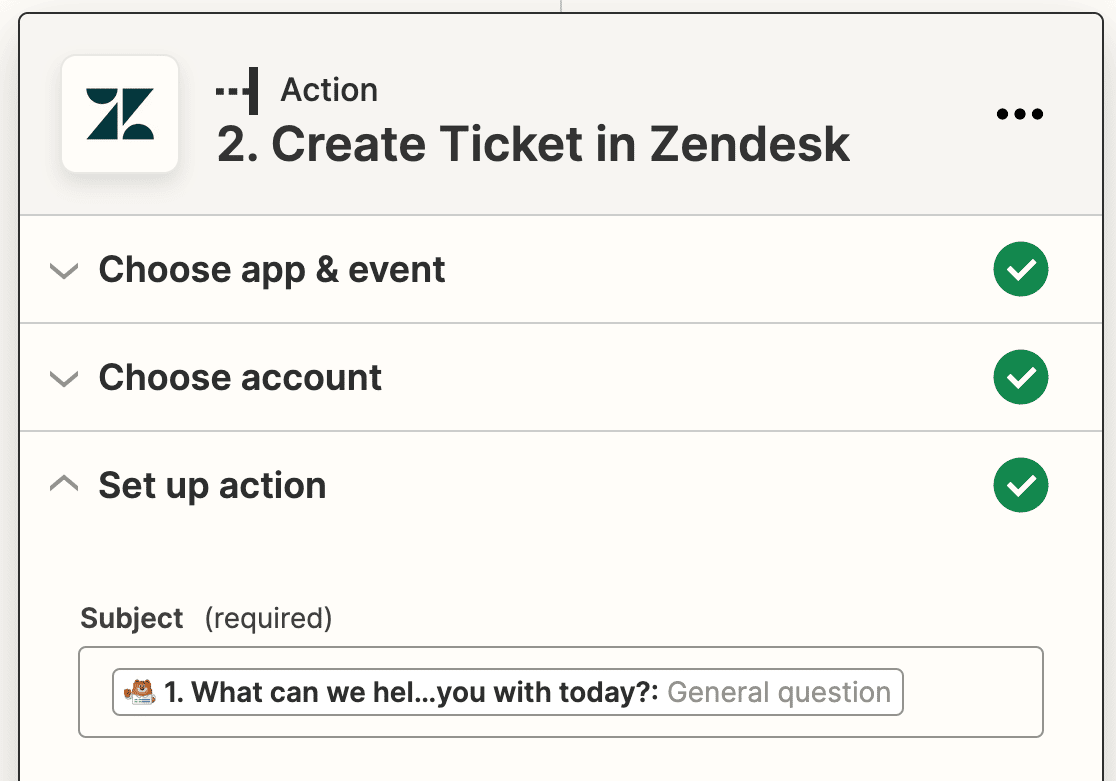
The 2 required fields are Subject and First Comment/Description. We’ll connect them to the What can we help you with today? and Issues/Message fields.
Fill out any other fields you want to connect such as the Requester Name and Requester Email, then click Continue.
Now Zapier will test your connection to Zendesk just like it did for WPForms. Click Test action to continue.
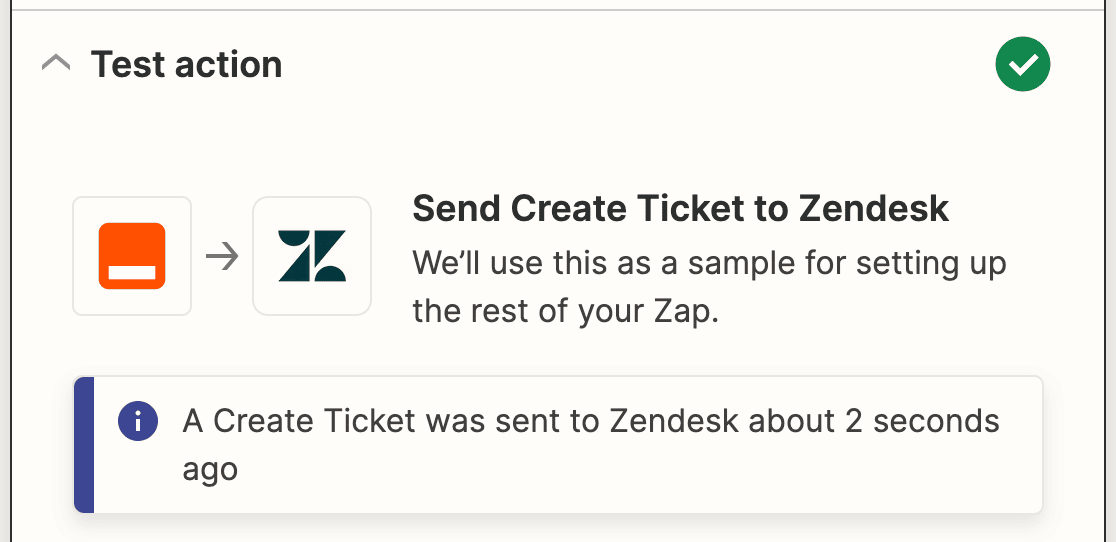
If everything is set up properly, you’ll see a success message.
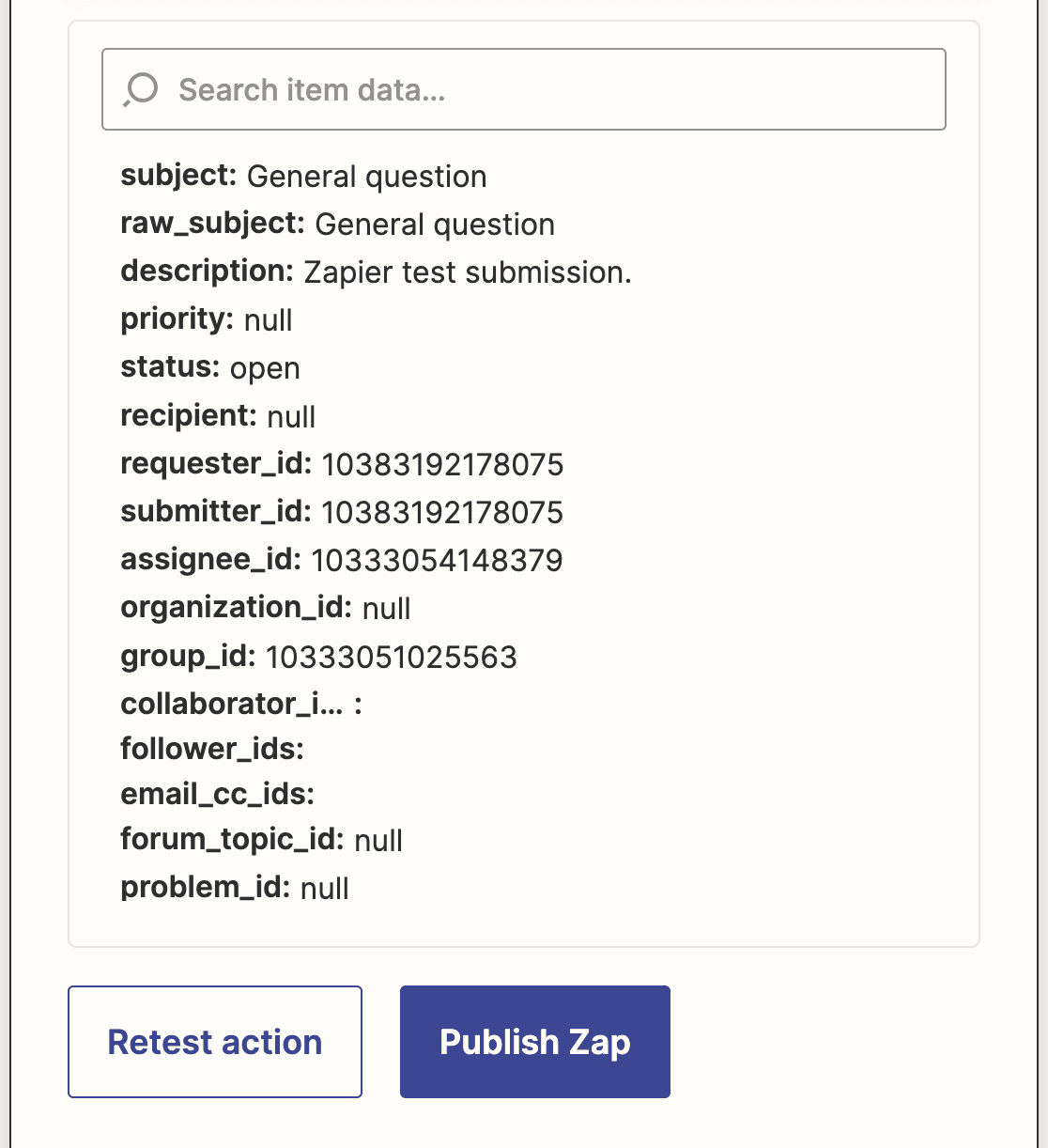
You can also check Zendesk to see if your test submission has now been added as a ticket in your account.
Lastly, don’t forget to publish your Zap so that when someone submits a support ticket form on your WordPress website, the form entry goes directly to your Zendesk account.
Other Ways to Connect Zendesk to WordPress
The WPForms and Zapier route is my pick if you want a custom support ticket form, but it’s not the only option. Depending on how your team works, one of these might suit you better.
Use the Official Zendesk Plugin and Web Widget
Zendesk offers its own Support for WordPress plugin for self-hosted WordPress sites. It works in the opposite direction from a form builder. Instead of sending form entries out to Zendesk, it brings Zendesk into your WordPress dashboard.
With the official plugin, you can view and manage tickets from a widget in your admin dashboard, convert blog comments into support tickets, and embed the Web Widget so visitors can search your knowledge base or start a chat from any page.
The catch is that it requires a Zendesk Team plan or higher, and it only works on self-hosted WordPress sites. You also don’t get much control over the ticket form itself, so it’s a better fit for teams who live in Zendesk and mainly want dashboard access inside WordPress.
Use a Free Zendesk Connector Plugin
If you’d rather skip Zapier entirely, free connector plugins on WordPress.org (WP Zendesk is a popular one) send entries from form plugins, including WPForms, straight to Zendesk using your API key.
The setup is similar in spirit to the Zapier method. You connect your Zendesk account, map your form fields to ticket fields, and every new entry creates a ticket automatically. The trade-off is a much smaller user base and a lighter feature set than the Zapier route, so run a few test submissions before you rely on it for real customer traffic.
Not sure which method to pick? Scroll back up to the comparison table. If you want full control over your form and notifications, stick with WPForms and Zapier. If you mainly want to manage tickets inside WordPress, the official plugin makes more sense.
FAQs About Zendesk WordPress Integration
Most people who set up a Zendesk WordPress integration run into the same questions, so here are quick, direct answers to the ones we hear most.
Does Zendesk work with WordPress?
Yes, Zendesk works with WordPress in several ways. You can connect it through a form plugin like WPForms using Zapier, install Zendesk’s official Support for WordPress plugin, or use a free connector plugin. The WPForms method sends every form entry to Zendesk as a new, fully mapped ticket.
Does Zendesk have a WordPress plugin?
Yes. Zendesk offers an official Support for WordPress plugin for self-hosted sites. It lets you manage tickets from your WordPress dashboard, turn blog comments into tickets, and embed the Web Widget. You’ll need a Zendesk Team plan or higher to use it.
How do I create a ticket form in Zendesk?
To create a ticket form inside Zendesk itself, go to the Admin Center and select Ticket Forms under the Manage section. You can customize the form fields there. If you want the form to live on your WordPress site instead, build it with WPForms and connect it using the steps in this tutorial.
How do I integrate Zendesk with WordPress?
Create a support ticket form with WPForms, then connect it to your Zendesk account using the Zapier addon. Once the Zap is published, every support request submitted through your WordPress site is sent directly to Zendesk as a ticket.
Can I connect Zendesk to WordPress without Zapier?
Yes. You can install Zendesk’s official WordPress plugin or use a free connector plugin that pushes form entries to Zendesk through the API. Both skip Zapier completely, though you give up some of the field mapping flexibility that makes the Zapier route so customizable.
How much does a Zendesk WordPress integration cost?
The integration itself doesn’t cost anything extra. You’ll need a WPForms Pro license, which is $199.50 per year at introductory pricing, and Zapier’s free plan covers a simple two-step Zap like the one in this tutorial. Zendesk is priced separately per agent, per month, based on the plan you choose.
How do you format a support ticket?
Keep it clear and concise. Start with a brief subject line that summarizes the issue, then provide a detailed description of the problem, including any relevant details like screenshots or steps to reproduce it. WPForms can help you structure your support ticket form so all the necessary information is captured before the ticket ever reaches your team.
Next, Explore More Ways to Automate Your Customer Support
Now that your Zendesk WordPress integration is live, you can keep building out the rest of your support workflow. Take a look at these customer service solutions for WordPress to see how forms can handle feedback, cancellations, and refund requests too.
And if your team works in a different platform, browse the full list of help desk integrations to connect it to your forms the same way.
Create Your Zendesk WordPress Form Now
Ready to build your form? Get started today with the easiest WordPress form builder plugin. WPForms Pro includes lots of free templates and offers a 14-day money-back guarantee.
If this article helped you out, please follow us on Facebook and Twitter for more free WordPress tutorials and guides.