



AI Summary
Survey answers are only useful once you can actually work with them. Scrolling a mailbox full of individual notification emails is a poor substitute for one sheet you can sort, filter, and chart.
Google Sheets is the obvious place to keep that data, but a spreadsheet has no front end for anyone to fill in, so it needs a form feeding it.
If you have a WordPress website, you can use WPForms to quickly connect Google Sheets to your survey forms and collect form data. In this post, I’ll take you step-by-step through connecting your surveys to Google Sheets.
Can You Make a Survey in Google Sheets?
No, the short answer is that you can’t make a survey directly in Google Sheets. However, you can send form responses from a survey builder tool to Google Sheets.
Doing so gives you a record of all survey responses in a spreadsheet so you can analyze and sort your data. It’s also helpful to see all responses at a glance versus individual email notifications.
How to Create a Google Sheet Survey Form
WPForms is the best WordPress plugin for creating surveys and polls. It allows you to build survey forms and generate survey reports with visual charts and graphs that can be viewed from the WordPress admin area. Follow the steps to get started:
- Step 1: Install the WPForms Pro Plugin
- Step 2: Activate the Surveys and Polls and Google Sheets Addons
- Step 3: Connect WPForms to Your Google Account
- Step 4: Create Your Survey Form in WordPress
- Step 5: Connect Your Form to a Google Spreadsheet
- Step 6: Publish the Form and Submit Test Entries
- How to Analyze Your Google Sheet Survey Results
Step 1: Install the WPForms Pro Plugin
WPForms is the form builder I reach for when a survey has to live on a WordPress site. It comes with over 2,100+ templates, including ready-built survey and poll layouts, so most of the question structure exists before you start dragging fields around.
What I like about it for survey work is that the reporting is native. Answers get charted inside the WordPress admin, which means the spreadsheet holds your raw data while the visual reports handle the reading, no exporting required.

To get started, buy the Pro license. Then install WPForms on your website. If you need help, follow these instructions on how to add a plugin to WordPress.
Step 2: Activate the Surveys and Polls and Google Sheets Addons
The surveys and polls addon adds the survey-specific fields and the reporting, while the Google Sheets addon handles sending entries to your spreadsheet.
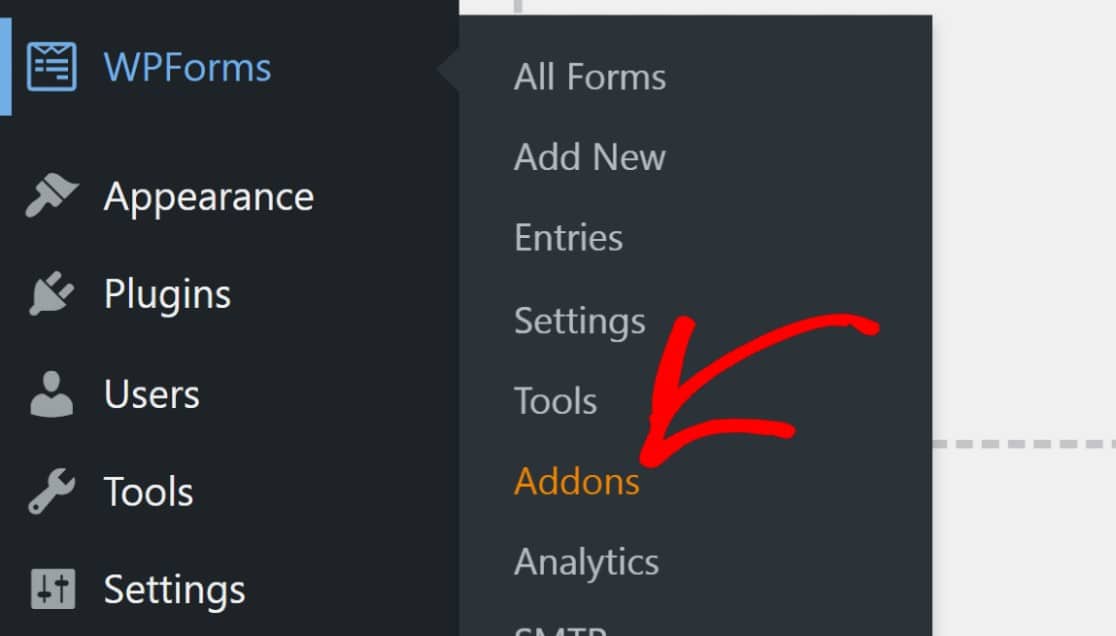
Activate both now and you won’t have to come back here mid-build. From your WordPress dashboard, go to WPForms » Addons.
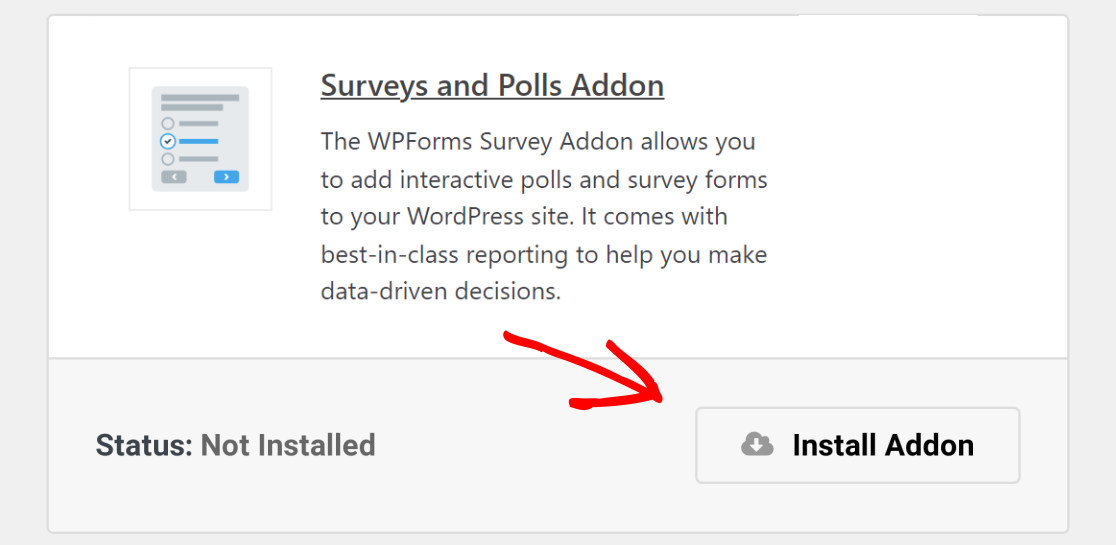
Scroll until you find the Surveys and Polls addon, or search for it in the search bar, then click Install Addon. WPForms activates it once the install finishes.
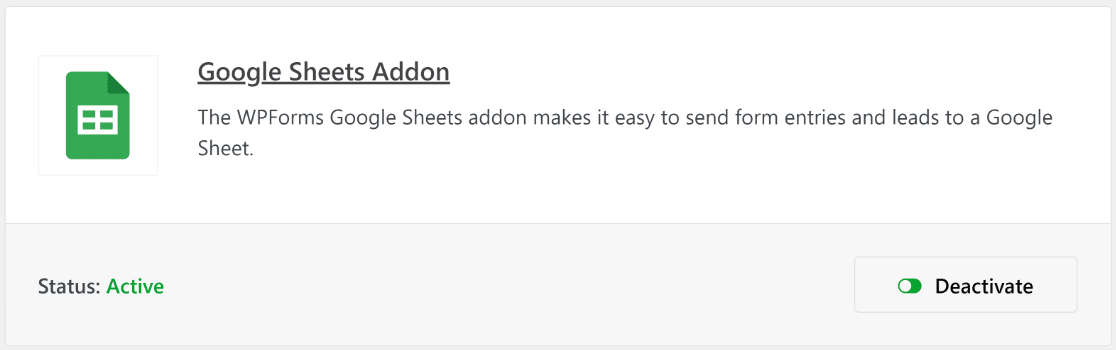
Stay on the addons screen and do the same for the Google Sheets addon.
For the finer points of the survey side, including how the reporting toggles work per field, the official guide on how to install and use the Surveys and Polls addon goes deeper than I will here.
Step 3: Connect WPForms to Your Google Account
WPForms Pro includes the Google Sheets addon, which allows you to integrate your WordPress forms directly with Google Sheets.
Note that you’ll need to be logged in to the Google Workspace account you use to access Google apps like Google Sheets and Google Docs.
With Google Sheets connected, you can create new forms that automatically send survey data to a spreadsheet so you can view real-time responses.
With your browser still open to WPForms » Addons, locate the Google Sheets addon and activate it.
Next, you’ll need to integrate Google Sheets with WPForms using the Integrations tab of the WPForms settings dashboard.
You can get here by clicking WPForms » Settings » Integrations.
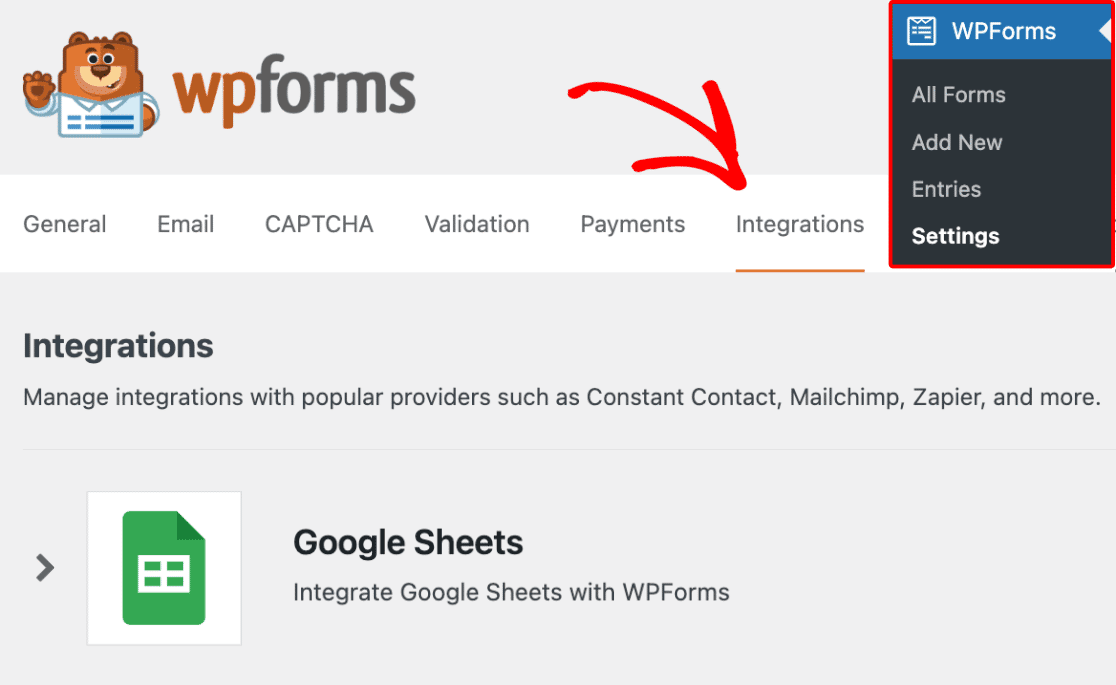
Scroll down till you see Google Sheets, then click on it.

You’ll see the option to activate the integration. Click Add New Account.
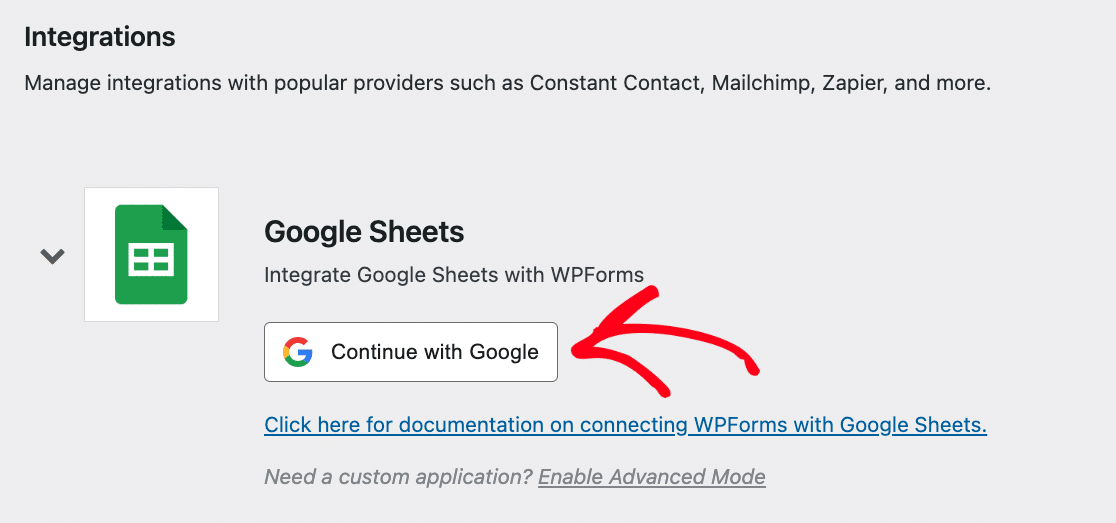
You’ll be prompted to log in to your Google account to give WPForms access. Click Select all to grant the necessary access.
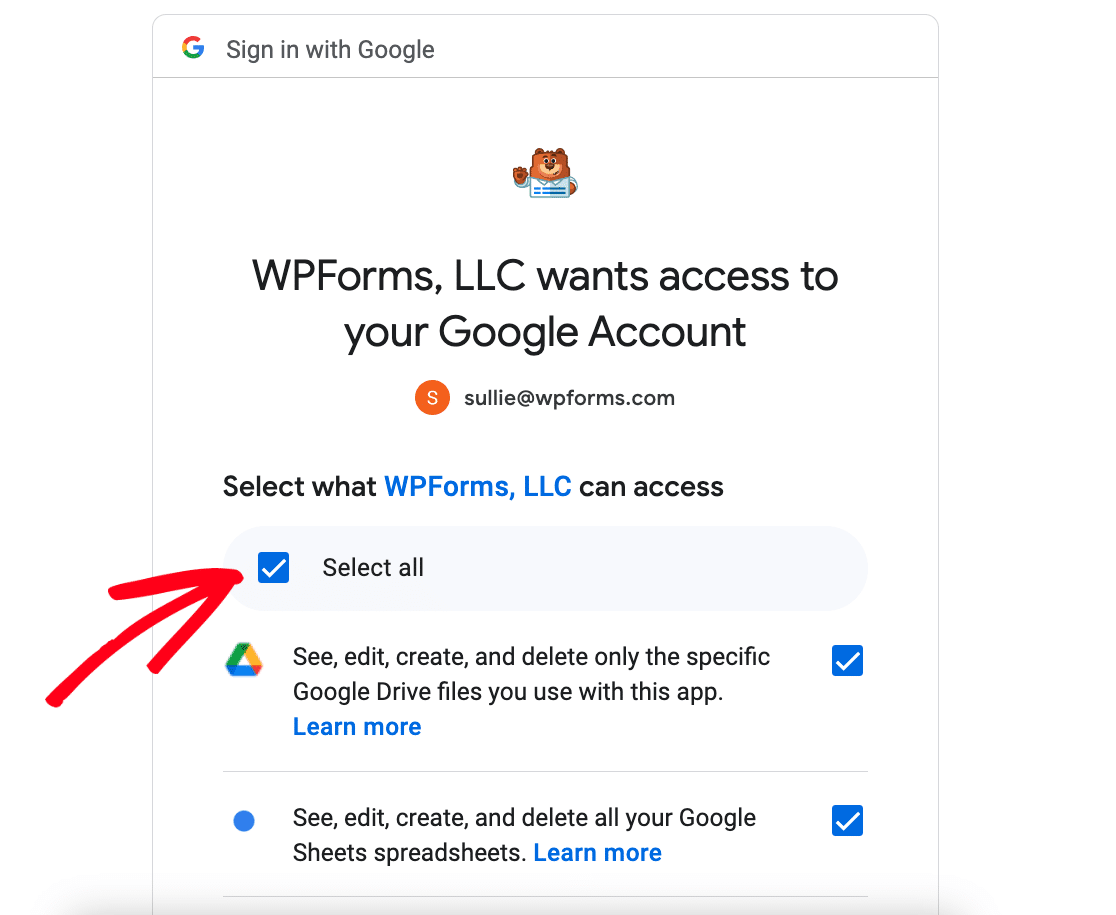
Then scroll down and click Continue.
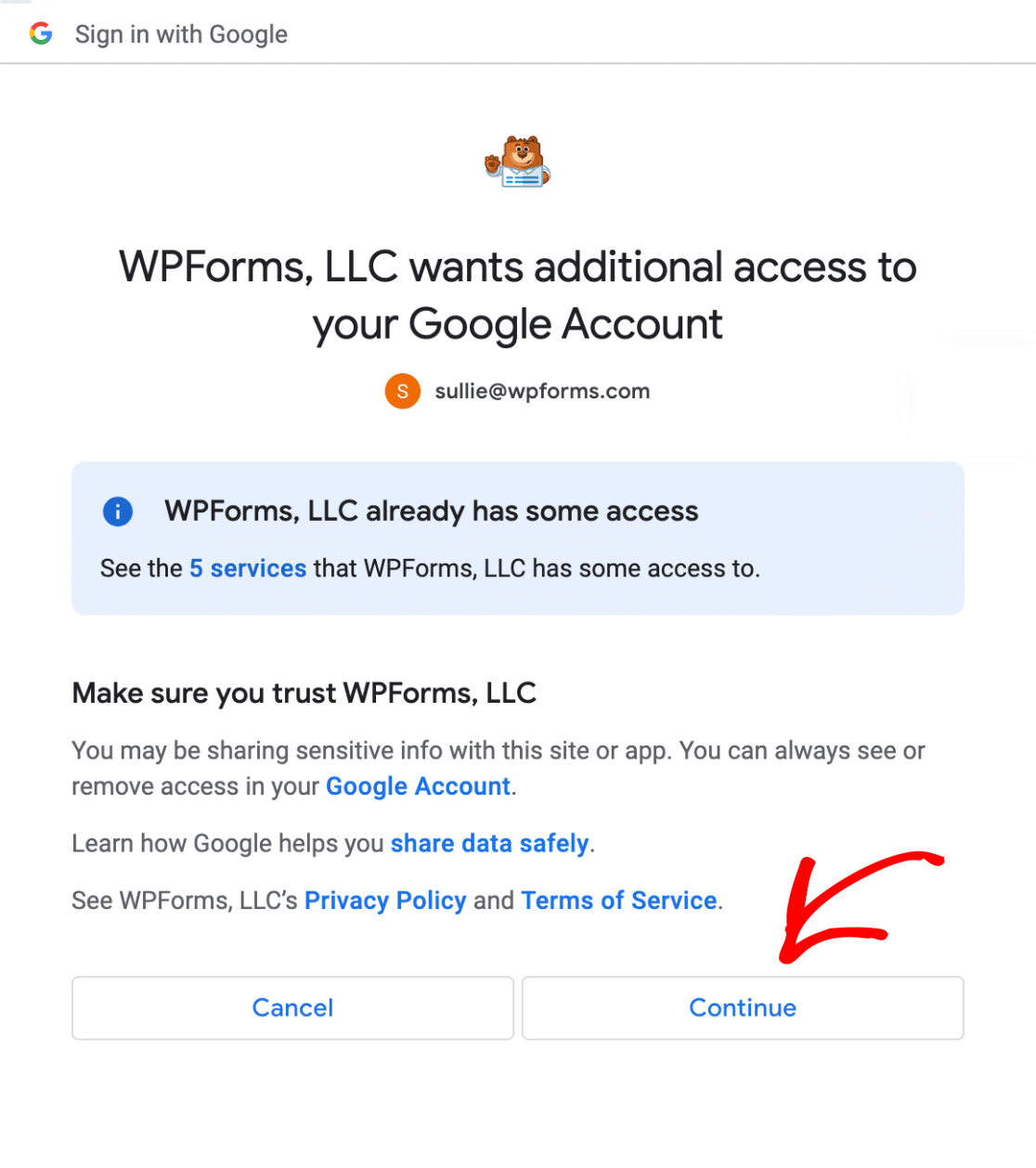
When the page redirects to the WPForms integrations page, you’ll see that the Google Sheets integration is now connected.

Next, we’ll create a survey form and connect it to a Google Sheets spreadsheet.
Step 4: Create Your Survey Form in WordPress
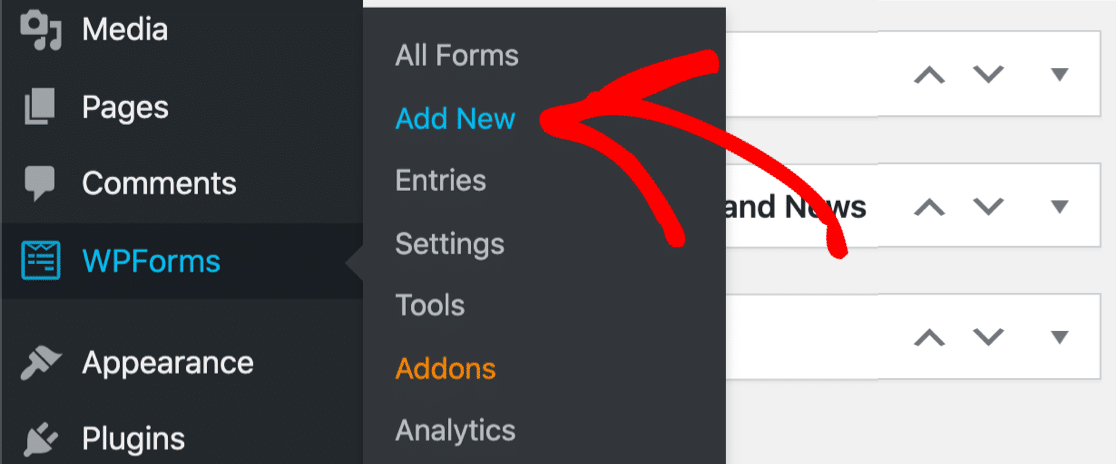
To create your online form, click on WPForms » Add New. That opens the template library, where you can pick a prebuilt layout or click Blank Form to start from nothing.
The survey form template already contains most of what a general questionnaire needs, and there’s a Google Sheets survey template built specifically for this workflow.
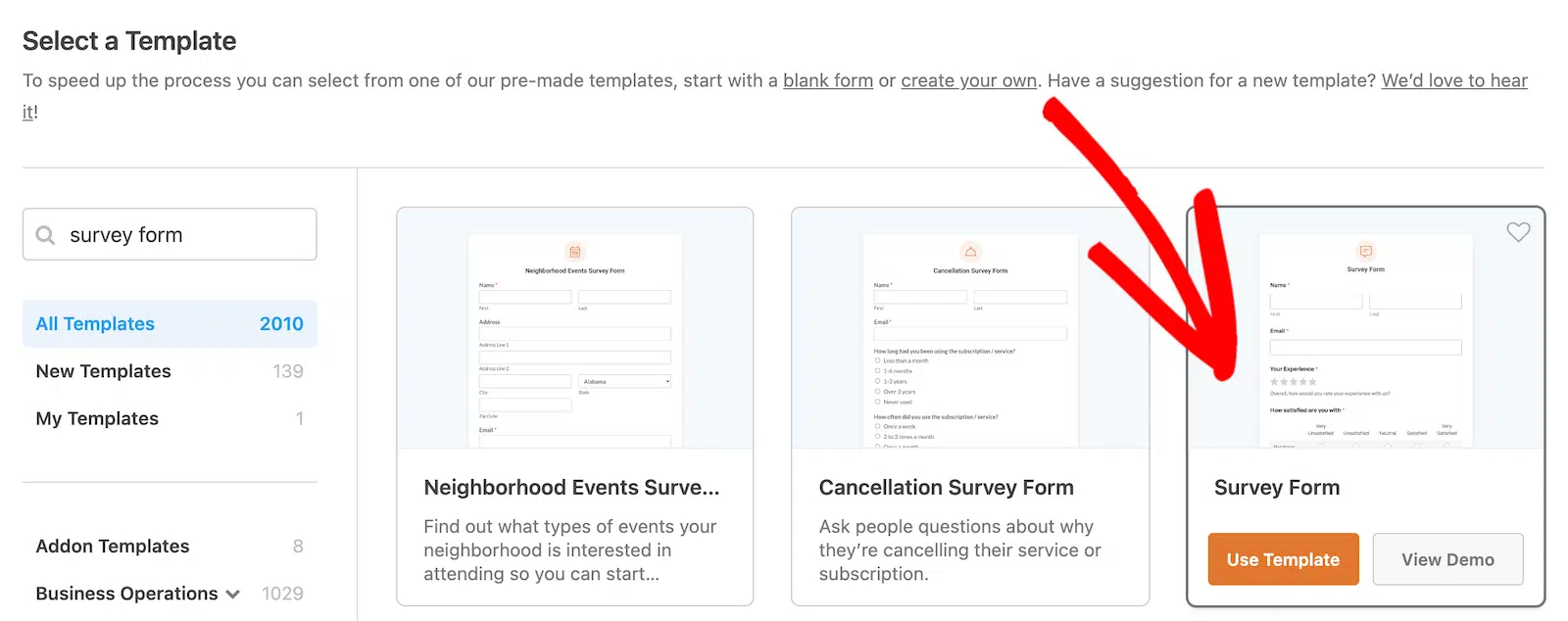
When you open the Survey Form Template, you’ll see your form template on the right of the screen, with additional form fields on the form builder panel on the left.
These fields allow you to include different types of questions or answer options in your survey. To add form fields to your form, you can drag and drop them onto the template.
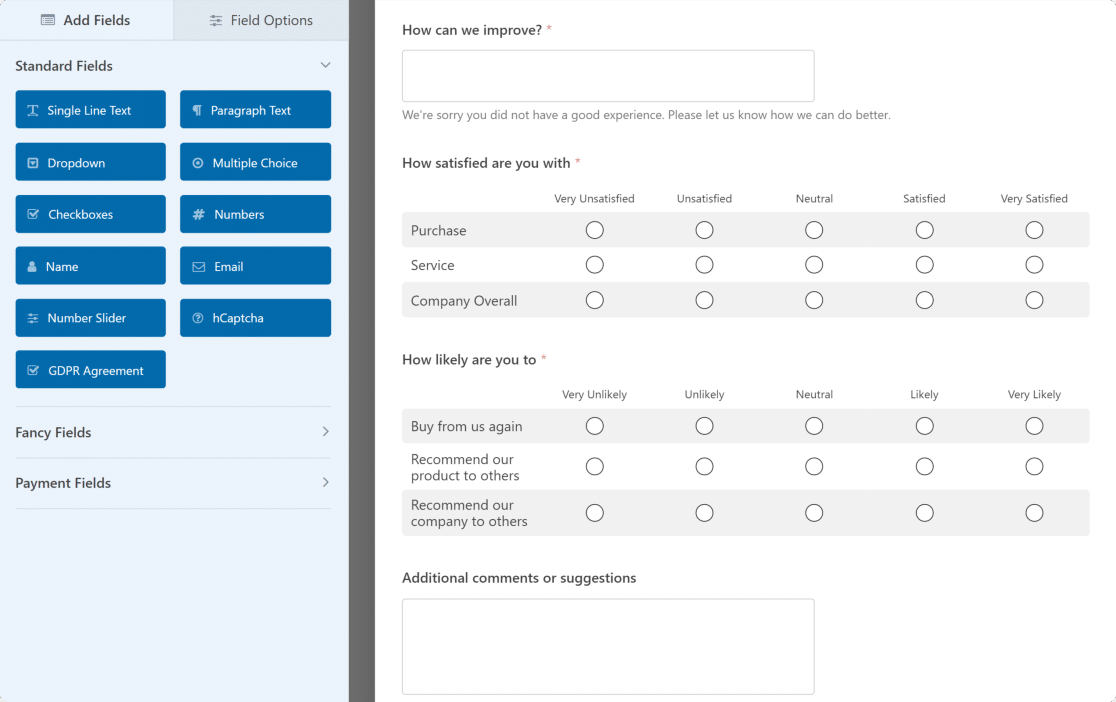
The fields worth knowing about for survey work are the ones the Surveys and Polls addon unlocks. Likert Scale handles rating several statements on one shared scale.
Net Promoter Score produces the standard 0 to 10 recommendation question with its own scoring, and Rating gives you star ratings. Those three cover the bulk of customer feedback questions.
If you’d like to customize yours with additional survey questions, however, here’s a handy guide to creating survey forms to get you started. You can also use conditional logic to help your forms flow better.
Step 5: Connect Your Form to a Google Spreadsheet
When you’re finished creating your form, it’s time to connect it to Google Sheets. While in the form builder, click on Settings » Google Sheets » Add New Connection.
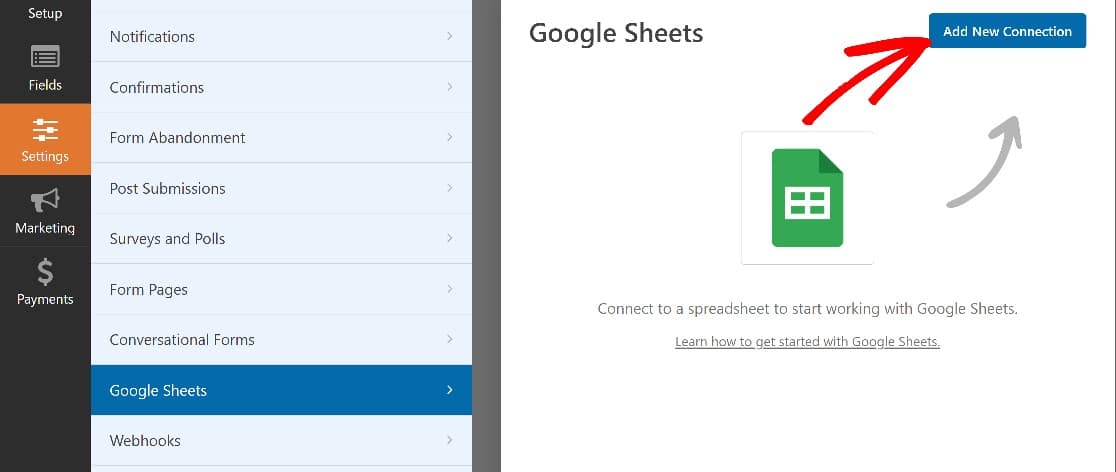
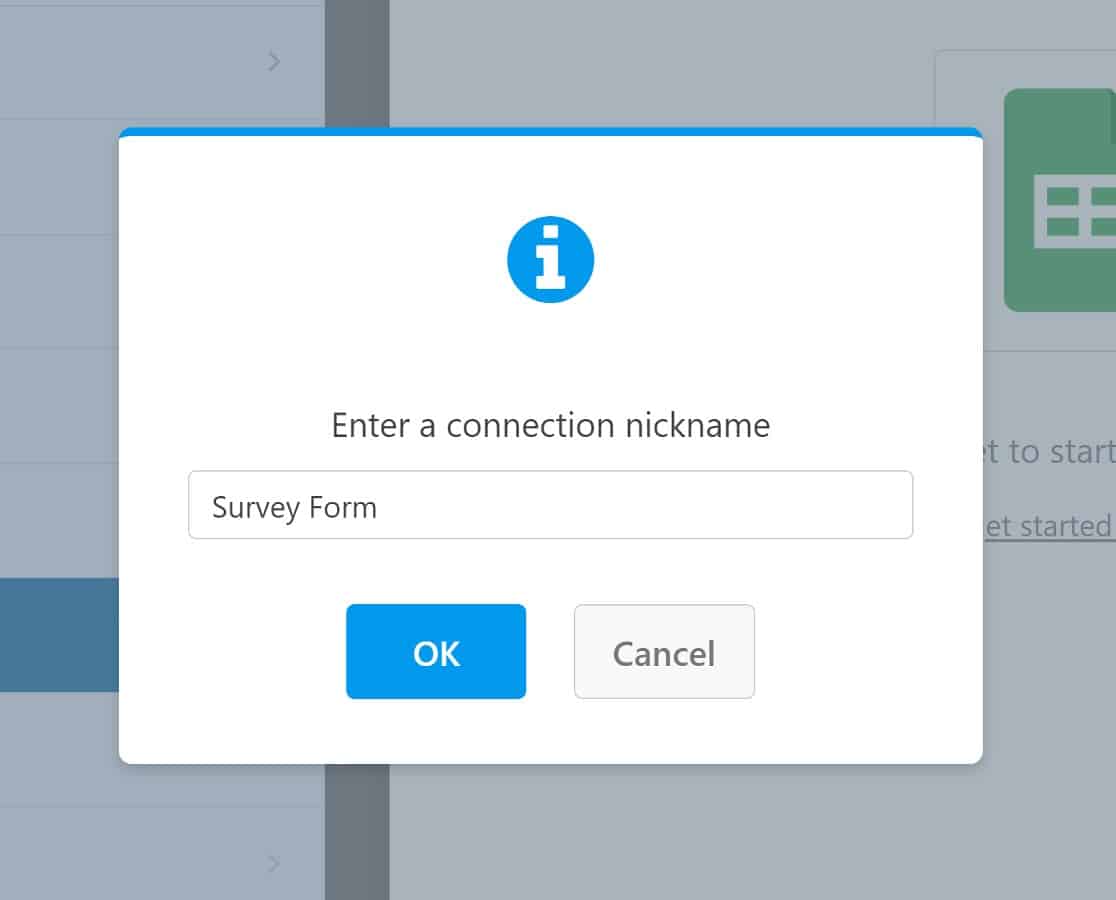
Give the connection a nickname so you can identify it later. Visitors never see this, so anything descriptive works. I’ll use Survey Form, then click OK.
There are two ways to proceed. If you already have a spreadsheet created to collect survey results, you can connect this sheet now. If you don’t, the WPForms Google Sheets integration allows you to create one.
Let’s look at how each of these options works.
Connecting to an Existing Spreadsheet
To connect your survey form to an existing spreadsheet, choose the Select Existing option.
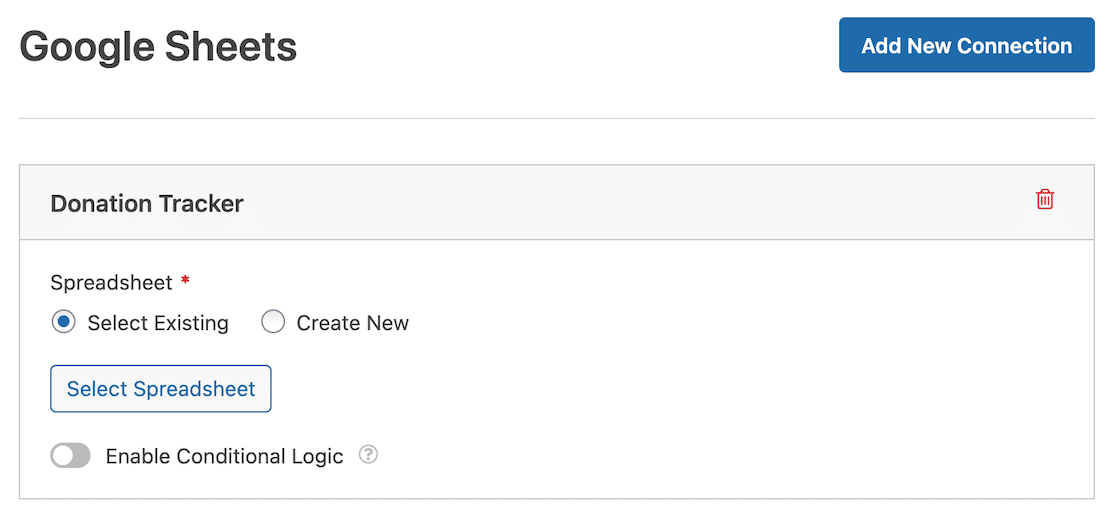
Then click on the Select Spreadsheet button and follow the steps to connect your existing spreadsheet to your form.
Once this is done, you can set up form field mapping, which allows you to specify which column in your spreadsheet should receive data from specific fields on your form.
One thing to remember is to always keep the first column in your sheet free for the automatically generated Entry ID data. To set up form field mapping, scroll down to the Field Mapping section.
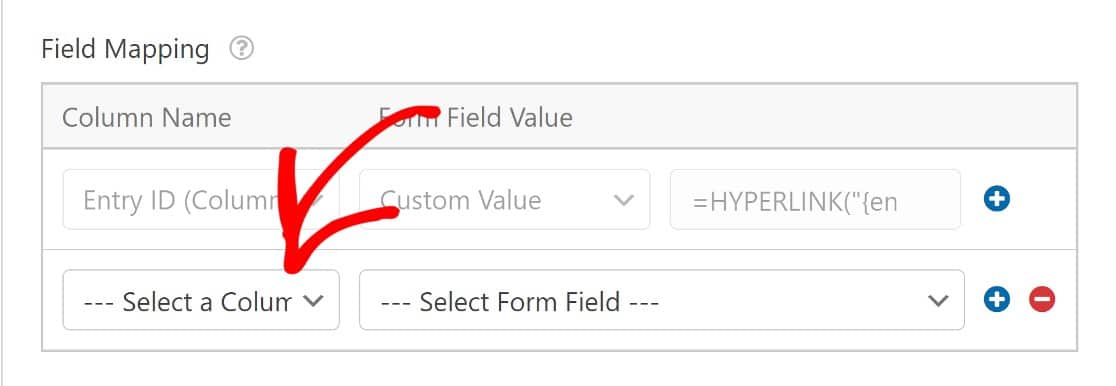
Select the column that you want to map to a form field. Next, choose the form field that you want to sync with the column you chose.
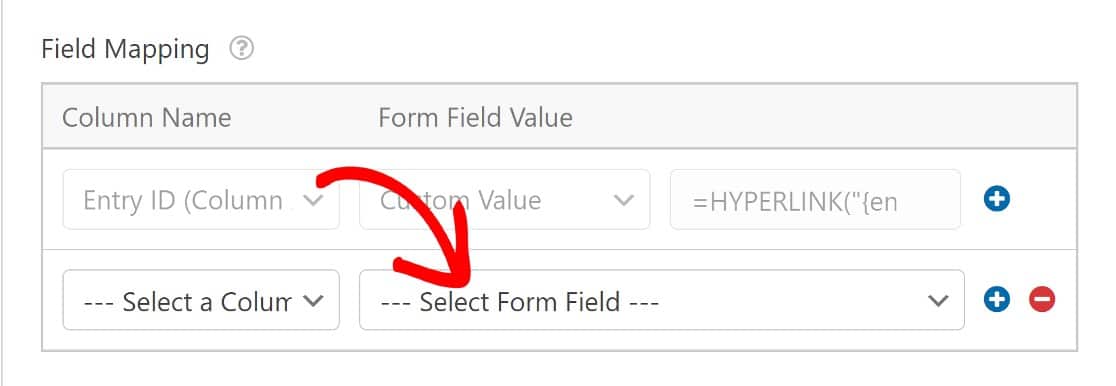
Once you’ve mapped your fields, save your settings. Now every time a respondent fills out your survey, the survey form will send entries to the Google spreadsheet you selected.
Connecting to a New Spreadsheet
If you don’t already have a spreadsheet for your survey form, it’s super easy to create one. Rather than choose the Select Existing option like we did above, select Create New. Then you can enter all of the relevant details to create your spreadsheet.
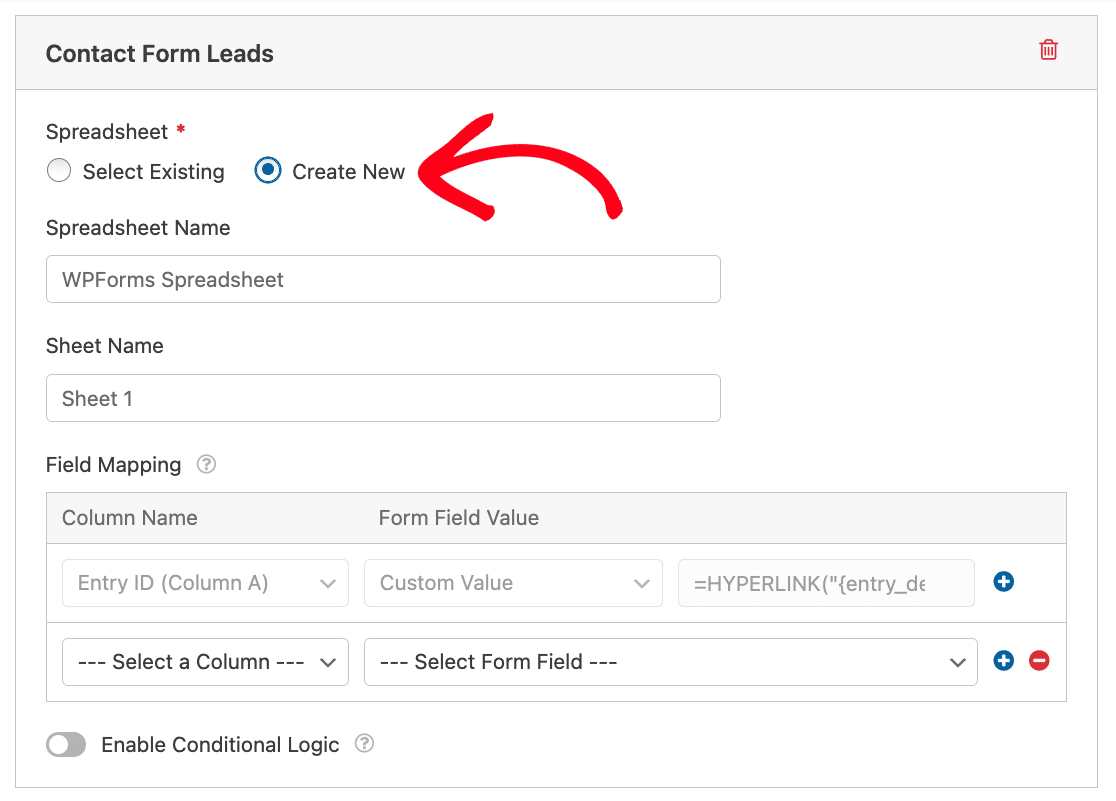
Then you can complete the steps to map form fields to columns. Note that Entry ID is the default first column. It links directly to the individual entry details from your WordPress dashboard.
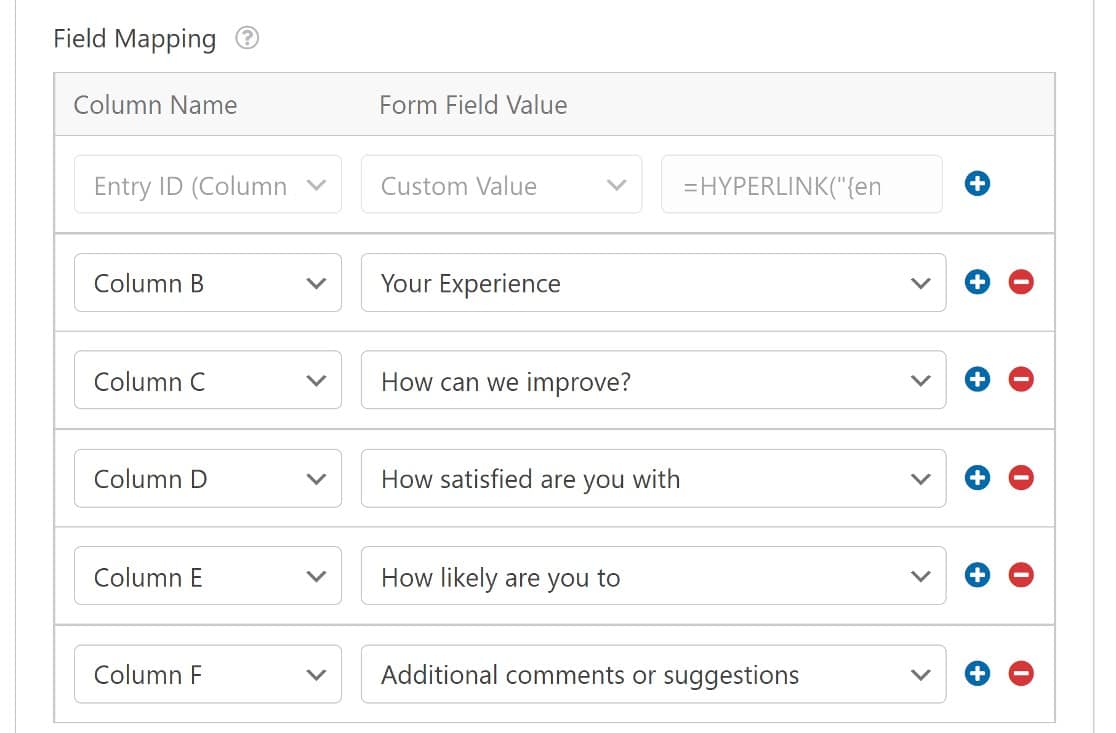
Save the form and the spreadsheet picks up your column headings. From this point every completed survey will send entries straight to the Google spreadsheet you connected.

Step 6: Publish the Form and Submit Test Entries
The last step is to embed our form and create a test entry to see how everything works.
If you need guidance with this step, here’s our guide to embedding a contact form on a page in WordPress.
Once you’ve published your form, go ahead and submit an entry as a user would.

Now open your survey spreadsheet in Google Drive, and you’ll see that the sheet has been updated with your response.
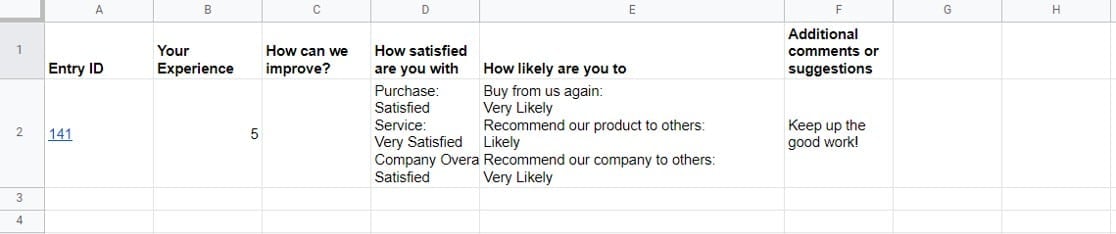
Test with a couple of different answer combinations before you send the survey out, particularly if you’ve used conditional logic.
Fields that stay hidden for a given respondent simply leave their column empty, and it’s better to see that behaviour on a test row than to wonder about gaps in real data later.
Google Forms vs WPForms for Survey Data in Google Sheets
Both routes deliver responses into a spreadsheet, so the decision comes down to the questions you can ask and what happens to the answers once they arrive.
| Google Forms | WPForms | |
|---|---|---|
| Cost | Free | Pro license or higher |
| Setup time | A couple of minutes | Longer, the plugin and addons install first |
| Where responses are stored | Google account only | Your WordPress database plus the sheet |
| Survey-specific fields | Grids and linear scales | Likert Scale, Net Promoter Score, and star ratings |
| Survey reporting | Per-question summary charts | Interactive reports with date and answer filters, plus export and print |
| Live poll results on your site | Not supported | Confirmation message or shortcode anywhere on the site |
| Conditional logic | Section branching | Field level, plus conditional notifications |
| Form styling and branding | Google branding, limited themes | Matches your site with full styling control |
| Spam protection | Google’s built-in checks | CAPTCHA, Cloudflare Turnstile, anti-spam, allow and deny lists |
Google Forms genuinely wins on cost and speed, and for a one-off internal poll it’s hard to argue with. WPForms earns its keep when the survey is customer-facing, when you need scoring rather than raw counts, or when the response data matters enough that you want it in your own database. If you’re weighing up other options too, I’ve compared Google Forms against other survey tools elsewhere on the blog.
How to Analyze Your Google Sheet Survey Results
Getting answers into a spreadsheet is only halfway, and reading them properly is where the value sits. Depending on which method you used, you have one or two places to do that.
In Google Sheets
Select your response range, go to Insert » Pivot table, then put the question column into Rows and the same column into Values set to COUNTA. That gives you a count per answer without writing anything.
For single figures, a formula like =COUNTIF(D2:D500,"Very satisfied") does the job. Insert » Chart turns any summarized range into a bar or pie chart, and conditional formatting on a rating column makes the low scores jump out while you’re scrolling.
If other people share the sheet, look at Data » Filter views rather than the standard filter. It lets you slice the responses for yourself without changing what anyone else is looking at.

In WPForms
The Surveys and Polls addon charts everything inside WordPress, so a survey built with Method 2 gives you interactive survey reports alongside the spreadsheet.
Each question gets a graph matched to its field type, with Likert questions rendering as stacked bars and Net Promoter Score getting its own scoring breakdown.
The filtering is the part I’d point people to first. Reports can be narrowed by date range or by a specific question and answer, and you can save a filter to return to the same view later.
Reports also export and print, which helps when results have to reach someone who doesn’t log in to WordPress. Polls behave a little differently from surveys, and the results don’t have to stay inside the WordPress admin at all.
You can display survey results in the confirmation message right after someone votes, or anywhere on your site with a shortcode so visitors watch the tally build.

FAQs on Google Sheet Survey Forms
Connecting a survey form to Google Sheets tends to raise the same handful of questions, mostly around account permissions and column limits. Here are the ones that come up most often.
Do I need a Google Workspace account to connect WPForms to Google Sheets?
No. Any standard Google account works. You only need access to an account that can edit the spreadsheet you want to use.
Why don’t all of my spreadsheets appear when I try to select one?
Only spreadsheets you have permission to edit show up in the picker. If a sheet was shared with you as view-only, or it sits in a corporate account with restricted sharing, ask the owner for edit access and it will appear.
What happens if my survey form has more than 26 fields?
Google Sheets runs out of default columns at Z. Add the extra columns to the sheet yourself and they become available to map in the connection settings.
Can I send survey responses to Google Sheets and still get email notifications?
Yes. The Google Sheets connection runs alongside your normal form notifications, so a response can land in the spreadsheet and in your inbox at the same time.
Can I show live poll results to visitors on my site?
Yes, using the Surveys and Polls addon. Poll results can appear in the confirmation message after someone votes, or anywhere on your site through a shortcode.
Next, Turn Your Survey Responses Into Better Decisions
A spreadsheet full of answers only pays off when somebody reads it properly. If you want to go further on the reporting side, my guide to analyzing survey results in WordPress covers what to look for once responses start arriving.
It’s also worth revisiting your question wording after the first fifty or so responses. Questions that looked clear while you are building the form often turn out to be read differently by respondents.
Start Collecting Survey Responses Now
Ready to build your form? Get started today with the easiest WordPress form builder plugin. WPForms Pro includes lots of free templates and offers a 14-day money-back guarantee.
If this article helped you out, please follow us on Facebook and X (Twitter) for more free WordPress tutorials and guides.