



AI Summary
Do you want to add matrix survey questions to your WordPress forms?
When you ask people to rate ten different things on the same scale, writing ten separate questions wears them out before they reach the end, and that is the exact problem a matrix question is built to solve.
If you’re collecting customer feedback, using matrix questions is an excellent way to gather accurate responses about how your audience feels about your products and services.
In this guide, I’ll explain what matrix survey questions are, walk through the different types you can use, and cover when they actually help. After that, I’ll show you how to build one in WordPress with WPForms.
What Is a Matrix Question?
A matrix question is a survey question that consists of multiple rows and columns. The questions on a particular subject are grouped in rows, while the columns represent the corresponding answer choices for each question.
For example, you can ask your visitors to rate different aspects of the customer service you provide on a scale from ‘Very Satisfied’ to ‘Very Unsatisfied’.
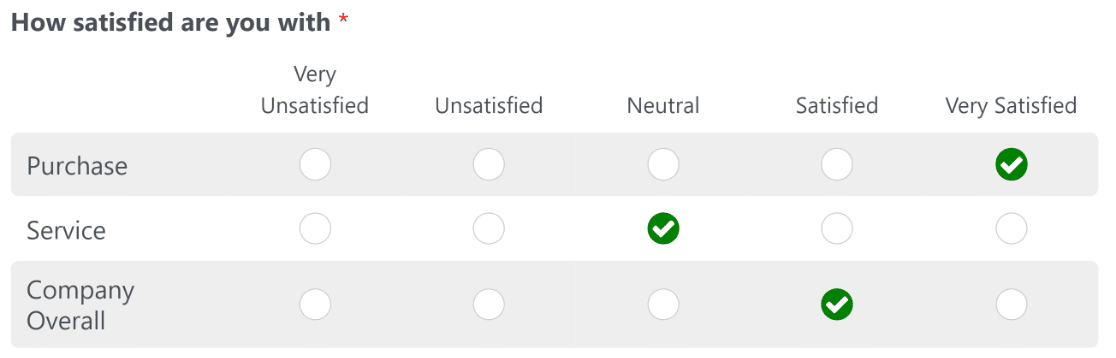
Matrix survey questions can either be single-selection, where respondents can only select one answer for a question row. Or it can be multiple selection, where respondents can select multiple answer choices for a row of question.
Types of Matrix Survey Questions
The way a matrix question looks depends on the label you give the field and the answer choices you set for its rows and columns. That defines the main types you’ll reach for most often:
- Single-selection matrix: Respondents choose one answer per row. This is the standard setup for satisfaction and agreement ratings.
- Multiple-selection matrix: Respondents can pick more than one answer in a single row. It fits questions like which features someone has used from a list.
- Likert scale: A rating matrix that measures agreement or satisfaction on an ordered scale, usually running from strongly disagree to strongly agree. If you want the full breakdown, our guide on what a Likert scale is covers it in detail.
- Rating matrix: Rows are items and columns are a numeric or star rating, handy for scoring product features side by side.

When to Use Matrix Survey Questions (With Examples)
Matrix questions are worth using when you’re asking people to judge several things against the same yardstick. They group similar questions together, which shortens your form and gives you cleaner data to compare across items:
- Customer satisfaction: Rate different parts of your service, like support, pricing, and delivery, on one scale. Our roundup of customer satisfaction survey examples shows how this looks in practice.
- Event and course feedback: Ask attendees to rate the venue, speakers, and materials after a conference or training session.
- Product feedback: Have users score individual features so you can see which ones land and which need work.
- Employee surveys: Gather opinions on workload, communication, and management using consistent rating rows.
Matrix questions fit naturally into most types of surveys, and pairing them with the right survey questions to ask is what turns raw responses into something useful.

Matrix Question Best Practices (and Mistakes to Avoid)
Matrix questions are easy to overload, and an overloaded grid is where data quality starts to slip, so a few simple habits go a long way toward keeping them readable and reliable.
Long grids tire people out, and a tired respondent starts straight-lining, clicking the same column down the whole list without really reading each row and quietly skewing your data.
How the grid renders on phones matters just as much, because a layout that looks fine on a desktop can turn into a cramped mess on a small screen. When a lot of your traffic is mobile, keep your columns to a handful.
When you use a rating or Likert scale, an odd number of choices, five is a common setup, gives people a neutral middle option instead of forcing them to lean one way.
Keep the scale direction consistent as well, so every row runs from negative to positive in the same order. If you want inspiration for the wording itself, our library of questionnaire examples is a good place to start.

How to Create a Matrix Question
I’ll use WPForms for this walkthrough, because its Surveys and Polls addon comes with a ready-made matrix field and turns responses into visual reports for you.
For a broader walkthrough that goes beyond matrix questions, our guide on how to create a survey form in WordPress covers the whole process.
Step 1: Install the WPForms Pro Plugin
WPForms is a beginner-friendly form and survey plugin for WordPress, with more than 2,100+ templates covering everything from contact forms to full survey forms.
What I like most about WPForms for surveys is that it doesn’t stop at collecting answers. The Surveys and Polls addon builds interactive reports from your responses, so you can spot trends without exporting anything to a spreadsheet.
To follow this tutorial, you’ll need the Pro license, since the matrix field and the survey reporting features live in the Surveys and Polls addon..

To get started, go ahead and buy the Pro license, then install it on your website. If you need help with this part, follow these instructions on how to install a plugin in WordPress.
Step 2: Install the Surveys and Polls Addon
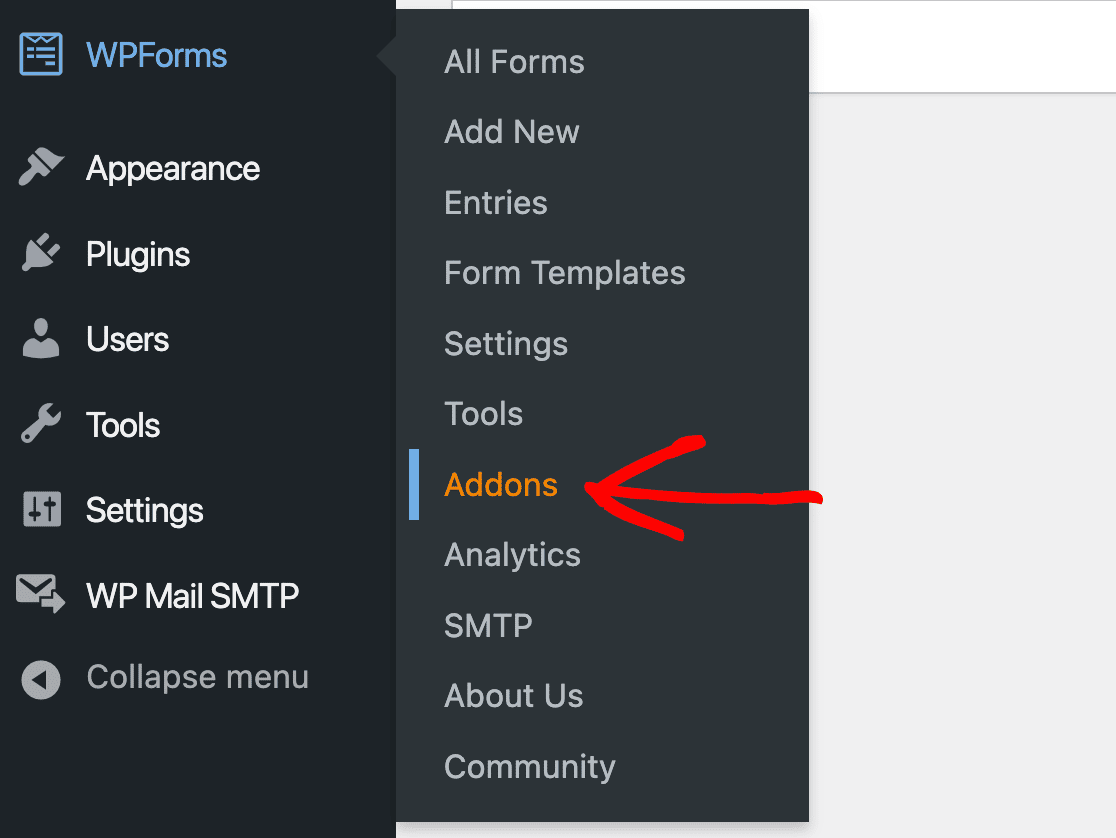
With WPForms Pro active, the next step is to add the Surveys and Polls addon, which is what unlocks the matrix field and the survey reports. From your WordPress dashboard, go to WPForms » Addons.
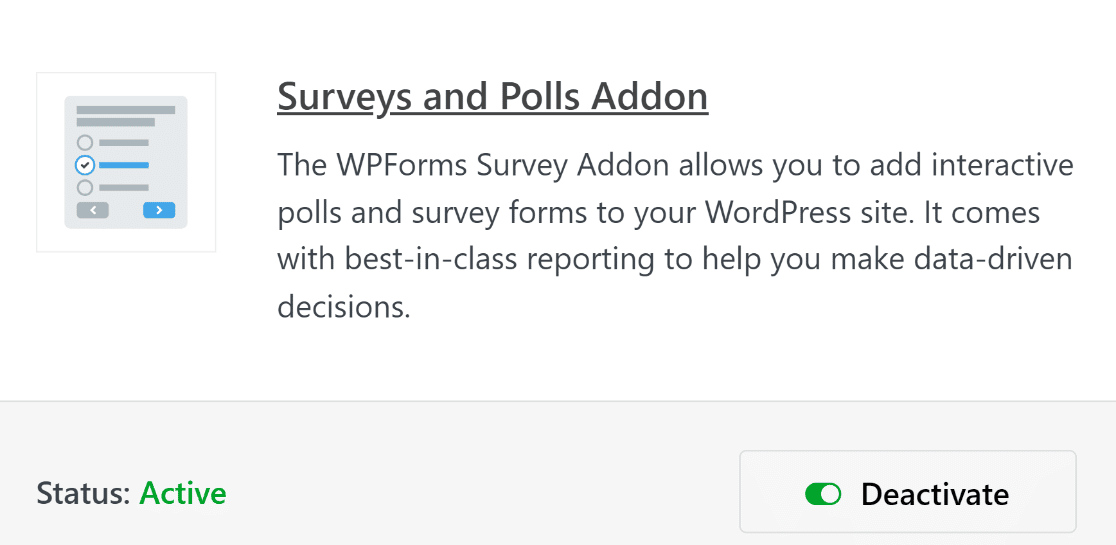
Find the Surveys and Polls addon, then click the Install Addon button. Once it finishes, the status underneath will switch to Active, and you’re ready to build your form.
For a closer look at the addon’s settings, WPForms also has official documentation worth bookmarking.
Step 3: Use the Survey Form Template
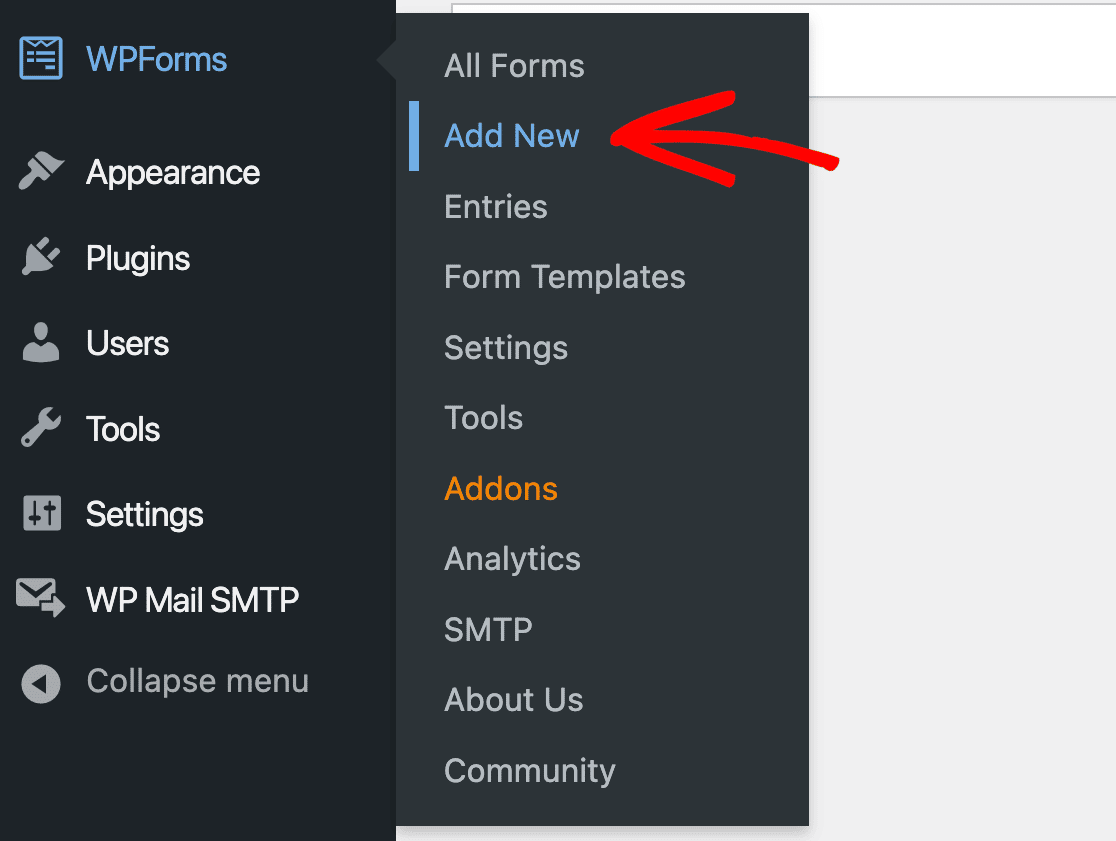
Rather than build a survey from scratch, you can start from a template that already has matrix questions in place. Go to WPForms » Add New to open the form setup screen.
Here you can name your form and pick a template to work from.
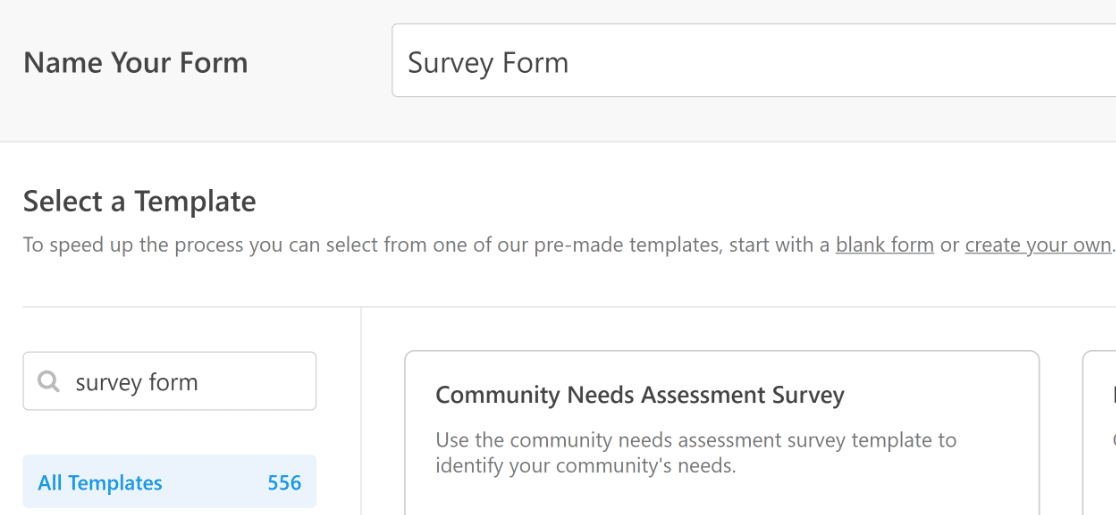
WPForms includes 2,100+ form templates, and the Survey Form template already contains a Likert Scale field, which is the most common type of matrix question. Hover over the Survey Form template and click Use Template.
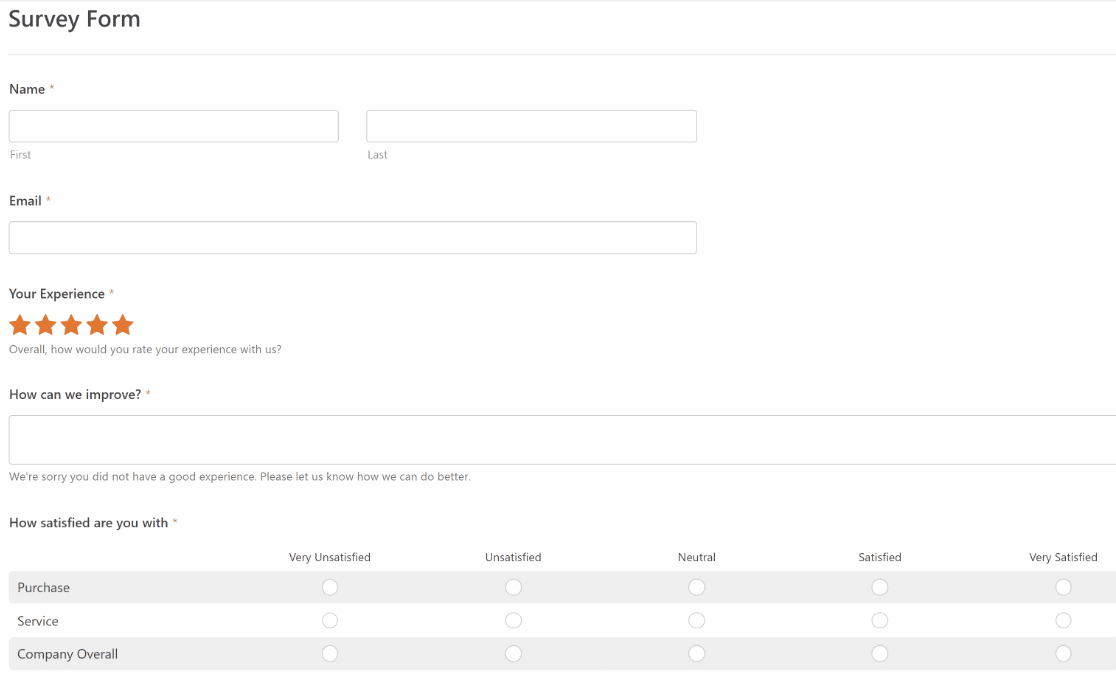
You’ll notice a couple of Likert Scale fields already in the template. If you want to go deeper on this field type, our step-by-step guide on how to add a Likert Scale to your WordPress forms walks through it.
Step 4: Customize Your Matrix Question
To edit a matrix question, left-click the field in your form preview. The Field Options panel opens on the left, where you can change the question label and edit the row and column choices.
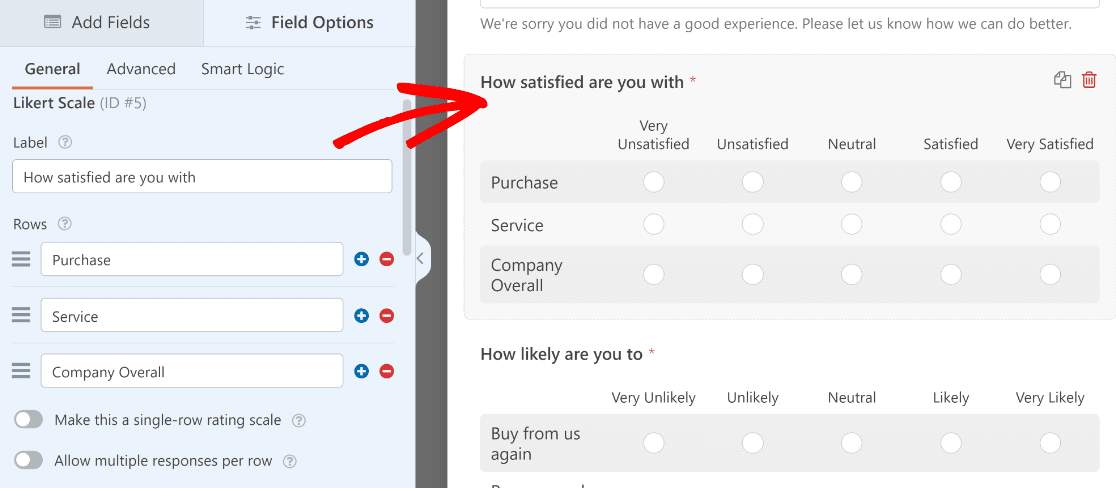
To add or remove rows and columns, use the plus (+) and minus (–) buttons.
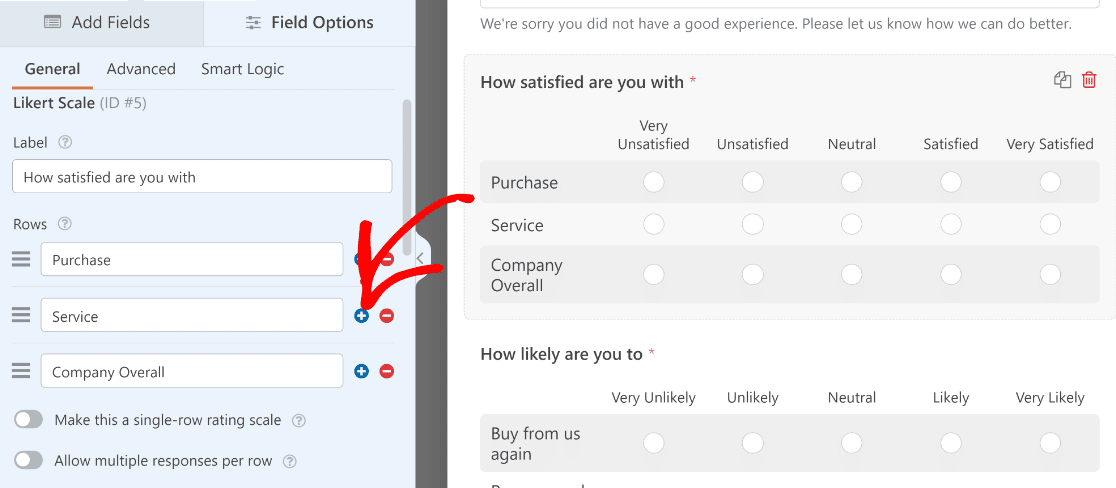
For a Likert Scale, stick to an odd number of answer choices, usually five, so respondents have a neutral middle option. You can use more or fewer depending on how much nuance you want.
By default, WPForms allows one response per row, which is right for most rating scales. If a question should accept more than one answer per row, toggle on Allow Multiple Responses Per Row in the Field Options.
Step 5: Add Your Matrix Survey Form to Your Site
With your form ready, the quickest way to publish it is the built-in embed tool. Click the Embed button at the top of the form builder.

When WPForms asks where you’d like to embed the form, choose Create New Page to put it on its own page.

Give the page a name, then click Let’s Go!

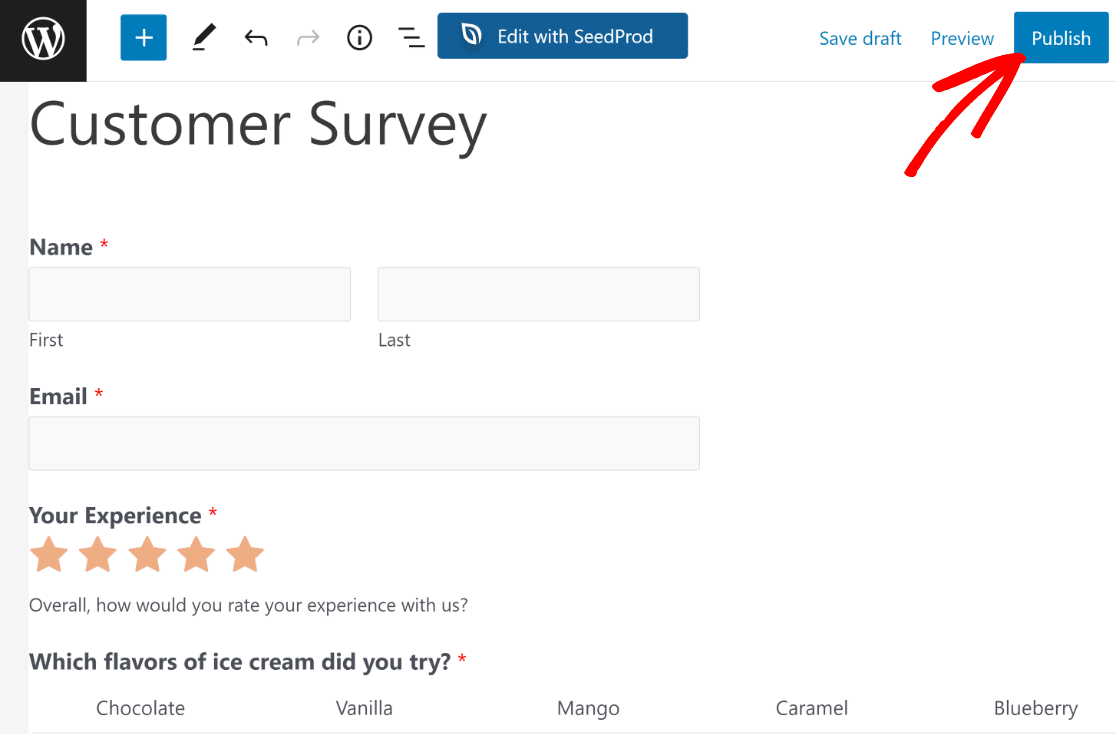
WPForms drops you into the WordPress page editor with your matrix question form already embedded. Add any extra content you want, then click Publish.
Prefer to show your survey in a popup instead? Our guide to building a popup survey in WordPress walks through that option.
Step 6: View and Analyze Your Survey Responses
From your WordPress admin, go to WPForms, open the Entries page for your form, and click Survey Results.

Click the Filters button in the header, pick a date range (Today, Last 7 days, Last 30 days, Last 90 days, Last year, or a custom range), check the answer choices you want included, and Save the view as a preset you can rerun next month.

If you want to customize the way your results look, click the Settings icon on any question card.
Pick line, bar, horizontal bar, or pie. Pick a size (SM, MD, LG, or XL), a color from the palette, or a custom hex. Hit Save Changes to propagate the style across every question on the page.

FAQs on Matrix Survey Questions
Matrix survey questions come up a lot once you start building feedback forms. Here are answers to the questions I hear most often about how they work and when to use them.
What is a matrix question in a survey?
A matrix question is a group of related questions shown in a grid, where each row is an item and each column is a shared answer choice. It lets people rate several items using the same scale in one place, instead of answering a separate question for each one.
What is the difference between a matrix question and a Likert scale?
A Likert scale is one specific type of matrix question. The matrix is the grid format itself, while a Likert scale is a matrix that measures agreement or satisfaction on an ordered scale, such as strongly disagree to strongly agree. Every Likert scale is a matrix question, but not every matrix question uses a Likert scale.
When should you avoid using matrix questions?
Skip matrix questions when your items don’t share the same answer scale, since forcing unrelated questions into one grid confuses people. They’re also a poor fit for very long lists or for surveys with heavy mobile traffic, where a large grid becomes hard to read and pushes people toward straight-lining.
How many rows and columns should a matrix question have?
Keep it as small as the question allows. A handful of rows and around five columns is comfortable for most people, and it keeps the grid readable on phones. The longer the grid, the more likely respondents are to rush through it without reading each row.
Can you create a matrix question in Google Forms?
Google Forms offers a similar feature through its multiple-choice grid and checkbox grid options. If you’re building your survey on WordPress, though, WPForms gives you a dedicated matrix field plus visual reporting, so you can collect and analyze responses without leaving your site.
Next, Create an NPS Survey in WordPress
Matrix questions are just one way to collect better feedback with WPForms. Once you’re comfortable with them, a natural next step is measuring loyalty with a Net Promoter Score survey.
Our guide on how to create an NPS survey in WordPress shows you how. You can also branch out into other feedback formats, like a quick poll form to gather fast opinions from your audience.
Ready to build your form? Get started today with the easiest WordPress form builder plugin. WPForms Pro includes lots of free templates and offers a 14-day money-back guarantee.
If this article helped you out, please follow us on Facebook and Twitter for more free WordPress tutorials and guides.