



AI Summary
Are you looking for some useful evaluation form examples? Evaluating forms are great for assessing things that you’re already doing well while highlighting areas of improvement.
A good one turns “how did that go” into scores you can track over time, ranked priorities you can act on, and written comments that explain the numbers behind them.
I have pulled together 12 evaluation form examples you can recreate on your own WordPress site, each based on a ready-made WPForms template.
Create Your Evaluation Form Now 📝
What Is an Evaluation Form?
An evaluation form collects feedback on a person, organization, product, or event. To make feedback insightful and actionable, forms should include a mix of open-ended and close-ended fields.
WPForms provides evaluation forms with all necessary fields, plus easy customization options with its form builder. Next, I’ll show you my top evaluation form templates that you can steal!
Evaluation Forms Examples
The evaluation form examples below are all taken from the carefully designed WPForms templates. If you’d like to use one of these examples, make sure to get WPForms Pro to get started right away.
| Evaluation form | Best for | Key fields and scales |
|---|---|---|
| Employee evaluation | Manager-led performance reviews | Likert skill ratings, signature, file upload |
| Customer service evaluation | Rating support interactions | Likert rating, comment fields, radio |
| Peer evaluation | Colleague-to-colleague reviews | Likert scale, open strengths and impact fields |
| Performance improvement plan | Setting goals for struggling staff | Checkboxes, goal fields, date, signature |
| Event evaluation | Post-event attendee feedback | Likert rating, radio, file upload |
| Training course feedback | Measuring training effectiveness | NPS, Likert, email opt-in |
| Self-evaluation | Employee self-assessment before reviews | Rating scales, open reflection fields |
| 360-degree evaluation | Multi-rater feedback on one person | Likert competencies, multi-section ratings |
| Supervisor evaluation | Upward reviews of managers | Likert leadership ratings, comments |
| Course evaluation | Student feedback on a class | Rating scales, multiple choice, comments |
| Interview evaluation | Scoring job candidates | Likert criteria, scoring notes |
| Supplier evaluation | Vetting vendors and suppliers | Rating sections, compliance checkboxes |
1. Employee Evaluation Form
Employee evaluations are the most common review most businesses run, and they work just as well for nonprofits and volunteer teams.
You review someone’s performance on a regular schedule so you can reinforce what they do well and give them a clear path to improve the rest.
Which metrics you include depends on your field. A technical team might rate specific engineering skills, while a service business leans more toward communication, reliability, and attitude.
The WPForms employee evaluation form template uses a Likert Scale to rate each skill, and you can rename those skills to match the exact role you are reviewing.

Likert scales generally use a range of 5 possible values on a linear scale to indicate the strength of your response between two extremes.
This template is great to get you started ahead of employee reviews. And if you want, you can add or remove some fields.
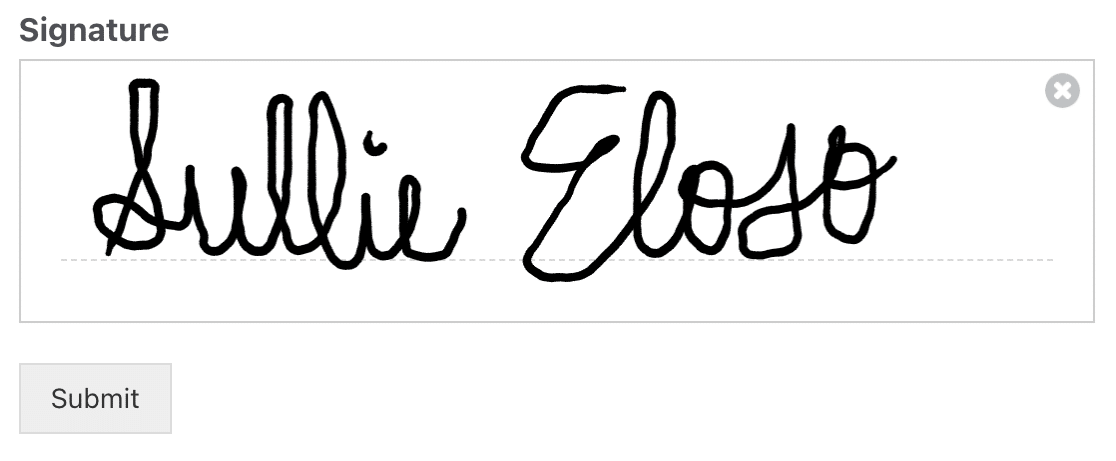
For example, you might consider adding an electronic signature field to an employee evaluation form to get the employee to sign off on their appraisal.
You can also add a File Upload field if you’d like to upload additional documents or performance sheets along with the evaluation form.
2. Customer Service Evaluation Form
Measuring customer feedback is one of the best ways to improve the quality of your service. And with WPForms’ customer service evaluation form template, you can quickly put together a survey form for your customers.
This template has all the basic fields such as the date and time when the customer made contact and the reason for making contact.

Additionally, there are 3 crucial fields included. Even though this form is 100% customizable, you probably should keep these fields as they’ll help you get actionable information from your customers:
Please Rate Your Experience With Us
This is where you can get a good idea of what the customer feels about the overall quality of your service. The field consists of a Likert scale, which makes it easy for your customers to specify their satisfaction levels.

This is a common feature with our evaluation form templates, as Likert scales are usually quite effective.
Did We Solve Your issue?
This can be a yes or no question, but it’s advisable to use a paragraph field to allow the customer more room for expression.

How Could We Improve Our Service?
Customers can often give you valuable pointers for how you may improve your service. It’s always a good idea to include a question asking customers for their thoughts on service improvement.
In our template, this question is a paragraph field, allowing users to add as much detail as they’d like.

Would You Use Our Service Again?
This field is a simple radio button field that allows users to answer if they’d like to use your service again.

The customer service evaluation form template is short and sweet, but you’re free to add more fields or edit existing fields as per your preference.
For instance, you can include a Name field so you can identify the customer by name. You may also add a Single Line Text field to collect the reference or ticket number assigned to the customer’s request.
3. Peer Evaluation Form
Peer evaluation is an important part of overall employee appraisals. The perspective of peers can help management to see different aspects of an employee’s skill set and attitude.
You can use a peer evaluation form to complement an employee evaluation form.
The WPForms peer evaluation form template has a similar structure to the employee evaluation form, as it also uses a Likert scale to evaluate team members’ behavioral competencies.

It has two unique fields, though:
What are your peer’s greatest strengths?
This is a paragraph field, so it allows the user to go into details.

Because peers often work together, they’re typically in a good position to tell what a team member might be strong or weak at.
How do this person’s actions impact your own work?

Every employee directly or indirectly impacts the work of other members of the team. This question allows employees to discuss the contributions of their peers and mention if they’re being hindered in any way because of another team member.
You can also include fields to gather additional details from employees in the peer review form. For instance, you could require the employee to mention their function in the team from a Dropdown field.
4. Performance Improvement Plan Form
A performance improvement plan is an excellent tool for setting goals that an employee should be focusing on in the next quarter.
The most important part of WPForms’ performance improvement plan template is the Areas of Improvement field;

You can select multiple items using the checkboxes in this field. This field is followed by three very useful ones labeled:
- Please describe the reason(s) for submitting this plan
- Improvement Goals
- Performance Goals

Including a target date or deadline for implementing the improvement plan is also a good idea, so the template comes with a date field too.
Again, you can consider adding an electronic signature field. If you’re getting your employee or team member to agree to these goals, you might want them to sign off on the form.
5. Event Evaluation Form
Getting some feedback after events is always useful. Most events have a lot going on, and it’s always better to hear directly from the people what they thought of your event.
Our event evaluation form template includes a radio field for asking if the participants would return next year.

Equally important is the Likert scale field that requires participants to rate their overall experience at your event.

These responses can help you identify the aspect of your event that people enjoyed and also learn of any areas that fell short of expectations.
And then there are paragraph fields allowing users to offer more detailed feedback on things that could be included next time, things that could be improved, additional feedback, and suggestions for other venues.
Additionally, there’s a file upload field that allows users to upload images of the event to the form.

You may be surprised to find some great photos taken by your participants that you may be able to share on your own website!
6. Training Course Feedback Template
If you’re a corporate trainer, nothing can be more valuable to you than to learn if your training courses are effective.
The WPForms training course feedback template is designed to collect useful insights and see if the attendees have received full value from the course.
The main feature of this template is the linear scale called a Net Promoter Score (NPS) to determine how likely an employee is to recommend the course to coworkers. The NPS is another kind of rating scale question commonly used in feedback surveys.

The template includes some open-ended questions as well that allow participants to discuss more freely about what they liked or disliked about the course.
Plus, there’s a Likert scale that participants can use to rate different aspects of the training they received.

The training course template also includes an email opt-in field. If you’re a training organization that offers services to different businesses and individuals, the email opt-in field can be a great way to build your email list for future courses.

This field has conditional logic enabled, and it is set up to reveal an email field only if the user selects “Yes”.
7. Self-Evaluation Form
Self-evaluations are worth running right before a manager review, because they show you the gap between how an employee sees their own performance and how their manager sees it. That gap is often the most useful conversation starter in the whole review.
The WPForms self-evaluation form template asks employees to rate their own performance across key areas and then reflect on it in writing. You get rating fields for the measurable side and open fields where people describe their wins, their challenges, and the goals they want to set for themselves.
I would line the rating areas up with the ones on your employee evaluation form, so the self-assessment and the manager assessment sit on the same scale. When both use the same criteria, the comparison is immediate.
8. 360-Degree Evaluation Form
A 360-degree evaluation gathers feedback on one person from every direction at once, their manager, their peers, and the people who report to them. Because it pulls in several viewpoints, it paints a fuller picture than any single review can.
The WPForms 360 evaluation form template is built for managers and team leads. It records who is being assessed in an employee information section, then walks reviewers through a Likert Scale rating of the performance areas you care about.
Because the same form goes out to several reviewers, keep your competency list short and specific. A handful of well-defined behaviors gives you cleaner, more comparable results than a long list of vague traits that each reviewer reads differently.
9. Supervisor Evaluation Form
Most review systems point downward, from managers to their teams. A supervisor evaluation flips that, letting team members give structured feedback on the people who lead them. It is one of the clearest ways to catch leadership problems before they cost you good employees.
The WPForms supervisor evaluation form template collects details about both the reviewer and the supervisor, then uses a Likert Scale to rate competencies like communication, leadership, and how well the supervisor manages performance.
To get honest answers, I would make the identifying fields optional so team members can respond without worrying about who sees their name. People are far more candid about a manager when their feedback feels safe to give.
10. Course Evaluation Form
Schools, universities, and online course creators all need a reliable way to hear from students once a class wraps up. A course evaluation form collects that feedback in a consistent format you can compare term over term.
The WPForms course evaluation form template captures the course name, instructor, and term up front, then asks students to rate the parts that matter. That covers the instructor’s teaching style, the course difficulty and pace, the materials, and how well the assignments and exams reflected what was taught.
Pair those ratings with one or two open comment fields and you will learn not just which courses scored well, but exactly what to change before you run them again.
11. Interview Evaluation Form
When several people interview the same candidate, everyone walks away with a different gut feeling and no easy way to compare notes. An interview evaluation form fixes that by scoring every candidate against the same criteria.
The WPForms interview evaluation form template uses Likert Scale items to rate the factors that matter for the role, with space for notes on each one. Every interviewer fills out the same form, so you can line candidates up and make a hiring decision based on more than the last conversation you happened to have.
It works as an internal document for your hiring team, which means you can be candid in the notes without that feedback ever reaching the applicant.
12. Supplier Evaluation Form
Choosing a supplier on price alone is how businesses end up with missed deadlines and quality problems later. A supplier evaluation form forces a more complete look before you sign anything.
The WPForms supplier evaluation form template gives you a thorough way to assess a prospective vendor. It includes sections for reputation, skills and compliance, available manpower and resources, and the legal and contract conditions you need to confirm.
Scoring each supplier on the same criteria gives you a record you can compare across vendors and revisit at renewal time, instead of relying on whoever made the strongest pitch.
And that’s it! We’ve shared 6 evaluation form examples with templates that can simplify your feedback collection process and play a big role in improving different aspects of your work.
FAQs on Evaluation Forms
Evaluation forms come up a lot in support, so here are the questions I hear most often about building and running them on a WordPress site.
How can businesses analyze the data collected from evaluation forms?
WPForms makes this straightforward. With the Surveys & Polls addon, you can turn on survey reporting and see visual summaries of your results right inside your WordPress dashboard. If you would rather work with the raw data, the Google Sheets addon sends every submission to a spreadsheet automatically.
Why are evaluation forms important for businesses?
Evaluation forms give you systematic feedback you can use to improve operations, raise employee performance, refine products, and lift customer satisfaction. They surface both the strengths worth reinforcing and the weak spots that tend to stay hidden until someone asks the right question.
How often should you update an evaluation form?
Review your evaluation forms at least once a year. It is also smart to revisit them whenever something changes in your organization that affects what you are measuring, like a new role, a new product line, or a shift in company goals.
Can I create an evaluation form for free?
You can build the basic structure with the free WPForms Lite plugin, but the rating scales most evaluation forms rely on, the Likert scale and NPS field, come with the Surveys & Polls addon on WPForms Pro. If scoring and survey reports matter to you, Pro is the tier to start with.
What are some common mistakes to avoid when designing an evaluation form?
The usual culprits are forms that run too long, questions worded in a way that nudges people toward a certain answer, and ambiguous phrasing that means different things to different respondents. Keep it concise and neutral, and always test the form with a small group before you roll it out widely.
Next, Explore Customer Satisfaction Survey Examples
The customer service evaluation form is one of the most popular templates here, and it has a close cousin worth a look. If your business is more product-focused than service-focused, a customer satisfaction survey will fit you better.
To set one up, take a look at our guide to customer satisfaction survey examples, which walks through the questions that pull the most useful feedback.
Build Your Evaluation Form Now
Ready to build your form? Get started today with the easiest WordPress form builder plugin. WPForms Pro includes lots of free templates and offers a 14-day money-back guarantee.
If this article helped you out, please follow us on Facebook and Twitter for more free WordPress tutorials and guides.