


AI Summary
Contact Form 7 recently entered a feature freeze. At a WordPress event, it was announced that version 6.2 will be the final major update for the plugin. After that, only bug fixes and security patches.
If you’re one of the many WordPress sites still running Contact Form 7, that’s worth paying attention to. No new features means the plugin won’t keep pace as WordPress evolves.
Contact Form 7 has no export button of its own, and it doesn’t save submissions to your database. So exporting Contact Form 7 really means two separate jobs, getting your forms out and getting your entries out.
I’ve helped quite a few people migrate from CF7 to WPForms over the years, and the process is one of the easiest plugin switches you’ll make in WordPress.
WPForms has a built-in importer that pulls your CF7 forms over in a few clicks. In this guide, I’ll walk you through the full export and migration process from start to finish.
Export Your Contact Form 7 Data Now
How to Export Contact Form 7 to WPForms
The full migration takes about 5-10 minutes for most sites. You’ll import your existing forms, replace them on your pages, and export any submission data you’ve been collecting through CF7 addons. I’ve broken it down into five clear steps.
- Step 1: Install the WPForms Plugin
- Step 2: Import Your Contact Form 7 Forms Into WPForms
- Step 3: Replace Contact Form 7 on Your Pages
- Step 4: Export Your Contact Form 7 Submission Data
- Step 5: Clean Up and Deactivate Contact Form 7
- Does Contact Form 7 Have a Built-In Export Option?
- Why Switch from Contact Form 7 Now?
Step 1: Install the WPForms Plugin
WPForms is a drag-and-drop form builder with 2,100+ pre-built templates for everything from simple contact forms to payment forms, surveys, and registration flows.
If you’re coming from CF7’s shortcode-based approach, the visual builder is a completely different experience. You can see your form taking shape as you build it, instead of working with markup tags.
What I like most about WPForms for this specific situation is the built-in form importer. It reads your CF7 forms and converts them into WPForms format automatically. And even the free Lite version includes the importer.
For the import alone, WPForms Lite works perfectly. If you want entry management, conditional logic, or multi-page forms that CF7 doesn’t offer natively, I recommending upgrading to a Pro plan.
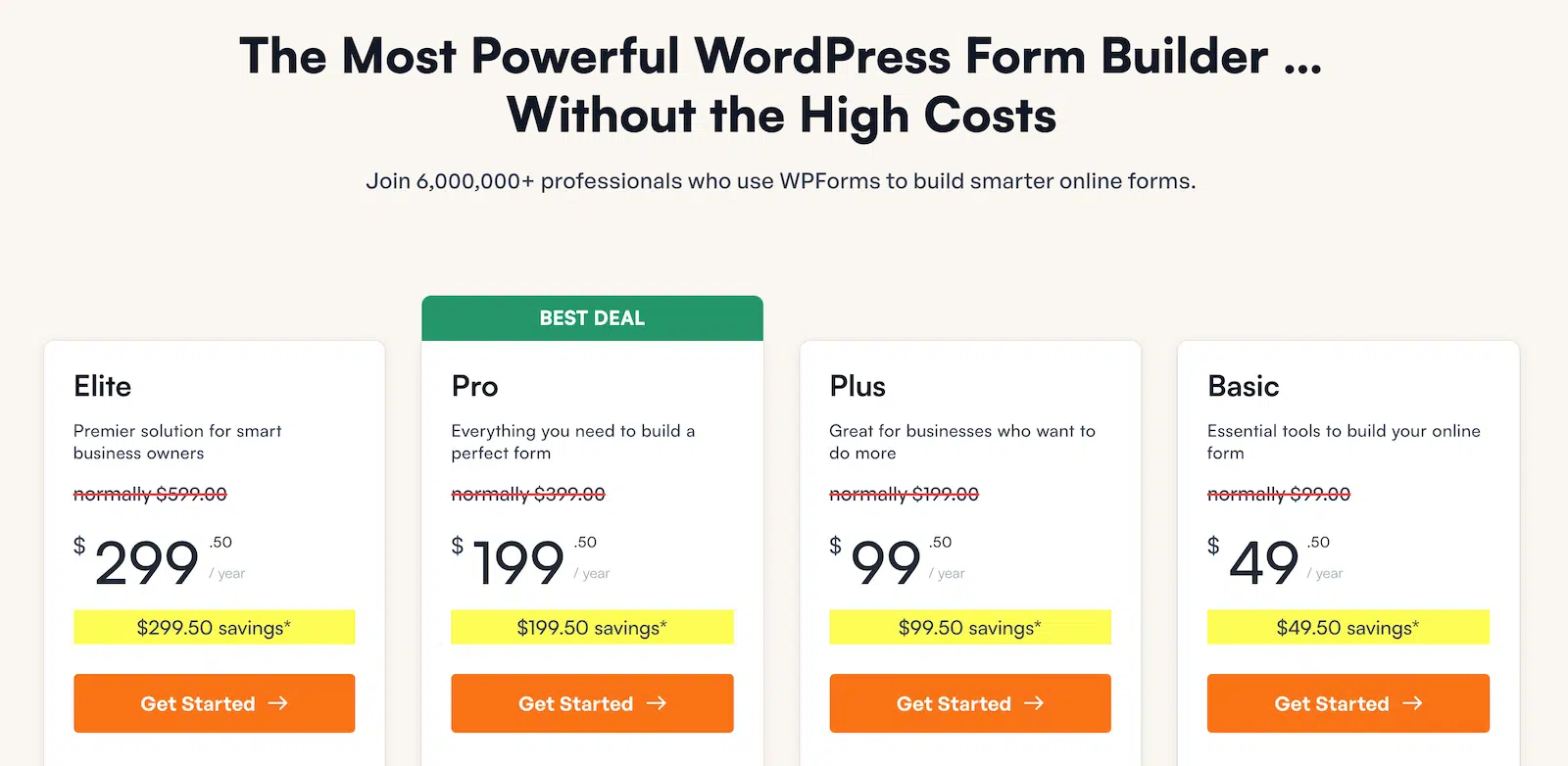
To get started, download WPForms Lite from WordPress.org or buy a Pro license. Then, install it on your site. If you need help with the installation, follow these instructions on how to add the plugin to WordPress.
Step 2: Import Your Contact Form 7 Forms Into WPForms
With both plugins active on your site, go to WPForms » Tools and click the Import Forms subtab.
You’ll see a section labeled Import from Other Form Plugins, which is the built-in migration tool that handles the entire conversion for you.
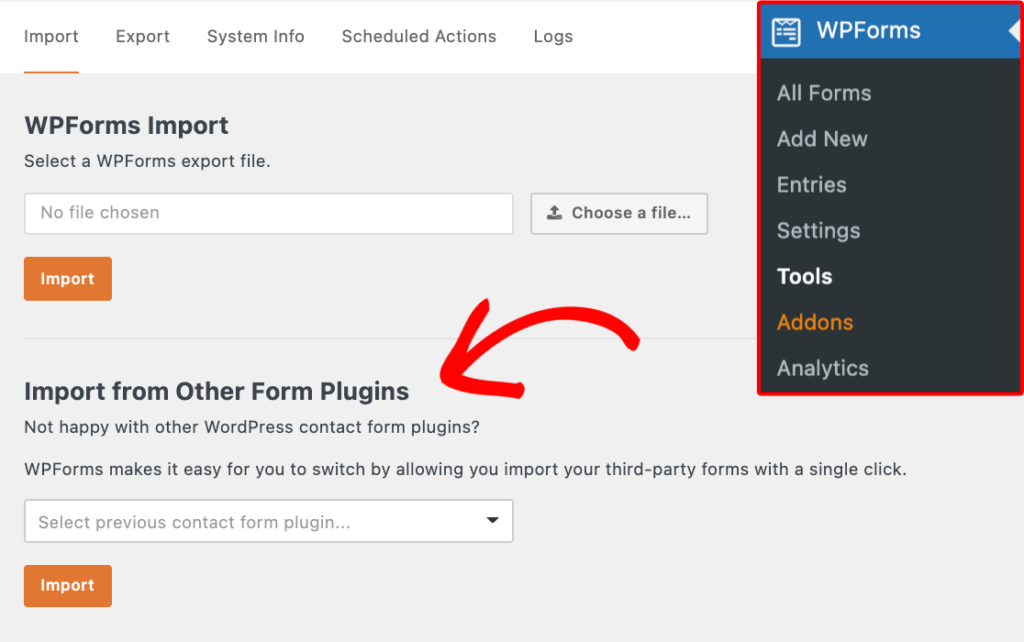
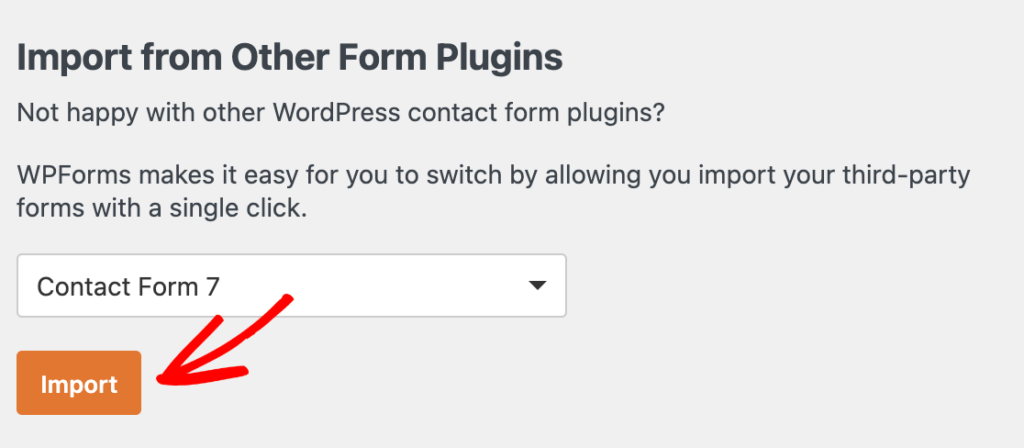
Pick Contact Form 7 from the dropdown menu. This tells WPForms where to pull your forms from. Once you’ve selected it, click Import to get the process started.
Now you’ll see all your CF7 forms listed in the Available Forms column. Click on each form you want to migrate, or click Select All to grab everything at once.
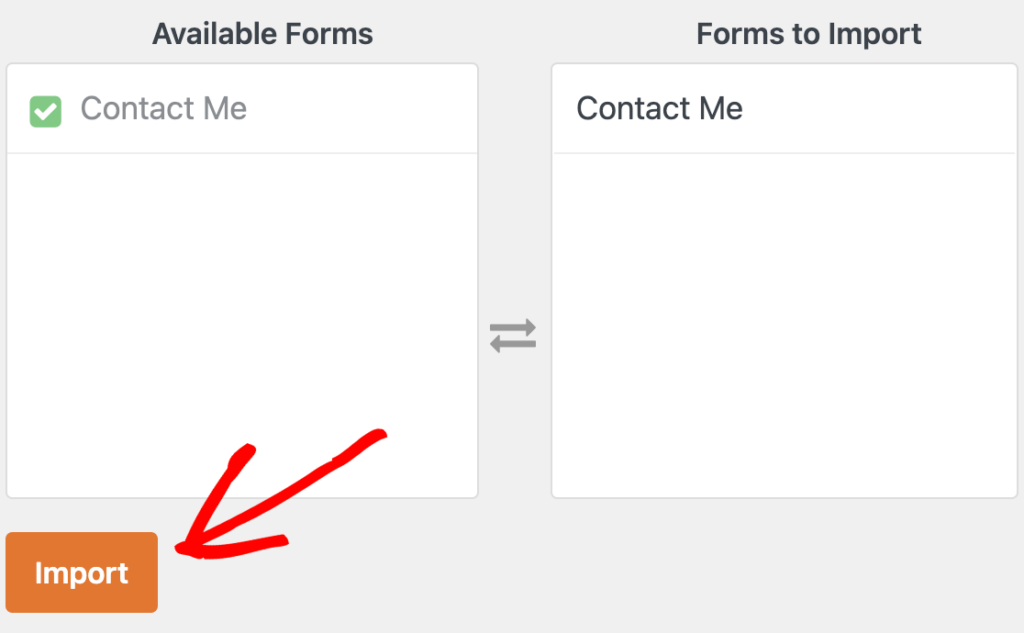
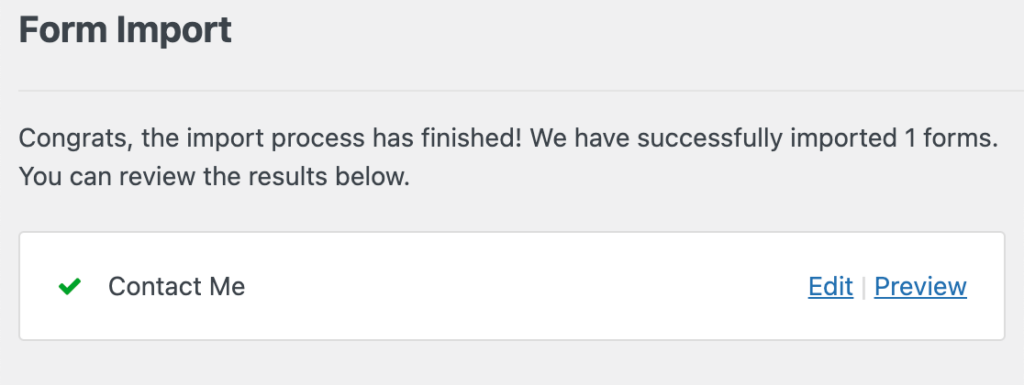
When it finishes, you’ll see a success message with links to edit or preview each imported form. I’d recommend clicking on the preview links just to make sure everything came through the way you expected.
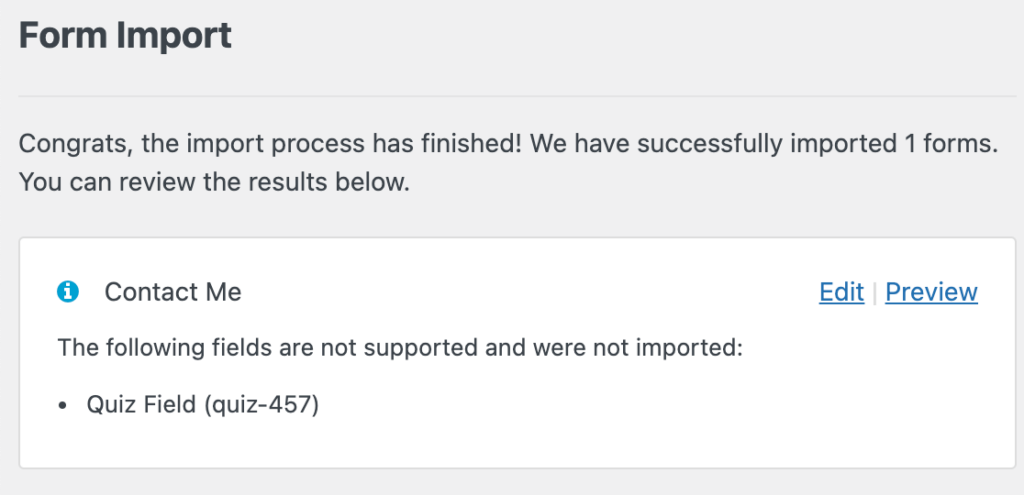
If any fields couldn’t transfer due to compatibility issues, WPForms flags them for you. This usually happens with heavily customized CF7 shortcodes or fields from third-party CF7 addons like Conditional Fields for CF7.
The importer also brings over your notification email and confirmation settings. I’d still recommend double-checking both after the import.
WPForms has detailed guides on setting up form notifications and configuring confirmation settings if you need to adjust anything.
For edge cases and troubleshooting, there’s also detailed migration documentation available. Go ahead and preview each imported form to confirm the fields, layout, and settings came through correctly.
Step 3: Replace Contact Form 7 on Your Pages
Now swap out the old CF7 forms on your site with the imported WPForms versions. Open the page or post where a CF7 form is currently embedded.
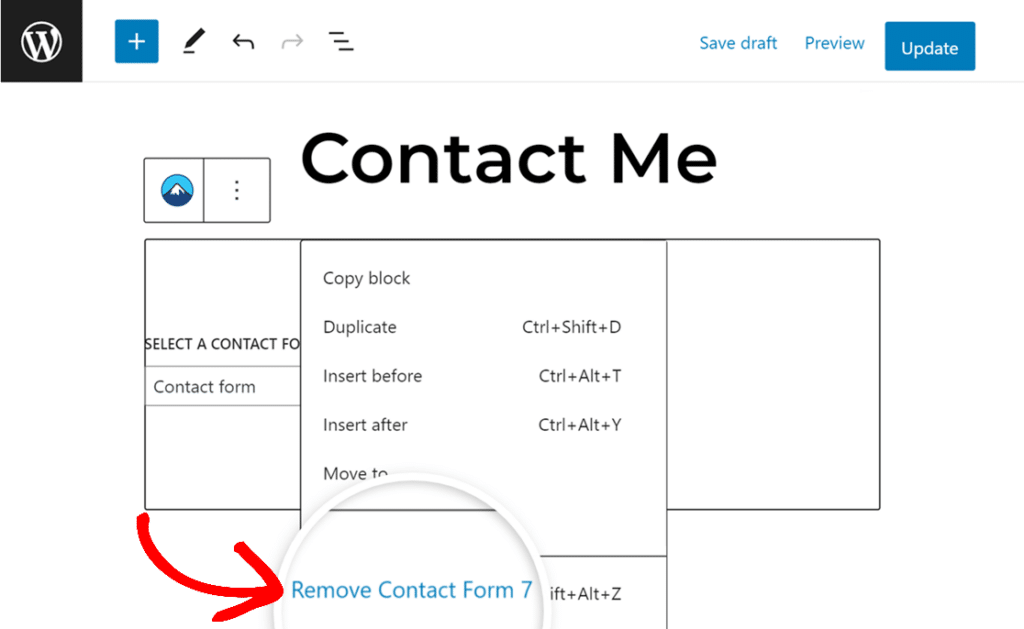
Find the Contact Form 7 shortcode or block and delete it. In the block editor, click the CF7 block, then press delete on your keyboard. You can also click the three-dot menu and select Remove Contact Form 7.
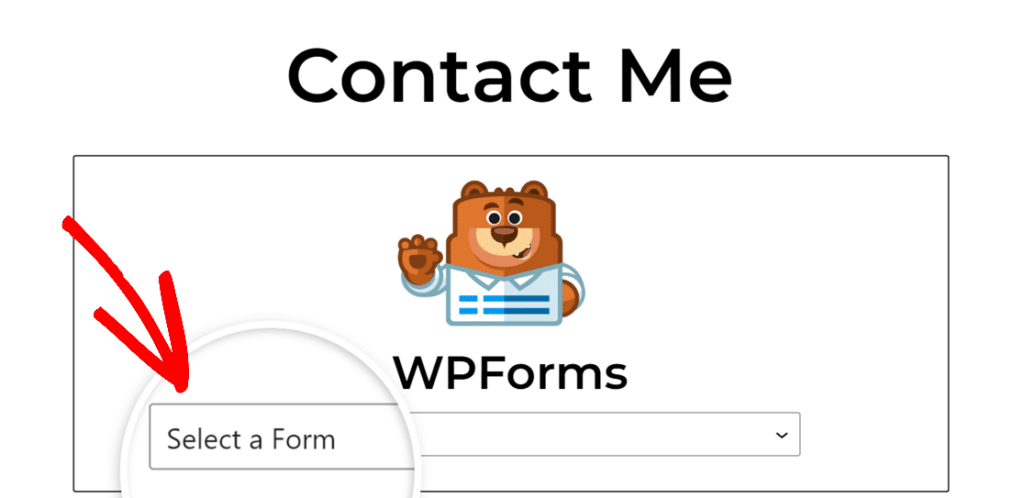
Click the plus (+) button to add a new block. Search for “WPForms” or scroll to the Widgets section. Add the WPForms block, then choose your imported form from the dropdown.
Once your form is in place, take a second to check out the styling options in the block editor sidebar. WPForms lets you customize colors, borders, button styles, and spacing right there, without any CSS knowledge.
If you spent time wrestling with custom stylesheets to make your CF7 forms look presentable, you’ll appreciate how much easier this is. For a full walkthrough, check out the form styling guide.
To make quick work of styling your form, you can also select a ready-made theme under the Form Theme section. In this example, I’m using the Sonic theme (which is one of my favorites).

Hit Preview to check how it looks. When you’re satisfied, click Update or Publish. Repeat this for every page and post that uses a CF7 form.
If you’re not sure where all your CF7 forms are embedded, try searching your pages for the [contact-form-7 shortcode in the WordPress editor.
Step 4: Export Your Contact Form 7 Submission Data
This is the step most migration guides skip, and it matters. Contact Form 7 does not store form submissions in the WordPress database by default.
When someone fills out a CF7 form, it sends an email notification. There’s no entries dashboard and no way to search or export past submissions.
If you haven’t been using a database addon alongside CF7, your past submissions only exist in whatever email inbox received those notifications.
If you’ve been using Flamingo (a free companion plugin by the CF7 developer), your submissions are stored in WordPress. Go to Flamingo » Inbound Messages to review them and export anything you need.

If you’ve been using CFDB7 or a similar database addon, navigate to the plugin’s dashboard, select each form, and hit the CSV export button to download your submission data.

Getting a CSV out of CFDB7 or Flamingo is only half the job, because the file still sits outside WordPress. WPForms has an entry importer that reads those old submissions and stores them as real WPForms entries.
If Flamingo is still active, WPForms detects it automatically and you can import your entries into WPForms from WPForms » Tools » Import Entries.

For a CFDB7 export, upload the CSV instead, up to 300 MB with your column headers in the first row. The importer then matches source fields to WPForms fields by label.

All entries validate as they land, so a malformed email address or date gets skipped rather than imported. Nothing gets moved either, so your original Flamingo or CFDB7 records stay exactly where they are.

After switching to WPForms, you won’t need separate plugins to save submissions.
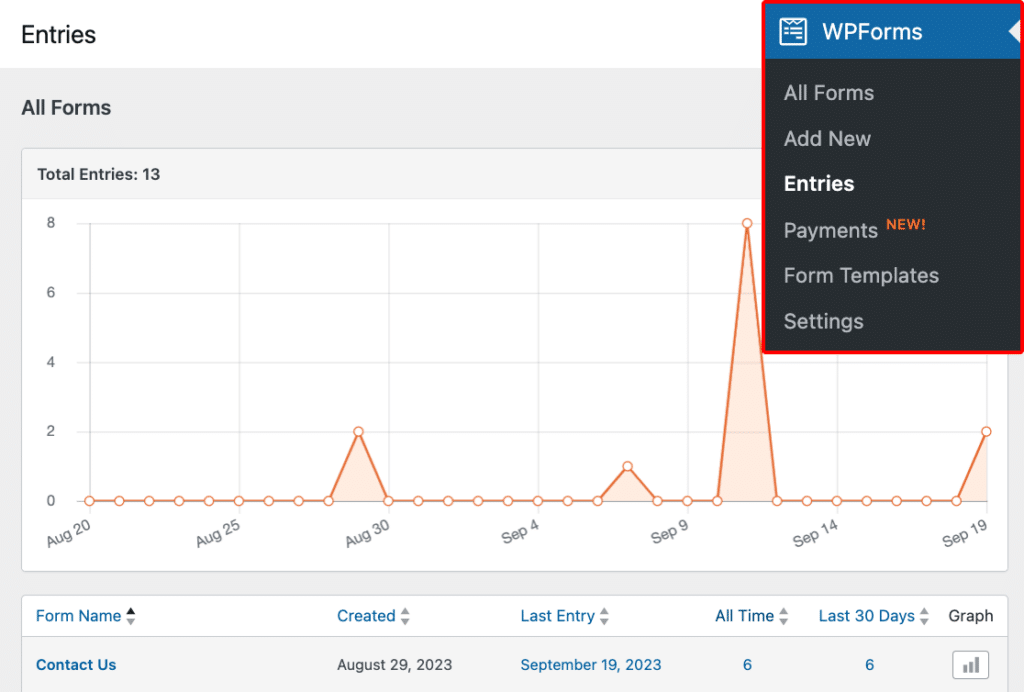
WPForms stores every entry automatically in the WordPress dashboard. You can search, filter, and export form entries to CSV or export entries to Excel anytime.
Step 5: Clean Up and Deactivate Contact Form 7
Before removing CF7, run through this checklist to make sure nothing falls through the cracks.
- All CF7 forms have been imported into WPForms and tested
- Every page and post with a CF7 form has been updated with the WPForms block
- Email notifications are firing correctly on the new forms
- Any submission data from Flamingo or CFDB7 has been exported and saved
Once you’ve confirmed everything is working, go to Plugins » Installed Plugins. Start by deactivating Contact Form 7 first, followed by any CF7-related addon plugins you had installed, like Flamingo, CFDB7, or CF7 Skins.

After deactivating, delete all the CF7-related plugins you no longer need. If you’re running a caching plugin, clear your site cache so the old CF7 scripts and styles are fully removed from your pages.
Does Contact Form 7 Have a Built-In Export Option?
No, there’s no export button anywhere in the Contact Form 7 settings screens.
Because CF7 saves each form as a WordPress custom post type called wpcf7_contact_form, your form definitions do travel through Tools » Export and Tools » Import, the same way posts and pages do.
You get a WXR file, and it only re-imports into another WordPress site that already runs Contact Form 7. It won’t convert into any other form plugin, no matter which one you’re moving to.
It also carries none of your submissions, because there were never any in the database to begin with. Anyone weighing a Contact Form 7 alternative needs something that converts rather than copies, which is what the WPForms importer in Step 2 does with those same wpcf7_contact_form records.
The native route works fine for cloning a CF7 form onto a second CF7 site, and that’s about the limit of it.
Why Switch from Contact Form 7 Now?
I want to give CF7 fair credit here. It’s been a reliable plugin since 2007, it’s free, and for basic contact forms it gets the job done. It even has built-in Stripe payments, Brevo email marketing integration, and decent anti-spam options with reCAPTCHA, Cloudflare Turnstile, and Akismet.
But the feature freeze changes the picture. At a recent WordPress event, it was announced that CF7 version 6.2 will be the last major release. After that, only bug fixes and security updates. The development team is moving on to a different project. So what CF7 can do today is what it will do going forward.
That means the gaps between CF7 and WPForms are now permanent. And there are several that matter for most WordPress site owners.
- Form building: CF7 uses a markup editor where you type shortcode tags by hand. WPForms gives you a visual drag-and-drop builder where you see exactly what your visitors will see.
- Entry management: CF7 doesn’t save submissions to your database. You need Flamingo or CFDB7 just to view what people submitted. WPForms stores every entry natively, with full search, filtering, and export built in.
- Conditional logic: CF7 requires a third-party addon (Conditional Fields for CF7) for any conditional field visibility. WPForms has conditional logic built in.
- Form templates: CF7 gives you one default template per new form. WPForms ships with 2,100+ ready-made templates covering everything from event registrations to donation forms to job applications.
- Spam protection: CF7 has reCAPTCHA, Turnstile, and Akismet, which is solid. WPForms adds proprietary anti-spam technology, custom CAPTCHAs, and allow/deny lists on top of those same third-party options. You can read more about spam prevention in WPForms.
- Payment flexibility: CF7 has basic Stripe support through a form-tag. WPForms Pro gives you Stripe with no additional processing fees, plus PayPal Commerce, Square, coupons, recurring subscriptions, and calculation fields for custom pricing.
- Marketing integrations: CF7 connects to Brevo and Constant Contact (which CF7 is actively deprecating). WPForms Plus connects to 10 email services including Mailchimp, Kit, AWeber, Drip, GetResponse, and more.
For a detailed side-by-side breakdown, check out the full WPForms vs Contact Form 7 comparison. WPForms also offers features CF7 has never had and won’t add now that development has stopped.
Surveys and polls, digital signatures, save and resume, geolocation, form abandonment tracking, and user journey reports are all available.
FAQs About Exporting Contact Form 7
Here are answers to the most common questions about the Contact Form 7 export process and migrating to WPForms.
Can I Export Contact Form 7 Entries to CSV?
Only if you’ve been using a database addon like CFDB7 or Flamingo alongside CF7. Contact Form 7 itself doesn’t store form submissions in your WordPress database, so there’s nothing to export from CF7 directly.
After switching to WPForms, every submission is stored automatically. You can export entries to CSV or Excel anytime from the WPForms » Entries dashboard.
Will I Lose My Form Data When Switching from CF7 to WPForms?
No. The WPForms importer copies your CF7 forms without touching the originals. Both plugins can run side by side while you transition, so take your time testing before you remove anything.
Is WPForms Free?
WPForms Lite is 100% free and includes the CF7 importer, a visual drag-and-drop builder, basic form fields, and Stripe payments.
For entry management, conditional logic, multi-page forms, and advanced features, paid plans start at $49.50/year. You can see a full breakdown in the WPForms vs Contact Form 7 comparison.
Can I Import Multiple Contact Form 7 Forms at Once?
Yes. The WPForms importer shows all your CF7 forms in an Available Forms list. Select individual forms or click Select All to import everything in one batch.
Where are Contact Form 7 submissions stored?
By default, Contact Form 7 stores them nowhere at all, because it emails each submission to whoever is set as the recipient and then discards it.
Installing Flamingo or CFDB7 changes that, since both of them save submissions into the WordPress database as they arrive.
Without one, the only copy of any past submission is whatever sits in the inbox that received the notification.
Next, Get More From Your WordPress Forms
Now that the migration is done, you can start building forms that CF7 could never handle on its own. That’s the real payoff of switching.
For example, if you’ve got a longer form that visitors tend to drop off from, try splitting it into a multi-page form with a progress bar.
If you need to create new forms beyond the ones you imported from CF7, the WPForms AI form builder can save you a lot of time.
Describe what you need with a simple prompt and it generates a working form in seconds. It’s a quick way to set up all those forms you kept putting off because CF7 made the process tedious.
Start Building Better Forms With WPForms
Ready to build your form? Get started today with the easiest WordPress form builder plugin. WPForms Pro includes lots of free templates and offers a 14-day money-back guarantee.
If this article helped you out, please follow us on Facebook and X (Twitter) for more free WordPress tutorials and guides.