



AI Summary
Spam is one of those things every WordPress site owner deals with eventually. The best anti-spam plugin for WordPress depends on where the spam lands, and for form spam that plugin is WPForms, paired with ActiveLayer when you want invisible AI detection across your forms and your comments.
I’ve been fighting form and comment spam for years, and the good news is you don’t have to just live with it. The right anti-spam plugin can take you from “drowning in junk” to “barely thinking about it” without making real visitors jump through hoops.
So in this guide, I’ll walk you through the 8 best anti-spam plugins for WordPress in 2026. Some are completely free, some are paid, and a few do double duty across comments and forms. I’ll be honest about what each one is actually good at so you can pick the right fit instead of installing all of them and hoping.
Create Your Secure Contact Form Now
How Do I Protect My WordPress Site From Spam?
There are a few different ways to keep spam off your site, and most people end up combining two or three. CAPTCHA services like Google reCAPTCHA, hCaptcha, and Cloudflare Turnstile are popular, and they work by adding a check that bots struggle to pass.
The simplest approach for most WordPress sites is to install a dedicated anti-spam plugin. Some focus on comment spam, some focus on form spam, and a few handle both. If you want the background on why this matters for your forms specifically, here’s a good read on why you should stop contact form spam before it eats your inbox.
The rest of this guide breaks down the plugins worth your time, starting with a quick comparison so you can scan your options.
Best WordPress Anti-Spam Plugins
Here are the eight plugins I’d recommend looking at this year. The table below gives you the fast version, and then I’ll get into what each one does well (and where it falls short) underneath.
| Plugin | Best for | Free version | Protects | WP.org rating | Price |
|---|---|---|---|---|---|
| WPForms | Stopping form spam | Most of the toolkit | Forms | 4.8/5 | Free, paid from $49.50/yr |
| ActiveLayer | Invisible AI detection | 1,000 checks | Forms + comments | 4.8/5 | Free, Pro from $4/mo |
| Akismet | Comment spam, the default | Free for personal sites | Comments + forms | 4.7/5 | Free, Pro from $9.95/mo |
| Titan Anti-Spam & Security | Comments plus light security | Yes | Comments | 4.5/5 | Free, premium available |
| Zero Spam | IP and country blocking | Yes | Comments + forms | 4.1/5 | Free |
| Antispam Bee | Privacy-first free protection | Yes | Comments | 4.8/5 | Free |
| CleanTalk | All-in-one paid firewall | Trial only | Comments, forms, login | 4.8/5 | From about $8/yr |
| WP Armour | Set-and-forget honeypot | Yes | Forms + comments | 5.0/5 | Free, Extended is paid |
1. WPForms
WPForms is the leading WordPress form builder, and honestly, few other form plugins come close when it comes to the spam-prevention options you get built in. If most of your spam is landing through your contact, registration, or order forms, this is where I’d start.
It begins with built-in modern anti-spam protection and the WPForms Custom Captcha field, both solid first layers for fighting spam. You can see the whole toolkit on the WPForms spam protection page.
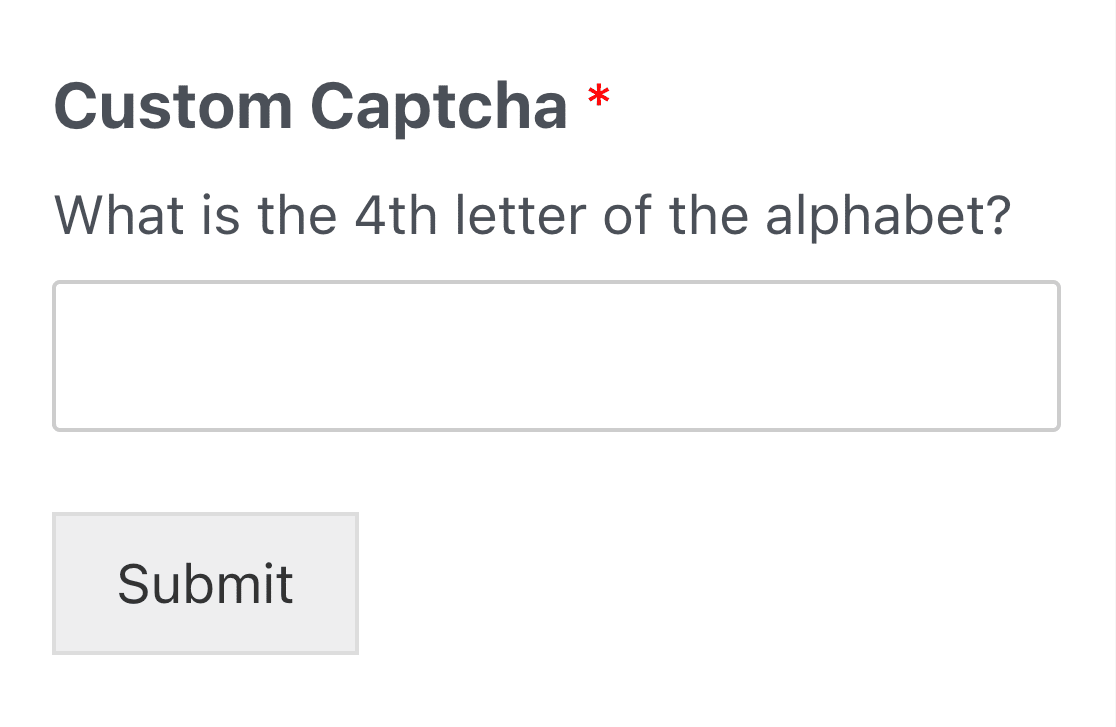
On top of that, you can add CAPTCHA services like hCaptcha and Google reCAPTCHA to strengthen your defenses.
WPForms also integrates with Akismet, which is one of my favorite ways to handle spam quietly. Akismet is mostly known for comment spam, but the integration lets it filter your form entries too. It’s a great alternative to reCAPTCHA because nobody has to solve a puzzle, and the marketer in me really can’t stand anti-spam that punishes real visitors.
You enable Akismet in the Spam Protection and Security settings, as long as you already have an Akismet account active on your site. Otherwise the option won’t show up.
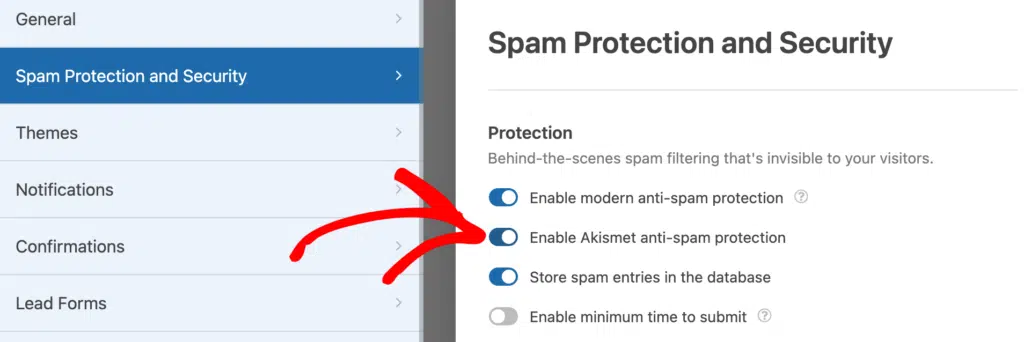
From there, Akismet filters your form entries against its huge database of known spam and watches on-page behavior. Here’s the step-by-step on filtering contact form spam with Akismet if you want to set it up.
WPForms supports Cloudflare Turnstile too (it also comes up in Gravity Forms vs Fluent Forms vs WPForms). It’s another no-puzzle option that keeps things easy for your visitors.
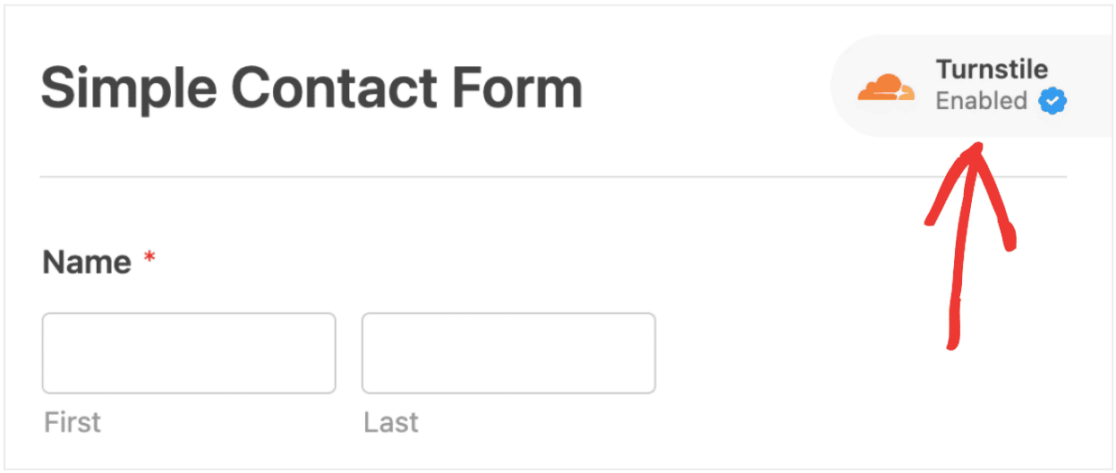
You can add Cloudflare Turnstile to your forms the same way you’d set up any other CAPTCHA tool.
If you’d rather skip CAPTCHAs altogether, WPForms will point you at ActiveLayer from inside the plugin. The option turns up in the setup wizard and in the builder’s Spam Protection and Security panel.
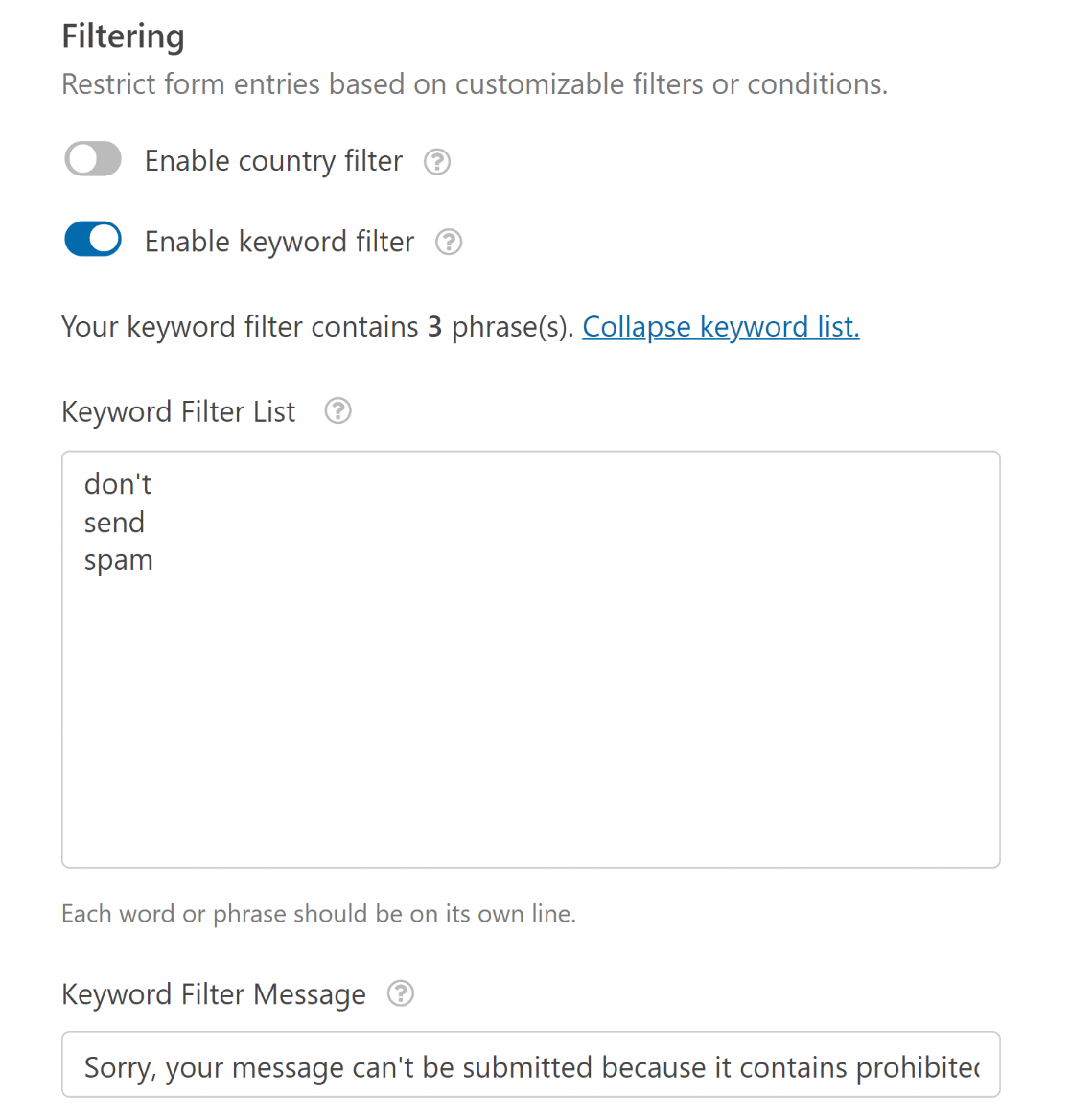
And there’s more. WPForms also gives you country and keyword filters so you can block spam before it ever lands. This is the part I lean on most, and it’s something a lot of other form builders still don’t offer a real answer for.
So if you’re getting hammered with submissions from one country, or you keep seeing the same junk keywords, you can just hop into your form’s settings and shut those sources down. Here’s how to set up those country and keyword spam filters.
One more thing I genuinely like. You can flag spam entries instead of losing them. Flip one toggle in your form’s Spam Protection and Security settings and you’re set.
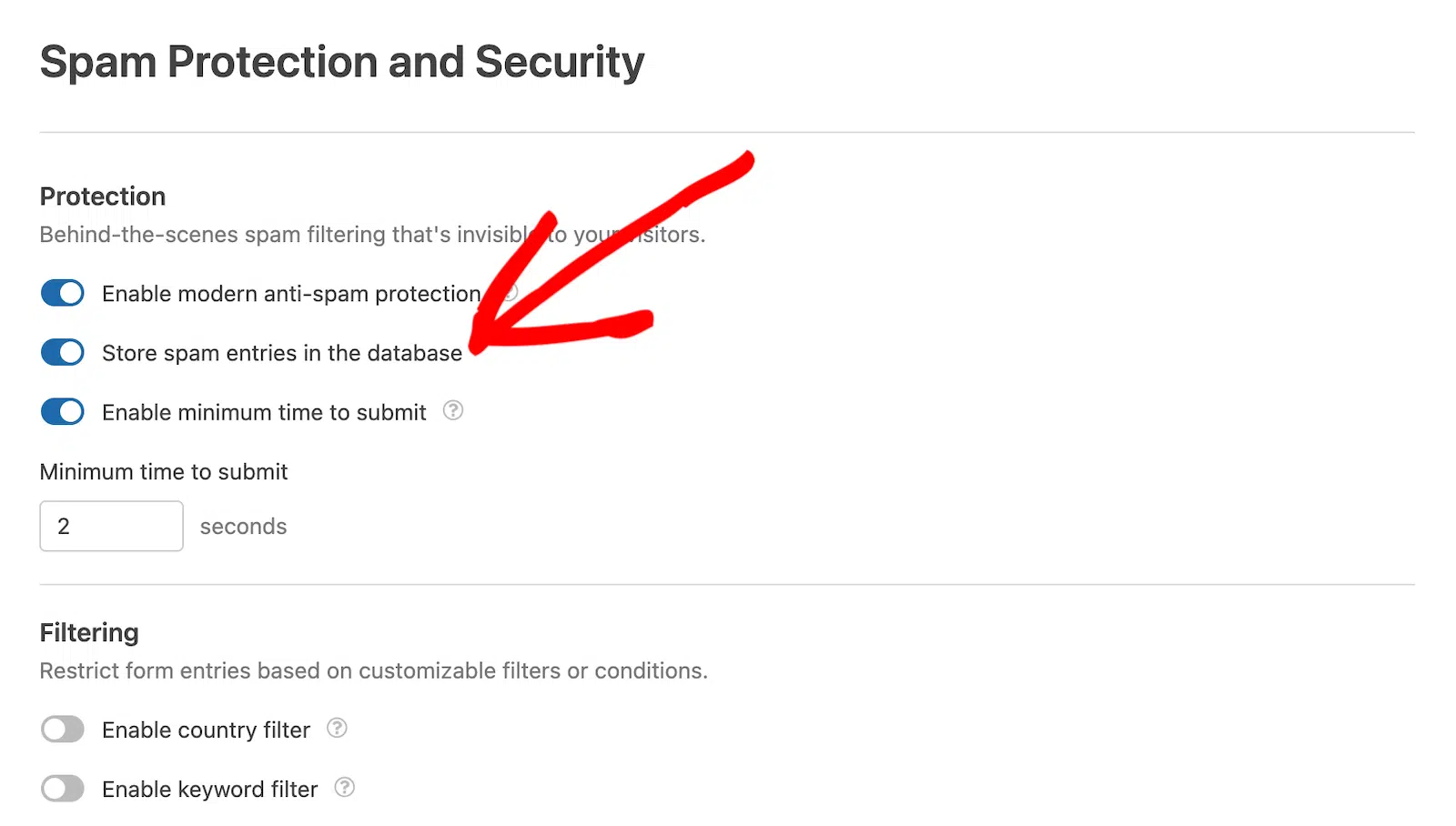
When it’s on, WPForms quietly sets aside anything suspicious as spam. You can review those entries, delete the junk, and if something legit got caught, click Not Spam in the Actions column to rescue it.
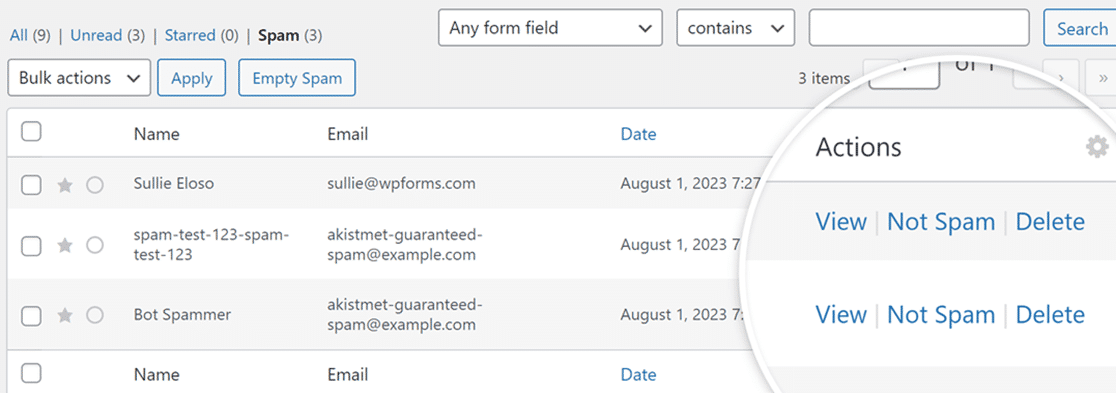
That little feature has saved me more than once, because nothing’s worse than realizing a real lead got tossed out with the spam.
If reCAPTCHA is giving you grief, by the way, these tips for troubleshooting reCAPTCHA in WordPress are worth a look.
My Favorite Things: the country and keyword filters, the native Akismet integration, and being able to recover a real submission that got flagged.
What Could Be Better: the full anti-spam toolkit isn’t in the free Lite version. Lite gives you a basic honeypot, and the rest unlocks on a paid plan.
A quick note on pricing so I’m not misleading you. WPForms Lite is free and includes a basic honeypot field. The full anti-spam toolkit (modern anti-spam, Custom Captcha, the CAPTCHA integrations, allow and deny lists, and the country and keyword filters) is available on every paid plan, starting with Basic at $49.50 per year. So WPForms isn’t really a “free anti-spam plugin,” but it is the most complete option for stopping form spam.
2. ActiveLayer

ActiveLayer is an AI-powered spam blocker built by Awesome Motive, the same team behind WPForms. It works on the server instead of in the browser, so your visitors never see a puzzle or a checkbox.
This is the newest plugin on the list, and it earns its place on what it does rather than how long it’s been around. Rather than asking a visitor to prove they’re human, ActiveLayer reads the submission itself and scores it.
Each verdict comes back with a confidence number and the specific signals behind it, which is a real change from the usual spam-or-not black box. It looks at three things:
- Content patterns: linguistic analysis of the submission text, which is what catches AI-written spam that reads perfectly well
- Sender reputation: signals gathered across every site on the network, so an address that hit someone else’s form yesterday is already known
- Behavioral signals: metadata about how the submission was made
Setup is genuinely quick. Install the ActiveLayer plugin from the WordPress directory, add your free API key, then tick the ActiveLayer box under Settings » Spam Protection and Security in any form.

If you’d rather cover everything at once, turn it on globally at ActiveLayer » Settings » WPForms. The WPForms integration page walks through all three steps and confirms that this works on WPForms Lite as well as Pro.
ActiveLayer then queues each entry and holds your notification email until a clean verdict comes back, which usually takes a moment. Every submission stays visible in the ActiveLayer dashboard with its verdict attached.
If you need to trace one, the related WPForms entry ID sits right beside it. The reach goes well past forms. ActiveLayer also protects:
- WordPress comments: the half of the spam problem a form plugin never touches
- WooCommerce: both product reviews and customer registration
- Membership and affiliate tools: MemberPress, BuddyPress, Easy Digital Downloads and AffiliateWP
- Anything else, through a REST API: handy if you run a headless front end
One thing worth being straight about. ActiveLayer isn’t WPForms-only. It supports Contact Form 7, Gravity Forms, Ninja Forms and Formidable Forms, among others.
What you get as a WPForms user is the depth of the hookup rather than exclusive access, because WPForms surfaces it in the setup wizard and installs it for you from the CAPTCHA settings page.
My Favorite Things: nothing loads in your visitor’s browser at all, so no third-party JavaScript and no cookies. The confidence score on every verdict also tells you why something was flagged.
What Could Be Better: it’s new, so there are only a handful of reviews behind that rating so far. The free tier is also 1,000 checks in total rather than 1,000 a month, so a busy form will move you to a paid plan sooner than you’d expect.
ActiveLayer is free to try with 1,000 checks and no credit card. Paid plans start at $4 per month billed yearly ($48 a year) for 5,000 checks a month. The pricing page runs up to 250,000 checks a month, with enterprise plans above that.
3. Akismet
Akismet is the name most people think of first, and for good reason. It’s the comment-spam workhorse of the WordPress world, and you can run it on its own or alongside a form plugin like WPForms.
Because Akismet is made by the team behind WordPress, it integrates cleanly and usually comes pre-installed with most WordPress sites. It runs quietly in the background, checking comments against a massive spam database and catching the junk before it ever reaches you.
If you’re weighing your options, this breakdown of Akismet vs reCAPTCHA is a helpful way to decide whether you need one, the other, or both.
My Favorite Things: it’s basically zero-setup, the detection is excellent, and it’s free for personal sites.
What Could Be Better: on its own, it’s built for comment spam. To cover your forms, you’ll need to pair it with a form plugin that supports the integration.
Akismet is free for personal and nonprofit sites, where you can pay what you want (the default is around $36 per year, and you can slide it down to $0). Commercial plans start at $9.95 per month, billed annually.
4. Titan Anti-Spam & Security

Titan Anti-Spam & Security is a strong pick if you want spam protection with a little extra security thrown in. It checks comments against a global spam database and uses a self-learning system that keeps rechecking published comments, so it gets sharper over time.
I also like that it bundles in extras like brute-force protection and a malware scanner, even on the free version. If you’re a smaller site that wants one plugin to handle comment spam plus some basic hardening, that combo is handy.
My Favorite Things: the self-learning detection and the bonus security features at no cost.
What Could Be Better: it’s focused on comments, so it won’t cover form spam on its own.
Titan Anti-Spam & Security is free to get started, with a premium upgrade available if you want the advanced features.
5. Zero Spam for WordPress

Zero Spam for WordPress is a flexible free option that blocks spam using a mix of methods rather than relying on one trick.
It leans on detection algorithms to spot spambots, and it can use JavaScript to stop bots without adding friction for real visitors. The part people tend to love is the blocking control. You can block specific IP addresses, countries, or cities if a particular source keeps flooding you.
My Favorite Things: the detailed IP and location blocking, and that it covers both comments and forms.
What Could Be Better: its rating is a bit lower than the others here, so test it on your setup before you rely on it as your only layer.
Zero Spam for WordPress is free.
6. Antispam Bee

Antispam Bee is one of the easiest free anti-spam plugins to set up, and it’s a favorite for privacy-conscious site owners. It screens suspected spam against its database of known offenders and does it all without sending your visitors’ data off to a third party.
When I tried it, the feature that stood out was being able to allow or block comments in a specific language, plus restrictions on certain countries or regions. It also gives you a tidy dashboard for monitoring spam right inside your WordPress admin.
My Favorite Things: it’s genuinely free, GDPR-friendly because it processes locally, and simple to configure.
What Could Be Better: it’s built for comment spam only, so it won’t protect your contact or registration forms.
Antispam Bee is completely free.
7. CleanTalk Anti-Spam
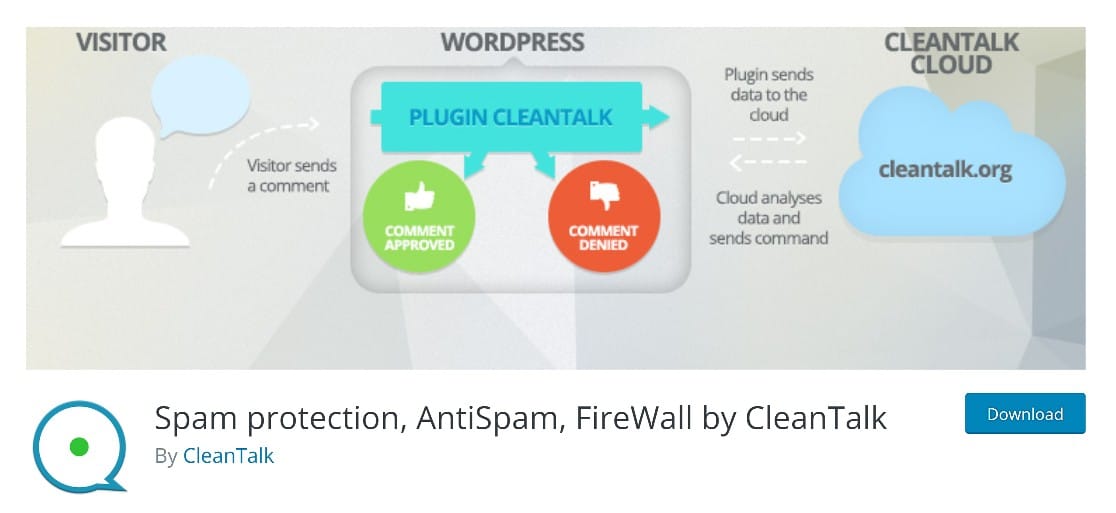
CleanTalk Anti-Spam (officially “Spam Protection, AntiSpam, FireWall”) is one of the highest-rated anti-spam plugins in the WordPress directory, with thousands of reviews behind it.
What makes it stand out is the breadth. CleanTalk covers comments, contact forms, registration, and login pages, all from one tool, and it works invisibly in the background so visitors never hit a CAPTCHA. If you want a single paid plugin doing the work everywhere, it’s a serious contender.
My Favorite Things: wide coverage across comments, forms, and logins, with no user-facing puzzles.
What Could Be Better: there’s no permanent free tier, just a trial, so it’s a paid commitment after that.
CleanTalk runs on a subscription that starts at around $8 per year for a single site.
8. WP Armour

WP Armour is an easy-to-use plugin that works in the background, a lot like Akismet. If a smooth visitor experience matters most to you, it’s worth a look.
It uses a clever honeypot trick: an extra hidden field that only bots can see. When a bot fills it in, WP Armour flags the submission as spam and blocks it, all without showing anything to your real visitors. It’s also compatible with several leading form builders, including WPForms, Gravity Forms, and Elementor.
My Favorite Things: invisible to visitors, near-zero setup, and a near-perfect user rating.
What Could Be Better: the honeypot method is just one technique, so heavier spam targets may want it layered with something else.
WP Armour is free, with a paid WP Armour Extended version if you want the advanced options.
Which Is the Best Anti-Spam Plugin for WordPress?
If most of your spam comes through forms, WPForms is the one I’d recommend. With a paid WPForms plan, you get the full toolkit in one place:
- The full range of CAPTCHA tools, including Google reCAPTCHA, hCaptcha, Cloudflare Turnstile, and WPForms Custom Captcha
- The native Akismet integration for your forms
- Country and keyword filters to block spam at the source
- Spam-entry review, so a real lead never gets deleted by accident
If your spam is mostly in your comments, Akismet is the easiest free starting point, and Antispam Bee is the best privacy-first free alternative. And if you’d rather have one paid plugin covering comments, forms, and logins together, CleanTalk is the most complete option.
For most sites, the best setup is actually a combination of two tools, a form-focused one like WPForms plus a comment-focused one like Akismet. Match the plugin to where your spam actually shows up and you’ll spend a lot less time cleaning up junk.
FAQs About WordPress Anti-Spam Plugins
WordPress spam protection comes up a lot, especially for site owners trying to pick between free and paid anti-spam plugins. Here are answers to the questions I hear most often.
Can I use multiple anti-spam plugins at once?
Yes, as long as they handle different areas of your site. For example, you need both Akismet and WPForms to enable Akismet protection on your forms. But you shouldn’t run two plugins doing the exact same job, like two separate reCAPTCHA tools, since that creates conflicts and redundant work.
Is there a free anti-spam plugin for WordPress?
There are several. Antispam Bee, Zero Spam, Titan Anti-Spam, and WP Armour are all free, and Akismet is free for personal and nonprofit sites. WPForms includes a free honeypot in its Lite version, with the full anti-spam toolkit on paid plans. Free plugins are great for comment spam, but for serious form protection you’ll usually want a dedicated form tool.
Do I still need an anti-spam plugin if I use CAPTCHA?
Usually, yes. A CAPTCHA stops a lot of bot traffic, but it doesn’t catch everything, and aggressive CAPTCHAs can frustrate real visitors. Layering a CAPTCHA with an anti-spam plugin (or with WPForms’ filters and Akismet integration) catches more spam while keeping the experience smooth.
I’m still getting spam despite using a plugin. What should I do?
Add more layers. With WPForms, you can combine Cloudflare Turnstile, keyword filters, country filters, a minimum time-to-submit, and built-in anti-spam all at once. If you know your repeat offenders, you can blocklist their email addresses too. Stacking a few methods together stops most spam.
How do anti-spam plugins affect site performance?
The well-built ones I’ve recommended here have a negligible impact, since they’re made by reliable developers. The thing to watch is lesser-known plugins, which can occasionally cause slowdowns or conflicts. Stick to well-reviewed, frequently updated plugins and you’ll be fine.
Next, Stop Bots From Filling Your Forms
Now that you’ve got your anti-spam options sorted, you can go deeper on the form side of things. Here’s how to stop bots from filling out your forms with a few more specific tactics.
If you want a full walkthrough, this guide on how to build spam-free WordPress contact forms ties everything together. And if spam registrations are your problem, these simple tricks to eliminate spam user registration will help you lock that down.
Stop Form Spam With WPForms Now
Ready to build your form? Get started today with the easiest WordPress form builder plugin. WPForms Pro includes lots of free templates and offers a 14-day money-back guarantee.
If this article helped you out, please follow us on Facebook and Twitter for more free WordPress tutorials and guides.