



AI Summary
If you’ve ever watched a contact form submission vanish or an order confirmation land in spam, you already know WordPress email delivery is unreliable out of the box.
Easy WP SMTP fixes that, and after testing it for this review, I think it earns its name for most sites that just need reliable transactional email.
Below I’ll cover the setup wizard, the email log, the eight alert channels, rate limiting, and what each plan costs to help you decide whether it’s the fix you need.
My Favorite Easy WP SMTP Features
The Easy WP SMTP WordPress plugin has 500,000+ active installations and holds a 4.6-star rating from 707 reviews on WordPress.org. Here’s a breakdown of the core features.
- 1. Easy WP SMTP Setup Wizard
- 2. Email Reports Dashboard
- 3. Comprehensive Email Logs
- 4. Instant Alerts for Failed Emails
- 5. Backup Connection for Email Continuity
- 6. Smart Email Routing
- 7. Miscellaneous Email Tools
- 8. Email Controls
- 9. WordPress Multisite Support
- 10. Support and Documentation Overview
- How Much Does Easy WP SMTP Cost?
- Easy WP SMTP: Pros and Cons
- Is Easy WP SMTP Worth It?
- Next, Improve Your WordPress Email Setup
1. Easy WP SMTP Setup Wizard
Who doesn’t love a good setup wizard? After you sign up for an Easy WP SMTP account and download the plugin, a setup wizard walks you through configuring your settings.
I found that pretty much everything was covered in the setup wizard, so let’s take a closer look at what it entails.
First, you get the option to choose your SMTP mailer. This is the service that actually sends the emails, and Easy WP SMTP is compatible with all the major providers in the industry.

Absolute beginners might not know much about the mailers to be able to choose. To help you make the best decision about what you need, there’s a complete mailer guide linked that gives more information.
Easy WP SMTP gives you options to use some of the top SMTP mailers, including Amazon SES, Gmail (offering an easy connection without the need to set up your own app), Mailgun, Microsoft Outlook and 365, Brevo (formerly Sendinblue), SendGrid, Mailjet, SMTP.com, Postmark, SparkPost, SMTP2GO, Zoho Mail, and any other SMTP server.
If you want to send WordPress emails using Gmail SMTP, the one-click OAuth setup makes it straightforward. After selecting your mailer, the wizard guides you through the process of configuring the mailer settings.
Don’t miss the linked documentation as you go through this step. It will help you understand the steps you’re taking and why.
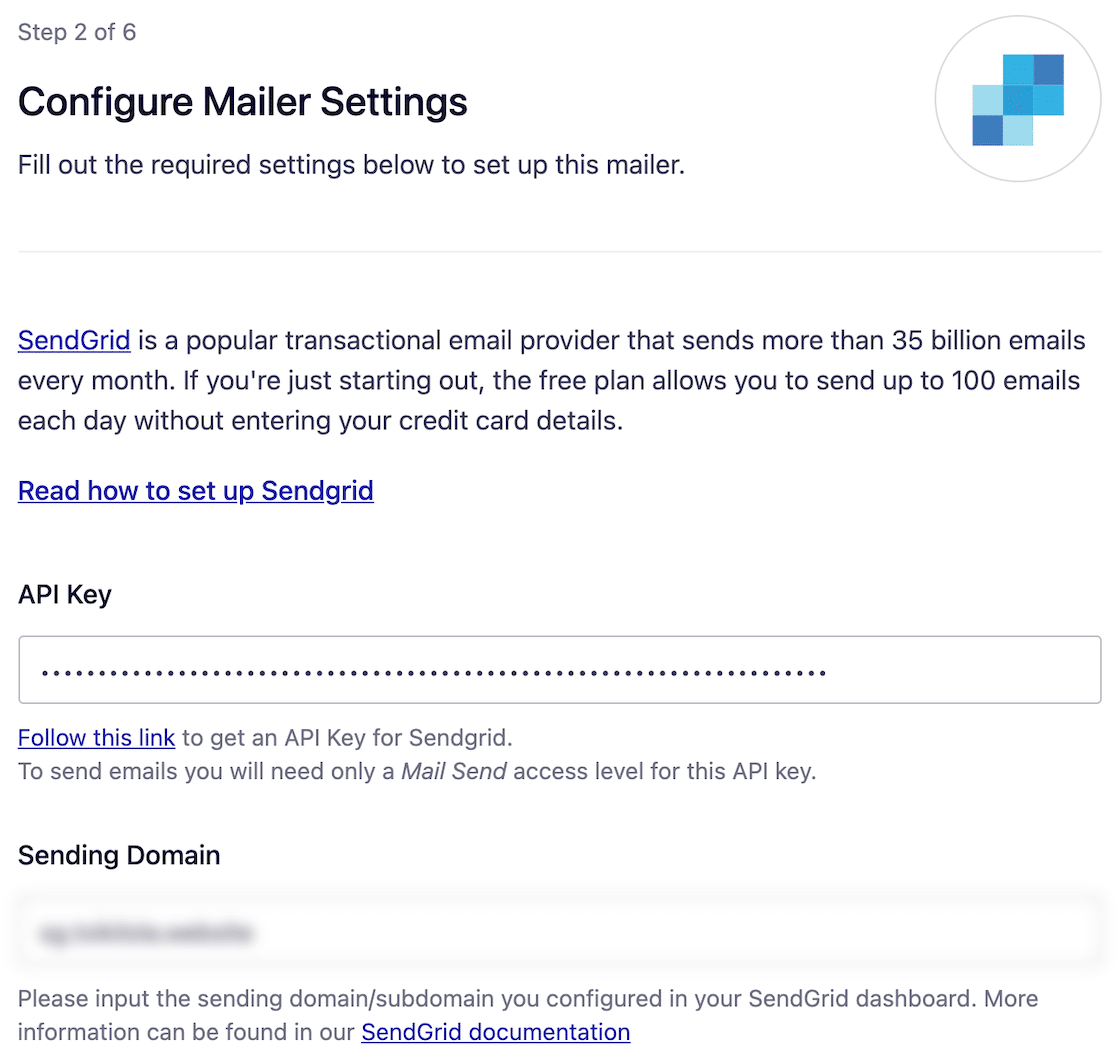
After configuring your mailer settings, including adding your API key, you’ll go through enabling the email features you want to use and configuring email logs.
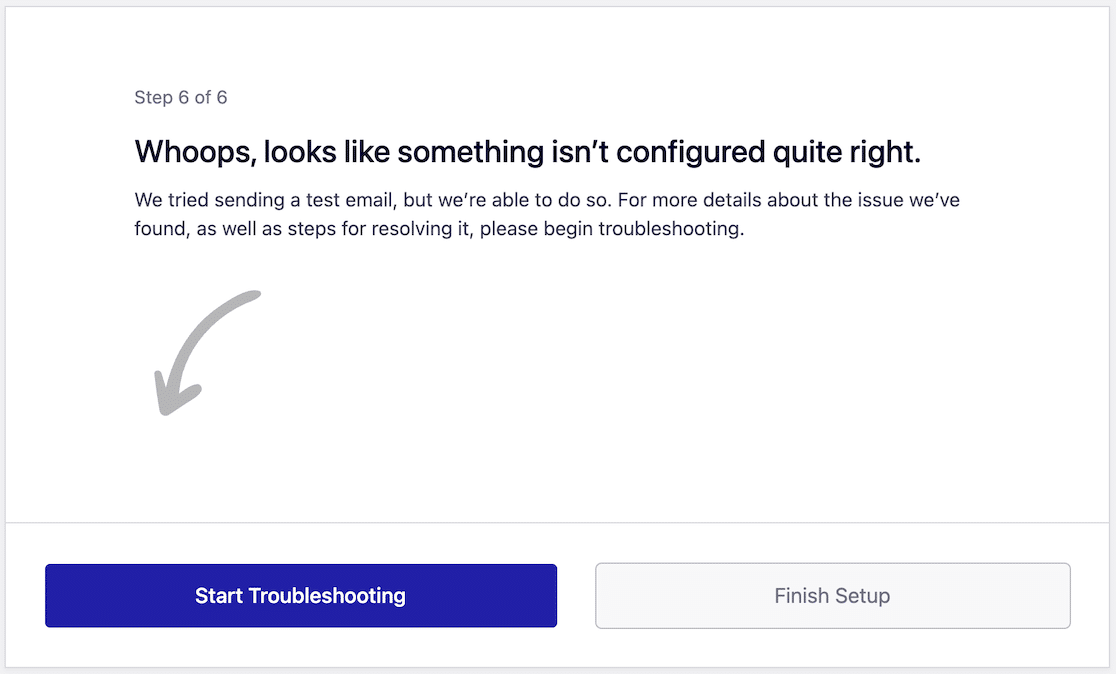
Finally, the setup wizard will check the mailer configuration. If everything checks out, you’re golden. If it doesn’t, though, it will walk you through the steps to troubleshoot the issue.
SMTP configuration can be intimidating to people who don’t fully understand what it is or why they need it.
Easy WP SMTP makes setup easy with the setup wizard. Users who are new to SMTP will certainly benefit from how clear and easy it is to set up.
SendLayer Quick Connect
One of the standout additions to Easy WP SMTP is the SendLayer Quick Connect feature. This is worth calling out because it takes what’s already a simple setup process and makes it even faster.
Here’s how it works. In your Easy WP SMTP settings, when you select SendLayer as your mailer, you’ll see a Quick Connect button. Click it, and a popup walks you through creating a SendLayer account right from within the plugin.

You enter your email, name, and password, verify your email with a 6-digit code, and choose a plan. There’s even a free tier with 200 emails and 1 sender domain to get started.
The best part? Once you’re connected, Easy WP SMTP automatically generates your API key, sets up a shared sending domain, and configures everything for you.

You don’t have to copy API keys between two dashboards, add DNS records manually, or dive into other specifics for email sending. You go from zero to sending in about 2 minutes.
For anyone who’s ever struggled with configuring SMTP settings, this is a big deal. It removes virtually all the friction from getting started.
2. Email Reports Dashboard
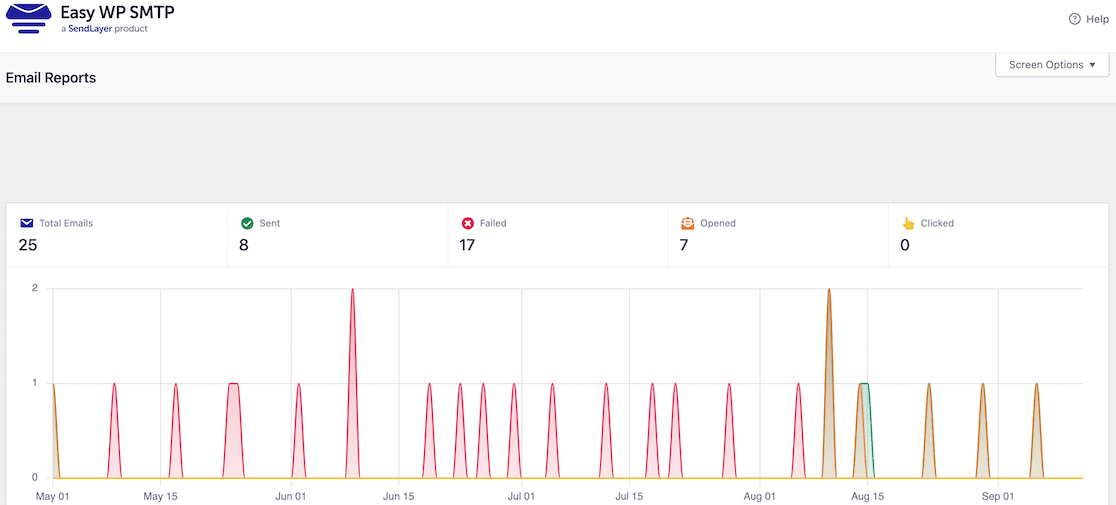
Easy WP SMTP offers a basic email reports dashboard so you can see your emails at a glance. You can set it to whatever date range you want to monitor for emails sent, emails failed, emails opened, links clicked, and more.
While it might not have all the bells and whistles that other SMTP plugins feature on their dashboards, it sticks to Easy WP SMTP’s commitment to simplicity. All the information you need is there, and it’s easy to read.
3. Comprehensive Email Logs
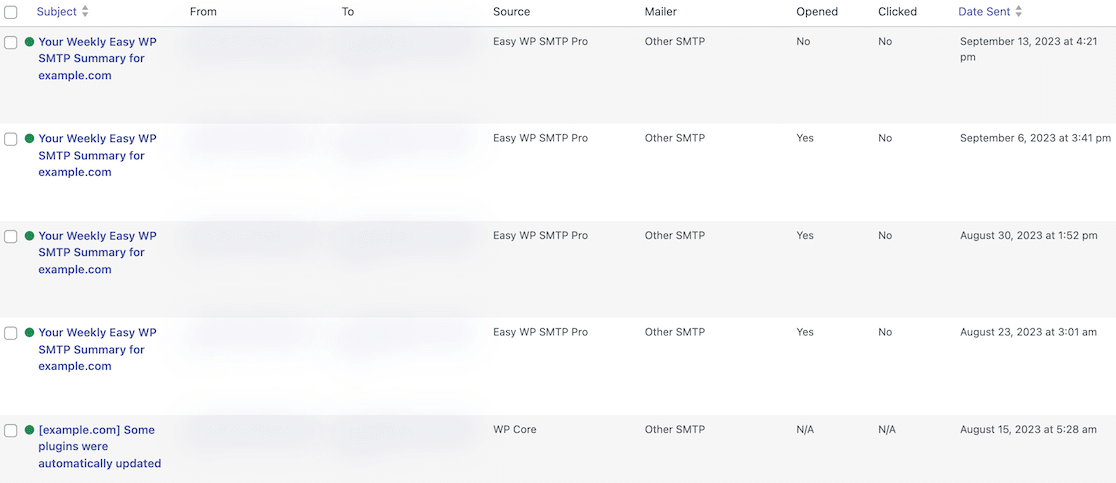
If you enable email logging, you can access every email you’ve sent based on the settings you’ve configured. You can also set up detailed WordPress email logs if you want a more thorough tracking setup.
The log interface looks very much like the backend of WordPress, which makes it intuitive for users. You can click on any message for more info, such as the email ID or attachments.
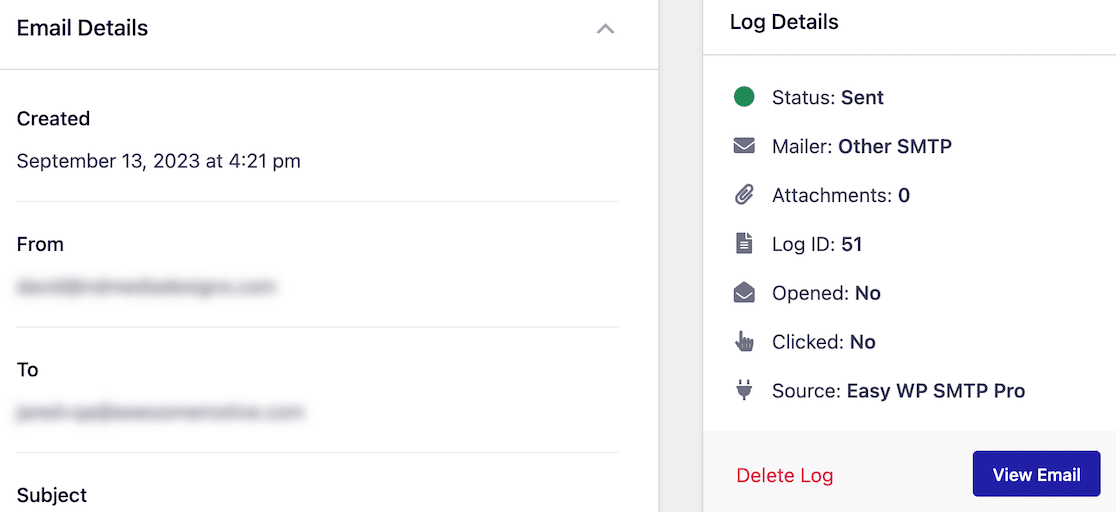
What I like is that the logs also support open and click-through tracking. So you’re not just seeing whether an email was sent, you can tell whether the recipient actually opened it and clicked any links inside.
Any logged email can be resent or forwarded straight from the list, and a bulk resend option handles a whole batch at once.
That matters after a mailer outage, when you’re trying to recover a morning’s worth of order confirmations rather than just confirm they failed.
That’s a level of insight you don’t always get from SMTP plugins at this price point. You can also customize what’s included in your email logs by going into the Easy WP SMTP settings.
4. Instant Alerts for Failed Emails
Nothing is more frustrating than learning too late that your emails haven’t been delivered. Easy WP SMTP solves this with real-time notifications.
Easy WP SMTP supports a wide range of notification channels. You can receive alerts via email, SMS (through Twilio), Slack, Microsoft Teams, Discord, WhatsApp, Webhooks and even push notifications.
And you can run several of them at the same time!

What makes the email channel genuinely clever is that alerts go out through a separate secure API rather than your site’s own mail configuration. So the alert still reaches you when your site can’t send email at all, which is exactly the moment you need it.
There’s also a Deliverability Verification option that notifies you when an email fails permanently, like a bad recipient address. It only works with transactional providers such as SendLayer, so a plain SMTP connection won’t give you that signal.
I’ve found the multi-channel approach genuinely useful, and I keep Slack alerts running for my team so nobody has to check a dashboard to know something went down.
5. Backup Connection for Email Continuity
With the backup connection system, Easy WP SMTP automatically switches to a secondary SMTP provider if your main one fails. It’s like having a safety net for your email delivery.
You don’t have to monitor everything constantly or scramble to fix things at the last minute. The plugin handles it in real-time, ensuring that emails continue to send without interruptions.

Another great thing is how easy it is to set up. You just configure your secondary SMTP provider in the plugin, and it does the rest.
If the first provider fails, the plugin instantly switches over, and you won’t even notice a gap in email delivery. For me, this has been incredibly useful during provider outages or unexpected spikes in email volume.
6. Smart Email Routing
Whether it’s transactional emails like order confirmations or marketing campaigns, this feature allows me to organize and optimize how these emails are sent, ensuring everything reaches its destination smoothly.
With smart email routing, I can set up rules to send specific types of emails through different SMTP providers. For example, I route all my transactional emails, like password resets, through a reliable and secure provider.

On the other hand, marketing emails, which often involve bulk sending, go through a different service designed to handle high volumes efficiently. This way, I ensure that each email is sent via the provider best suited for the job.
Setting up smart email routing was straightforward. The interface allows me to define specific criteria for routing, such as the type of email or even the recipient’s domain.
7. Miscellaneous Email Tools
Easy WP SMTP also includes a Tools section with utilities for email export, test emails, scheduled actions, and debug events.
The plugin uses the Action Scheduler library, which means you can schedule and process large-scale tasks in the background without slowing your site down for visitors.
Rate limiting also caps how many emails leave your site per minute, hour, day, week, or month, which keeps you inside whatever limit your provider sets.
It deserves more attention than its placement in the Tools area suggests. Stores running a sale are the obvious case, since a sudden burst of order confirmations is what gets a batch rejected.
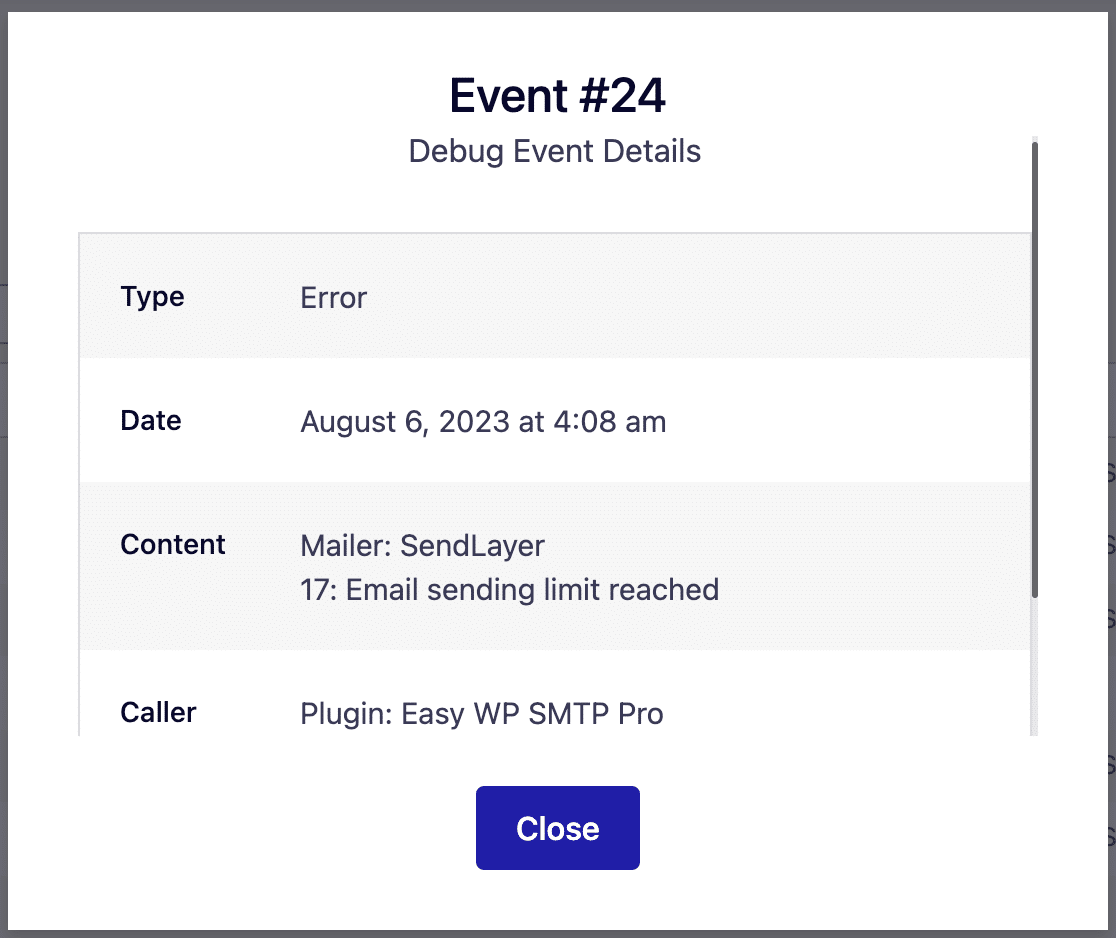
The Tools area also lets you view and configure debugging events to help resolve email send errors. There’s an event log where you can click on any item for more details.
And, that’s where I’d start if you hit a could not connect to SMTP host error. It’s not flashy, but it gives you what you need for troubleshooting.
AI Assistant Access and WP-CLI
Easy WP SMTP also adds two things that developers and agencies will care about more than most readers, starting with support for the WordPress Abilities API on WordPress 6.9.
That lets connected tools and AI assistants securely read your debug events instead of someone opening the dashboard to check.
If you roll out the same mailer settings across a lot of client sites, a new set of WP-CLI commands turns that repetitive dashboard job into a script.
8. Email Controls
Email Controls let you manage which default WordPress emails get sent from your site, and it’s one of the plugin’s most practical features.
WordPress sends a lot of emails automatically like new user registrations, password resets, plugin update notices, admin notifications.
Not all of them are necessary, and in some cases they just add clutter to your inbox. With Email Controls, you can selectively disable the ones you don’t need while keeping the important ones active.

It’s a small feature, but once you start using it, you’ll wonder how you managed without it.
9. WordPress Multisite Support
If you manage a WordPress Multisite network, Easy WP SMTP has you covered. The plugin supports Multisite installations, so you can configure your SMTP settings once at the network level and have them apply across all your sites.

This is particularly useful for agencies, educational institutions, or any organization running multiple WordPress sites from a single dashboard. Instead of setting up SMTP individually on each site, you handle it centrally.
10. Support and Documentation Overview
One thing I’ve learned from managing email setups is that problems can pop up when you least expect them. That’s why having a reliable support team to turn to can make all the difference.
With Easy WP SMTP, the support is responsive and genuinely helpful. I’ve worked with other plugins before, and I can confidently say that the support from Easy WP SMTP stands out.
Their documentation is thorough and covers everything from initial setup to specific mailer configurations. If you’re buying Easy WP SMTP, you can also purchase their White Glove Setup.

That means the Easy WP SMTP team will configure the plugin for you. It’s a nice option if you’d rather hand the technical work off to someone who does it every day.
How Much Does Easy WP SMTP Cost?
Easy WP SMTP offers a free version on WordPress.org that you can use to get a feel for the plugin. It handles basic SMTP configuration, but features like email logging, reports, and alerts are reserved for premium plans.

Here’s a breakdown of the premium pricing:
| Plan | Introductory Price | Renews At | Sites | Key Highlights |
|---|---|---|---|---|
| Basic | $49.50/year | $99/year | 1 | Full feature set, including email logs, alerts, backup connections, smart routing, and rate limiting |
| Plus | $99.50/year | $199/year | 5 | The same features as Basic, across 5 sites |
| Pro | $199.50/year | $399/year | 10 | The same features, sized for developers rolling out to clients |
| Elite | $299.50/year | $599/year | 50 | The same features, plus priority support |
One of the things I really like about Easy WP SMTP’s pricing is that all premium plans include the full feature set. The main difference between plans comes down to how many sites you can use and the level of support.
Since plans bill annually, each plan includes one year of updates and support. There’s also a money-back guarantee, so you can try it without risk.
Easy WP SMTP: Pros and Cons
Easy WP SMTP is the stronger choice if you want reliable transactional email with almost no configuration, and the weaker one if you need a capable free tier.
Every premium plan carries the complete feature set, while the free version handles basic SMTP and not much else.
What I liked:
- Setup wizard and SendLayer Quick Connect make getting started very fast
- Wide range of SMTP provider integrations, now including Mailjet and SMTP2GO
- Eight failure alert channels, with alerts delivered over a separate secure API
- Automatic backup connections for uninterrupted email delivery
- Smart email routing to separate transactional and marketing emails
- Email logs with resend, forward, and bulk resend built in
- Rate limiting to stay inside your provider’s sending caps
- Email Controls to manage which WordPress emails get sent
- Clean, intuitive interface that doesn’t overwhelm beginners
Where it falls short:
- Free version is limited to basic SMTP, with no email logging and no reports
- Deliverability Verification needs a transactional mailer, so plain SMTP connections miss permanent-failure detection
- Primarily focused on transactional emails, not marketing campaigns
Is Easy WP SMTP Worth It?

Easy WP SMTP is worth it for small businesses and eCommerce sites that need transactional email to arrive reliably without technical setup, though it isn’t the pick if a capable free tier matters to you.
The plugin covers all the essentials like reliable email delivery, logging, reports, multi-channel alerts, backup connections, and smart routing.
Recent additions like rate limiting and WordPress Abilities API support show that the team is still actively improving the product rather than coasting.
Order confirmations and password resets are the emails that cost you money when they go missing, and Easy WP SMTP is a solid plugin for making sure they arrive. The pricing is fair, and you get the full feature set on every premium plan.
If you need deeper analytics or more advanced configuration, you can also consider WP Mail SMTP. But for most WordPress sites, Easy WP SMTP delivers exactly what you need without the complexity.
FAQs about Easy WP SMTP
If you still have questions about Easy WP SMTP or using SMTP on WordPress, here are answers to the most common ones.
Why should I use an SMTP plugin?
An SMTP plugin like Easy WP SMTP improves email deliverability by sending emails through an SMTP server instead of using the PHP mail() function, which is native to WordPress. PHP mail() is known to have email deliverability issues, which is why SMTP is preferable.
Do I need to know any code to use Easy WP SMTP?
No, one of the best things about Easy WP SMTP is that you don’t need any coding knowledge. You can set it up using the setup wizard, and if you go with SendLayer Quick Connect, the entire process takes about 2 minutes.
Why are my emails still going to spam after configuring Easy WP SMTP?
If you’ve configured your SMTP plugin and your outgoing emails are still going to the spam folder, go into your settings and locate the From address. Make sure it matches your SMTP domain.
Also double-check your DNS, SPF, and DKIM records. For a more detailed walkthrough, check out our guide on how to fix email delivery issues in WordPress.
Is Easy WP SMTP free?
Easy WP SMTP has a free version available on WordPress.org. It supports basic SMTP configuration with a handful of mailer integrations.
However, important features like email logging, delivery reports, and failure alerts are only available in the premium plans, which start at $49.50/year.
Easy WP SMTP vs WP Mail SMTP: What’s the Difference?
Both plugins solve the same core problem, fixing WordPress email delivery. Easy WP SMTP focuses on simplicity and includes features like SendLayer Quick Connect and multi-channel alerts.
WP Mail SMTP offers a broader feature set with deeper analytics and more advanced configuration options. Which one is better depends on how much control and reporting you need.
Does Easy WP SMTP support WordPress Multisite?
Yes. Easy WP SMTP supports WordPress Multisite networks, allowing you to configure SMTP settings at the network level and apply them across all your sites.
Is Easy WP SMTP GDPR compliant?
Yes, Easy WP SMTP is GDPR compliant and does not store data that would violate those regulations.
Next, Improve Your WordPress Email Setup
Now that you know what Easy WP SMTP offers, the next step is deciding how it fits the rest of your WordPress email setup.
If you’re still weighing your options, my roundup of the best WordPress SMTP plugins puts it side by side with the alternatives. My SendLayer review digs into the mailer behind that Quick Connect feature.
Once your email is sending reliably, you can put it to work. Learning how to automatically send WordPress order form receipts is a good place to start.
Ready to build your form? Get started today with the easiest WordPress form builder plugin. WPForms Pro includes lots of free templates and offers a 14-day money-back guarantee.
If this article helped you out, please follow us on Facebook and X (Twitter) for more free WordPress tutorials and guides.