



AI Summary
Adding a login form to any page on your WordPress site can seem tricky, especially if you’re not familiar with coding or complex setups.
You might be wondering if there’s an easy way to do this without breaking your site or spending hours figuring it out. Luckily, with the right tool, like WPForms, it’s actually a simple process.
In this guide, I’ll walk you through how to add a login form to any page on your WordPress site with just a few clicks, saving you time and avoiding any technical headaches.
Create Your WordPress Login Form Now! 🙂
How to Create a Login Form on Any WordPress Page
There are a few different ways to add a login form in WordPress, and the right one depends on how much control you need over the form’s look and functionality. Here’s what I’ll cover.
Before You Begin
Before you can add a login form to a page, you’ll need three things ready:
- Install and Activate WPForms: If you haven’t already, install the WPForms plugin on your WordPress site. For login and registration forms, you’ll need a WPForms Pro license.
- Activate the User Registration Addon: Once WPForms is active, go to WPForms » Addons in your WordPress dashboard. Search for the User Registration addon and click Install Addon.
- Create Your Login Form: The WPForms documentation on creating a custom login form covers every setting in detail.
Method 1: Use the Embed Wizard
This is the fastest way to add your login form to a page. You don’t even need to leave the form builder. After you’ve created or edited your form, click the Embed button at the top right of the builder.

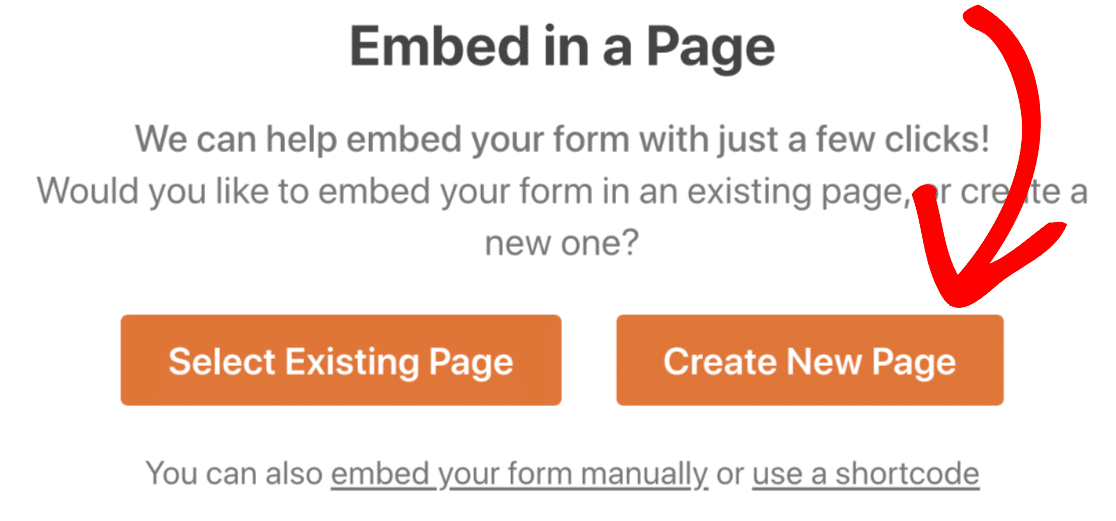
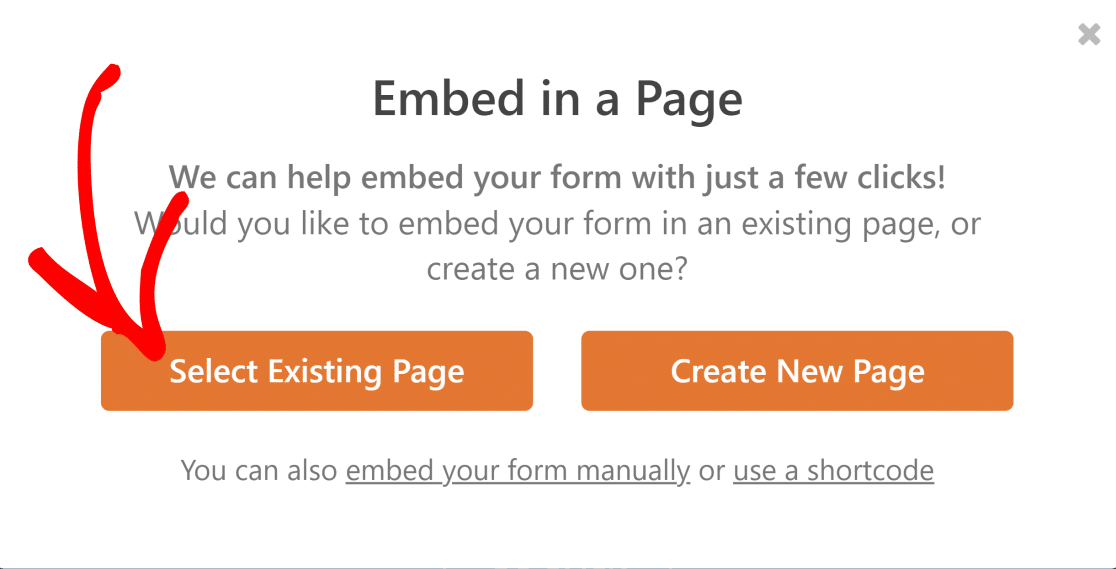
A popup will give you two options: create a new page or select an existing one.
Embed on a New Page
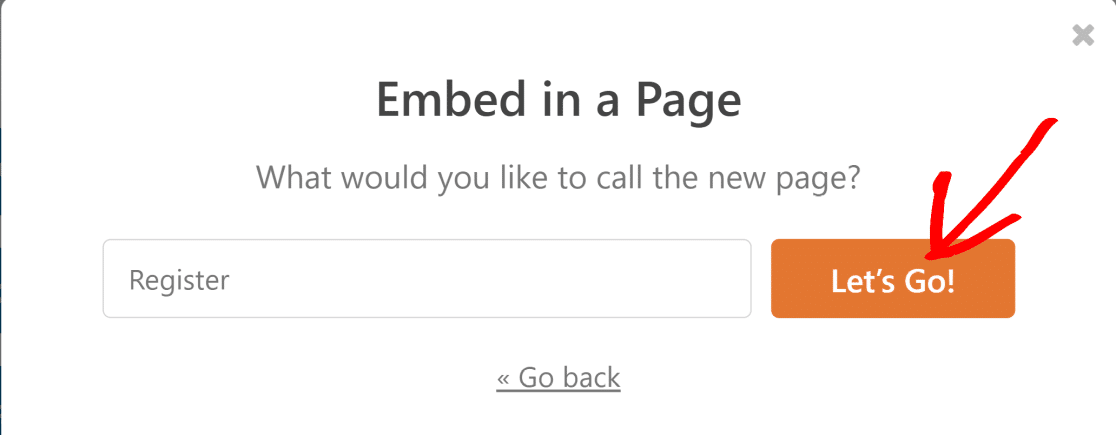
If you want a fresh page for your login form, click Create New Page. Enter a name for the page and click Let’s Go.
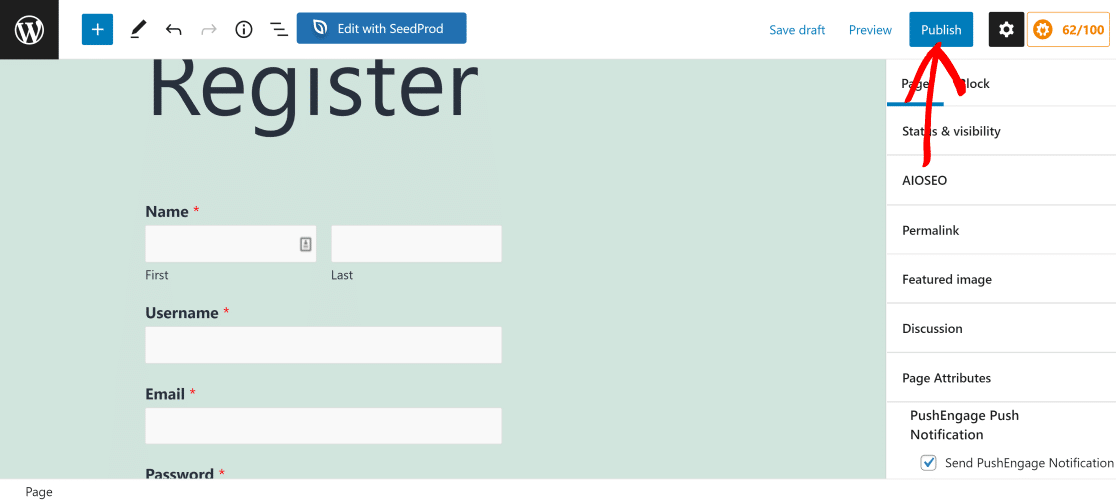
You’ll be taken straight to the page editor with your form already embedded. Just click Publish to make it live.
Embed on an Existing Page
Already have a page where you want the login form? Click Select Existing Page and pick the page from the dropdown.
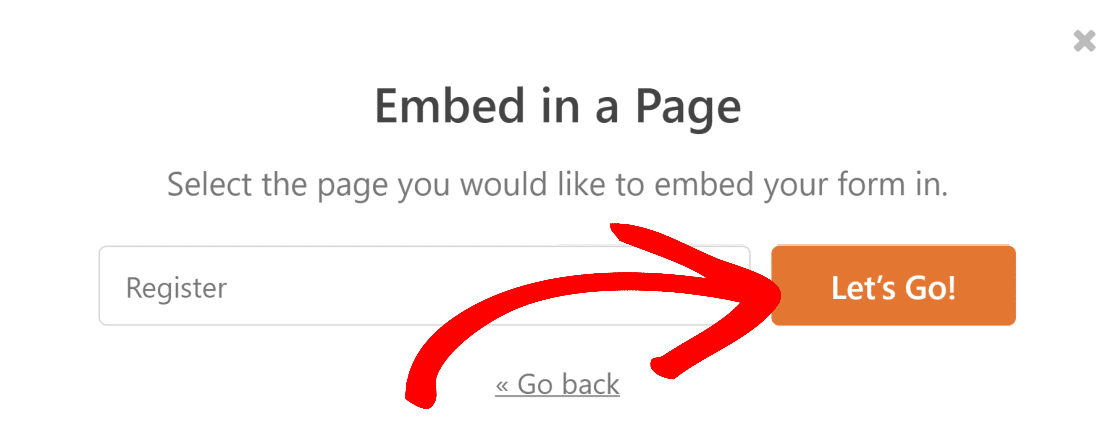
Click Let’s Go and you’ll be redirected to that page’s editor. From here, you may need to add the WPForms block to the page (I’ll cover how in Method 2). Hit Update to save your changes.
Method 2: Use the Block Editor
If you’re already editing a page and want to drop in your login form, you can add the WPForms block directly. No need to go back to the form builder.
Open the page where you want your form. Click the + button to open the block inserter and search for “WPForms.” Click the WPForms block to add it to your page, then select your login form from the dropdown.
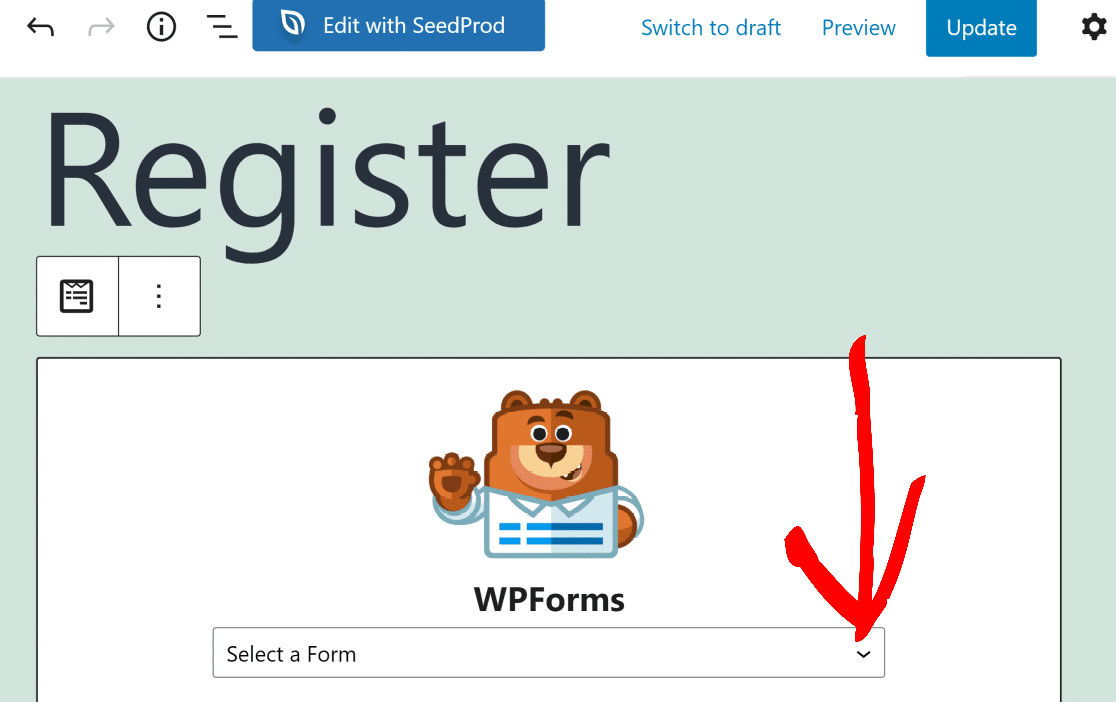
Your form will appear right in the editor. Click Publish or Update when you’re ready.
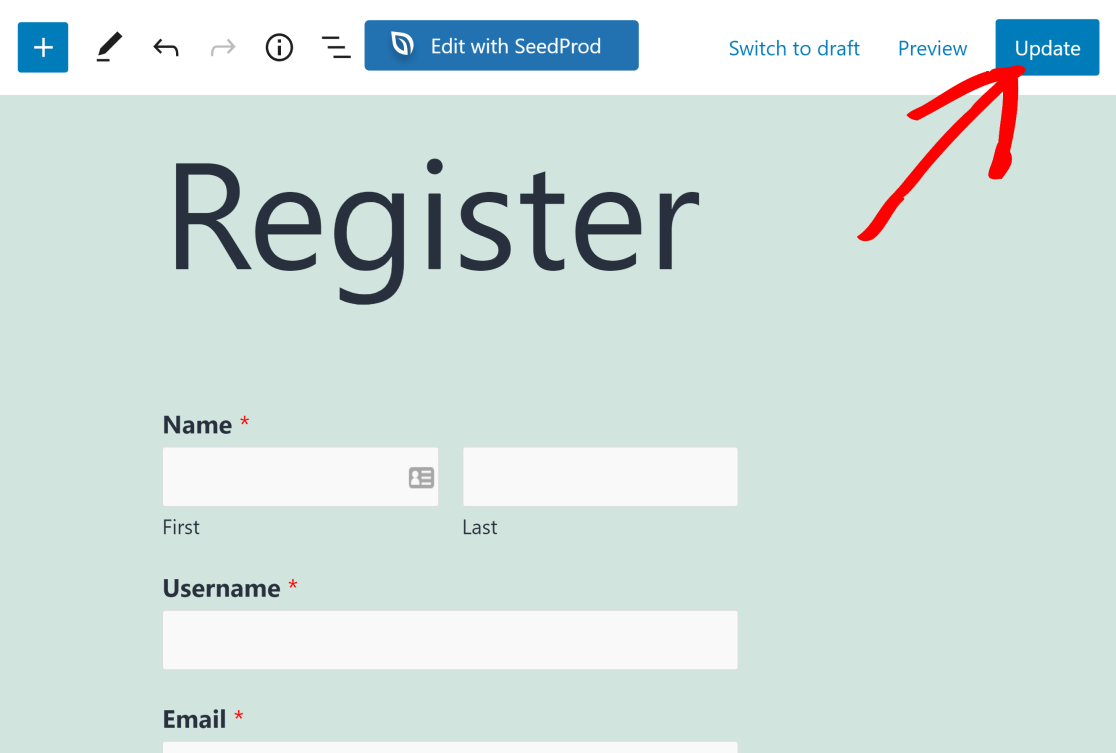
You can repeat this on as many pages as you want. All login submissions still flow into one place under WPForms » Entries. For the full list of embedding options, check the documentation on displaying forms on your site.
Configure the WPForms Block Settings
Once you’ve added the form, you’ll notice additional settings in the right sidebar panel.
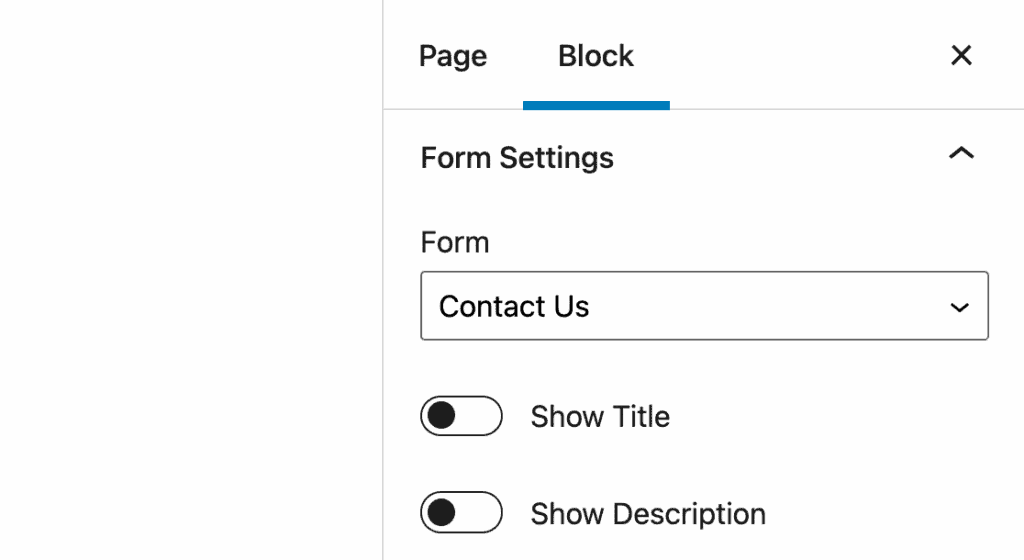
Here’s what you can adjust:
- Show Title and Show Description: Toggle these on to display the form’s name and description above the form fields.
- Form Styling: WPForms lets you style your forms right in the block editor without writing any CSS. You can change field sizes, colors, and button styles visually.
- Advanced: Add custom CSS classes if you need more control over the form’s appearance.
Method 3: Use a Shortcode
WPForms generates a unique shortcode for every form you create. This is useful if you’re working with the Classic Editor, a theme that doesn’t fully support blocks, or any area that accepts shortcodes.
To find your form’s shortcode, go to WPForms » All Forms in your dashboard. You’ll see the shortcode listed next to each form. It looks like this:
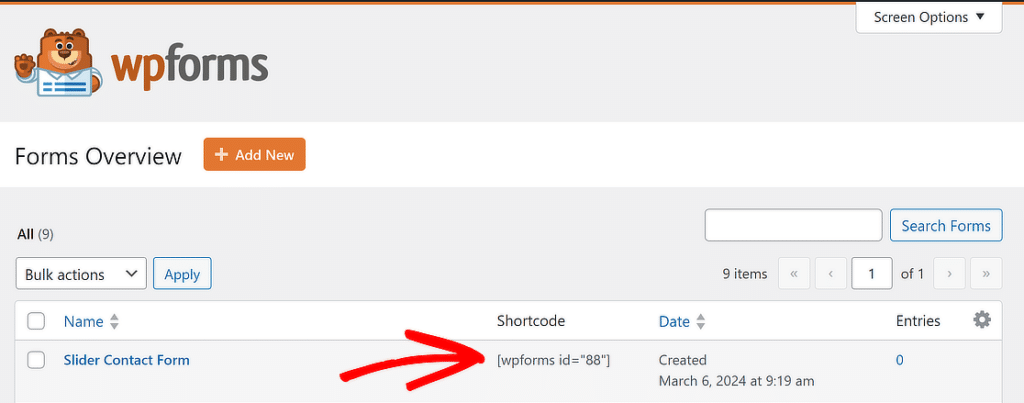
Copy the shortcode, open the page or post where you want your login form, add a Shortcode block, paste it in, and click Publish or Update.
You can also embed your login form using this shortcode in text widgets, sidebar areas, and anywhere else that supports shortcodes.
Method 4: Use a Widget (Sidebar or Footer)
Want your login form visible on every page of your site? Adding it to a sidebar or footer as a widget is a great option.
Visitors can log in from anywhere without having to find a dedicated login page. Go to Appearance » Widgets in your WordPress dashboard.
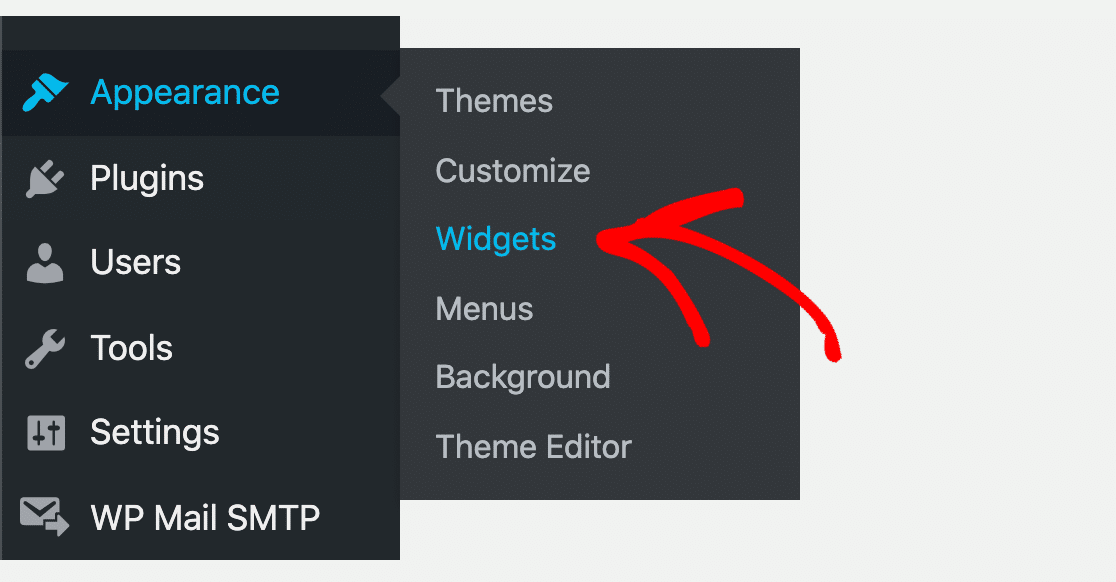
Find the Main Sidebar section. If your theme doesn’t support sidebars, you won’t see this option. Click the + button and search for WPForms.
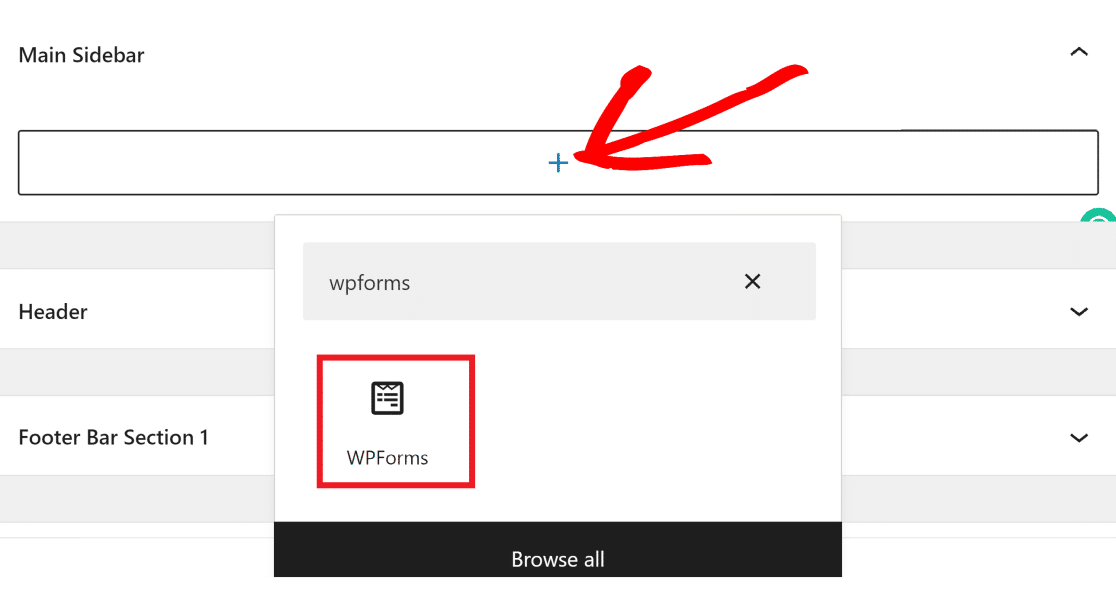
Click the WPForms block to add it, then select your login form from the dropdown.
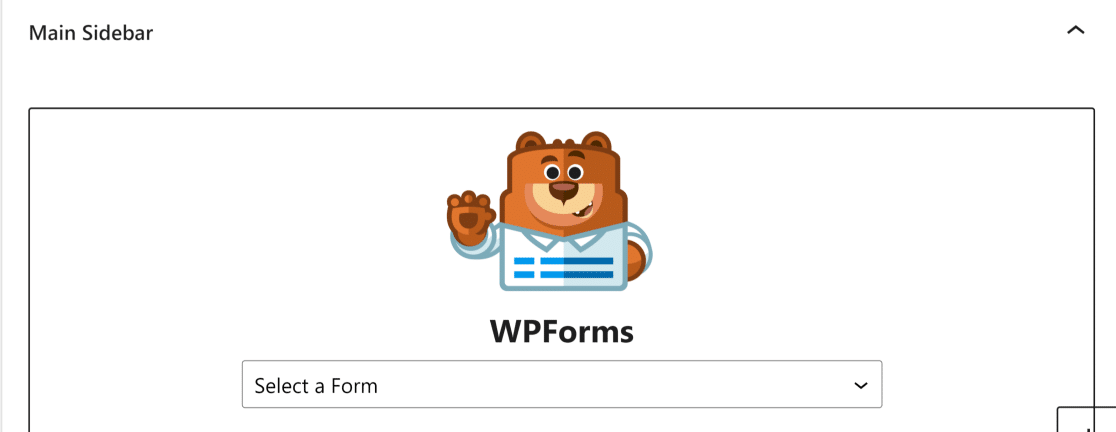
You’ll see a preview of the form right in the widget area.
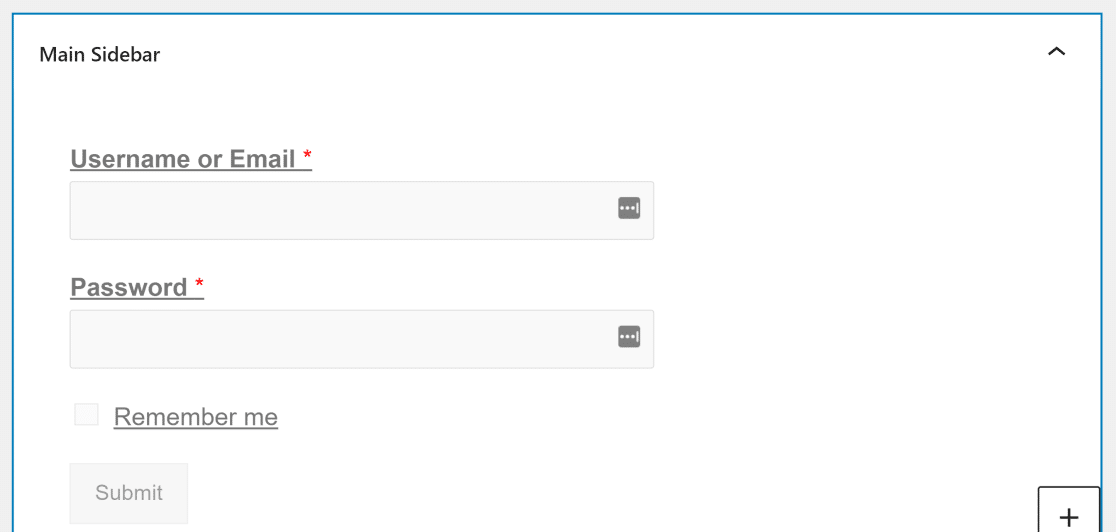
You can do the same for your footer. Scroll down to the Footer Bar widget area, add the WPForms block, and select your login form.
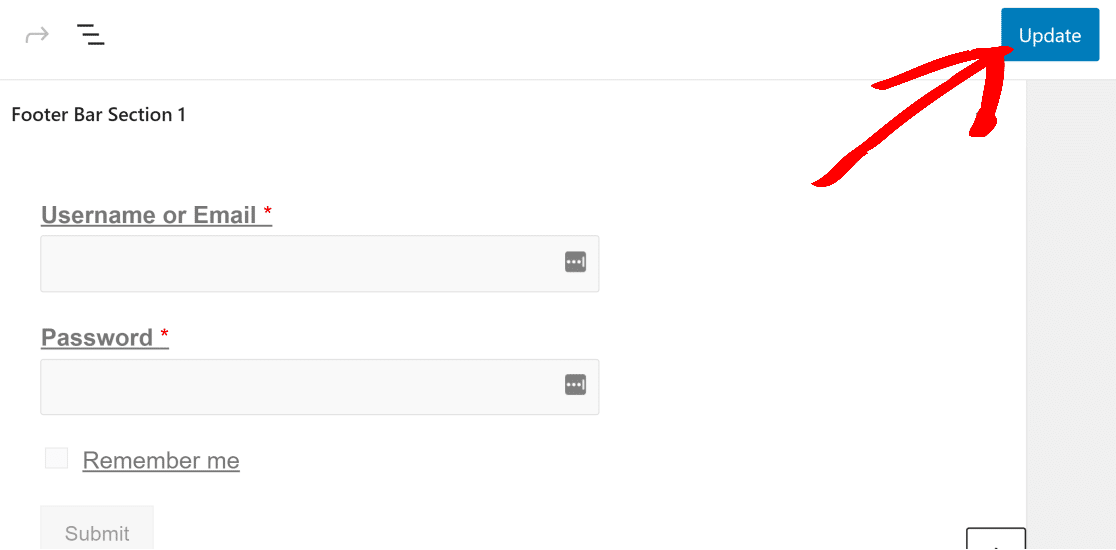
Click Update when you’re done. Here’s what a login form looks like in a sidebar:
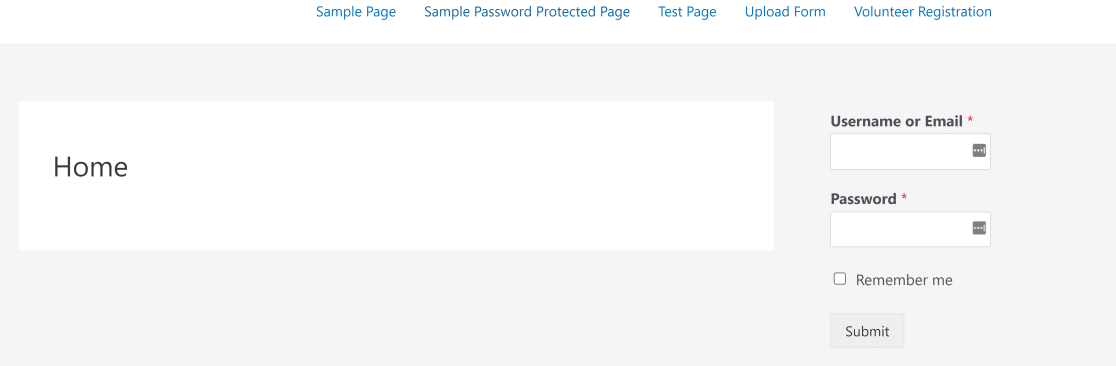
And here it is in the footer:
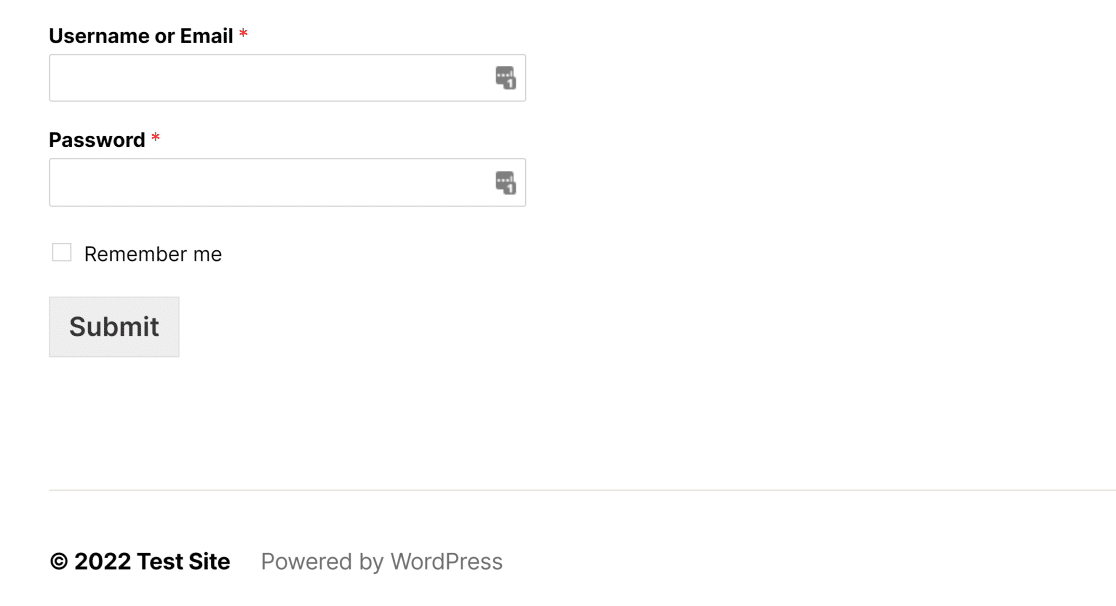
If you’re using a block theme with Full Site Editing, go to Appearance » Editor instead. Open the template part for your sidebar or footer and add the WPForms block there.
Bonus: Create a User Registration Form
Now that you’ve got a login form on your site, you’ll probably want a registration form too so new visitors can create accounts. WPForms handles this with the same User Registration addon you set up earlier.
You can build a custom registration form with whatever fields you need and embed it using any of the methods above. For the full walkthrough, check out this guide on how to create a user registration form in WordPress.
After you’ve created your registration page, you’ll want to add it to your site’s navigation so visitors can find it. In your WordPress dashboard, go to Appearance » Menus.
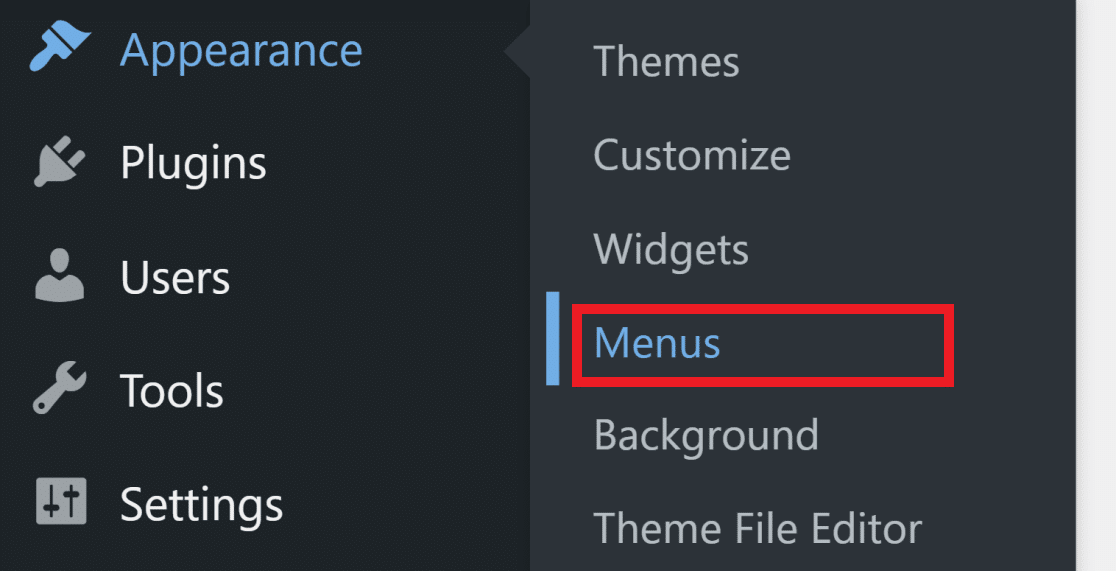
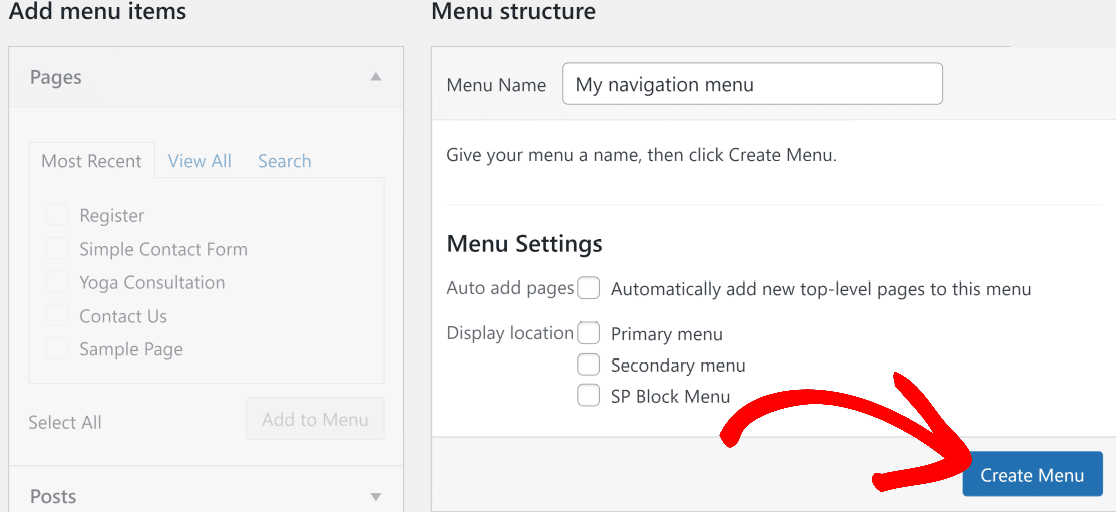
If you don’t have a menu yet, give it a name and click Create Menu.
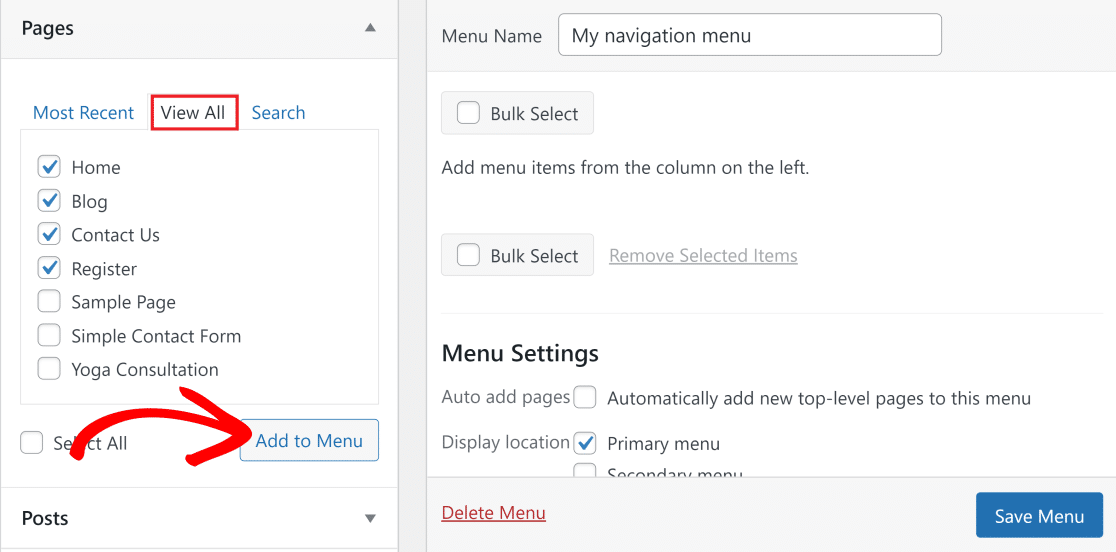
Under the Pages section on the left, click View All to see all your published pages. Check the boxes for your login and registration pages, then click Add to Menu.
Drag and drop the menu items to arrange them however you want.
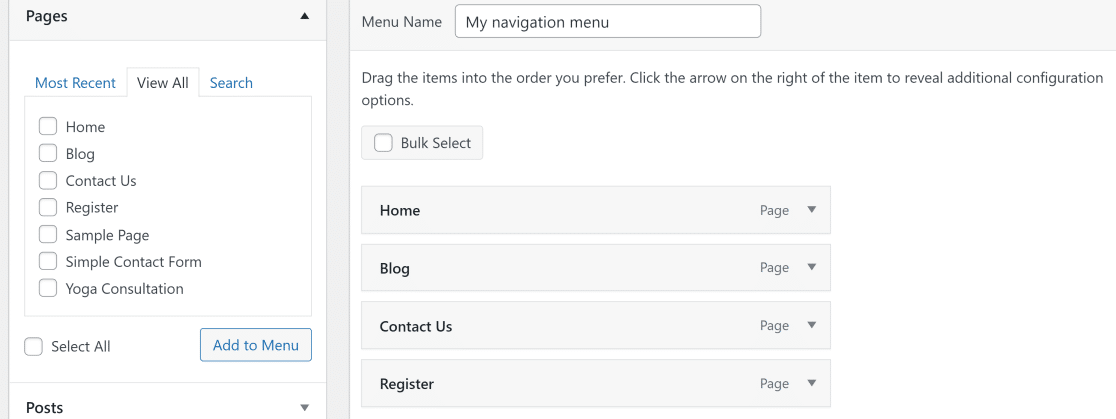
Select a display location (like Primary menu) and click Save Menu.
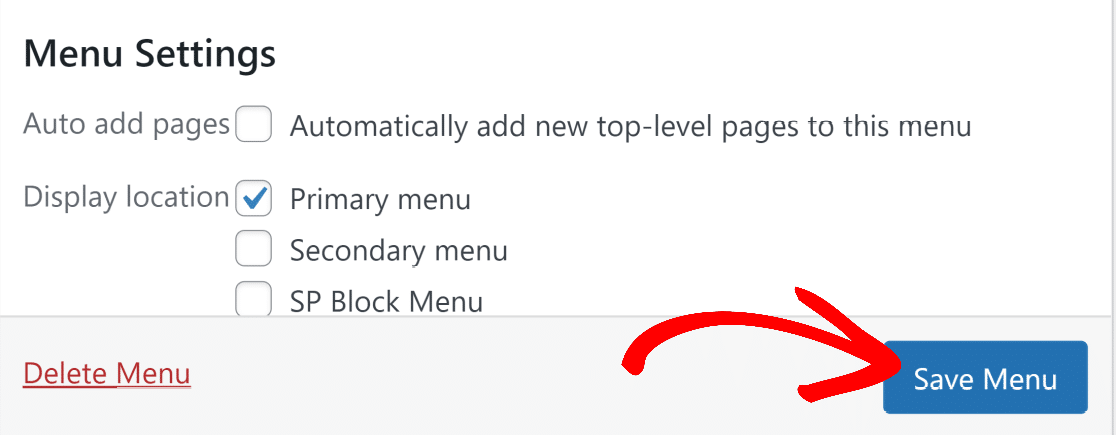
Now your login and registration pages are in your site’s main navigation.

If you’re on a block theme, add these pages through Appearance » Editor instead. Open your header template part, select the Navigation block, and add the links there.
Tips for Improving Your WordPress Login Page
- Set up login redirects: Don’t drop users on the homepage after they log in. Point them somewhere useful, like an account page or a members-only dashboard. Here’s a full guide on how to set up WordPress registration redirects.
- Add spam protection: Login forms are a target for brute force attacks. If you’re using WPForms, you can enable CAPTCHA, set up anti-spam rules, or use the built-in honeypot. These simple tricks to eliminate spam user registration work for login forms too.
- Customize the look: A plain login form works, but matching it to your site’s branding makes a better impression. You can customize your login form’s branding with custom colors, logos, and layouts. Check out these login page examples for inspiration.
FAQs About Adding a WordPress Login Form to Any Page
Adding a WordPress login form to any page is one of the most common requests from site owners running memberships, online courses, or community forums. Here are the questions I see most often.
How do I add a login form to a WordPress page?
The easiest way is to use WPForms Pro with the User Registration addon. Create a login form in the builder, then embed it on any page using the embed wizard, block editor, shortcode, or widget. You can also use the built-in WordPress Login/Logout block for a simpler approach.
How do I redirect WP login to another page?
With WPForms, go to your login form’s Settings » Confirmations and set the redirect page. You can create different redirects for different user roles using conditional logic. If you’re using wp_login_form(), pass a redirect parameter with the destination URL.
What’s the difference between a login form and a registration form?
A login form lets existing users sign into their account with a username and password. A registration form lets new visitors create an account. Most sites need both, and WPForms can create both types using the same User Registration addon.
Can I assign different user roles based on form responses?
Yes. WPForms allows you to assign user roles conditionally based on how users fill out your registration form. This gives you more control over permissions and access levels on your site.
Next, Customize Your Login Page
That covers 4 different ways to add a WordPress login form to any page on your site. Now that your login form is live, here are a few things you might want to do next:
- Customize your login form’s branding with colors, logos, and custom layouts
- Set up registration redirects to send users where they need to go
- Eliminate spam registrations with CAPTCHA and anti-spam tools
Create Your WordPress Login Form Now
Ready to build your form? Get started today with the easiest WordPress form builder plugin. WPForms Pro includes lots of free templates and offers a 14-day money-back guarantee.
If this article helped you out, please follow us on Facebook and X (Twitter) for more free WordPress tutorials and guides.





How do i add paid subscription form with referal bonus Upto the forth level.
eg. If may be a person Subscribe to my website and pays $5 and given referal link and also Sends the.link to other who also pays and the referal gets some bonus….how do i do it???
Hey Mukasa, — In order to make sure we answer your question as thoroughly as possible and avoid any confusion, could you please contact our team?
If you have a WPForms license, you have access to our email support, so please submit a support ticket. Otherwise, we provide limited complimentary support in the WPForms Lite WordPress.org support forum.
Thanks.