


AI Summary
Are you trying to choose between MailerLite vs Contact Contact to run your marketing campaigns?
MailerLite is among the fastest-growing SaaS platforms for email automation, while Constant Contact has been one of the top-rated email and digital marketing tools for many years.
So let’s put them side by side on the things that actually decide it, pricing, templates, automation, integrations, deliverability, reporting, A/B testing, and ease of use.
MailerLite vs Constant Contact: Quick Comparison
Here’s a quick overview of MailerLite and Constant Contact and their features to help you determine the better choice for your needs.
| MailerLite | Constant Contact | |
|---|---|---|
| Starting price | Free plan, paid from $12/mo | From $12/mo (no free plan) |
| Free plan | Yes, up to 250 subscribers | No, free trial only |
| Email automation | Yes, even on the free plan | Yes, on paid plans |
| A/B testing | Subject line, sender name, and content | Subject line only |
| Deliverability | Very high | High |
| Standout feature | Built-in landing pages and websites | Built-in event management |
| WPForms integration | WPForms Plus | Free WPForms Lite and up |
| Best for | Budget, modern design, list growth | Hands-on support and events |
Both are strong tools, and the differences show up once you look at what you pay and what you get for it, so let’s dig into each area.
1. Pricing and Plans
Price is where most people make the call, so I’m putting it first. This is also the area that has changed the most since either tool launched, and it’s where MailerLite and Constant Contact take quite different approaches.
MailerLite Pricing
MailerLite starts with a real, permanent free plan rather than a time-limited trial. You get up to 250 subscribers and 2,500 emails a month, plus automations, a website, a landing page, and signup forms. For a new list, that’s enough to launch without spending a cent.
When you outgrow it, the Comfort plan begins at $12 a month and the Power plan at $25 a month, both priced for the smallest subscriber tier and scaling up as your list grows. Every paid plan includes unlimited monthly emails, and paying yearly knocks 10% off.

Now, if you run a registered nonprofit, MailerLite gives you 30% off any paid plan, which is one of the more generous nonprofit discounts in this space. For more options in this category, see our roundup of email marketing services with free options.
Constant Contact Pricing
Constant Contact skips the free plan and offers a short free trial instead, usually a couple of weeks with a cap on how many emails you can send. If a permanent free tier matters to you, that’s worth knowing upfront.
- Lite starts at $12 a month and covers the basics, including a welcome automation and landing pages.
- Standard at $35 a month adds A/B testing, segmentation, and deeper reporting.
- Premium at $80 a month unlocks dynamic content, advanced automation, SEO tools, and an Ad Manager.

One thing to watch with Constant Contact is that pricing climbs quickly as your list grows. Doubling your contacts from 500 to 1,000 on the Lite plan can push the cost from $12 to around $50, so map out your list size before you commit.
2. Email Templates
Templates decide how fast you can get a good-looking campaign out the door. Both tools give you a drag-and-drop editor and a library to start from, but the libraries aren’t the same size.
MailerLite Email Templates
MailerLite has a clean, modern set of templates that are easy to customize in its drag-and-drop editor. The designs feel current, which matters when your emails are competing with everything else in a crowded inbox.
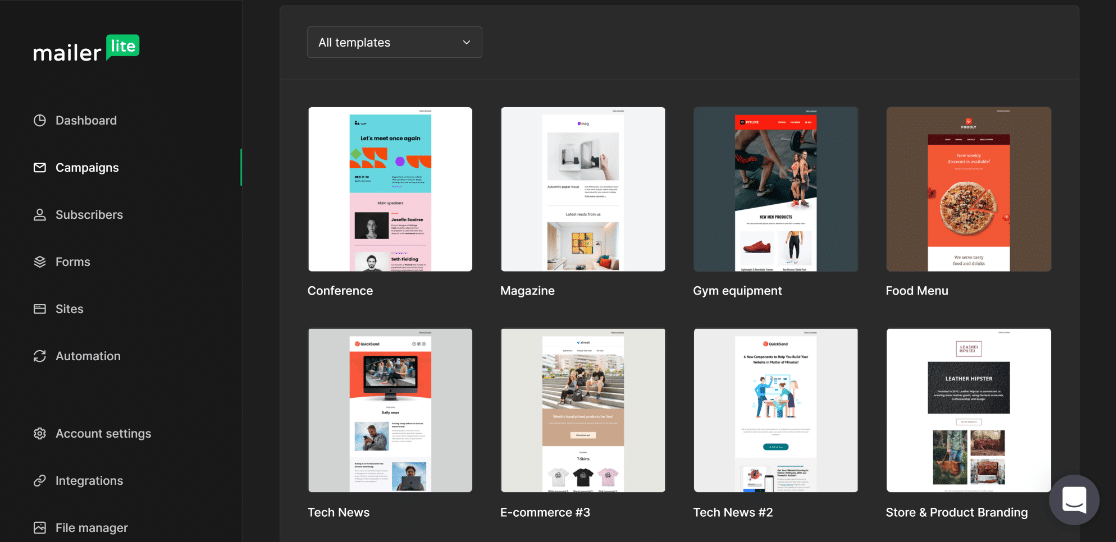
The richer template designs and the ability to save your own are reserved for the paid plans. The free plan still lets you build and send campaigns, so you can test the waters before upgrading for the full design library.
Constant Contact Email Templates
Constant Contact gives you a much bigger library, with over 200 templates to choose from. That’s noticeably larger than MailerLite’s collection.
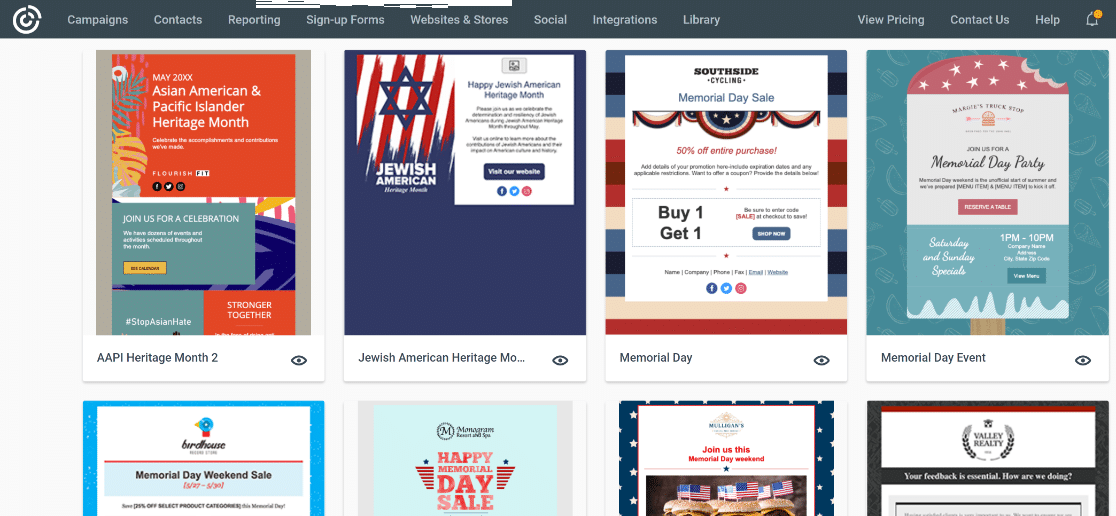
You customize them with Constant Contact’s own drag-and-drop builder. With so many designs on hand, you can usually find one close to what you need, which cuts down on editing time.
So on templates, it comes down to taste versus volume. MailerLite wins on modern polish, and Constant Contact wins on sheer choice.
3. Automation
Automation is what lets your email marketing run while you’re doing other things, from welcome sequences to follow-ups triggered by what a subscriber does. Both tools cover the essentials well, though they take slightly different routes to get there.
MailerLite Email Automation
MailerLite gives you genuinely capable automation, and the good part is that it’s available on the free plan too. You can trigger workflows when someone clicks a link, completes a form, or hits a date like an anniversary.
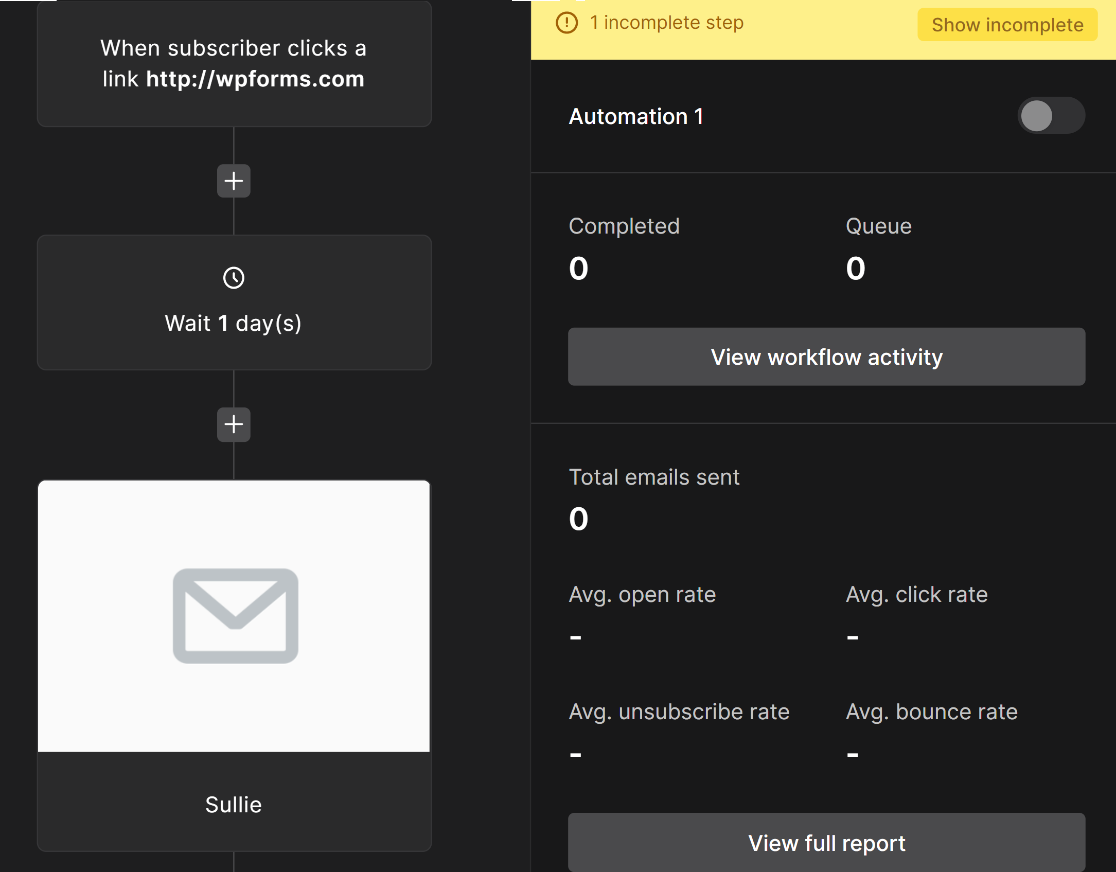
The visual workflow editor makes it easy to see your automation at a glance and build one with conditional logic or simple linear steps. For a small business, it covers just about every trigger you’d reach for.
Constant Contact Email Automation
Constant Contact handles the common jobs well, like welcome emails, abandoned-cart reminders, and birthday messages.
Setting up a sequence is straightforward, and all you have to do is draft an email, set a waiting period, and add the next one in the series.
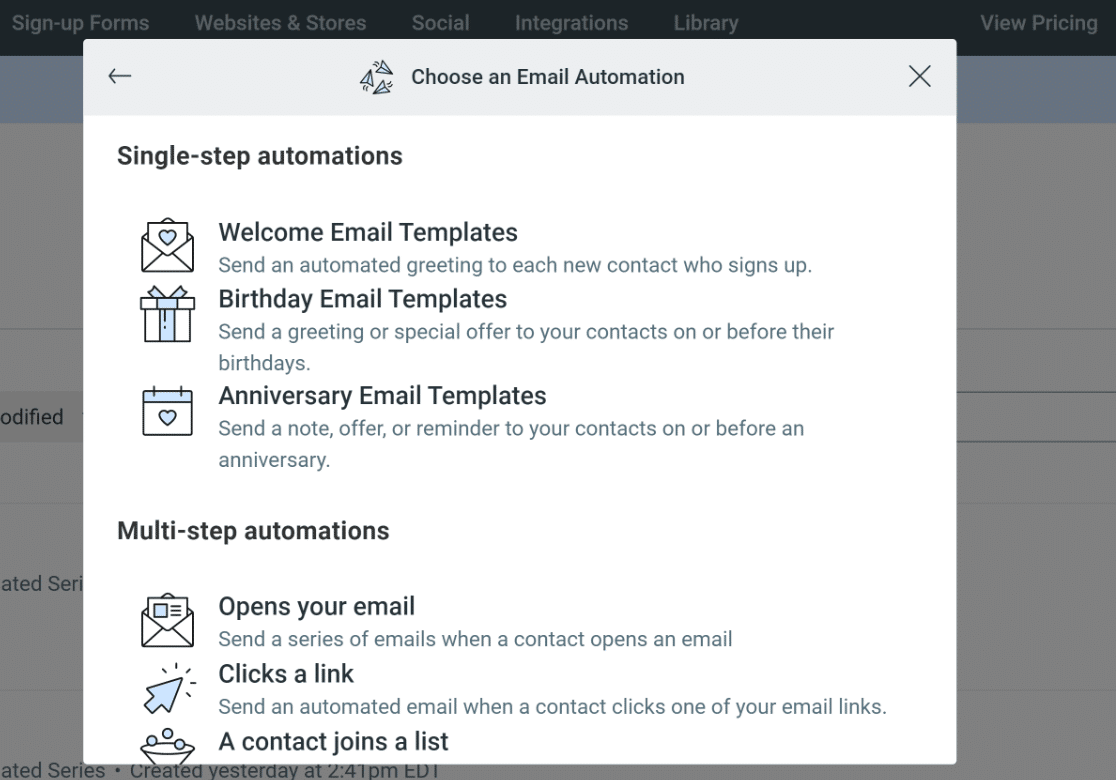
You can run several workflows based on different subscriber actions, which is plenty for most small-business needs. The more advanced automation paths sit on the higher Premium tier.
4. Integrations
Integrations connect your email tool to the rest of your stack, from your website and store to your CRM. This is also where WPForms comes in, since it’s how you feed new subscribers from your WordPress forms straight into your email list.
MailerLite Integrations
MailerLite supports over 130 integrations with third-party tools, including WordPress plugins, eCommerce platforms, and CRMs.
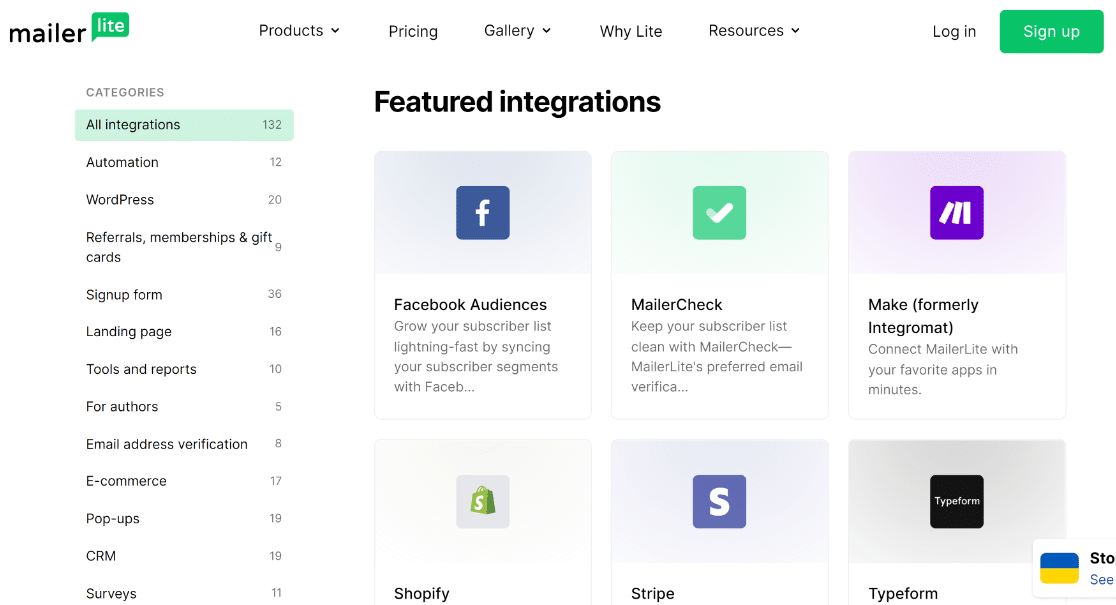
You can connect your WordPress forms with MailerLite so new signups flow automatically into your email list.
To do that with WPForms, you’ll need the WPForms Plus plan, which unlocks the MailerLite addon along with the rest of the marketing integrations.
For more ways to wire it up, see our guide to the best MailerLite integrations for WordPress.
Constant Contact Integrations
Constant Contact connects smoothly with hundreds of apps, including Shopify, Salesforce, and Zapier. It even ties into call tracking and SMS services that a lot of tools skip.
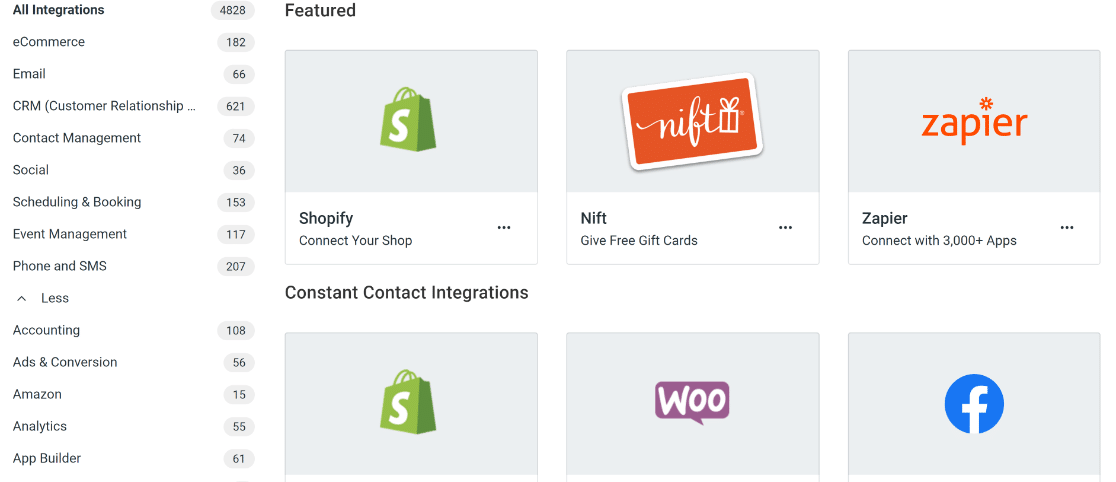
If you’re a Constant Contact user, you get a real advantage on WordPress, because you can connect it with WPForms Lite, the free version of the plugin, so you don’t need a paid WPForms plan to start collecting subscribers.
Take a look at the full range of Constant Contact integrations, or follow our guide to add a Constant Contact signup form to your site.
5. Deliverability
Deliverability is the quiet feature that decides whether all your work actually lands in the inbox. A beautiful campaign that gets filtered to spam does nothing for you, so this one matters more than it gets credit for.
MailerLite Deliverability
MailerLite is one of the top performers on deliverability, and a big reason is its strict account approval process. Before you can send, MailerLite reviews your account to confirm you’re a legitimate sender.
That vetting can make signup feel a little slower, but you’re trading a few minutes upfront for a sender reputation that keeps your emails out of spam folders. For most people, that’s a trade worth making.
Constant Contact Deliverability
Constant Contact also maintains strong deliverability, backed by decades as an established sender. Its rates run slightly behind MailerLite’s, but not by a margin most senders would notice.
Your emails will reliably reach inboxes with either tool. If you want the very best odds, MailerLite has a slight edge here.
6. Reports and Analytics
Good reporting is how you learn what’s working and turn one decent campaign into a repeatable one. You want to see opens, clicks, and where people drop off without drowning in dashboards.
MailerLite Reports and Analytics
MailerLite keeps reporting simple and readable, showing the metrics you actually use like open and click rates, click maps, devices, and popular links.
That simplicity is the point, so the reports are quick to scan and you can spot what happened before moving on to your next send.

Constant Contact Reports and Analytics
Constant Contact gives you a solid analytics dashboard covering clicks, opens, bounce rates, and successful sends. On the higher plans, you also get more detailed drill-down reporting.
With these numbers, you can compare campaigns and see which subject lines and content pull the best response. It’s a step up in depth if you like slicing your data more finely.

7. A/B Testing
Split testing is how you stop guessing and let your subscribers tell you what works. Test one variable, send it to a slice of your list, and roll out the winner. This is one of the clearest differences between the two tools.
MailerLite A/B Testing
MailerLite gives you real testing flexibility across three variables:
- Subject line: Try different subject lines to see which one lifts your open rate.
- Sender name: The name next to your subject line can move opens too, so you can test that.
- Content: Test the text, images, and calls to action inside the email to improve your click-through rate.
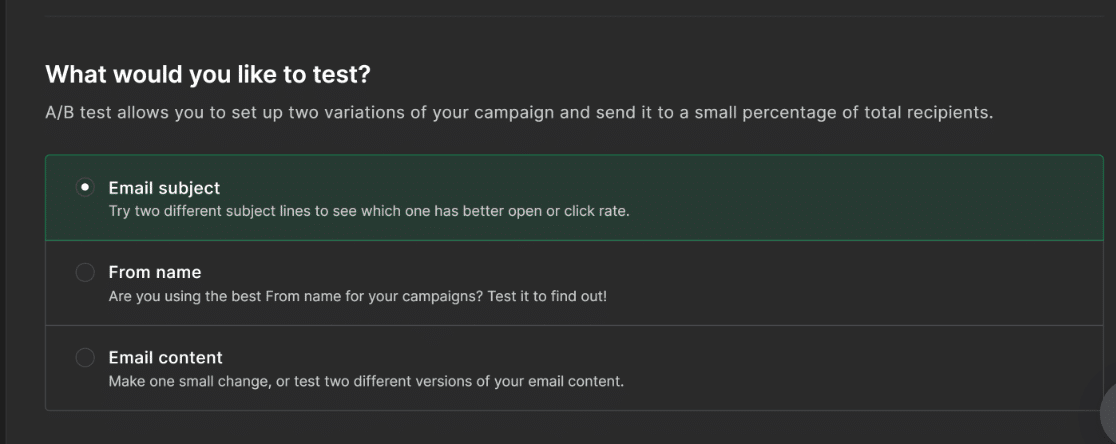
MailerLite has also extended testing beyond email to things like pop-ups and landing pages. If you like running real experiments, this is the more flexible option by a wide margin.
Constant Contact A/B Testing
Constant Contact keeps A/B testing simpler, limiting you to subject line tests, and only from the Standard plan up.
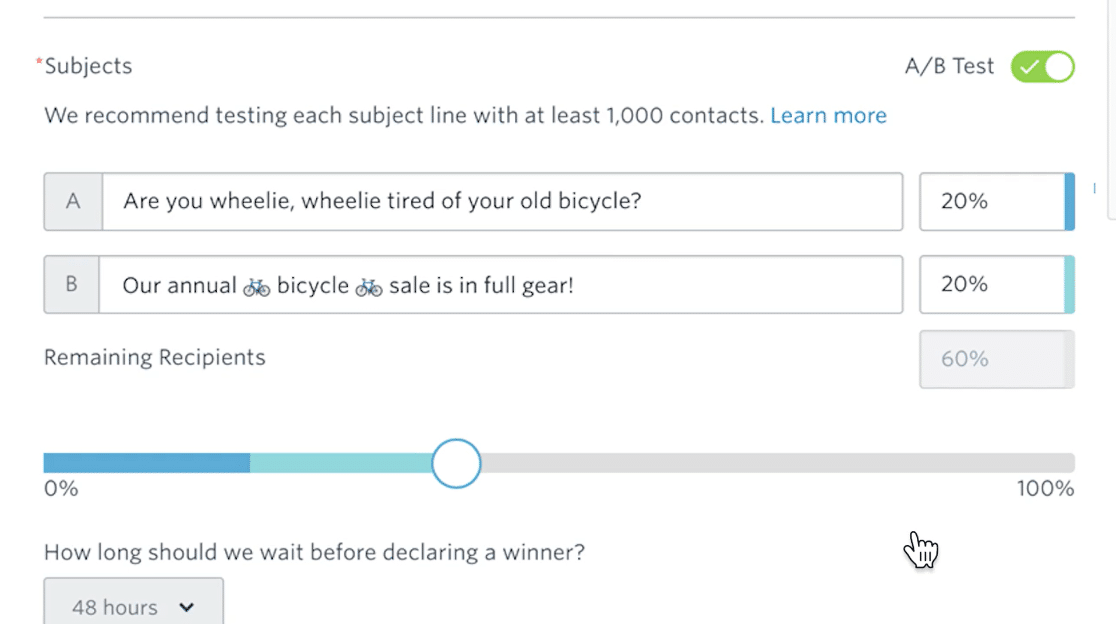
That’s fine if subject lines are all you care about experimenting with. But you can’t test content variations for click-through rate, so serious testers will feel the ceiling here fairly quickly.
8. Ease of Use
You’ll spend real hours in whichever tool you pick, so how it feels day to day counts. Both are aimed at beginners, and both get you to a sent campaign without a manual, but they don’t feel the same.
MailerLite Ease of Use
MailerLite is about as easy as email marketing tools get, with a modern, clean interface that’s genuinely pleasant to work in. The drag-and-drop editor makes drafting an attractive email quick, even for a first-timer.

Building automations and setting up integrations is just as approachable. MailerLite also bundles in landing pages, pop-ups, and a basic website builder, so a lot of your marketing can live in one place without extra tools.
Constant Contact Ease of Use
Constant Contact has long been known as beginner-friendly, and you can find features and draft a campaign without much of a learning curve. Its interface shows its age next to MailerLite’s, but it’s still approachable.
Where Constant Contact pulls ahead is the extras and the support around them. It includes built-in event management with registration and ticketing, which MailerLite doesn’t offer, plus extensive training resources.
The Verdict: Which Should You Choose?
After all that, both tools are genuinely good, but they’re built for different people, so the right pick depends on what you need most.
- Choose MailerLite if you want a real free plan to start, care about a modern interface, or plan to grow your list on a budget. Its automation, deliverability, and A/B testing all punch above its price, and the 30% nonprofit discount makes it especially strong for mission-driven teams.
- Choose Constant Contact if you want hands-on support and training, run events that need registration and ticketing, or want the largest template library to pull from. You’ll pay more as your list grows, but you’re paying for guidance and features that MailerLite leaves out.
Whichever you land on, WPForms is how you connect it to your website and start collecting subscribers from your forms.
MailerLite runs through the MailerLite addon on WPForms Plus, while Constant Contact works with the free WPForms Lite plan.
Either way, you can turn your contact and signup forms into a growing email list in a few minutes.
FAQs about MailerLite vs Constant Contact
MailerLite and Constant Contact are two of the most popular topics among our readers. Here are answers to the questions people ask most when comparing MailerLite vs Constant Contact.
Does MailerLite or Constant Contact have a free plan?
MailerLite has a genuine free plan for up to 250 subscribers and 2,500 emails a month, including automations and a landing page.
Constant Contact doesn’t offer a free plan, only a short free trial, so MailerLite is the better fit if you want to start without paying.
Is MailerLite cheaper than Constant Contact?
MailerLite has a free tier and paid plans from $12 a month, and its pricing scales more gently as your list grows. Constant Contact also starts around $12 a month, but the cost climbs faster with your contact count.
Which is better for nonprofits, MailerLite or Constant Contact?
MailerLite offers a 30% discount on paid plans for registered nonprofits, which makes it very budget-friendly for smaller organizations.
Constant Contact is popular with nonprofits too, thanks to its event tools and hands-on support, so it comes down to whether price or guidance matters more to you.
Does MailerLite have good deliverability?
Yes. MailerLite is known for strong deliverability, helped by a strict account approval process that protects sender reputation. That vetting keeps your emails landing in inboxes rather than spam folders.
Is Constant Contact easy to learn?
Yes. Constant Contact is built to be beginner-friendly, with an interface that’s simple to navigate and plenty of training resources. Most people can set up and send a campaign without prior experience.
Next, Connect Your Forms to Your Email List
Once you’ve picked your email tool, the next step is feeding it new subscribers automatically. The easiest way to do that on WordPress is to connect your forms to your email list so every new signup lands on your list without any copy-paste. If you’re ready to build one, here’s how to create an email newsletter from start to finish.
You might also want to compare your options further with our guide to the best transactional email services. And if you’re thinking about switching from Mailchimp, we’ve rounded up the best Mailchimp alternatives worth a look.
Start Building Your Email List With WPForms
Ready to build your form? Get started today with the easiest WordPress form builder plugin. WPForms Pro includes lots of free templates and offers a 14-day money-back guarantee.
If this article helped you out, please follow us on Facebook and Twitter for more free WordPress tutorials and guides.