


AI Summary
One wrong keystroke in an email field means a lead you’ll never reach back. A typo here, a missing letter there… It’s one of the most common reasons legitimate form submissions go nowhere.
Adding a “confirm email address” field is the quickest fix. It forces users to type their address twice, catches typos before the form submits, and takes about 15 seconds to set up in WPForms.
In this article, I’ll show you how to enable user email address confirmation in your form in just a few simple steps.
TLDR: The Quick Answer
To add a confirm email address field in WPForms, open your form in the builder, click the existing Email field to open Field Options, then toggle on “Enable Email Confirmation.” Save the form. That’s it — users will now see two email fields side-by-side and can’t submit until both match.
What Is the Point of the Confirm Address Field?
An email confirmation field asks users to type their email address twice. If the two don’t match, the form won’t submit — and the user gets a friendly nudge to fix the typo.
It’s a small UX tweak that pays off in a few big ways:
- Fewer false leads from typo’d addresses like @gmial.com or @yaho.com
- Better deliverability on your follow-up emails (bounces hurt your sender reputation)
- Clean data in your CRM, email list, or support system from day one
- Higher sign-up-to-conversion rates for registration and membership forms
It’s especially worth adding on contact forms, registration forms, lead magnet forms, and anything tied to a paid transaction.
How to Show a Confirm Email Address Field on WordPress Forms
Adding a confirm email address field to your WordPress forms is really easy. In fact, all it takes are 4 simple steps, as we’ll show below:
Step 1: Install WPForms
The Email Confirmation feature is built into the standard Email field in WPForms, so you don’t need any extra addons. It’s available on every WPForms plan, including WPForms Lite.
We recommend that you get started with WPForms Pro, which is packed with some of our most popular features.
If you need a bit of help to get started, here’s a handy guide to installing WordPress plugins.
Step 2: Create a Form
Once you’ve installed and activated WPForms, you can go ahead to create a form and add it to a page on your website.
With WPForms, this is really easy to do, as you can use the drag-and-drop form builder, or simply choose from over 2,100+ form templates.
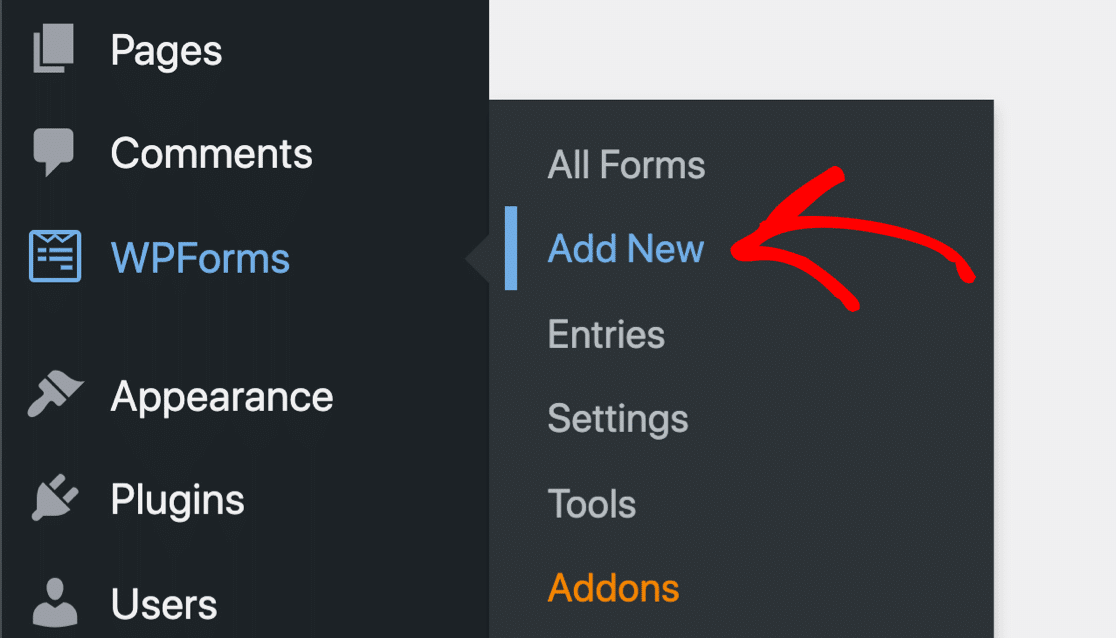
To do this, click on the WPForms tab on the left sidebar in the WordPress admin area. Then click through Add New.
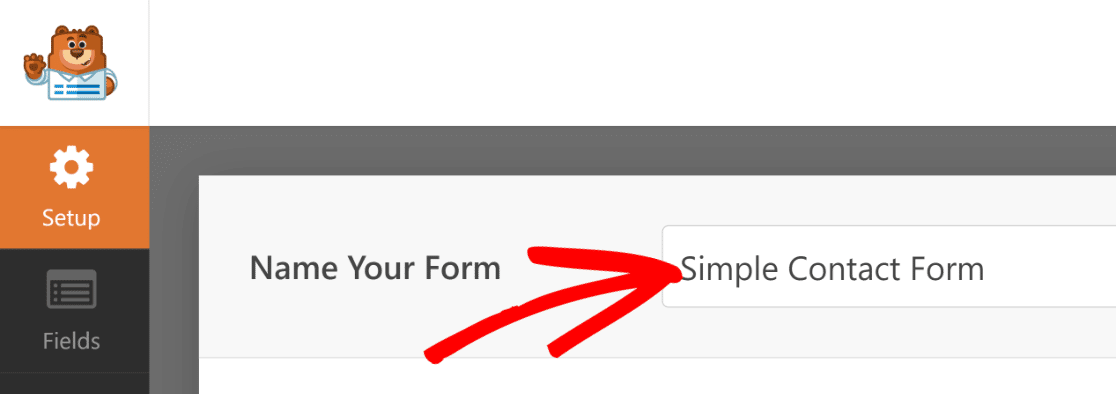
This will take you to the WPForms interface where you can name your form and choose a template. Start by entering a title for your form, which can be anything you like.
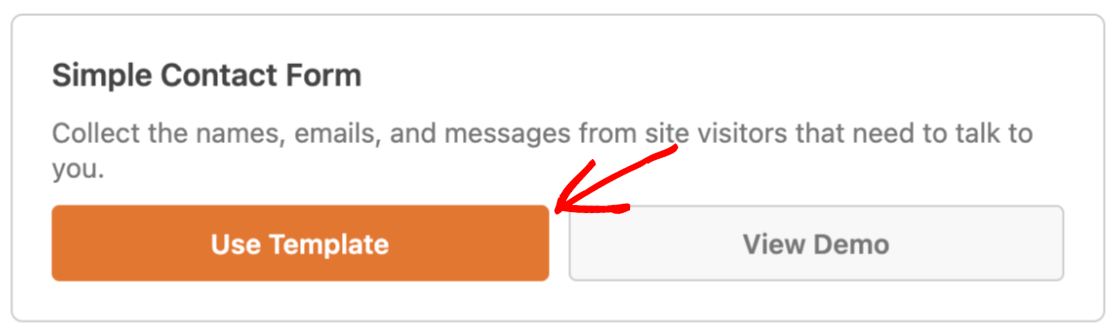
Then choose a template that works for you. For this guide, we’ll choose the Simple Contact Form Template. Hover your cursor over the template you want and click Use Template.
The form will now open up in the form builder, where you’ll see the form template on the right and a panel with form fields on the left.
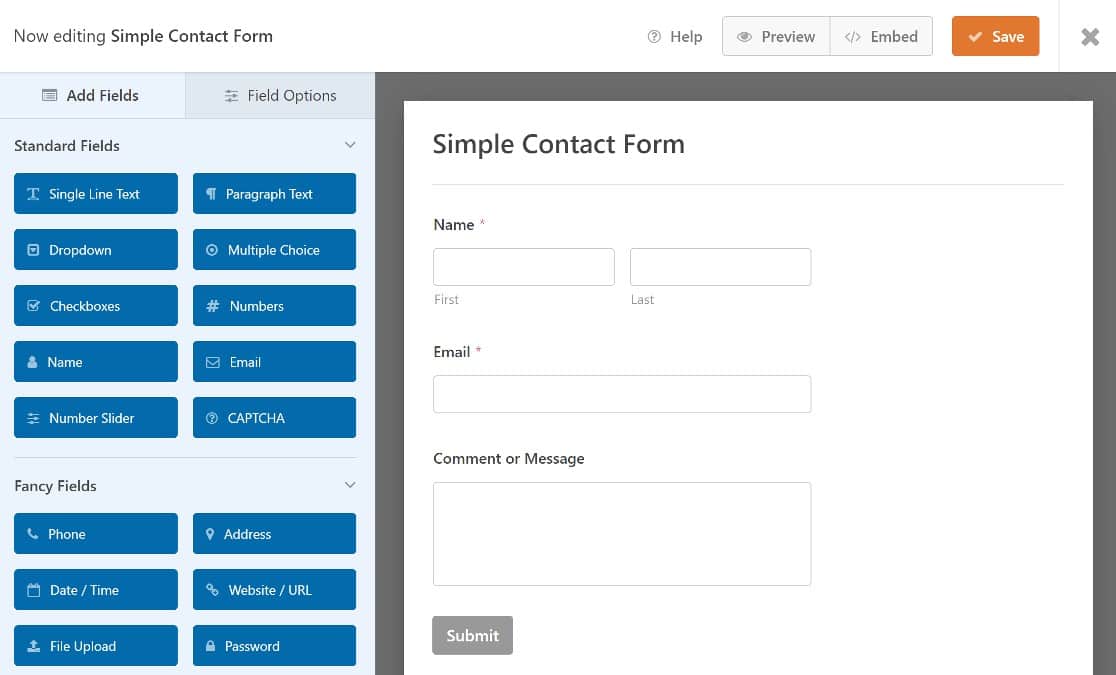
We won’t need to add any form fields since the one we want — the email field is already added to the Simple Form template. However, you can go ahead and add any other fields you need for your form.
For step-by-step instructions on working with WordPress forms, here’s our guide to making a simple contact form.
Step 3. Edit the Email Field
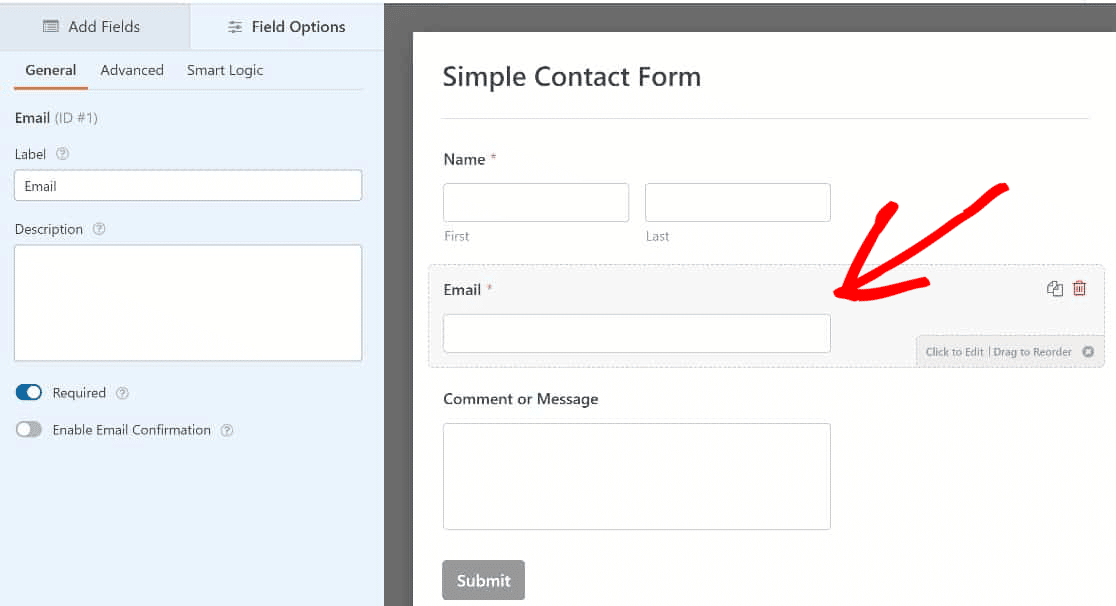
To add an email confirmation field, we’ll need to edit the email field. Simply click on it to open the Field Options on the left-hand panel.
Click on the Enable Email Confirmation toggle button to enable this option.
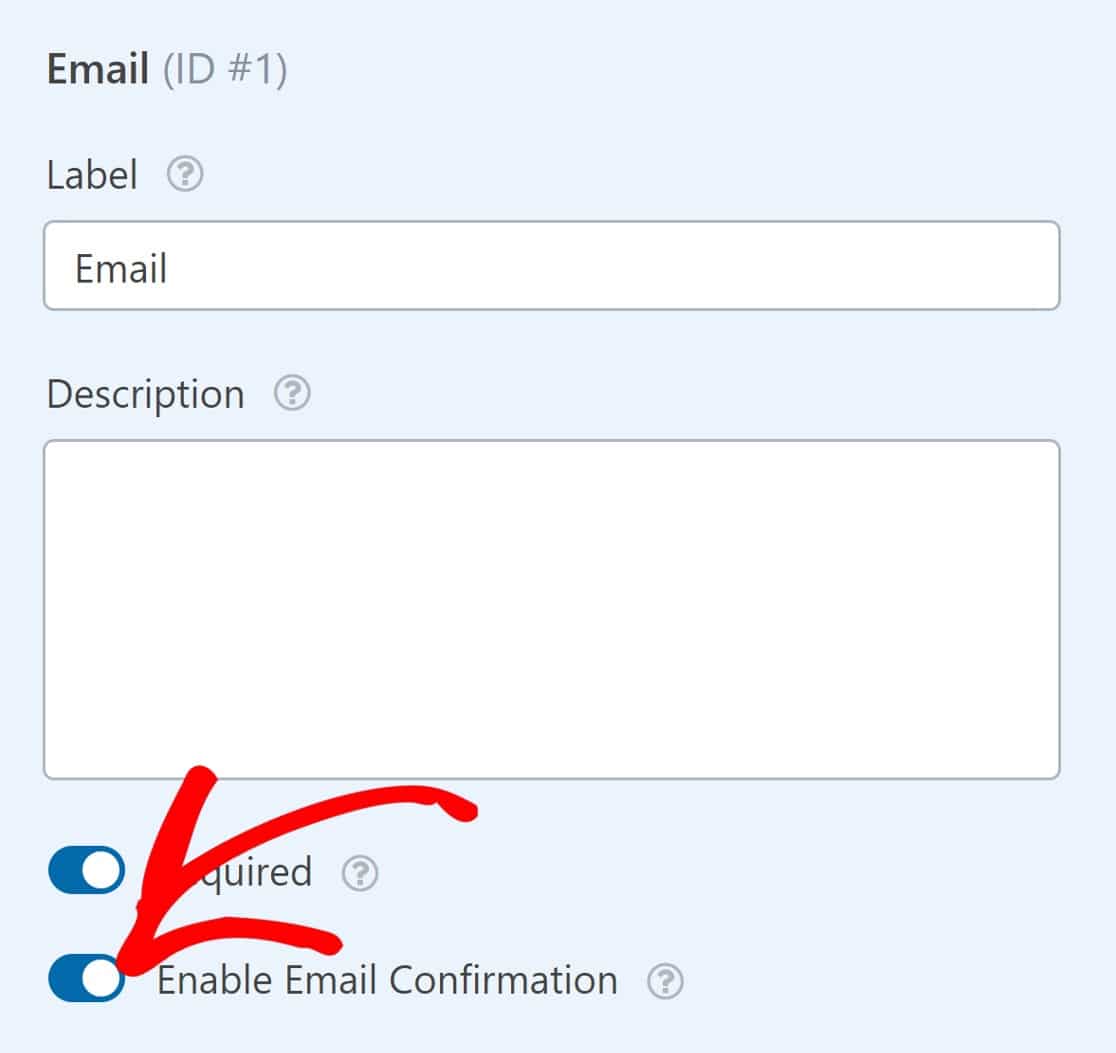
And that’s all you’ll have to do here. Your form will now require users to confirm their email addresses before they submit it.
Step 4. Publish the form
The final step would be to publish your form on your WordPress site. First, click the Save button at the top right corner of the page.

Next, click Embed, to publish your form to a page on your website.

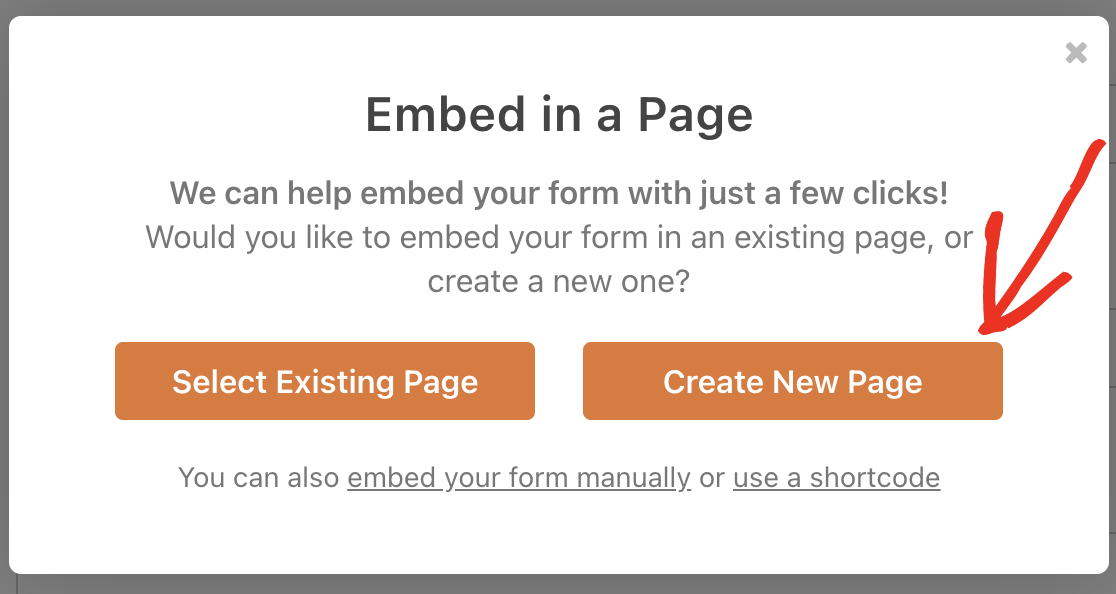
You’ll see a modal offering you the options of embedding the form either in a new page or in an existing one.
We’ll embed the form in a new page for this tutorial by clicking on Create New Page.
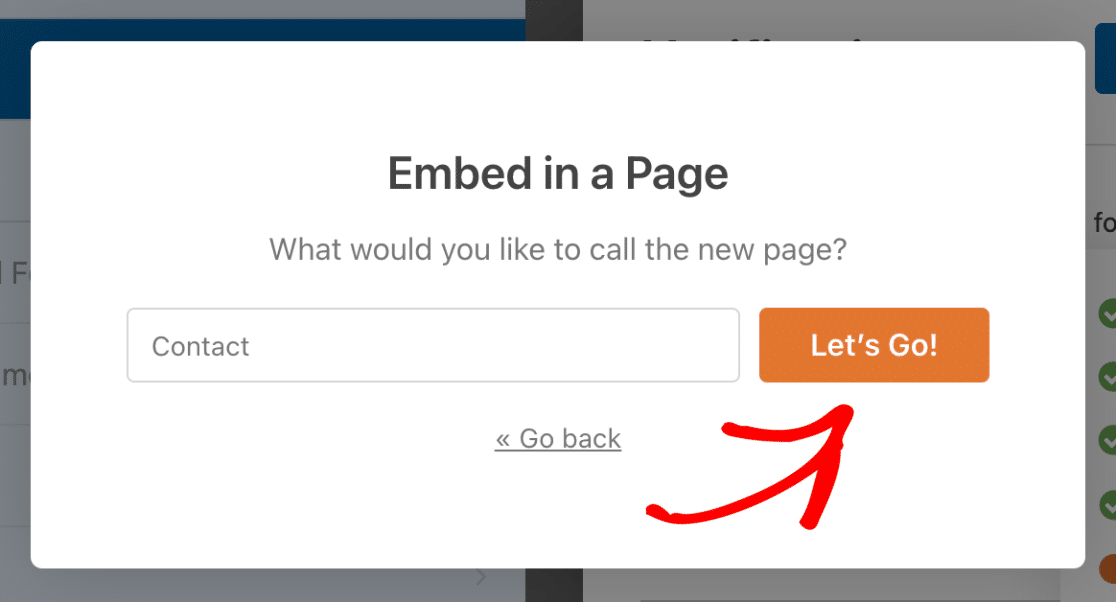
Enter a name for your new page and click on Let’s Go.
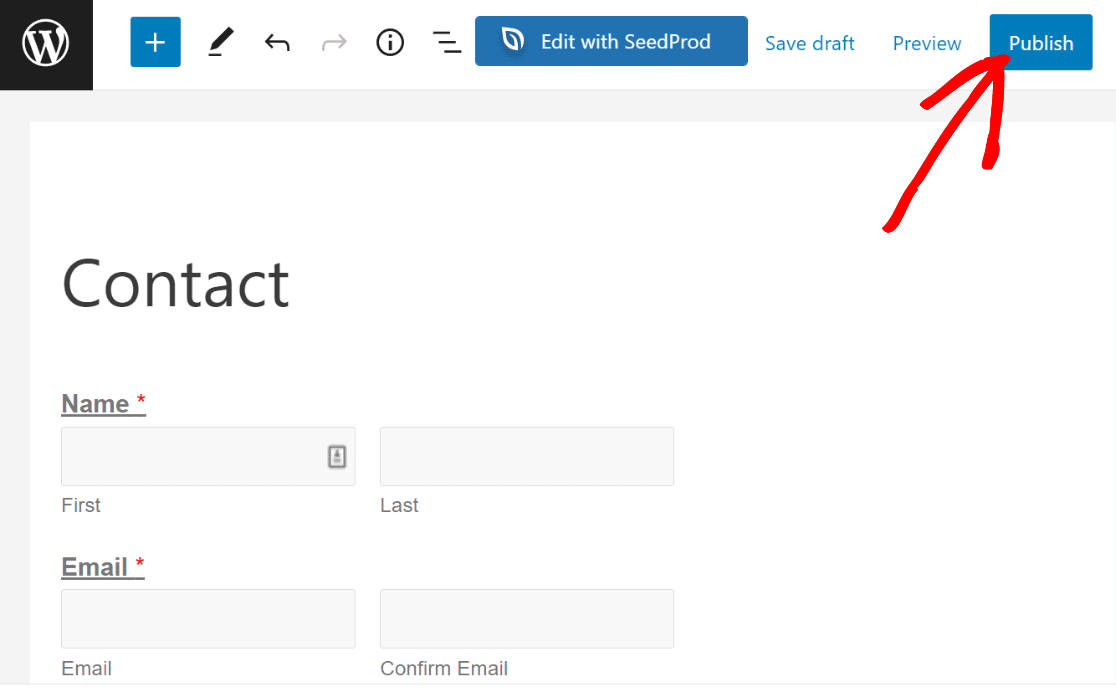
You should now see your WordPress page editor open with your form placed inside it. Press the Publish button on the top right to take your form live.
When you view your form on the frontend now, you’ll see the confirm address field and users will be required to enter their email twice to confirm it.
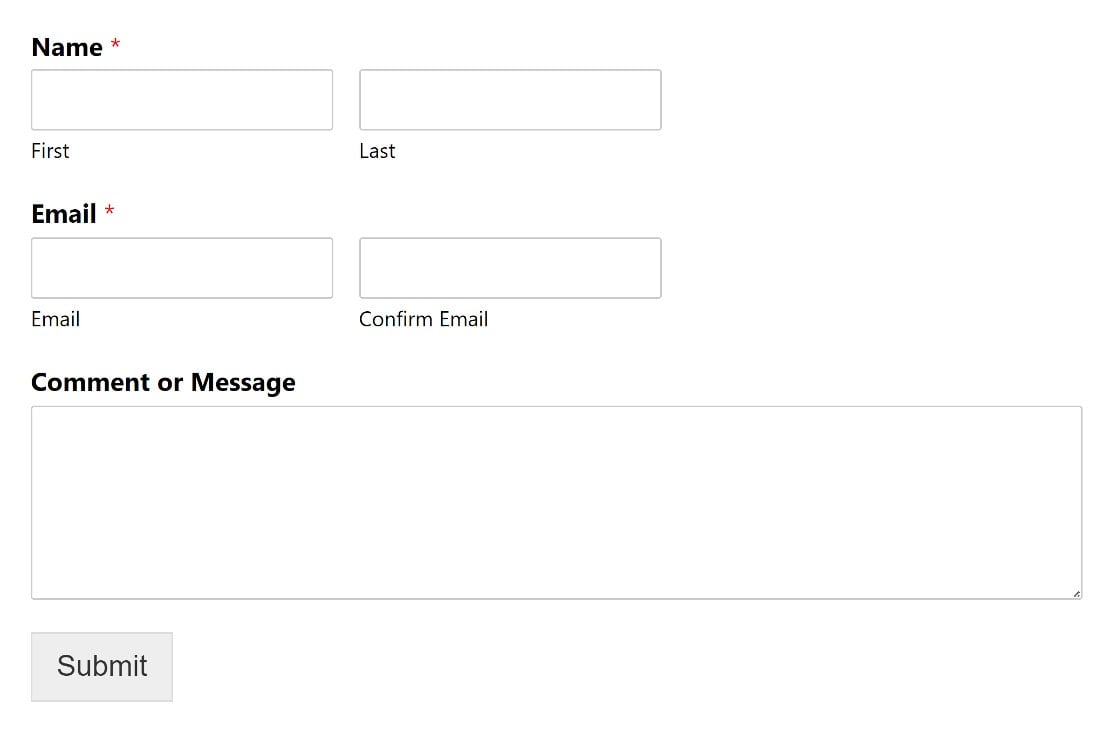
If they enter 2 email addresses that don’t match, your form will show a validation message instructing the user to re-enter their email address.
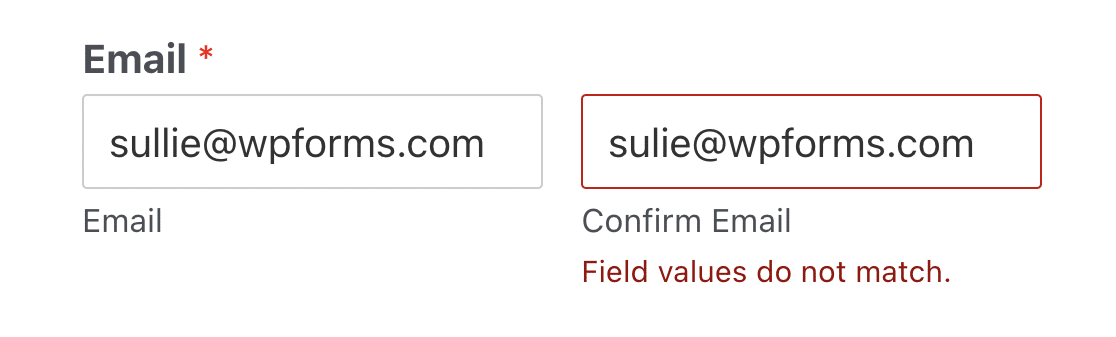
They will have to correct their mistake before sending in their form submission.
And that’s it! You now know how to add a confirm email address field to your WordPress forms in just 4 steps.
Email Verification UX Best Practices: 2 Extra Tips
While the email address confirmation field is very effective at reducing the number of entries with incorrect email addresses, it can sometimes be slightly frustrating for users to enter their email addresses twice in the same form.
If you think that adding an extra confirm email field will spoil the user experience for your visitors, here are two tips to try:
Make the Email Field More Prominent
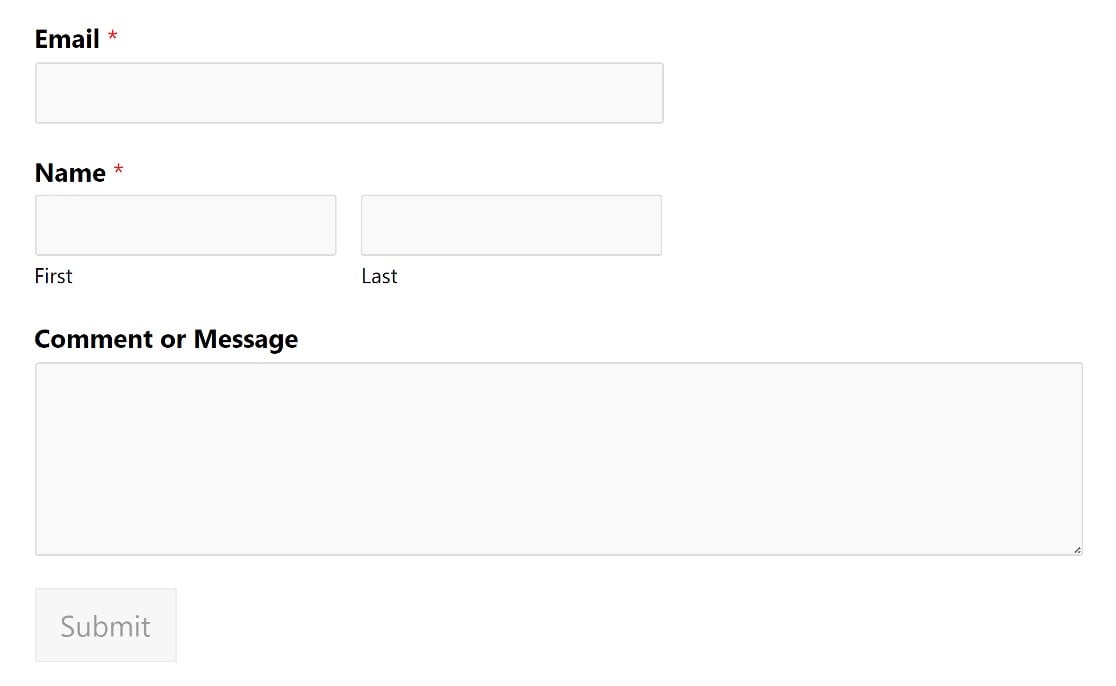
The usual practice would be to start your forms with a name field. But putting the email address field first is one way to make it stand out so that users pay more attention to it and fill the field more carefully.
Add a Reminder in the Email Field Label
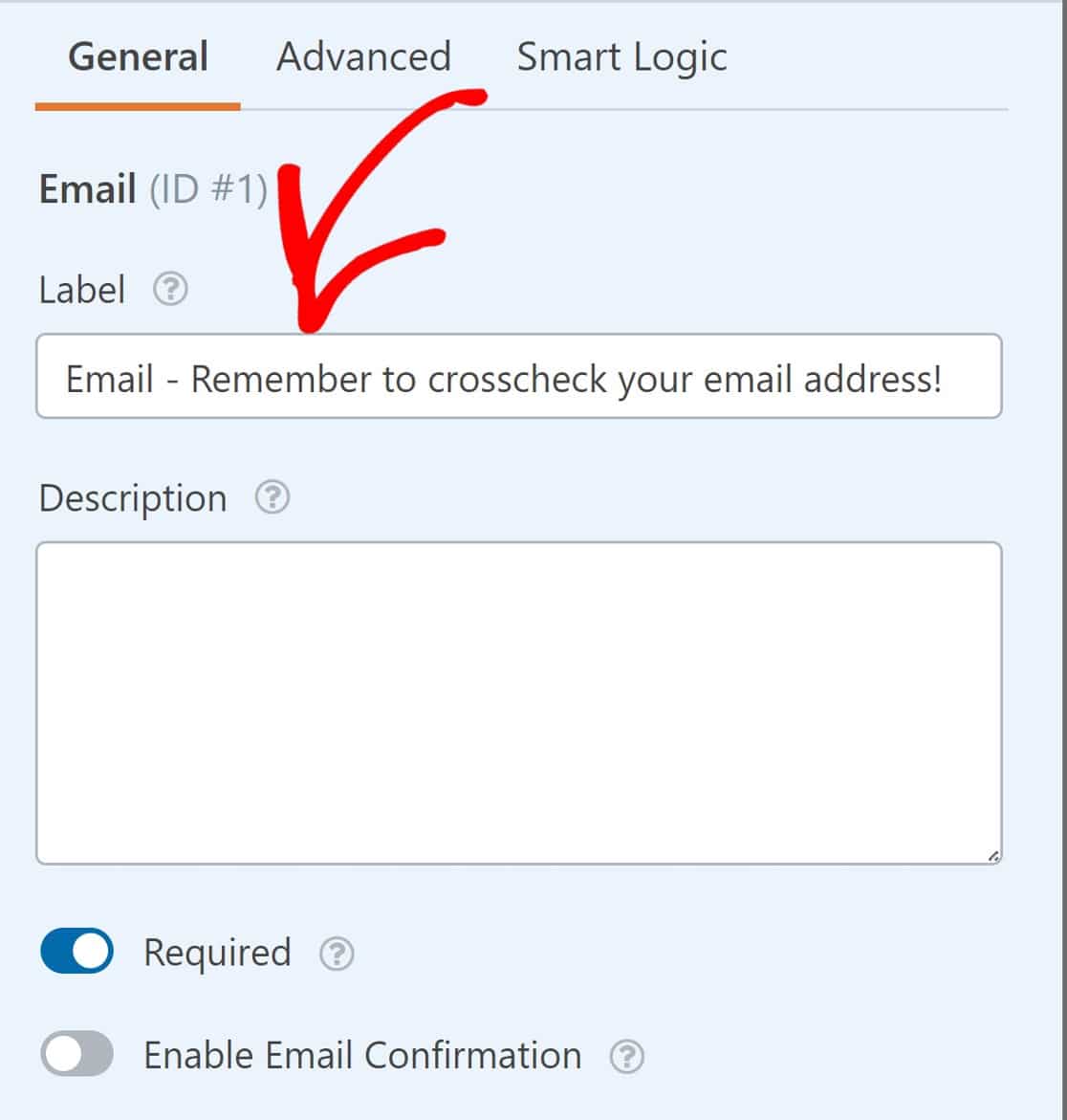
Another thing to try is adding a reminder to the email field, asking users to check that their email address has been entered correctly.
This can be done from the field options panel of the email field. Simply look for the Label field and add some text where it says Email.
And if you like, you can use a combination of these tips for the best results.
Bonus: Block Fake or Disposable Emails
The Enable Email Confirmation toggle catches typos, but it won’t stop someone from entering a fake address on purpose (think [email protected] or a 10-minute disposable inbox like Mailinator). If that’s a problem for your forms, WPForms has two more tools built into the same email field:
- Allowlist — Only accept submissions from specific domains. Useful for internal company forms where you only want @yourcompany.com emails coming through.
- Denylist — Reject submissions from specific domains or exact addresses. Great for blocking known disposable email providers.
Both options live under Field Options » Advanced on the email field. Combine them with Enable Email Confirmation for the cleanest email data you can collect without custom code.
And that’s all there is to it!
We’ve shown you how to confirm an email address in your forms, and we’ve shared 2 additional UX tips.
Go ahead and try them out! And you can take a look at our guide to the top form design best practices for more form design and layout tips!
FAQs About Confirming Email Addresses
Do I need WPForms Pro to add an email confirmation field?
No. The Enable Email Confirmation toggle is built into the standard Email field and works on every WPForms plan, including WPForms Lite (the free version).
Does the confirm email field verify that the email address actually exists?
No — it checks that the user typed the same address twice. It won’t confirm the inbox is real or that someone will see messages sent there. For that kind of validation, pair it with allowlist/denylist rules or a third-party email verification service.
Why does my form still get bad email addresses even with confirmation turned on?
Usually one of three reasons: users intentionally entering fake addresses, browser autofill putting the same wrong address in both fields, or bots ignoring the JavaScript validation. Add CAPTCHA, turn on denylist rules, and disable autofill on the confirm field to clean it up.
Can I customize the error message when the two emails don’t match?
Yes. Click the email field in the builder, go to the Advanced tab, and edit the Confirmation Error Message field. You can use any text that fits your brand voice.
Will the confirm email field work on mobile?
Yes. WPForms renders the confirm email field as two stacked inputs on mobile for an easy-to-tap layout. No extra setup required.
What’s the difference between email confirmation and email verification?
Email confirmation = the user types their address twice and both must match (catches typos). Email verification = an actual check that the inbox exists and can receive mail, usually via a confirmation email or a verification API. The built-in WPForms feature is confirmation; for true verification you’d need a service like ZeroBounce or a double opt-in email flow.
Can I make the confirm email field optional?
Not really — if the original Email field is required, the confirm field inherits that setting. If your Email field is optional, the confirm field simply won’t show up unless the user starts typing.
Next, Add Custom Confirmations and Notifications to Your WordPress Forms
WPForms includes so many great form-building features, including built-in confirmation messages and email notifications with a custom from name, email subject and email message. You can easily set these up right in the form builder so that your users know their forms were submitted properly.
You can also have submission notifications sent to your admin email and view all your form entries for repeater fields in your WordPress dashboard.
Ready to build powerful, flexible WordPress forms? Get started today with the easiest WordPress form builder plugin. WPForms Pro includes lots of free templates and integrations with popular email marketing services and CRMs. It also offers a 14-day money-back guarantee.
If this article helped you out, please follow us on Facebook and Twitter for more free WordPress tutorials and guides.