


AI Summary
Ever wonder how some websites seem to have their email totally figured out? I can tell you, it’s all about having the right email plugins in your toolkit.
Whether you’re trying to capture leads, send newsletters, or just make sure your contact form messages actually reach their destination, there’s a WordPress email plugin for that.
In this guide, I’ll walk you through the 7 most essential WordPress email plugins that can transform how you communicate with your audience.
Create Customized Form Confirmation Emails! 😀
Understanding WordPress Email Plugins: What Each Type Does
Before jumping into specific plugins, it helps to understand that “email plugins” is actually a broad category covering different purposes:
- Form & Notification Plugins – Handle contact forms, surveys, and user-submitted content. These make sure form submissions actually reach your inbox with proper formatting and organization.
- Email Delivery Plugins – These ensure transactional emails (password resets, order confirmations, form notifications) actually get delivered instead of disappearing or landing in spam.
- List Building & Lead Capture Plugins – Help you grow your email subscriber list through popups, forms, and landing pages. These focus on converting visitors into subscribers.
- Newsletter & Marketing Plugins – Let you send bulk emails and newsletters directly from WordPress. These manage subscriber lists and email campaigns without requiring external email marketing services.
- Automation & Post Notification Plugins – Automatically send emails when you publish new content or when specific events occur on your site.
Best WordPress Email Plugins Compared
Here’s a side-by-side comparison of the 7 best WordPress email plugins before we get into detailed reviews:
| Email Plugin 📧 | Best For 👍 | Free Version? | Pricing 💰 |
|---|---|---|---|
| WPForms | Customizable form notifications & email management | ✅ Yes | Free or $49.50/year |
| WP Mail SMTP | Fixing email deliverability & tracking emails | ✅ Yes | Free or $49/year |
| OptinMonster | Growing your list with advanced lead capture | ⚠️ Free impressions | $7-$49/month |
| MailPoet | Sending newsletters directly from WordPress | ✅ Yes | Free or $10/month |
| Postie | Creating WordPress posts by email | ✅ Yes | Free with paid addons |
| The Newsletter Plugin | Budget-friendly newsletter management | ✅ Yes | Free |
| Subscribe2 | Blog post notifications via email | ✅ Yes | Free |
Note: Most email problems require combining multiple plugins. For example, WPForms for forms + WP Mail SMTP for deliverability is a common and effective combination.
Best Email Plugins for WordPress
Now let’s look at each WordPress email plugin in detail, starting with the tools that solve the most critical email problems.
Best Email Plugins for WordPress
1. WPForms
WPForms is the best WordPress form plugin for managing email notifications from contact forms, surveys, registration forms, and any other type of form you create.
Unlike basic form plugins that send generic email notifications, WPForms gives you complete control over who receives emails, what information they contain, and how they look.
My Experience
I’ve used WPForms on dozens of client sites, and the email notification system is one of the most powerful features. You can set up multiple email notifications for a single form, each going to different recipients based on form responses.
For example, I built a customer support form where general inquiries went to the support team, billing questions went to accounting, and technical issues went to the IT department. WPForms handled the routing automatically using conditional logic.
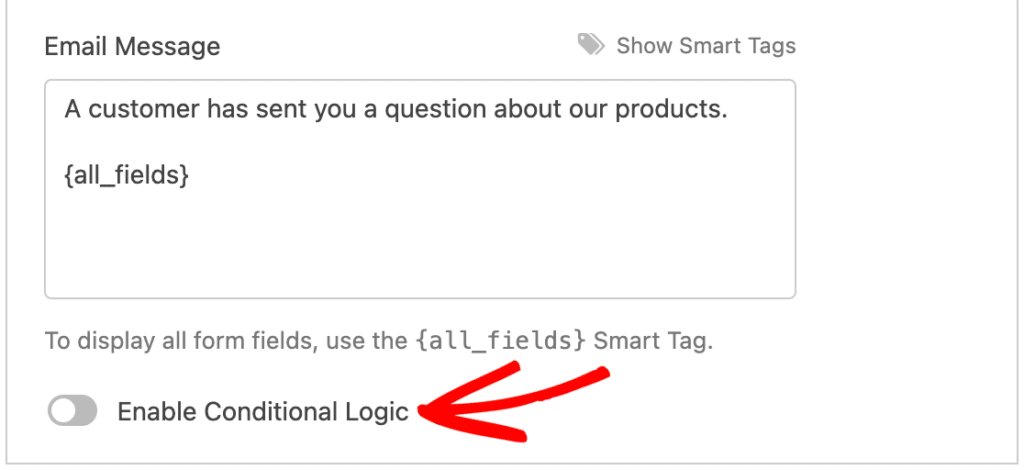
The Smart Tags system lets you personalize email notifications with actual form data. Instead of a generic “New form submission received” email, I could send “New contact form from {name} at {email}” with the user’s actual information inserted automatically.
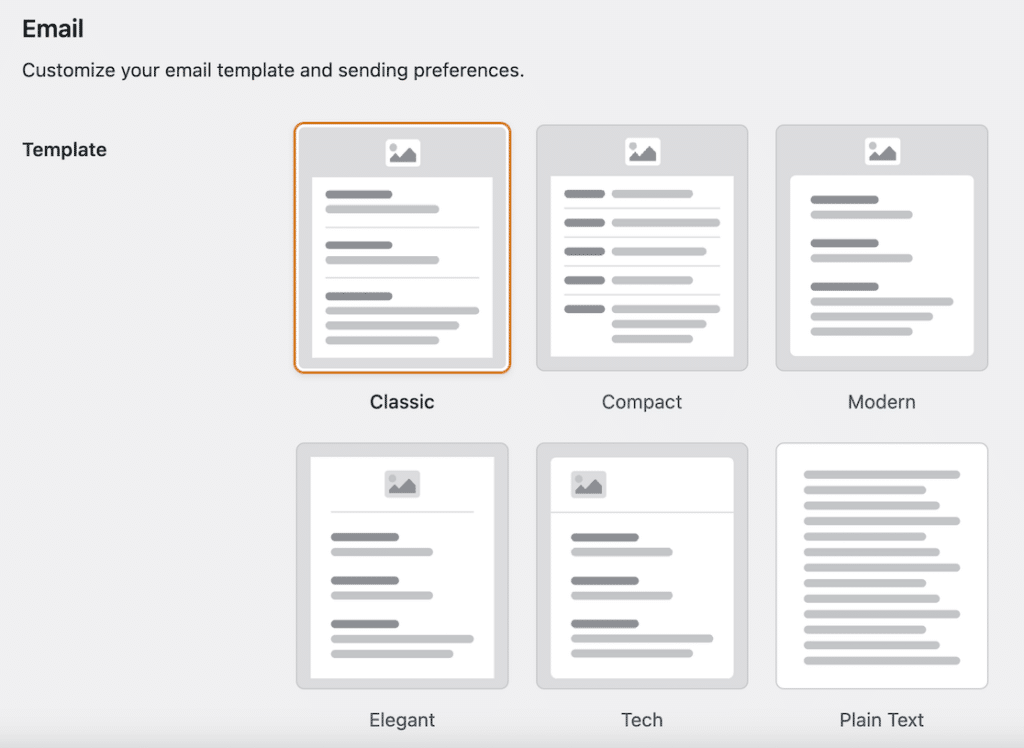
The email templates are professional and mobile-friendly. I customized colors, added header images, and adjusted layouts without touching any code. The templates also work in dark mode, which prevents awkward white backgrounds when recipients view emails on dark-themed devices.
One feature I use constantly is the ability to attach file uploads to email notifications. When someone submits a job application with a resume, the resume file automatically attaches to the notification email sent to HR.
WPForms includes 2,100+ form templates, and many are specifically designed for email collection like newsletter signups, lead generation forms, event registrations.
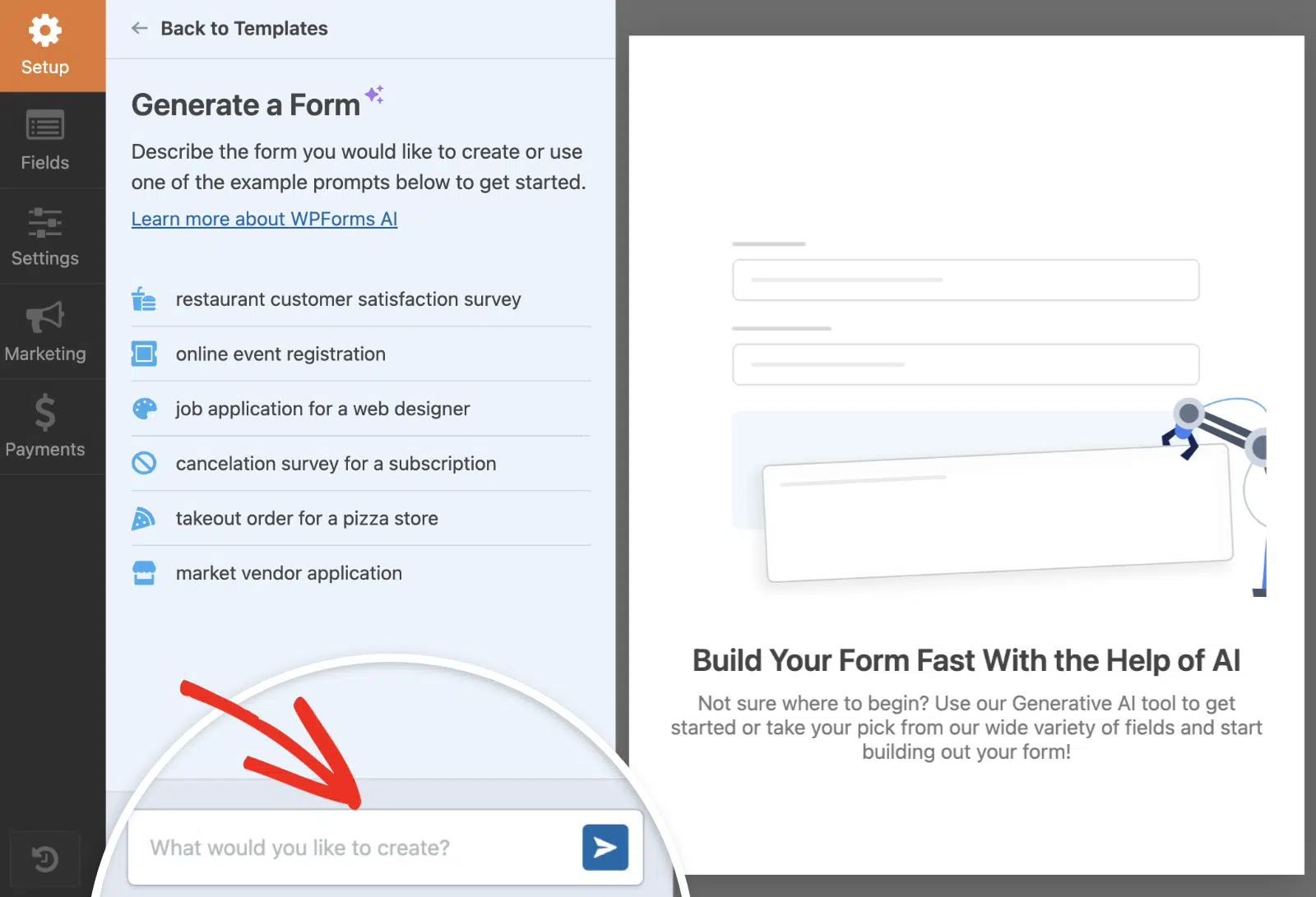
I can start with a template and have a working form with proper email notifications in under 5 minutes or use their AI form builder to prompt my way into building a customized form in no time,
What I Liked
WPForms delivers email features that matter for form management:
- Multiple email notifications – Send different emails to different people from one form
- Smart Tags – Dynamically insert form data into email subject lines and messages
- Professional email templates – Customizable designs that work across email clients
- Conditional email routing – Send emails to different recipients based on form responses
- File upload attachments – Include uploaded files in notification emails
- Mobile-friendly emails – Templates that display correctly on all devices
- Dark mode support – Emails look good in both light and dark email clients
- Email marketing integrations – Connect to Mailchimp, Constant Contact, ConvertKit, and 10+ other services
- Confirmation emails – Send auto-reply emails to form submitters
- 2,100+ templates – Pre-built forms with email notifications already configured
The email customization options work through a visual interface. You don’t need to write HTML or understand email coding to create professional notifications.
Pricing
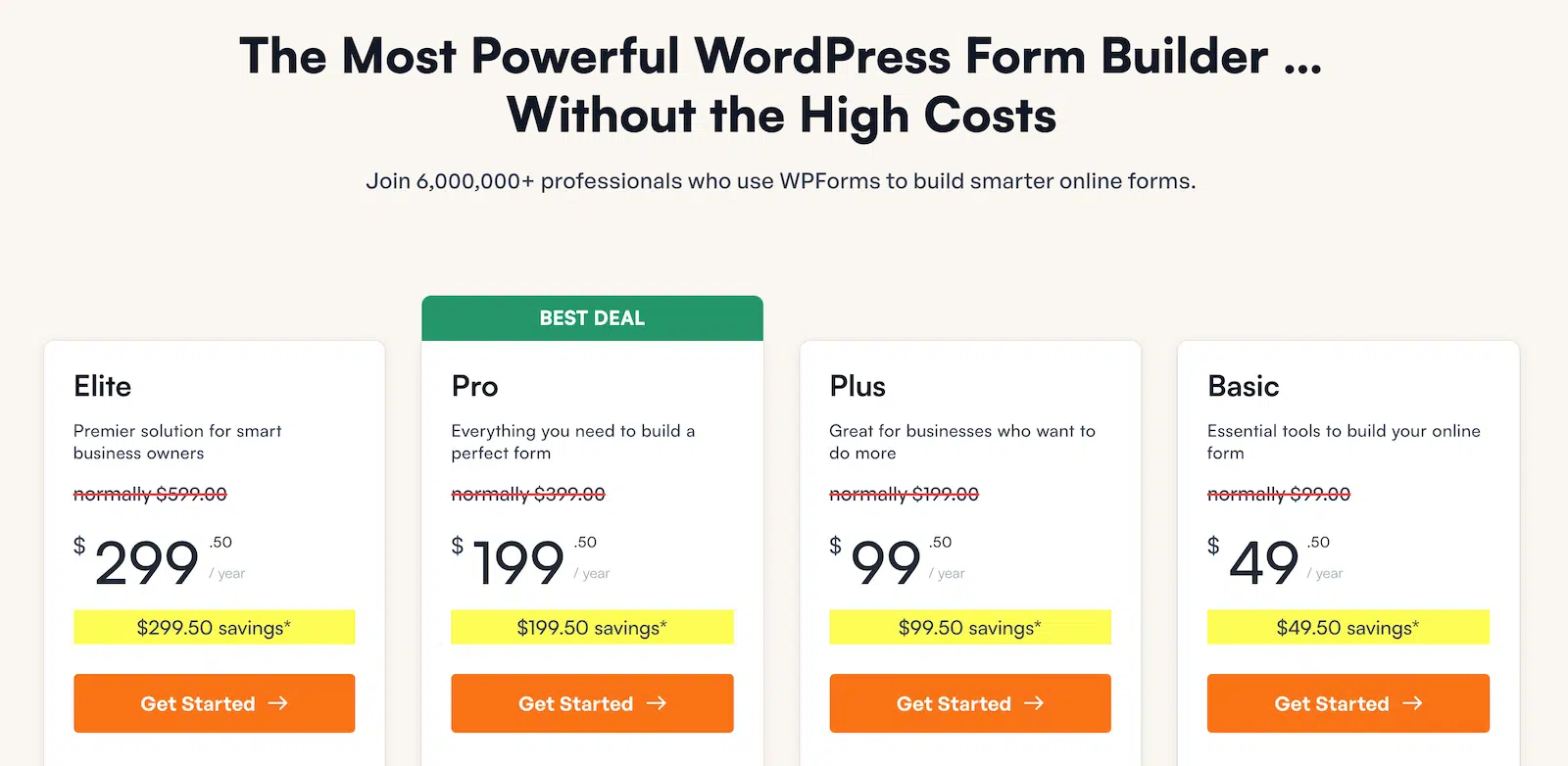
WPForms pricing ranges from $49.50 to $299.50 per year (currently 50% off introductory pricing):
- Basic: $49.50/year (normally $99) – 1 site, basic email features, Constant Contact integration
- Plus: $99.50/year (normally $199) – 3 sites, advanced email marketing integrations
- Pro: $199.50/year (normally $399) – 5 sites, all email features, payment forms
- Elite: $299.50/year (normally $599) – Unlimited sites, premium CRM integrations
WPForms Lite is free and includes one email notification per form with basic customization. All paid plans include a 14-day money-back guarantee.
Create Customized Form Confirmation Emails! 😀
2. WP Mail SMTP
WP Mail SMTP solves WordPress’s biggest email problem: emails that never get delivered. WordPress sends emails using PHP mail(), which most email providers treat as unreliable and often block or send to spam.
WP Mail SMTP bypasses this by routing your emails through trusted email services like Gmail, SendLayer, Brevo, or any SMTP provider.
My Experience
I’ve installed WP Mail SMTP on hundreds of WordPress sites over the years, and it consistently fixes email delivery problems that clients thought were unfixable.
The most common issue I see: contact form notifications stop working, password reset emails never arrive, or WooCommerce order confirmations disappear.
In almost every case, installing the WP Mail SMTP plugin and connecting it to a proper email service fixes the problem immediately, particularly a mailer like SendLayer.
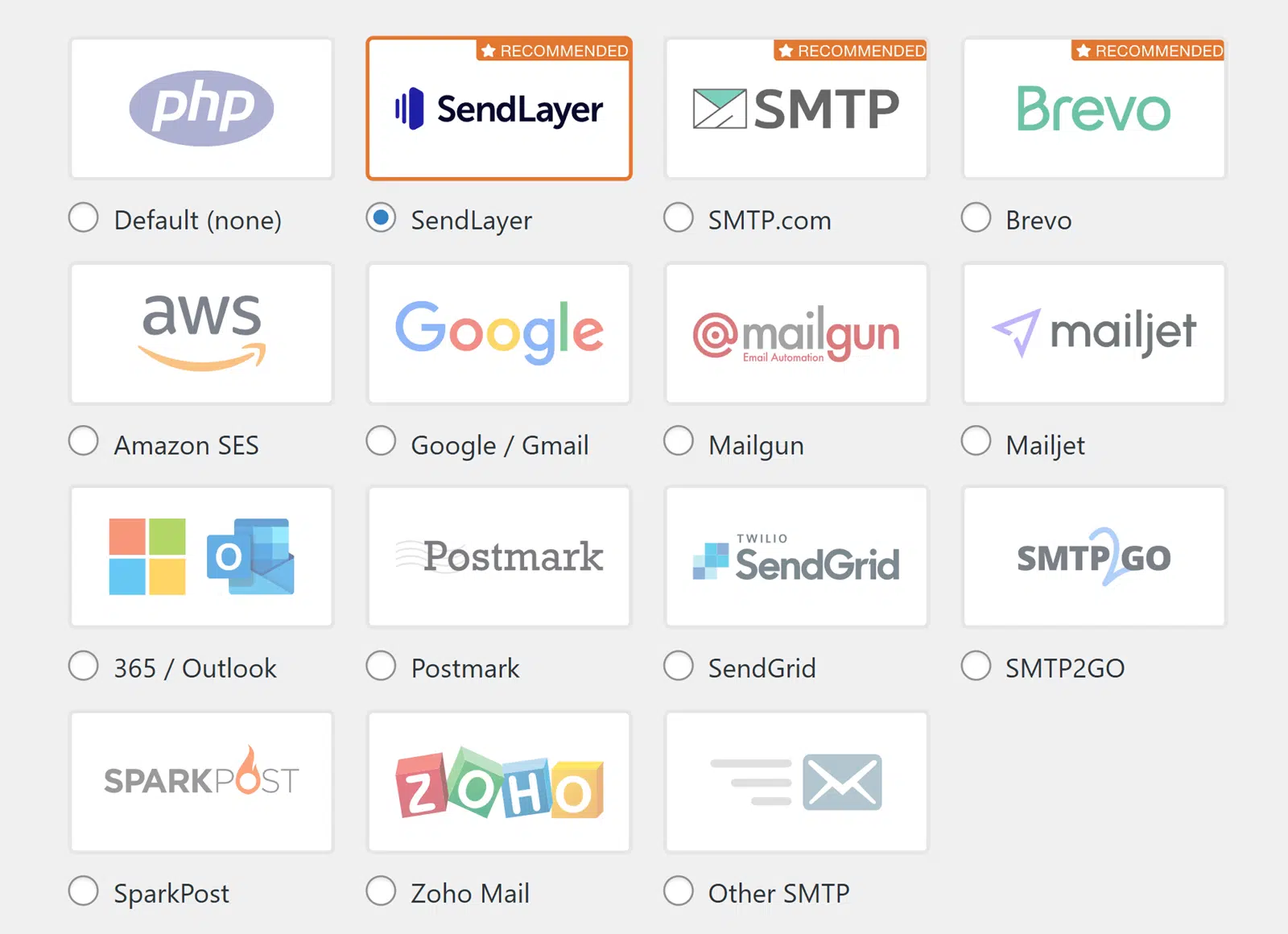
The Setup Wizard makes configuration straightforward. I select an email provider (usually Gmail for small businesses or SendLayer for higher volumes), enter my credentials, and send a test email. The whole process takes 5-10 minutes.
The free version works perfectly for basic email delivery. It supports popular services like Gmail, Brevo, SMTP.com, and SendLayer right out of the box. The Pro version adds features I use on client sites constantly:
- Email Logs – Every email sent from WordPress gets logged with the full message, recipient, timestamp, and delivery status. When clients ask “did that email send?”, I can check the logs and know for certain.
- Email Tracking – See which emails were opened and which links were clicked. This is useful for transactional emails where you need to confirm recipients actually read important messages.
- Backup Connections – If your primary email service fails, WP Mail SMTP automatically switches to a backup service. I’ve had this save clients during email provider outages.
- Smart Email Routing – Send different types of emails through different providers. For example, send high-volume WooCommerce order confirmations through SendLayer while sending admin notifications through Gmail.
What I Liked
- Reliable email delivery – Routes emails through trusted providers instead of unreliable PHP mail()
- Setup Wizard – Walks you through configuration step-by-step
- Multiple email providers – Gmail, SendLayer, SMTP.com, Brevo, Amazon SES, Mailgun, Postmark, SendGrid, and more
- Email logging – Track every email sent from WordPress (Pro)
- Open and click tracking – See email engagement rates (Pro)
- Backup connections – Automatic failover if primary service fails (Pro)
- Smart routing – Send different emails through different providers (Pro)
- White Glove Setup – Experts configure everything for you (Elite plan)
- Weekly email summaries – Get reports on email activity (Pro)
The free version genuinely works for email delivery. You don’t need paid features just to fix delivery problems. Those features add tracking and redundancy.
Pricing
WP Mail SMTP pricing ranges from $49 to $399 per year (currently $50 off):
- Pro: $49/year (normally $99) – 1 site, email logging, tracking, backup connections
- Elite: $99/year (normally $149) – 1 site, includes White Glove Setup service
- Developer: $199/year (normally $249) – 20 sites, priority support
- Agency: $399/year (normally $449) – 100 sites, priority support
WP Mail SMTP Lite is free and supports all major email providers for basic delivery. All paid plans include a 14-day money-back guarantee.
3. OptinMonster
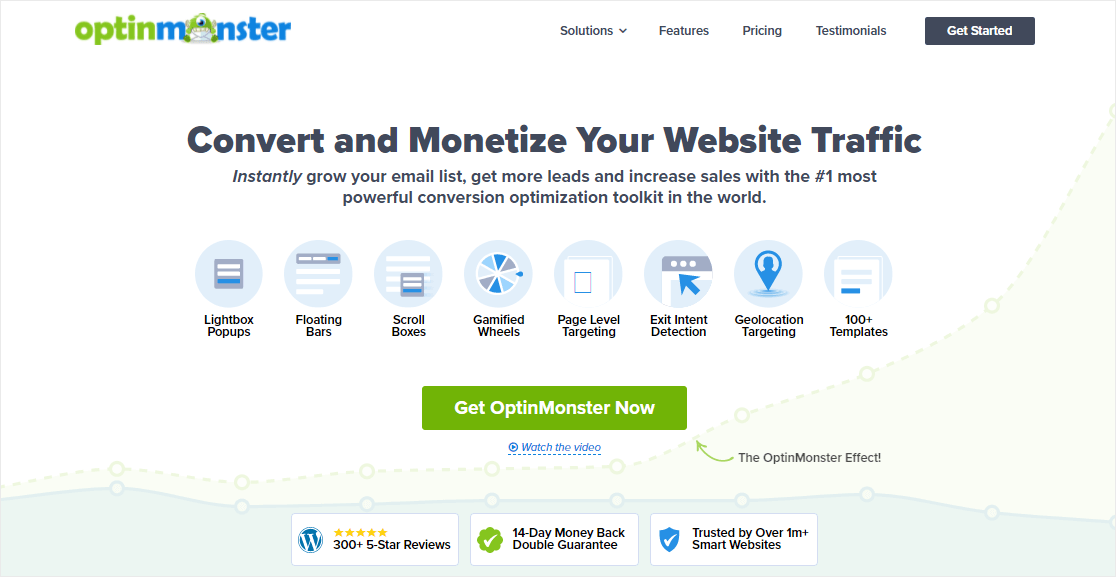
OptinMonster focuses on one specific email goal: growing your subscriber list by converting website visitors into email subscribers.
Unlike form plugins or delivery tools, OptinMonster specializes in capturing leads through popups, slide-ins, floating bars, and other attention-grabbing campaigns that appear at exactly the right moment.
My Experience
I’ve used OptinMonster on eCommerce sites, blogs, and service-based businesses to grow email lists faster than standard signup forms alone.
The Exit-Intent® technology is the standout feature. When visitors move their mouse toward the browser’s back button (indicating they’re about to leave), OptinMonster displays a targeted popup offering something valuable in exchange for their email address.
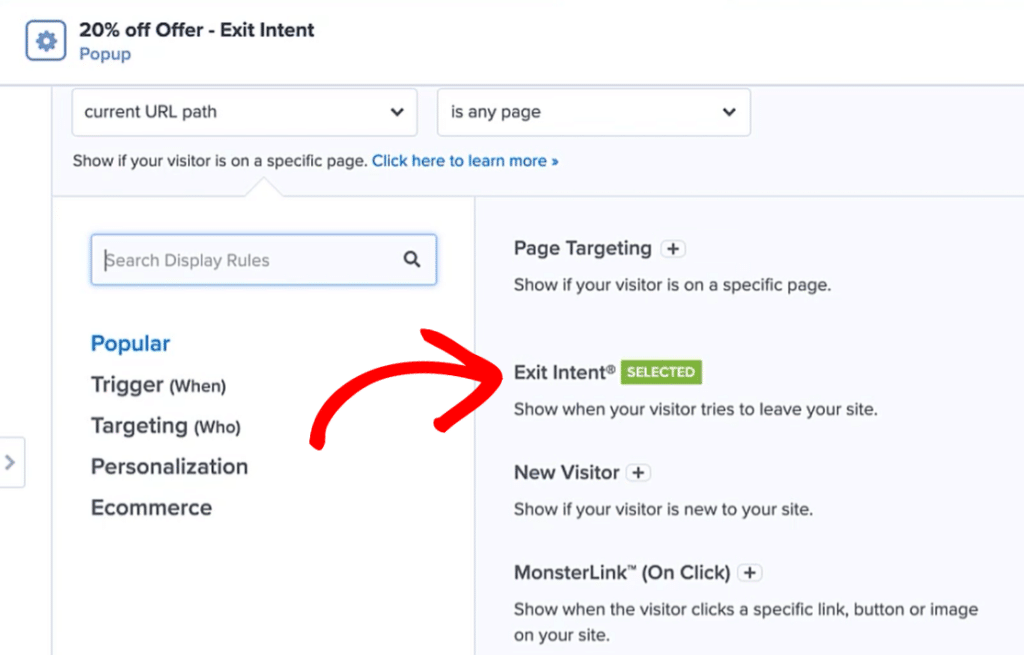
During testing on a blog, I set up an exit-intent popup offering a free PDF guide. The conversion rate was 8.3%, meaning 8.3% of people who were about to leave the site instead subscribed to the email list. That’s significantly higher than the 2-3% conversion rate from standard sidebar opt-in forms.
OptinMonster campaigns work with any email service. I’ve connected it to Mailchimp, ConvertKit, Constant Contact, Drip, and others. When someone submits their email through an OptinMonster popup, they’re automatically added to your email list. The targeting rules let you show different campaigns to different visitors. I created separate popups for:
- First-time visitors (welcome discount)
- Returning visitors who hadn’t subscribed (content upgrade)
- Visitors from specific geographic locations (location-based offers)
- People viewing specific pages (relevant lead magnets)
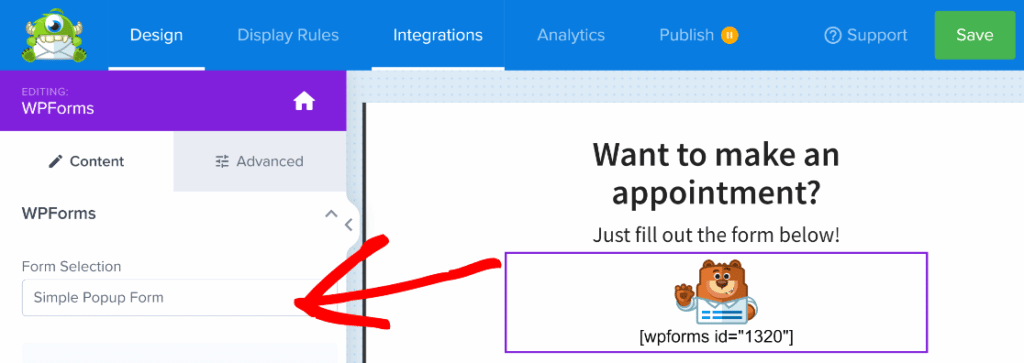
OptinMonster also integrates directly with WPForms. You can embed a WPForms form inside an OptinMonster popup, combining WPForms’ form functionality with OptinMonster’s advanced display triggers.
What I Liked
- Exit-Intent® Technology – Capture visitors before they leave your site
- 700+ templates – Pre-built campaigns for email collection
- Advanced targeting – Show campaigns based on behavior, location, device, referrer
- Multiple campaign types – Popups, floating bars, slide-ins, fullscreen overlays, spin-to-win wheels
- A/B testing – Test different campaigns to optimize conversion rates
- Email service integrations – Connect to all major email marketing platforms
- WPForms integration – Embed WPForms forms in OptinMonster campaigns
- Analytics – Track campaign views, conversions, and subscriber growth
- Mobile responsive – Campaigns work on all devices
The focus is entirely on list growth. If you need newsletter sending or email automation, you’ll need additional tools. OptinMonster captures emails—other tools manage them.
Pricing
OptinMonster pricing ranges from $7 to $49 per month (billed annually with 60% introductory discount):
- Basic: $7/month (normally $17.50) – 1 site, 2,500 impressions/month
- Plus: $19/month (normally $47.50) – 2 sites, 10,000 impressions, A/B testing
- Pro: $29/month (normally $72.50) – 3 sites, 25,000 impressions, Exit-Intent®
- Growth: $49/month (normally $122.50) – 5 sites, 100,000 impressions, advanced features
Free plan available with 500 campaign impressions for WordPress users. All paid plans include a 14-day money-back guarantee.
4. MailPoet

MailPoet is a complete email marketing solution that runs entirely inside WordPress. You can create newsletters, send automated emails, manage subscribers, and track results without leaving your WordPress dashboard.
If you want to handle email marketing on your own site instead of using external services like Mailchimp or ConvertKit, MailPoet keeps everything in one place.
My Experience
I tested MailPoet on a client site that wanted full control over their email marketing data. They didn’t want subscriber information stored on third-party platforms, so MailPoet’s WordPress-native approach fit perfectly.
The drag-and-drop email builder is intuitive. I created newsletters using pre-built blocks for headers, text, images, buttons, and product showcases. The interface feels similar to WordPress’s block editor, which made the learning curve minimal.

One feature that saved significant time was the automated welcome email sequence. When someone subscribed through a MailPoet form, they automatically received a welcome email, followed by three educational emails spaced three days apart. I set this up once, and it ran automatically for all new subscribers.
The WooCommerce integration worked particularly well. I could send automated emails to customers who:
- Made their first purchase (thank you email with discount for next order)
- Bought specific products (related product recommendations)
- Abandoned their cart (reminder with incentive to complete purchase)
MailPoet includes its own sending service, which handles email delivery without requiring separate SMTP setup. During testing, deliverability was reliable, emails consistently reached inboxes instead of spam folders.
The subscriber management tools let you segment lists based on engagement, purchase history, and custom fields. I created segments for “highly engaged subscribers” (opened recent emails) and “inactive subscribers” (haven’t opened in 90 days) and sent targeted re-engagement campaigns.
What I Liked
- WordPress-native interface – Everything managed from WordPress dashboard
- Drag-and-drop email builder – Visual newsletter creation with pre-built blocks
- Automated email campaigns – Welcome sequences, post notifications, WooCommerce automations
- Subscriber management – Organize and segment subscribers without external platforms
- WooCommerce integration – Abandoned cart emails, purchase follow-ups, product recommendations
- Built-in sending service – MailPoet handles email delivery (or use your own SMTP)
- Email analytics – Track opens, clicks, revenue per email
- Subscription forms – Create popup forms, inline forms, widget forms
- List segmentation – Target subscribers based on engagement and behavior
- Newsletter archives – Display past newsletters on your site
The free plan is genuinely functional for small lists. You can send 5,000 emails per month to up to 500 subscribers at no cost.
Pricing
MailPoet pricing ranges from free to $30 per month:
- Starter: Free – Up to 500 subscribers, 5,000 emails/month
- Business: $10/month – Unlimited emails, remove branding, priority support, advanced segmentation
- Agency: $30/month – Use on 50 websites (500 subscribers per site)
- Creator: $8/month – Business features without MailPoet Sending Service (use your own SMTP)
Pricing scales based on subscriber count. For 1,000 subscribers, Business plan costs $15/month. For 10,000 subscribers, it’s $100/month. Non-profits receive a 20% discount on all paid plans.
5. Postie
Postie takes a different approach to WordPress email—it lets you create blog posts by sending emails to your site.
If you get ideas for blog posts while traveling, commuting, or anywhere away from your computer, Postie lets you email those ideas directly to WordPress. The email becomes a draft or published post automatically.
My Experience
I tested Postie for a travel blogger who wanted to publish updates while on the road without laptop access. They set up a dedicated email address that Postie monitored, and anytime they sent an email to that address, it created a new WordPress post.
The setup requires connecting Postie to an email account (Gmail, Outlook, or any IMAP/POP3 email). I configured it to check for new emails every 15 minutes. When Postie found an email, it converted the subject line to the post title and the email body to the post content.

Postie handles media attachments well. During testing, I emailed photos from my phone, and Postie automatically uploaded them to the WordPress media library and inserted them into the post. This worked with images, videos, and audio files.
The formatting controls let you specify categories, tags, and post status directly in the email. By adding special codes to the email (like :start category: followed by the category name), I could control how the post was organized without touching WordPress.
One practical use case I found was creating photo galleries from email. A photographer client emailed multiple images with captions, and Postie created a gallery post automatically with all images properly formatted.
The plugin also supports custom post types, so you can create WooCommerce products, portfolio items, or any custom content type by email.
What I Liked
- Email-to-post creation – Turn emails into WordPress posts automatically
- Media handling – Upload images, videos, audio files from email attachments
- Category and tag control – Set post organization through email codes
- Custom post types – Create any post type, not just blog posts
- IMAP/POP3 support – Works with any email provider
- Scheduled posting – Control when emailed posts go live
- Multiple email accounts – Monitor different emails for different post types
- Template support – Format posts consistently with custom templates
The free version handles basic email-to-post functionality. Paid addons ($5-$49 each) add features like dynamic categories, subject line editing, and advanced formatting.
Pricing
Postie core plugin is free from the WordPress plugin directory. Optional premium addons range from $5 to $49 each:
- Dynamic Categories: $15
- Subject Fixer: $10
- Postie Shortcodes: $25
- Advanced Features Bundle: varies
You can use Postie indefinitely without buying addons. The paid extensions add convenience features but aren’t required for basic functionality.
6. The Newsletter Plugin

The Newsletter Plugin (by Stefano Lissa) is a free WordPress plugin for sending newsletters directly from your site. With over 400,000 active installations, it’s one of the most popular WordPress newsletter solutions. The plugin is completely free with optional premium addons for advanced features.
My Experience
I tested Newsletter on a small business site that wanted basic email newsletter functionality without monthly subscription costs.
The drag-and-drop composer made creating newsletters straightforward. I added text blocks, images, blog post excerpts, and call-to-action buttons without touching any code. The interface includes 25+ content blocks covering most newsletter needs.
Creating subscription forms was simple. Newsletter includes form builder tools that let you create inline forms, popup forms, or widget area forms. I embedded a signup form in the sidebar, and new subscribers were automatically added to the mailing list.

The automated newsletter feature saved time. I set up a weekly digest that automatically pulled the latest blog posts and sent them to subscribers every Friday. Once configured, this ran without manual intervention.
Newsletter includes basic statistics showing opens, clicks, and unsubscribes for each campaign. The analytics aren’t as detailed as dedicated email services, but they cover essential metrics for tracking newsletter performance.
The plugin integrates with popular form builders including Contact Form 7, Ninja Forms, Gravity Forms, WPForms, and Elementor. I tested the WPForms integration, and form submissions automatically added subscribers to Newsletter lists.
One limitation is that Newsletter sends emails from your WordPress server by default. For small lists (under 1,000 subscribers), this works fine. For larger lists, you’ll want to connect an external email service through the SMTP addon or use WP Mail SMTP alongside Newsletter.
What I Liked
Newsletter delivers solid features at no cost:
- Completely free – No subscription fees or subscriber limits
- Drag-and-drop builder – Visual newsletter creation with 25+ blocks
- Automated newsletters – Schedule recurring emails or trigger based on new posts
- Subscription forms – Multiple form types (inline, popup, widget)
- Form builder integrations – Works with WPForms, Contact Form 7, Gravity Forms, Ninja Forms
- Basic analytics – Track opens, clicks, unsubscribes
- WooCommerce support – Include products in newsletters
- Subscriber management – Organize lists and segments
- External service integrations – Connect to SMTP providers for better delivery
Premium addons are available for advanced features like delivery optimization, automated sequences, and enhanced reporting, but the free version is fully functional.
Pricing
Newsletter is completely free from the WordPress plugin directory. Optional premium addons are available for purchase individually (pricing varies per addon).
7. Subscribe2

Subscribe2 is a free WordPress plugin focused on one specific job: notifying subscribers when you publish new blog posts.
If you want a simple way to keep readers updated about new content without complex email marketing features, Subscribe2 handles that job reliably.
My Experience
I tested Subscribe2 on a blog that published new articles 2-3 times per week. The blogger wanted a straightforward way to notify subscribers about new posts without learning email marketing software.
After installing Subscribe2, subscribers could choose exactly what they wanted to be notified about. The plugin lets readers subscribe to:
- All new posts
- Specific categories only
- Specific tags
- Custom post types
This category-specific subscription was useful for the blog because it covered multiple topics. Readers interested in “Product Reviews” could subscribe to just that category and skip “How-To Guides” if they weren’t interested.
Subscribe2 offers two email formats: individual emails for each new post, or digest emails that compile multiple posts into one message. I set up weekly digests for subscribers who didn’t want daily emails.
The email templates are basic but functional. You can customize the email format using template tags, though the design options are limited compared to visual email builders in MailPoet or Newsletter.

One important consideration: Subscribe2 sends all notification emails simultaneously when you publish a post. If you have a large subscriber list (1,000+ people), this can trigger sending limits on shared hosting.
Pairing Subscribe2 with WP Mail SMTP helps manage bulk sending more reliably. The subscriber management is straightforward. You can view all subscribers from WordPress admin, manually add or remove people, and export subscriber lists for backup.
What I Liked
Subscribe2 excels at simple post notification:
- Completely free – No paid plans or upgrade prompts
- Category-specific subscriptions – Readers choose what topics interest them
- Digest or individual emails – Send immediately or compile into periodic summaries
- Public and registered user support – Works for both WordPress users and email subscribers
- Customizable email templates – Basic template editing with merge tags
- Subscription management – Easy admin interface for managing subscribers
- Double opt-in available – Confirm subscriptions to reduce spam signups
The plugin doesn’t include visual email builders, advanced segmentation, or detailed analytics. It’s focused on post notifications, not full email marketing.
Pricing
Subscribe2 is completely free from the WordPress plugin directory. There are no paid versions or premium addons.
Choosing Your Perfect Email Plugin Mix
Successful WordPress email management usually requires combining multiple plugins from this list. Each plugin handles a different aspect of email, and together they create a complete system. Here are proven plugin combinations that work well:
For Small Business Sites:
- WPForms (contact forms and notifications)
- WP Mail SMTP (reliable delivery)
- OptinMonster (list growth)
For Content Publishers:
- Newsletter or MailPoet (newsletter sending)
- WP Mail SMTP (delivery)
- Subscribe2 (post notifications)
For eCommerce Sites:
- WPForms (customer forms)
- WP Mail SMTP (order confirmations)
- MailPoet (abandoned cart emails and customer campaigns)
For Bloggers on a Budget:
- WPForms Lite (free contact form)
- WP Mail SMTP Lite (free delivery fix)
- Newsletter (free newsletter sending)
- Subscribe2 (free post notifications)
You don’t need to implement everything at once. Start with the basics that match your immediate needs and add more tools as your email requirements grow.
FAQs on WordPress Email Plugins
Here are answers to common questions about WordPress email plugins:
What is the best email plugin for WordPress?
The best email plugin depends on what you’re trying to accomplish:
- Best for form notifications (WPForms) – Handles contact forms with customizable email notifications.
- Best for email delivery (WP Mail SMTP) – Fixes WordPress email deliverability issues.
- Best for list building (OptinMonster) – Grows subscriber lists through lead capture campaigns.
- Best for newsletters (MailPoet) – Complete email marketing inside WordPress.
- Best for post notifications (Subscribe2) – Notifies subscribers about new blog posts.
- Best free newsletter tool (The Newsletter Plugin) – Full-featured newsletter plugin at no cost.
Most WordPress sites need multiple email plugins. WP Mail SMTP for delivery + WPForms for forms is the most common and effective combination.
What are the best free email plugins for WordPress?
The best free WordPress email plugins are:
- WP Mail SMTP Lite – Fixes email delivery issues using Gmail, Brevo, SendLayer, and other mailers.
- WPForms Lite – Create contact forms with one email notification per form.
- Newsletter – Send newsletters with unlimited subscribers and emails.
- Subscribe2 – Notify subscribers about new blog posts.
- MailPoet Starter – Email marketing for up to 500 subscribers with 5,000 monthly emails.
All of these plugins work indefinitely without forced upgrades. The free versions are genuinely functional, not just limited trials.
How do I send bulk emails from WordPress?
To send bulk emails from WordPress, use one of these approaches:
Option 1: Newsletter Plugin (Free)
- Install the free Newsletter plugin
- Create your subscriber list
- Design your email using the drag-and-drop builder
- Send to all subscribers or specific segments
Option 2: MailPoet (Free up to 500 subscribers)
- Install MailPoet
- Import or collect subscribers through forms
- Create newsletter campaigns
- Send using MailPoet Sending Service or your own SMTP
Option 3: External Service + Form Plugin
- Use WPForms to collect emails
- Connect to Mailchimp, Constant Contact, or ConvertKit
- Send bulk emails from the external service
Important: Always pair bulk email sending with WP Mail SMTP if you’re sending from WordPress. This ensures proper delivery and prevents your emails from being marked as spam.
For very large lists (10,000+ subscribers), external email services like Mailchimp or Brevo typically deliver better results than WordPress-based solutions.
Do I need WP Mail SMTP if I use an email marketing plugin?
Yes, you still need WP Mail SMTP even if you use email marketing plugins. Email marketing plugins (MailPoet, Newsletter) handle subscriber management and newsletter sending.
But they don’t fix WordPress’s default email problems for other types of emails. WP Mail SMTP fixes delivery for ALL WordPress emails including:
- Contact form notifications
- Password reset emails
- User registration confirmations
- WooCommerce order notifications
- Comment notifications
- Admin email alerts
Even if MailPoet handles your newsletter sending, WP Mail SMTP ensures your contact form notifications and system emails get delivered properly. The combination works like this:
- MailPoet or Newsletter: Manages and sends marketing emails
- WP Mail SMTP: Handles transactional emails and improves overall deliverability
- WPForms: Creates forms and manages form notifications
Why are my WordPress emails not sending?
Most WordPress email problems come down to how WordPress sends mail by default. It relies on the PHP mail() function, which many hosts disable and most inbox providers treat as suspicious. That is why contact form notifications, password resets, and order confirmations so often vanish or land in spam.
The fix is to route your email through a proper SMTP service. Install WP Mail SMTP, run the Setup Wizard, and connect a trusted mailer like Gmail, SendLayer, or Brevo. If your emails still fail, our guide on how to fix WordPress emails that aren’t sending walks through every common cause.
What’s the difference between an email plugin and an email marketing service?
An email plugin runs inside WordPress and handles one job from your dashboard, whether that is building forms, fixing delivery, or sending newsletters.
An email marketing service like Mailchimp, Brevo, or Constant Contact is a separate platform with its own sending infrastructure, list management, and automation built for high-volume campaigns.
Most sites use both together rather than choosing one. You might collect subscribers through a WordPress form, then sync them to an email marketing service for ongoing campaigns.
If you prefer to keep everything in one place, a WordPress-native tool like MailPoet or the Newsletter plugin lets you send straight from your dashboard.
Next, Stop Spam Form Submissions
Spam form submissions are a nightmare and an overall online nuisance.
However, more users these days have reservations about using reCAPTCHA, and many ask, is there a way to avoid using reCAPTCHA? There are plenty of reCAPTCHA alternatives to stop spambots harassing your email subscription forms.
Also, if you’re trying to pick an email marketing service, see our MailerLite vs Constant Contact comparison for a quick review of two super popular email services. If you’re looking to send a lot of emails, also check out this guide on the best bulk email plugins.
Ready to build your form? Get started today with the easiest WordPress form builder plugin. WPForms Pro includes lots of free templates and offers a 14-day money-back guarantee.
If this article helped you out, please follow us on Facebook and X (Twitter) for more free WordPress tutorials and guides.